Sodium-Ion Battery Cathode Materials: Layered Oxides vs
If you have spent years on the lithium bench, the first time you crack open a sodium-ion cell feels familiar and strange at the same time. The pouch format, the separator, the welded tabs — all recognizable. But the cathode is where the chemistry tells a different story, and as a senior lithium battery engineer who has qualified both NMC and LFP lines, I can tell you the cathode decision is the single most consequential choice in any sodium-ion program. In this article I break down the two dominant cathode families for the sodium-ion battery — layered oxides and polyanionic compounds — using the same kind of data I hand to procurement teams before they commit to a chemistry.
What Actually Makes a Sodium-Ion Cathode Different
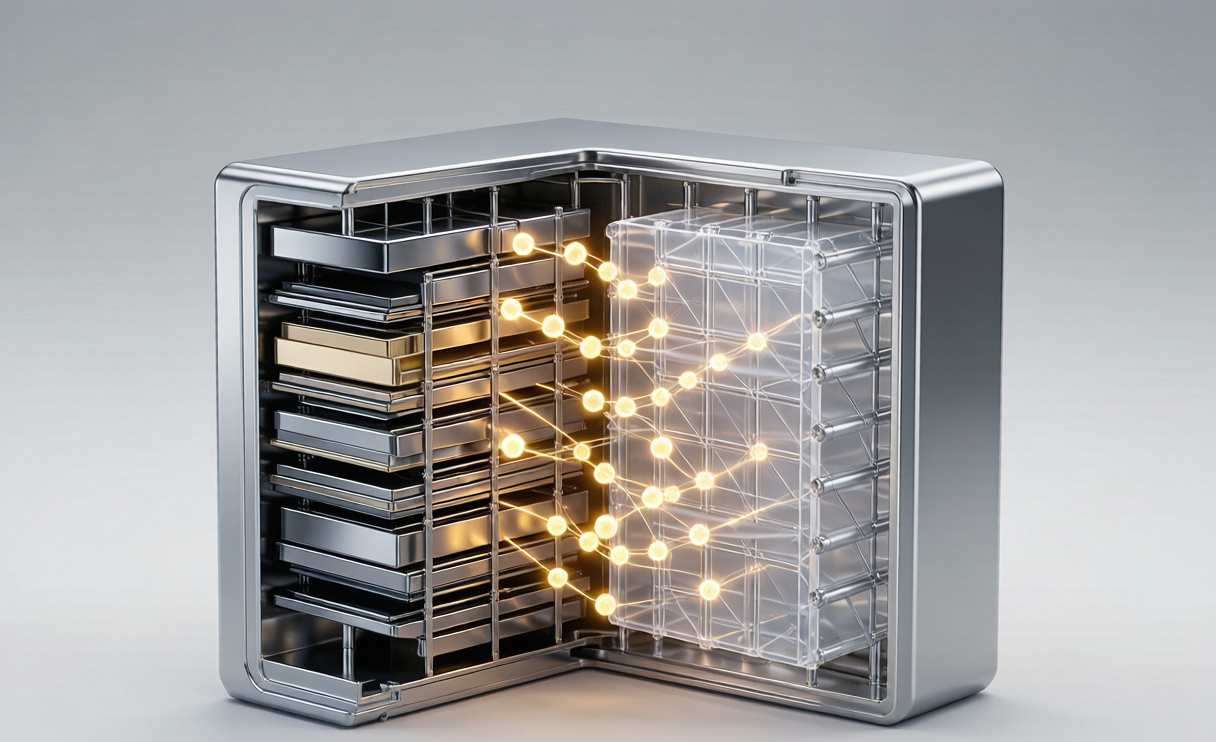
The constraint that shapes everything is ionic size. A Na+ ion carries a Shannon crystal radius of roughly 1.02 Å, against about 0.76 Å for Li+. That extra bulk changes how sodium moves through a host lattice and, more importantly, which host structures survive thousands of insertion-extraction cycles without collapsing. A sodium ion battery therefore cannot simply reuse the spinel or olivine frameworks that work beautifully for lithium; the channels are simply too tight. This is why the field has consolidated around two architectures that accommodate the larger ion: layered transition-metal oxides and polyanionic frameworks. Both are proven at pilot scale, both clear UN38.3 for transport, and both are now appearing in certified stationary products — but they serve different masters.
From an engineering standpoint the cathode is also where most of the cost and most of the safety risk live. Get the cathode chemistry wrong and no amount of clever BMS tuning will save the cell. That is why I always spec the cathode before I touch the anode, the electrolyte, or the format.
Layered Oxide Cathodes — Energy Density First
Layered oxides are the closest cousin to the NMC chemistry most engineers already know. The two commercial front-runners are O3-type NaNi1/3Fe1/3Mn1/3O2 (often abbreviated NFM) and P2-type Na0.67[Fe0.5Mn0.5]O2. In the O3 structure sodium sits in octahedral sites between close-packed oxide layers; in P2 the sodium occupies prismatic sites between hexagonal layers. The distinction matters because P2 materials tend to show better rate capability and less stacking-fault disorder during cycling.
In my lab cells, a well-formulated NFM cathode delivers a specific capacity of 120–160 mAh/g across an operating window of roughly 2.5–3.8 V versus sodium. Pack that into a prismatic sodium-ion battery and you land at a cell-level energy density of about 130–160 Wh/kg — clearly below good LFP (160–190 Wh/kg) but well above lead-acid and competitive for cost-sensitive stationary and light-mobility duty.
The trade-offs are real. Layered oxides are more hygroscopic than polyanionic compounds, so they need tighter dry-room discipline during electrode coating. Some O3 compositions also release lattice oxygen above roughly 200 °C, which is why we pair them with ceramic-coated separators and conservative upper cut-off voltages. And because certain layered oxides slowly lose capacity if stored fully charged, many OEMs ship them at partial state of charge — a quirk that catches out teams used to lithium logistics.
Polyanionic Cathodes — The Durability and Safety Specialists
Polyanionic cathodes flip the priority order. The明星 materials here are Na3V2(PO4)3 (NVP), the olivine analog NaFePO4, and the mixed-anion Na4Fe3(PO4)2P2O7 (often called the maricite/ferrovanadate family). What they share is a three-dimensional phosphate framework held together by strong P–O covalent bonds. Those bonds are the secret sauce: they pin the structure in place and resist the oxygen release that plagues layered oxides.
The numbers tell the story. NVP runs at a stable ~3.4 V plateau with a practical capacity around 90–110 mAh/g, while its thermal runaway onset sits above 300 °C — roughly 100 °C higher than a typical layered oxide. Cycle life is where polyanionic chemistry truly pulls ahead: in our 45 °C accelerated aging racks we routinely see 4,000–8,000 full equivalent cycles with less than 20% capacity fade. For a battery solution aimed at decade-long stationary service, that durability is worth more than a few extra watt-hours per kilogram.
The catch is cost and energy. Vanadium in NVP is not cheap, and the lower specific capacity keeps cell-level energy density in the 90–120 Wh/kg band. Iron-based polyanionics such as NaFePO4 or the pyrophosphate variants close some of the cost gap using earth-abundant iron, at the expense of lower voltage and trickier synthesis. Specifying polyanionic is therefore a statement of intent: you are optimizing for life and safety, not for range.
Head-to-Head: Energy, Life and Cost
When a buyer asks me which is better, my answer is always “for what?” Here is the comparison I put on the slide:
- Energy density: Layered oxides win clearly, 130–160 Wh/kg versus 90–120 Wh/kg for polyanionic. If mass or volume is the constraint, layered is the default.
- Cycle life: Polyanionic wins, 4,000–8,000 cycles versus 2,000–3,000 for most layered oxides. For daily cycling stationary storage this is decisive.
- Thermal safety: Polyanionic frameworks resist oxygen release to higher temperatures, simplifying the pack-level thermal design and easing compliance with IEC 62619 for industrial cells.
- Cathode active material cost: Manganese-iron-nickel layered oxides are the cheaper active powder today; vanadium-bearing NVP carries a material premium that only justifies itself through cycle-life economics.
- Rate capability: Polyanionic structures, with their 3D channels, often accept high C-rates with less polarization — useful for fast-charge or high-pulse applications.
Notice that neither chemistry is universally superior. The right choice is an application decision, not a spec-sheet beauty contest.
Manufacturing Reality on the Line
A question I hear constantly from OEMs is whether they can build sodium-ion cathodes on the lithium lines they already own. The honest answer: mostly yes, with caveats. Both layered and polyanionic slurries coat on the same comma-style or slot-die coaters, and both calender to similar electrode densities. The differences are in process window, not in equipment.
Layered oxides demand a tighter dew-point budget — I keep the coating room below -40 °C dew point and avoid prolonged slurry stand time, because absorbed moisture degrades both capacity and first-cycle efficiency. Polyanionic cathodes are more forgiving on moisture but often need higher firing temperatures (700–900 °C for the phosphate frameworks) and longer dwell times, which hits throughput. Calendering pressure is generally lower than for dense NMC because the polyanionic particles are less compressible. None of this requires new machinery, but it does require re-validated SOPs and a fresh round of IEC 62133 and UN38.3 testing on the output.
How We Specify Cathode Chemistry for B2B Buyers
My internal rule of thumb when briefing a sodium ion battery program is straightforward:
- home energy storage and telecom backup: Polyanionic (iron-based where cost is tight, NVP where cycle life dominates). You are buying for ten years of daily cycles.
- E-bikes, micro-EVs, portable power: Layered oxide. Range and mass matter more than 8,000-cycle immortality.
- Low-cost stationary and rural microgrids: Manganese-rich layered oxides. The bill-of-materials wins and the duty cycle is shallow.
- High-safety or high-pulse industrial: Polyanionic, accepting the energy-density penalty for the thermal headroom.
I also tell buyers to validate the cathode supplier’s batch-to-batch capacity spread. A Na-ion battery pack is only as consistent as its worst cell, and cathode uniformity is the largest single lever on pack-level balancing current. Ask for the coefficient of variation on specific capacity across a production lot — anything above 2% is a red flag.
FAQ
Which sodium-ion cathode is best for home energy storage?
For residential and behind-the-meter storage, polyanionic cathodes are usually the better fit. The priority is cycle life and safety over a decade of daily use, and polyanionic materials deliver 4,000–8,000 cycles with high thermal stability. Iron-based polyanionics keep material cost down, while NVP is chosen when maximum cycle life justifies the vanadium premium.
Are layered oxide cathodes safe enough for commercial deployment?
Yes, with correct pack engineering. Layered oxides do release lattice oxygen at higher temperatures than polyanionic compounds, so we pair them with ceramic-coated separators, conservative upper cut-off voltages, and certified BMS protection. Properly built, they meet IEC 62619 and UN38.3 for commercial cells; the risk is mismanagement, not the chemistry itself.
How does sodium-ion cathode material cost compare with LFP?
Manganese-iron-nickel layered oxide cathode powder is generally cheaper than LFP cathode material on a per-kilogram basis because it avoids lithium and uses abundant metals. Vanadium-bearing polyanionic NVP is more expensive. The total cell cost advantage of sodium-ion comes mainly from the cathode and the elimination of lithium feedstock exposure, not from the anode.
Can sodium-ion cathodes be produced on existing lithium-ion lines?
Largely yes. The same coaters, calenders, and dry rooms apply, though layered oxides need a tighter dew-point budget and polyanionic compounds need higher firing temperatures. No new equipment is required, but re-validated process SOPs and fresh IEC 62133 / UN38.3 certification on the new output are mandatory before shipment.