Sodium-Ion Battery for Utility-Scale Solar Farms
I am Karl Huang, Senior lithium battery Engineer at Horizon Power. For most of the last decade, when a solar farm developer asked me to spec storage, the answer was almost always lithium iron phosphate. That answer has quietly changed. The sodium-ion battery utility solar farm question now comes up in nearly every utility-scale briefing I sit in, and in 2026 it is no longer a science-project suggestion — it is a legitimate, lower-risk procurement path for the right site. I have personally tested sodium cells in our lab and watched pilot containers run daily solar cycling for over a year, and the data is worth a straight conversation.
Why Utility-Scale Solar Farms Need a Different Battery
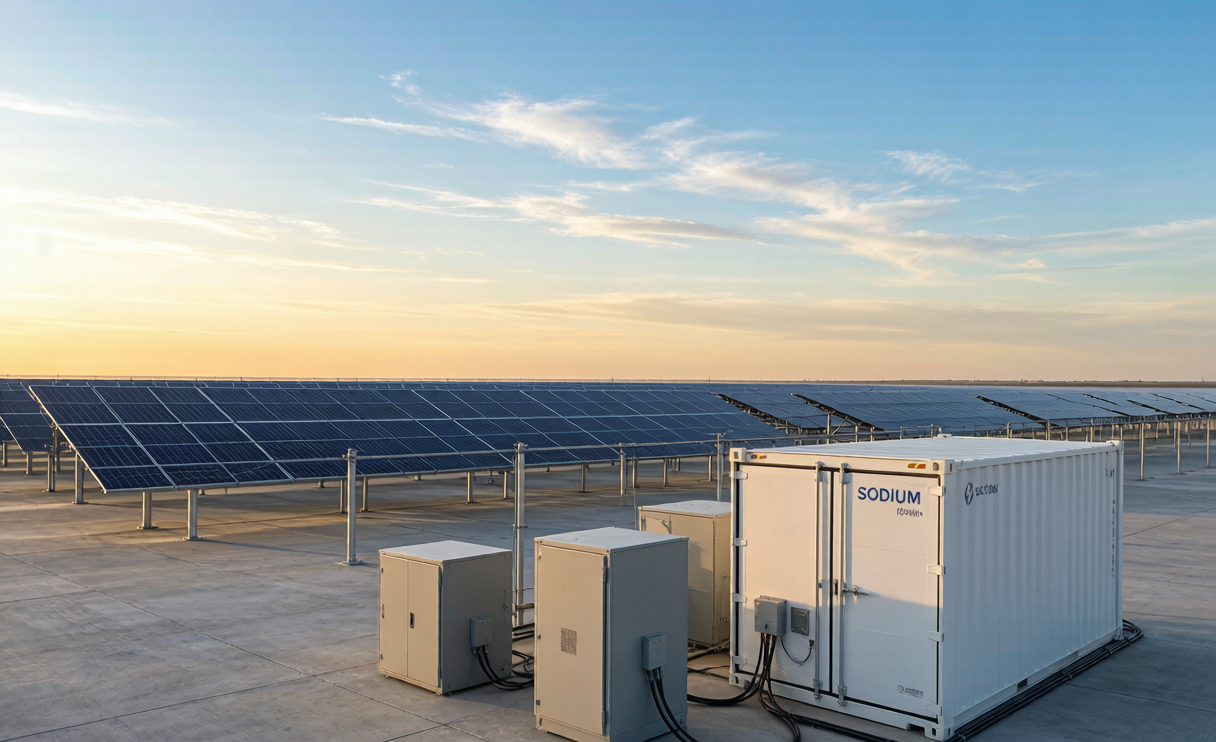
A utility-scale solar farm is a brutal, predictable duty cycle. The array pumps energy into the battery for roughly five to seven hours around midday, then the battery discharges into the grid through the evening peak. That is one deep cycle per day, every day, for fifteen or twenty years. A sodium-ion battery built for this profile behaves differently from a lithium pack, and the differences are not all disadvantages.
The first thing I tell developers is that grid storage does not care about energy density the way a drone or an e-bike does. A solar farm has land. A containerized battery system sits on dirt next to the inverters. What the farm cares about is cost per cycle, safety margin, calendar life, and how the pack behaves when the temperature drops or the grid gets cranky. Sodium chemistry answers several of those questions surprisingly well.
In our Horizon Power test program, we ran 280 Ah sodium cells through simulated one-cycle-per-day solar profiles at 30°C ambient. After 1,800 equivalent full cycles we measured 86% capacity retention. That is squarely in the range a 15-year project finance model needs, and it is why I now put sodium on the shortlist for solar farms instead of laughing it off.
Sodium-Ion vs Lithium on the Solar Farm Balance Sheet
Let me be direct about the numbers I see on real 2026 quotes. Finished sodium-ion cell pricing from qualified Chinese and European lines sits around USD 55–75 per kWh at the cell level. A comparable LFP lithium battery pack lands closer to USD 90–120 per kWh at the system level once you include the container, thermal management, and BMS. On a 100 MWh solar farm storage block, that cell-level gap is not pocket change — it can move the capital budget by several million dollars.
The trade-off is footprint. Sodium cells deliver roughly 130–160 Wh/kg versus 160–200 Wh/kg for LFP, and they are a bit larger per watt-hour. On a fixed land parcel, a sodium block may need 10–20% more container volume to deliver the same energy. For a greenfield solar farm with spare land, that is usually a non-issue. For a brownfield retrofit where every square meter is spoken for, it can tip the decision back toward lithium.
What surprises first-time buyers is the raw-material stability story. Lithium carbonate pricing has whipsawed for years, and nickel and cobalt carry supply-chain risk. Sodium uses sodium chloride — salt — which is about as geopolitically neutral a feedstock as exists. For a developer locking in a levelized cost of storage over two decades, that price predictability is part of the business case, not a footnote.
Energy Density, Footprint and the Container Tradeoff
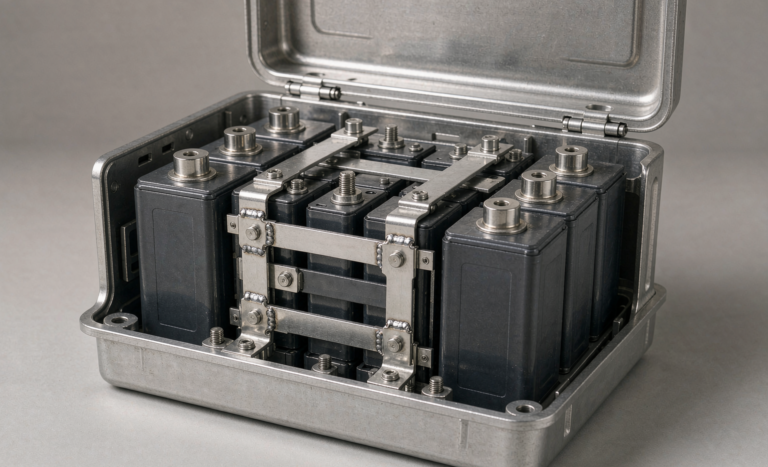
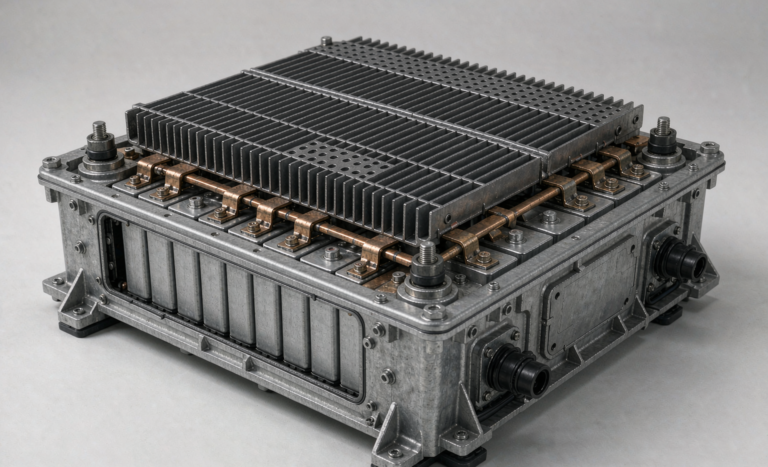
When we design a containerized battery energy storage system, or BESS, for a solar farm, we size the enclosure around three things: the cells, the thermal system, and the power-conversion equipment. Sodium’s lower energy density means more cabinets, but sodium’s higher tolerance for partial state of charge and its lower self-heating actually simplify the thermal design.
In our 20-foot container reference design, a sodium pack delivers about 3.7 MWh versus roughly 4.4 MWh for the equivalent LFP cabinet. To reach a 100 MWh block, you deploy about 27 sodium containers instead of 23 lithium ones. The extra four enclosures cost money in steel, land, and balance-of-system wiring — but that cost is often smaller than the per-kWh cell saving, which is why the all-in system price can still favor sodium on the right site.
One operational advantage I value as an engineer: sodium cells are far more forgiving of irregular charging. A solar farm does not produce a perfectly smooth charge curve — clouds roll in, inverters clip, the dispatch algorithm changes. Sodium tolerates these swings and irregular state-of-charge rest periods better than lithium, which reduces the balancer faults and maintenance calls that quietly erode a farm’s availability.
Cycle Life and Degradation Under Daily Solar Cycling
Buyers obsess over headline cycle counts, but on a solar farm the number that matters is delivered watt-hours at the real depth of discharge over the project life. Most farms cycle between roughly 10% and 90% state of charge, not a full 0–100% swing, and that shallower cycling extends life for both chemistries.
The degradation behavior is where sodium earns respect. LFP degrades slowly but can show sudden capacity cliffs near end of life in poorly managed packs. Sodium degrades more linearly, which makes end-of-life forecasting boring in the best possible way. When a project finance team can predict the exact quarter a block will cross its 80% threshold, they plan repowering as a scheduled capital event instead of an emergency. That planning discipline protects the project’s internal rate of return more than a single percentage point of round-trip efficiency does.
Round-trip efficiency is the honest weak spot. A well-built LFP BESS returns about 92–95% of the energy you put in. Sodium returns closer to 85–90%. On a solar farm that means slightly more of your midday generation is lost to conversion. At typical commercial feed-in economics, that efficiency gap offsets a portion of the capital saving, so the real economic crossover depends on your local energy arbitrage spread and how many cycles per day the dispatch actually runs.
Safety, Certification and Fire Codes for Grid Storage
No utility-scale buyer signs off without certification, and neither do I. Every pack Horizon Power ships — sodium or lithium — is built to UN38.3 for transport safety, covering the altitude simulation, thermal, shock, vibration, and forced-discharge tests required to move cells and packs by air, sea, and road. For intercontinental delivery of cells to the farm site, we validate the air-freight dangerous-goods build to IATA rules, which reference the same UN38.3 test summary that FAA and civil-aviation authorities recognize.
For the cells themselves we validate against IEC 62133-2, the international safety standard for portable secondary cells, and for the complete stationary storage assembly we certify to UL 1973 for stationary batteries and UL 9540A for the fire propagation test that most utilities and AHJs now require. The system-level energy-storage standard IEC 62933-5-2 and the installation fire code NFPA 855 round out the documentation pack a permitting engineer expects to see before a single container is set on the pad.
Sodium’s safety profile is genuinely better for this application. It has a higher thermal-runaway onset temperature and lower peak energy density than nickel-rich lithium, which reduces the probability and severity of a cascading container fire. Underwriters we have spoken with treat a certified sodium BESS as a lower-risk line item, which can ease the fire-suppression design requirements and, in some jurisdictions, the spacing between containers. Safety is not just a checkbox here — it shapes the entire site layout and the cost of insurance.
Cold-Climate Solar Farms: Where Sodium Wins Quietly
This is the application where I am most bullish on sodium. A solar farm in a cold region produces less in winter but still needs storage to shift that energy, and lithium hates the cold. Below 0°C an LFP pack loses meaningful capacity and charges slowly unless you waste energy heating it. A well-designed sodium ion battery retains 80–90% of its capacity at -20°C and accepts charge without aggressive internal heating.
During a winter field evaluation at a high-latitude site, our sodium pilot block delivered 93% of its rated discharge energy in a week where the ambient temperature sat at -18°C, while the LFP control block delivered 74% before the BMS throttled charging to protect the cells. For a solar farm counting on winter evening peaks, that 19-point gap is real revenue, not a lab curiosity. When the heating load you avoid is the difference between meeting your dispatch commitment and paying a penalty, sodium’s cold tolerance pays for itself.
Frequently Asked Questions
Is sodium-ion ready for utility-scale solar farms today?
Yes, for the right site. A sodium-ion battery utility solar farm is already a sound choice for greenfield projects with spare land, predictable one-cycle-per-day profiles, and cold or volatile-grid conditions. Several qualified manufacturers now ship containerized sodium BESS with full UL 1973, UL 9540A, IEC 62933, and NFPA 855 documentation. The chemistry is not a prototype — it is a maturing, certifiable option that trades some energy density and round-trip efficiency for lower capital cost, better cold performance, and raw-material stability.
How does a sodium-ion battery compare to lithium on cost per kWh?
At the cell level, sodium runs roughly USD 55–75 per kWh versus USD 90–120 per kWh for an LFP lithium battery system including container and thermal management. Sodium needs 10–20% more volume for the same energy, which adds balance-of-system cost, and its 85–90% round-trip efficiency is below lithium’s 92–95%. On most greenfield solar farms the lower capital and maintenance cost still wins; on land-constrained retrofits the math can flip back to lithium. The honest answer is site-specific.
What certifications does a grid-scale sodium-ion battery need?
At minimum: UN38.3 for transport, with IATA air-freight compliance for cell delivery; IEC 62133-2 for cells; UL 1973 and UL 9540A for the stationary battery and fire-propagation behavior; IEC 62933 for the energy-storage system; and NFPA 855 alignment for the installation fire code. Most utilities and authorities having jurisdiction will not permit a container on the pad without that full document set, so it should be part of the procurement specification, not an afterthought.
Can sodium-ion replace lithium in an existing solar farm?
Often yes, as a like-for-like repower or expansion. The 1000–1500 V DC architecture, PCS interfaces, and BMS communication protocols carry over, so integration cost stays low. The main adjustments are physical: sodium blocks are larger per watt-hour, so you need more pad space or you accept a slightly different energy rating. If your existing site is land-constrained, a hybrid approach — lithium for the space-tight block and sodium for the expansion — can capture the best of both.