Sodium-Ion Battery Energy Density Outlook
Every few months a new headline promises that the sodium-ion battery will close the gap with lithium overnight. After fifteen years on the bench — first with lithium iron phosphate, later commissioning sodium-ion pilot lines — I have learned to separate lab bragging rights from what a cell actually delivers inside a pack. The sodium-ion battery energy density outlook is genuinely encouraging, but the ceiling is set by chemistry, not marketing. In this article I will walk through the hard numbers I use when I advise procurement teams, the physics that caps sodium, and where the next five years are realistically headed.
Where Sodium-Ion Stands Today
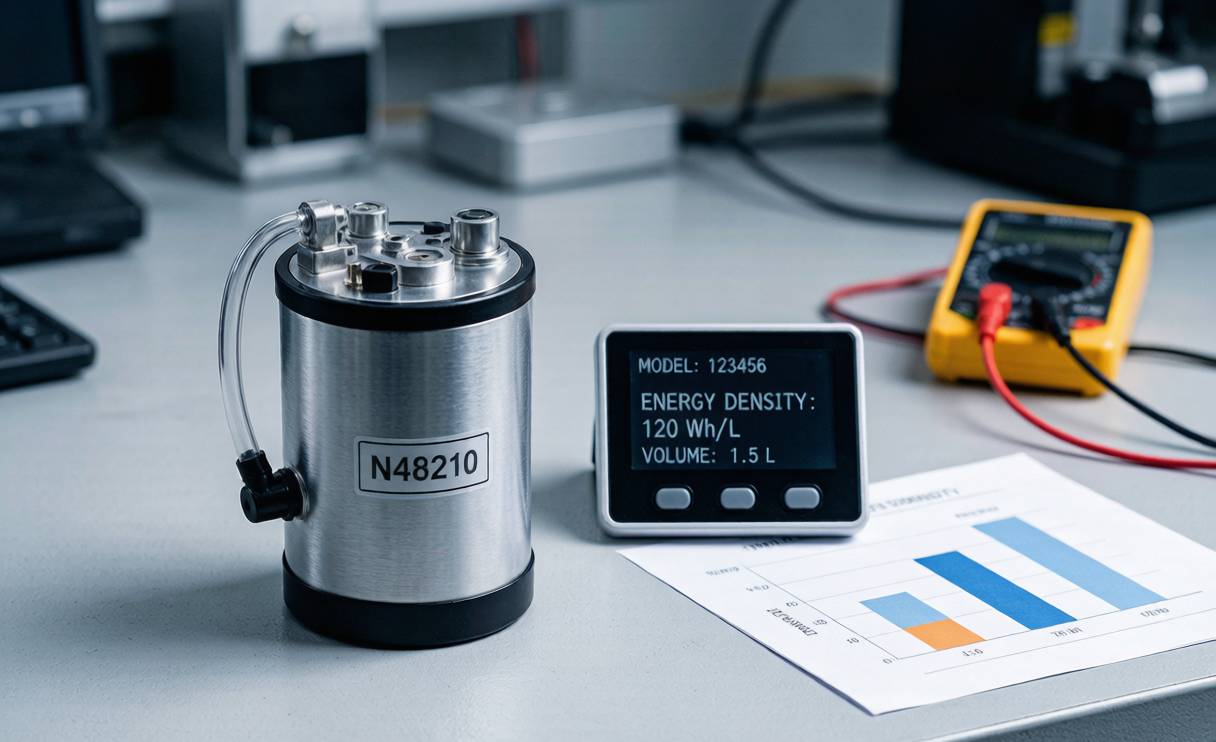
Let me start with the figures that actually ship. As of 2026, commercial cylindrical and prismatic sodium-ion cells land in a band of roughly 100–160 Wh/kg on a gravimetric basis, with the stronger production cells sitting near 155–160 Wh/kg. That is a wide but honest window, because cathode chemistry and formation yield vary heavily between lines. By comparison, good lithium iron phosphate (LFP) cells sit at 160–190 Wh/kg, and nickel-manganese-cobalt (NMC) packs reach 200–280 Wh/kg depending on nickel content.
When customers ask me whether sodium is “good enough,” I reframe the question around the application. For stationary storage, micro-mobility, and low-speed fleets, a sodium ion cell at 140 Wh/kg is more than adequate, and the safety and cost story is compelling. For long-range aviation or premium EVs, it is not yet the right tool. Volumetric energy density tells a similar story: sodium cells currently run about 250–300 Wh/L, while LFP reaches 350–450 Wh/L. You lose on both axes, but you gain on others I will cover below.
Why Sodium Is Heavier: The Fundamental Ceiling
The disadvantage is not a manufacturing shortfall — it is baked into the periodic table. Three facts dominate the energy-density math:
- Atomic mass. Sodium (22.99 g/mol) is roughly 3.3× heavier than lithium (6.94 g/mol). A sodium-ion cell must shuttle a heavier ion for every electron transferred.
- Ion size. The Na+ radius (~102 pm) is larger than Li+ (~76 pm), which constrains how tightly host structures can pack sodium.
- Cell voltage. Sodium’s standard potential (−2.71 V vs. SHE) is higher than lithium’s (−3.04 V), so a Na-ion full cell typically operates at 3.0–3.4 V versus 3.6–3.8 V for comparable lithium cells. Since energy = voltage × capacity, you start each cycle behind.
None of these are fixable with better quality control. They are the floor on the sodium-ion battery energy density outlook. The honest engineering answer is that we optimize around them rather than wish them away.
Hard Carbon Anodes and What They Cost Us
Graphite, the workhorse anode in lithium cells (372 mAh/g), does not reversibly intercalate sodium well. Instead we use hard carbon derived from biomass, pitch, or resins. Practical hard-carbon anodes deliver about 250–320 mAh/g, but with a catch: a large share of that capacity comes from “closed pore” adsorption at very low potential, which hurts first-cycle efficiency and adds irreversible loss. In my own formation trials, first-cycle coulombic efficiency for hard carbon averages 82–88%, versus 90–94% for graphite. That gap directly shaves usable cell energy.
Hard carbon also has lower tap density than graphite, so even when gravimetric capacity looks decent, the volumetric penalty bites. This is why a sodium-ion battery pack is almost always physically larger than an equivalent-energy lithium pack. For a home-energy-storage cabinet that is fine. For an under-seat drone payload, it is a constraint we design around with custom battery solution work.
Cathode Choices: Layered Oxides vs. Polyanions vs. Prussian Blue
The cathode is where most of the near-term density gains will come from, and the three families trade density for stability:
- Layered oxides (O3/P2). Highest practical capacity (120–160 mAh/g) and the backbone of most 2026 production cells. Sensitive to air/moisture, which complicates drying and raises cost if not handled in dry rooms.
- Polyanion compounds (e.g., NFPP). Lower capacity (~100–120 mAh/g) but superb thermal stability and cycle life. My favorite for stationary and forklift duty where density is secondary.
- Prussian blue analogs. Cheap and open-framework, but notoriously hard to make water-free, and residual sodium cyanide ligands are a compliance headache under transport rules.
For the highest-density roadmaps, layered oxides paired with optimized hard carbon remain the front-runner. I expect the best production cells to stay on that chemistry through 2030.
Cost and Supply Chain: The Real Sodium Advantage
Energy density gets the headlines, but in my weekly calls with B2B buyers the deciding factor is usually total cost of ownership and supply risk. Sodium is the eleventh-most abundant element in Earth’s crust and is extracted from seawater and standard brines without the geographic concentration that makes lithium and cobalt politically fragile. A Na-ion cell sidesteps nickel and cobalt entirely, which removes both the price volatility and the due-diligence burden of conflict-mineral reporting.
In pack economics, the cell-material saving only partially offsets the larger enclosure a lower-density chemistry needs. On a per-kWh basis at the pack level, sodium-ion is already competitive with LFP in 2026 and trends cheaper as volume scales. For a sodium-ion battery destined for a warehouse fleet or a solar buffer, the lower replacement rate from inherent safety often outweighs the extra steel in the cabinet. I would rather specify a slightly larger, cooler-running pack that passes UN38.3 and IEC 62619 on the first submission than chase the last Wh/kg.
How Energy Density Translates to Real Pack Weight
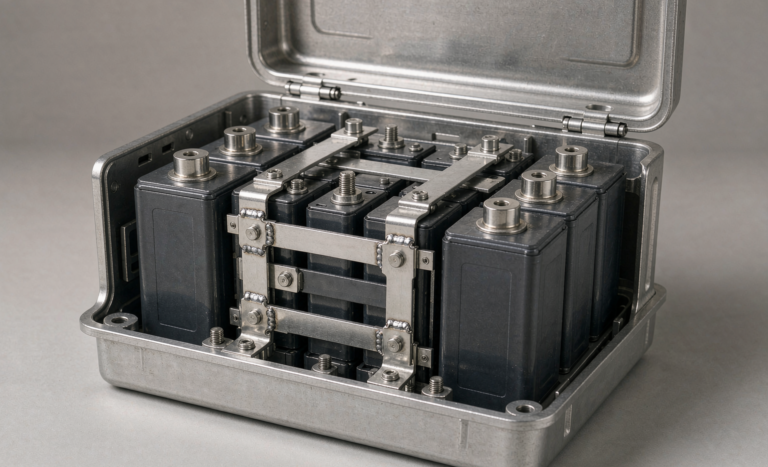
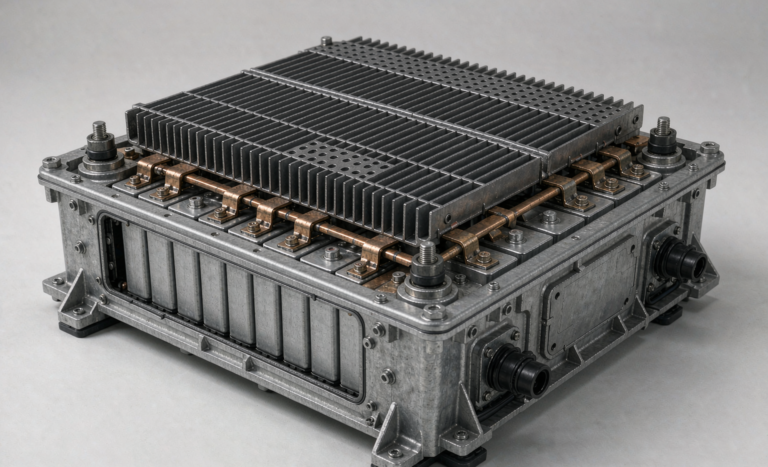
Cell numbers deceive people because the pack is heavier than the sum of cells. You must add the enclosure, the battery management system, busbars, thermal material, and the mandatory UN38.3-compliant safeguards. In a typical sodium-ion pack, cell-level energy represents about 75–82% of pack-level energy. So a 155 Wh/kg cell becomes a ~125 Wh/kg pack in practice.
Here is a concrete example I use with customers. Suppose a site needs 10 kWh of usable storage. With a sodium-ion pack at 125 Wh/kg, that is 80 kg of cells-and-pack. With LFP at 160 Wh/kg pack level, it is about 62 kg. The 18 kg difference is real, but it is also the difference between a pack that needs active liquid cooling and one that runs passively. When you add the cooling hardware, the sodium-ion system frequently ends up similar in total cabinet mass — and simpler to certify under IEC 62620 for stationary use.
This is where standards enter the conversation. Any pack we ship must clear UN38.3 (T.1–T.8: altitude simulation, thermal, vibration, shock, external short, impact, overcharge, forced discharge) and meet IEC 62133-2 for portable cells. Stationary units fall under IEC 62619 / IEC 62620, and North American installs typically want UL 1973. For air-carried modules, FAA and EASA guidance on spare batteries and state-of-charge limits still apply — and a lower-density chemistry that runs cooler actually makes those approvals easier to win.
The 2026–2030 Outlook: Roadmaps to 200 Wh/kg and Beyond
Here is my candid sodium-ion battery energy density outlook, grounded in what I see in pilot lines rather than press releases:
- 2026–2027: Volume production stabilizes at 140–165 Wh/kg. Yield and dry-room cost are the real battleground, not chemistry.
- 2028–2029: Improved layered-oxide cathodes plus higher-density hard carbon push leading cells toward 175–190 Wh/kg. Expect the first credible 200 Wh/kg lab-to-line transfers.
- 2030 and beyond: A realistic production ceiling sits near 200–230 Wh/kg gravimetric. Theoretical ceilings for ideal Na cathode/hard-carbon pairs approach ~260 Wh/kg, but those will stay in the lab for a long time.
The headline takeaway: sodium will not overtake NMC for energy, but it will comfortably surpass LFP within this decade in the best lines, while keeping a decisive cost and safety edge. For most of our B2B customers — storage, industrial vehicles, backup, and ruggedized field equipment — that trade is a clear win.
Frequently Asked Questions
Can sodium-ion batteries ever match lithium energy density?
Not the high-nickel lithium chemistries. Sodium’s heavier ion, larger size, and lower cell voltage impose a hard gravimetric ceiling. Realistic sodium-ion production cells will reach roughly 200–230 Wh/kg by 2030, which overtakes LFP but stays well below NMC. The right question is whether your application needs the extra density.
What is the highest sodium-ion cell energy density shipped today?
Leading 2026 production cells reach about 155–160 Wh/kg at the cell level, translating to roughly 125–135 Wh/kg at the pack level after enclosures and the BMS. Reputable suppliers publish third-party test data, which I always verify against IEC 62133-2 and UN38.3 results before specifying a cell.
Does lower energy density mean sodium-ion is inferior?
No. Lower density is only one axis. Sodium-ion offers lower material cost, abundant and geographically diversified raw supply, excellent low-temperature behavior, and a higher intrinsic safety margin. For stationary storage and many industrial duties, those advantages outweigh the weight penalty, and a cooler-running cell actually simplifies FAA/EASA and UN38.3 compliance.
How does cold-weather performance change the density trade-off?
This is sodium’s quiet superpower. Where LFP loses a large share of usable capacity near 0 °C, hard-carbon anodes retain far more of their capacity at low temperature. In cold-climate deployments, the effective year-round energy you can draw from a sodium-ion battery often beats a lithium pack on paper, because the lithium pack simply cannot deliver its rated Wh/kg when it is cold.