Battery Solution for Telecom Tower Sites: Engineering Reliable 48V Backup Power
I have spent the better part of a decade standing in muddy fields next to lattice masts, watching network engineers discover that their “backup battery” was the single point of failure in an entire coverage cluster. A battery solution for telecom tower site is not a generic box of cells you bolt to a cabinet and forget. It is a purpose-built power reserve that has to ride through grid outages, survive temperature swings, talk to the rectifier, and stay safe under abuse testing for a decade. As Karl Huang, Senior lithium battery Engineer at Horizon Power, I have spec’d, shipped, and field-troubleshot hundreds of these systems across climates from tropical coastal sites to high-altitude plateaus. This is the practical engineering playbook I wish every tower operator read before issuing an RFQ.
Why a Telecom Tower Needs a Purpose-Built Battery Solution
A modern macro site draws a surprisingly steady load. A typical 4G/5G remote radio unit, baseband, microwave backhaul, and climate control pulls anywhere from 600 W to 2.5 kW depending on configuration and climate. When commercial power drops, the battery solution telecom tower site must carry that load without a hiccup until the generator starts or the grid returns. The failure mode is brutal: a single dead string can take an entire sector offline, and in rural or remote deployments a tower may sit unattended for months.
Off-the-shelf consumer power banks simply are not engineered for this. They lack the cycle life, the thermal envelope, and the communications bus a telecom site demands. A proper custom battery solution treats the battery as a managed subsystem: it integrates with the site controller, reports state of health, and is sized against a documented load profile rather than a guess.
Step One: Sizing From a Real Load Audit, Not a Catalog Number
Every credible battery solution for telecom tower site begins with the load. I ask operators for a 24-hour power trace at the site, not a nameplate. From that trace we define two numbers: the sustained load in watts and the required autonomy in hours. Autonomy requirements vary by region — I have built sites with 4-hour reserves where generators are guaranteed within the hour, and 12-hour reserves for island grids where a storm can knock out power for half a day.
The math is straightforward but unforgiving. Required energy (Wh) = load (W) × autonomy (h) ÷ usable depth of discharge. For an LFP pack we design to 90% usable DoD, so a 1,200 W load with 8-hour autonomy needs roughly 10.7 kWh of nameplate capacity. I always add a 15% derate for aging and temperature, landing at about 12.3 kWh — which is why a 48V 250 Ah string is the workhorse in this class.
Chemistry Choice: Why LFP Owns Telecom Backup
For a battery solution telecom tower site, lithium iron phosphate (LFP) is the default choice, and the reasons are concrete. LFP delivers 3,000 to 6,000 cycles at 80% state of health, operates safely across −20°C to 60°C with mild thermal management, and carries intrinsic thermal stability that manganese or cobalt chemistries cannot match. In a sealed outdoor cabinet, that stability is not a nice-to-have; it is the difference between a safe site and a fire report.
The alternative operators still encounter is valve-regulated lead-acid (VRLA). Lead-acid is cheaper up front but loses half its capacity in two to three years of float cycling, hates heat, and needs replacement far too often for a remote mast. Over a 10-year horizon the total cost of ownership of an LFP lithium battery solution is consistently lower, and the truck rolls less.
System Architecture: 48V Strings, BMS and Rectifier Integration
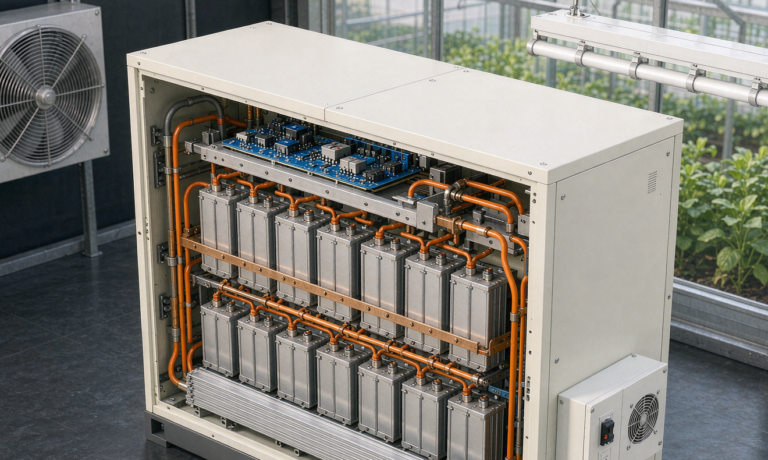
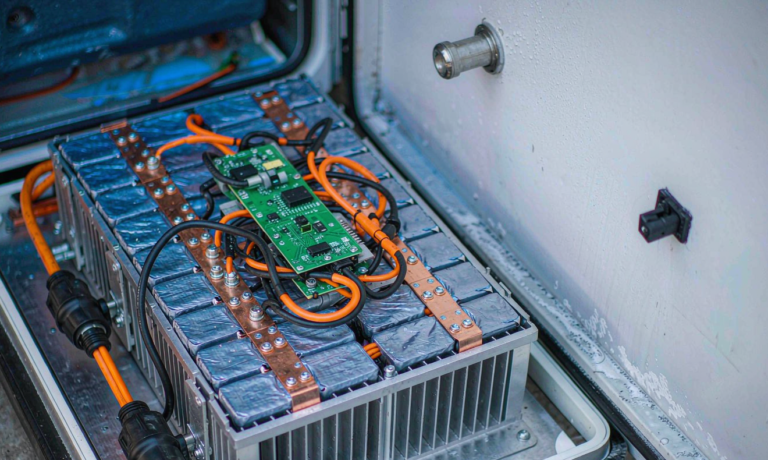
Most tower sites standardize on a 48V DC bus, which matches the telecom rectifier plant. We build the battery as series strings of 16 LiFePO4 prismatic cells (3.2V nominal each, 51.2V pack). This keeps cabling losses low and lets the existing rectifier treat the battery as a familiar 48V source.
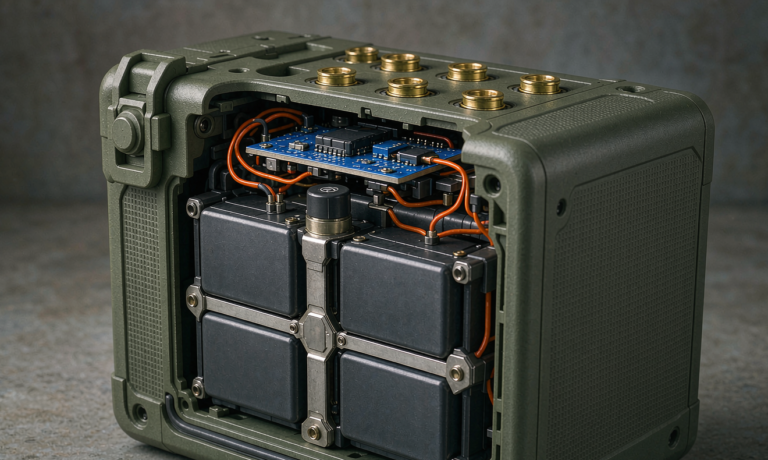
The brains are the battery management system. A telecom-grade BMS does more than protect against over-voltage and under-voltage. It balances cells continuously, logs cycle counts, and — critically — speaks to the site controller over RS485, CAN, or SNMP so the NOC can see state of charge and state of health remotely. As a battery solution provider, we always specify a communications protocol up front, because retrofitting a silent pack into a monitored network is a painful lesson operators should not have to learn.
Thermal Management, Enclosure and Site Hardening
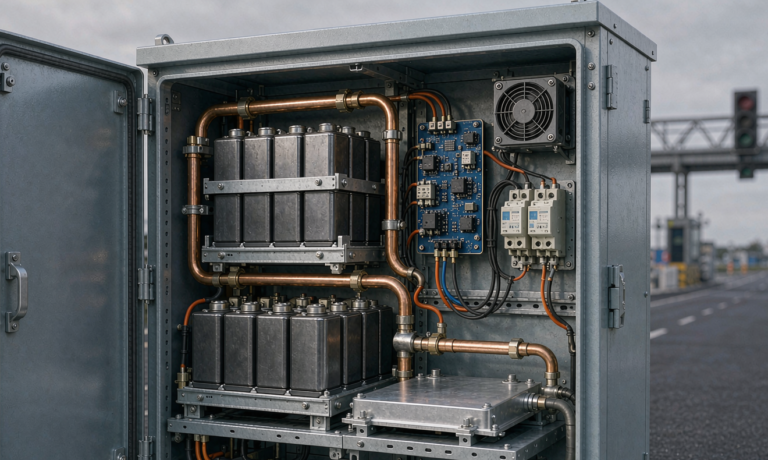
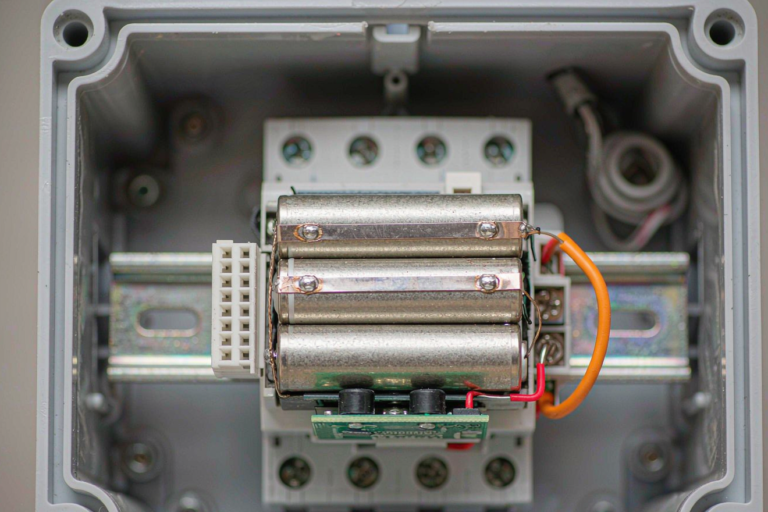
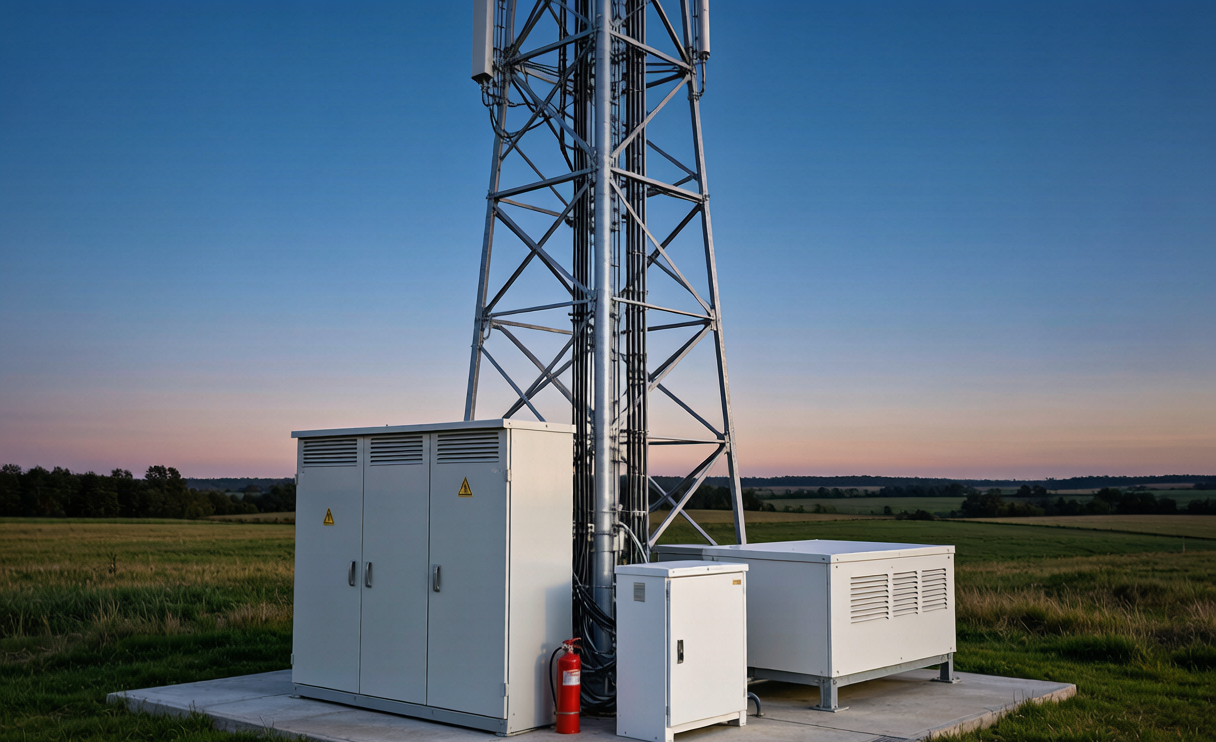
A battery solution for telecom tower site lives outdoors in a cabinet that bakes in summer and freezes in winter. We specify IP55 enclosures with passive ventilation plus a controlled heating element for sub-zero sites. The cells themselves are spaced for airflow, and we keep the BMS sense wiring away from high-current busbars to avoid noise. For coastal or industrial sites I spec conformal-coated PCBs and stainless hardware to fight corrosion — salt air will eat a cheap terminal in a season.
Theft is a real consideration in some regions. We have deployed locked, tamper-evident cabinets and even GPS-tracked packs for high-risk corridors. None of this is glamorous, but it is the difference between a system that survives its first year and one that gets written up in a failure report.
Compliance and What We Verify Before Shipment
Before any battery solution telecom tower site leaves our line, it goes through the same verification I apply to every industrial pack. Cells and packs carry UN38.3 test certification, which is the global baseline for safe transport of lithium batteries by air, sea, and road. We verify IEC 62133 compliance for the cell-level safety construction, and for the assembled system we test to IEC 62619 for industrial stationary use plus UL 1973 where the North American market is involved.
Because these packs ship internationally, transport compliance under IATA (and the FAA/EASA-aligned air carriage rules) is non-negotiable. I personally review the UN38.3 summary test report and the dangerous-goods declaration before release. A battery that cannot legally travel is not a solution; it is a liability sitting in a warehouse.
Field Results: What Good Engineering Buys You
The payoff of doing this properly is quiet reliability. On a recent deployment of 80 sites with a 12 kWh LFP battery solution per tower, we measured less than 0.5% pack failure in the first 18 months and zero thermal incidents. The operator cut generator fuel runs because the batteries absorbed short outages, and remote state-of-health reporting meant maintenance only rolled a truck when a pack actually needed attention. That is the entire point of a well-engineered battery solution for telecom tower site: it disappears into the background and lets the network stay up.
Frequently Asked Questions
How long should a telecom tower battery last during an outage?
It depends on your autonomy design, not on a fixed number. We size autonomy from 4 to 12 hours based on how fast backup generation or grid restoration arrives. The battery solution telecom tower site should be specified against that target with a 15% aging derate, not against the marketing figure on a brochure.
Can I retrofit an existing lead-acid site with lithium?
In most cases yes, and it is one of the highest-return upgrades available. A 48V LFP custom battery solution drops into the existing rectifier bus, but you should confirm the charger profile and replace or reprogram any lead-acid-only set points. We also add a BMS communications link so the site can actually monitor the new pack.
What certifications matter for a battery solution telecom tower site deployed internationally?
At minimum, UN38.3 for transport, IEC 62133 for cell safety, and IEC 62619 (or UL 1973) for the stationary industrial pack. Regional marks such as CE, FCC, and local telecom approvals apply depending on destination. I treat the UN38.3 summary test report as the first document any buyer should request.
How do I monitor battery health remotely?
Specify a BMS with RS485, CAN, or SNMP from day one. A properly instrumented battery solution for telecom tower site reports state of charge, state of health, temperature, and cycle count to the NOC, so degraded packs get flagged before they cause an outage rather than after.
If you are planning a rollout and want a battery solution telecom tower site engineered around your actual load profile rather than a catalog default, that is exactly the kind of custom battery solution we build at Horizon Power. Share your site power trace and autonomy target, and we will size, certify, and ship a system your field team can trust.