Lithium Battery for Data Center UPS Modernization
I’m Karl Huang, Senior lithium battery Engineer at Horizon Power. Over the past decade I have walked into more than forty data halls where the uninterruptible power supply (UPS) was the quiet liability nobody wanted to talk about. The valve-regulated lead-acid (VRLA) strings were swollen, the certified runtime had silently drifted, and the facilities team was already budgeting a forklift and a hazmat crew for the next replacement. This is exactly where lithium battery data center UPS modernization stops being a conference buzzword and starts paying for itself.
In this guide I will walk through what actually changes when you replace legacy VRLA with a properly engineered lithium battery system, the safety standards that are non-negotiable, and the total-cost math I use when a CFO asks me whether the upgrade is worth it. Everything here is drawn from field deployments, third-party cell testing, and the failure reports I have had to explain to anxious operations managers at 3 a.m.
Why Legacy VRLA UPS Is Quietly Failing Modern Data Centers
VRLA has been the default UPS energy storage for twenty years, and for good historical reasons: it is cheap per amp-hour and forgiving to specify. The problem is not the chemistry on day one. It is the chemistry on day 1,200. A typical VRLA string is rated for three to five years of float life, and that number collapses under the one condition data centers cannot avoid: heat.
Every 8–10°C above the 25°C reference roughly halves lead-acid life. In a hot aisle, a battery you expected to last four years is effectively a two-year consumable. Worse, VRLA fails gracefully in the worst possible direction — capacity fades while internal resistance climbs, so the first real symptom is often a runtime test that fails during a planned maintenance window.
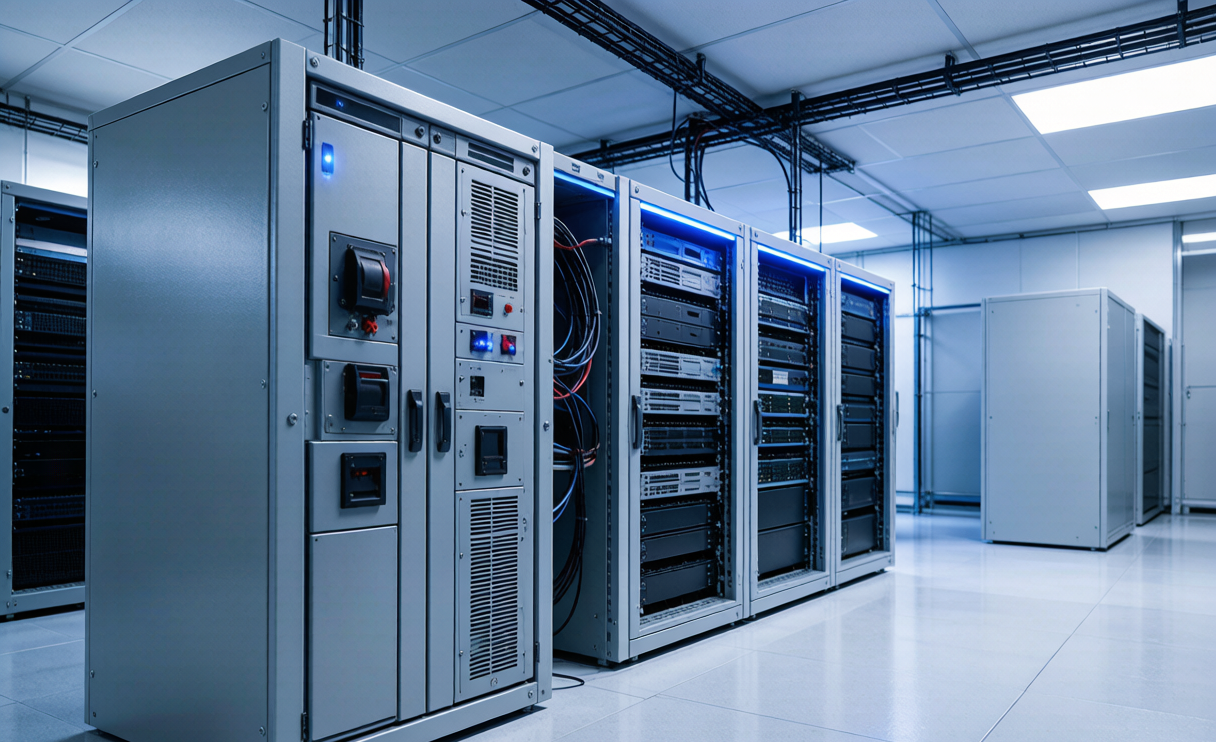
- A 500 kVA UPS sized for 15 minutes of ride-through can require 20–30 floor-standing VRLA cabinets.
- Those cabinets weigh 1,200–1,500 kg each and need a reinforced slab, a pallet jack, and two technicians to service.
- Replacement is a planned outage event, not a coffee break.
When you multiply that across a campus of halls, the “cheap” battery becomes a recurring capital and labor tax. This is the pain point that makes lithium battery data center UPS modernization a board-level conversation rather than a line item.
There is also a monitoring blind spot most operators discover too late. VRLA gives you almost no early-warning signal: a string can look healthy on a quarterly impedance scan and still collapse under a real load because the failure is localized to a single cell that the bank-level meter never sees. I have watched a “passed” battery bank drop a hall to bypass in under four minutes during a utility sag. That is the kind of event that ends up in an incident review, not a maintenance log.
What a lithium battery pack Actually Changes in the UPS Equation
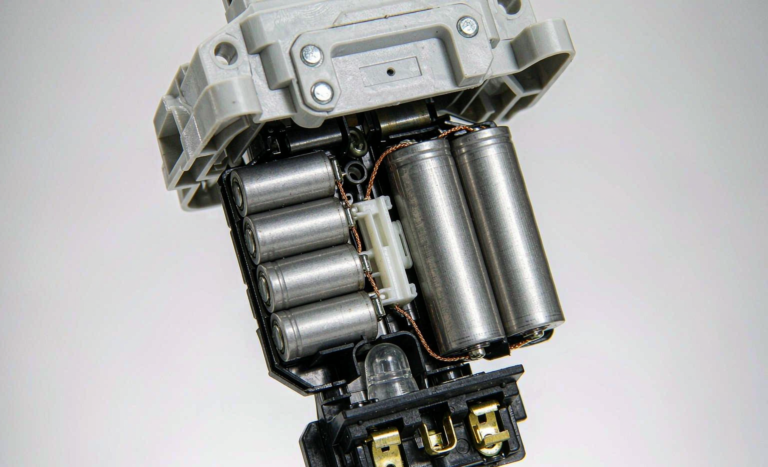
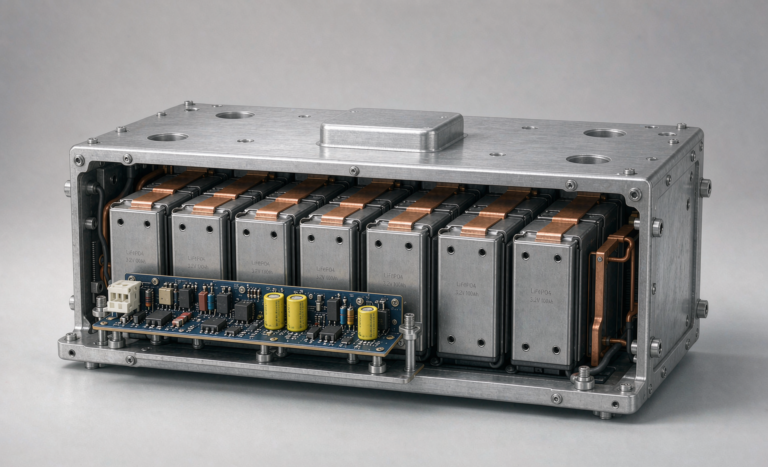
A modern lithium battery pack built on LiFePO4 (LFP) chemistry does three things that VRLA simply cannot match. First, energy density. You get roughly three to four times the usable energy per cubic meter, which means a cabinet footprint that is 60–70% smaller for the same runtime. Second, cycle life. Where VRLA gives you 300–500 deep cycles, a well-managed LFP pack delivers 3,000–6,000 cycles — realistically ten years or more in float-and-occasional-discharge UPS duty.
Third, and this is the one operators undervalue, is charge acceptance. After a utility event, a lithium system recharges to 90% state-of-charge in a fraction of the time a lead-acid bank needs, because it does not gas, stratify, or sulfinate. For a facility that sees frequent short dips, that recharge window is the difference between being ready for the next event and being caught flat.
- Weight drops to roughly one-third of an equivalent VRLA installation.
- Floor loading and seismic bracing requirements relax significantly.
- Usable depth-of-discharge in UPS duty is commonly 80–90% versus 30–50% for lead-acid.
Engineering a Safe Lithium UPS Cabinet: Standards You Cannot Skip
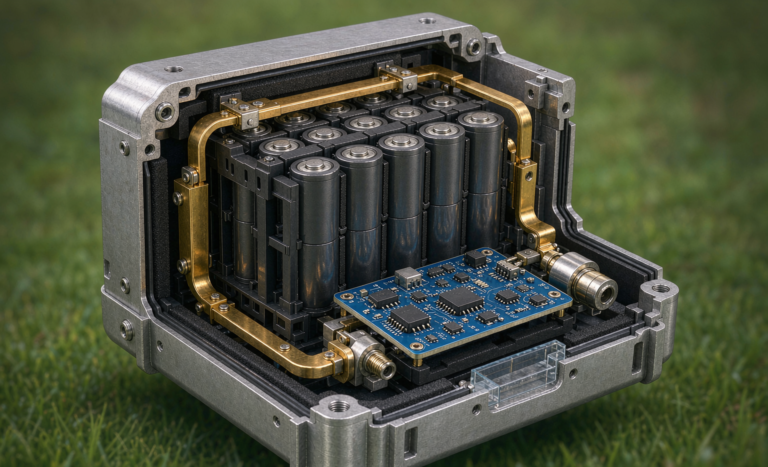
Anyone who tells you lithium is “just a drop-in” is selling something. A safe UPS cabinet lives or dies on the cell selection and the enclosure engineering, and the standards are clear. For an industrial stationary installation I specify to IEC 62619 for the cells, UL 1973 for the stationary storage system, and UL 9540A to characterize and contain thermal propagation. Installation spacing and room limits follow NFPA 855, while ongoing maintenance discipline is framed by IEEE 1188 and IEC 62485-5.
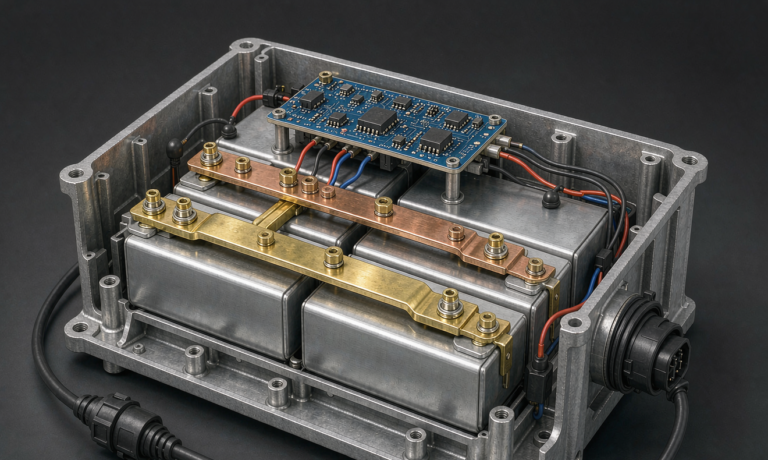
Transport into the building still runs through UN38.3, because a cell that cannot survive drop and crush testing has no business in your critical path. In the enclosure itself I insist on cell-level fusing, a steel barrier between modules, and a vent path that has been modeled, not guessed. Thermal runaway is not a question of if a single cell fails — it is a question of whether that failure stays a single cell. A properly engineered lithium battery cabinet is designed so the answer is yes.
The BMS Is the Real Reason We Trust Lithium
The single biggest reliability upgrade in any lithium battery data center UPS modernization project is not the cells. It is the battery management system (BMS). Every module in our packs carries a layered BMS that monitors per-cell voltage, temperature, and current, performs active balancing, and reports state-of-energy (SOE) and state-of-health (SOH) over CAN, Modbus, RS-485, or SNMP.
Contrast that with VRLA, where your only honest signal is a slowly climbing internal resistance that tells you failure is imminent rather than probable. With a BMS you get trend data months ahead of a problem, you can isolate a single weak module without taking the string down, and your DCIM platform finally has a battery feed that speaks its language. That visibility is what turns “battery” from a black box into a managed asset.
In practice this shifts maintenance from calendar-based guesswork to condition-based action. Instead of replacing every cabinet on a fixed three-year clock, you service the one module the BMS flagged at 88% SOH, and you keep the rest in service. Over a campus with hundreds of modules, that targeting alone recovers a meaningful slice of the modernization budget, and it removes the single largest source of unplanned battery downtime I see in legacy halls.
Designing a custom battery solution for Tiered Loads
Not every load deserves the same runtime, and a lazy design gives everything fifteen minutes because that was the default on the old spec sheet. In a modernization, I push clients toward a custom battery solution that tiers the load: a short ride-through (often 5–10 minutes) for an orderly, automated shutdown of non-critical racks, and a longer 15–30 minute window for the systems that must ride through a generator start and transfer. This right-sizing is where much of the payback hides.
- Modular rack design lets you add capacity in 5–10 kWh blocks as the hall grows.
- Front-access maintenance keeps service in the cold aisle and out of the data floor.
- Distributed architecture means a single cabinet fault degrades gracefully instead of tripping the bus.
The result is a battery plant that scales with the business instead of being re-spec’d every three years.
Total Cost of Ownership: When Modernization Pays Back
Yes, the capital expense of lithium is higher on day one — typically 1.5–2.5x the VRLA quote for the same nameplate runtime. But the operating expense story is where the CFO smiles. You eliminate two or three full replacements over a ten-year horizon, you reclaim valuable white space on the data floor, you cut the cooling load the batteries themselves used to demand, and you stop paying technicians to lug 1,400 kg cabinets.
In the deployments I have owned, simple payback lands in the three-to-five year window, and the ten-year total cost of ownership routinely comes in 30–50% below the lead-acid alternative. When you add the avoided risk of an unplanned runtime failure during peak load, the business case stops being about price per watt-hour and starts being about resilience per dollar.
Frequently Asked Questions
How long do lithium UPS batteries last compared to VRLA?
In typical UPS float-and-occasional-discharge duty, a LiFePO4 lithium battery pack delivers 10+ years or 3,000–6,000 cycles, versus 3–5 years for VRLA. The gap widens in warm aisles, where lead-acid life degrades exponentially with temperature.
Can a lithium retrofit work with my existing UPS inverter?
Often, yes. Most modern double-conversion UPS inverters accept the nominal 2V-per-cell or 12V-block equivalent that an LFP lithium battery cabinet presents, and the BMS handles charge-profile negotiation. The key is verifying the charger’s absorption/float setpoints and the inverter’s low-voltage disconnect behavior before cutover — I never skip that commissioning step.
Which fire-safety standards govern lithium UPS cabinets?
The core stack is IEC 62619 (cells), UL 1973 (stationary storage), UL 9540A (thermal propagation), and NFPA 855 (installation and quantity limits). IEEE 1188 and IEC 62485-5 govern ongoing inspection and maintenance. Any custom battery solution we ship is documented against all of these.
Is lithium safe in a hot data center aisle?
LFP is intrinsically more thermally stable than other lithium chemistries, and a properly engineered cabinet adds cell fusing, barriers, and a modeled vent path so a single-cell fault cannot propagate. The BMS continuously monitors temperature and isolates anomalies — far safer in practice than an aging VRLA bank quietly venting.
If you are planning a lithium battery data center UPS modernization and want a right-sized, standards-compliant custom battery solution built around your actual load tiers, our engineering team can model the payback and produce a cabinet layout that drops into your existing UPS. The chemistry is mature; the discipline is what makes it bulletproof.