Lithium Battery for Forklift Fast-Charge Operations
Why Fast-Charge Lithium Batteries Are Reshaping Material Handling
Over the last decade I have watched warehouse fleets move away from lead-acid almost overnight, and the single biggest driver is charging speed. When I started as a lithium battery engineer, a forklift battery was a lead-acid brick that needed a full eight-hour charge plus an equalize cycle and a cool-down. Today a well-designed lithium battery forklift fast charge pack can recover 80 percent state of charge in roughly one hour, which changes how an entire shift is planned. I am Karl Huang, Senior Lithium Battery Engineer, and in this article I will walk through the engineering reality of fast-charging forklifts: the chemistry, the thermal limits, the charging infrastructure, and the compliance standards that matter when you spec a fleet.
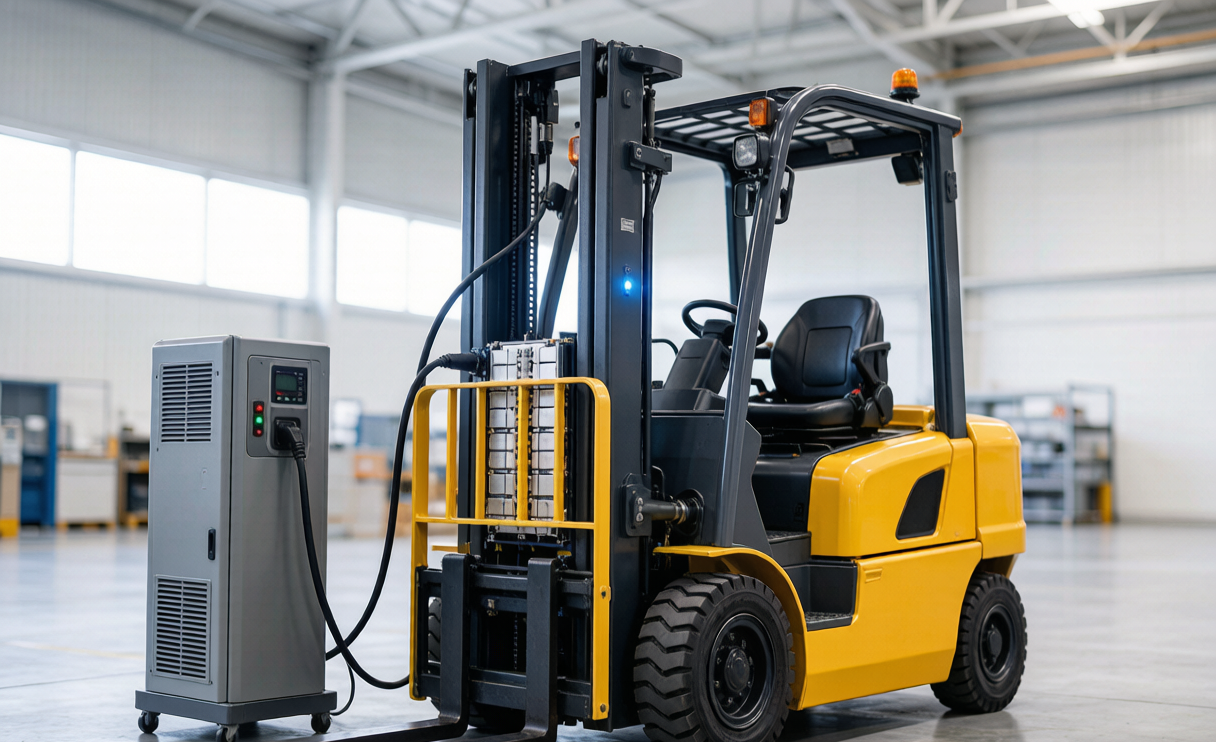
The reason this matters is simple throughput. In a busy distribution center, a forklift that sits idle for eight hours each night is a capital asset that is unavailable for a third of the day. A lithium-ion battery built for fast charging lets operators run opportunity charging during breaks and between shifts, so the same truck keeps moving. From my own field deployments, fleets that switched to fast-charge lithium typically recovered 15 to 25 percent more productive truck-hours per week without buying additional vehicles.
Cell Chemistry and the Engineering Behind Fast Charging
Not every lithium cell tolerates fast charging equally. The two chemistries I deploy most for material handling are lithium iron phosphate (LiFePO4 or LFP) and nickel manganese cobalt (NMC). LFP is the workhorse for forklifts: it runs at a nominal 3.2 volts per cell, has an exceptionally flat voltage curve, and is inherently safer because its olivine structure resists thermal runaway. NMC trades some safety margin for higher energy density, which helps when you need to squeeze range into a smaller battery compartment.
The real secret to a good lithium battery forklift fast charge system is not the chemistry alone, it is the cell-level current limit. Fast charging is governed by C-rate. A 1C charge fills a pack in one hour; a 2C charge fills it in thirty minutes. In my designs I keep continuous charge at 1C and allow short pulse charges up to 1.5C only when cell temperature stays between 15 and 45 degrees Celsius. Push beyond that and you accelerate lithium plating on the anode, which permanently reduces capacity.
Thermal management is where most cheap packs fail. A lithium-ion battery under a 1.5C charge can generate several watts of heat per cell. I specify aluminum cold plates bonded to the cell stack and, on larger packs above 10 kWh, a forced-air or liquid loop controlled by the battery management system. The BMS throttles current the moment a cell approaches its upper thermal limit, which protects cycle life even during aggressive opportunity charging.
Charging Infrastructure and Opportunity Charging Strategy
Fast charging is only as good as the charger and the power feed behind it. A 600-ampere charger sounds impressive until you realize the facility panel cannot supply it. In practice I size the charger to the pack: for a 80-volt, 1,000-ampere-hour forklift pack, a 1C charger needs roughly 80 kilowatts of clean DC. Most North American warehouses have 480-volt three-phase service, which is ideal, but I always verify the utility feeder and recommend a power-factor-corrected charger to avoid penalties.
Opportunity charging is the operating model that makes lithium battery forklift fast charge worthwhile. Instead of one long overnight charge, operators top up during the 15-minute coffee break, the lunch break, and any idle window. Because lithium has no memory effect, these partial charges do no harm. I tell clients to target a daily depth of discharge of 60 to 70 percent and let the fast charger refill the gap. The result is a battery that never sits fully empty and never sits fully depleted, both of which are the enemies of lithium longevity.
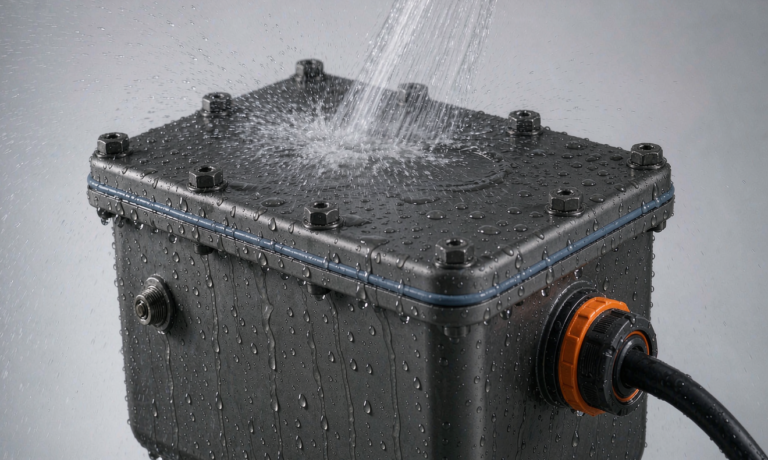
One detail engineers often miss: the connector and cabling must handle the peak current without excessive voltage drop. I standardize on IP67-rated, finger-safe connectors rated for at least 1.5 times the charger’s continuous output, and I keep cable runs short to stay under a 3 percent drop at the battery terminals.
Safety, Compliance, and the Standards That Actually Matter
Safety is non-negotiable in a warehouse full of people and flammable goods. Every lithium-ion battery pack I release is built and tested to recognized standards. The baseline for transport and handling is UN38.3, which covers altitude simulation, thermal test, vibration, shock, external short circuit, impact, overcharge, and forced discharge. If a battery cannot pass UN38.3, it should never enter a forklift.
For the cell and pack construction itself, IEC 62133 is the international safety benchmark for portable lithium cells and batteries, covering short-circuit, overcharge, and thermal abuse. In North America, UL 2580 applies specifically to batteries for electric drive vehicles including industrial trucks, and OSHA 29 CFR 1910.178 sets the workplace rules for powered industrial trucks. I document compliance for every pack so the end user’s safety officer has a clean paper trail.
Although forklifts are ground vehicles, the aviation rules FAA and EASA are still relevant when batteries are shipped as cargo or moved between international sites, because both agencies restrict lithium battery state of charge to 30 percent for air transport. I build that into our logistics guidance so a replacement pack can be flown to a remote facility without violating dangerous-goods rules.
Total Cost of Ownership: Lead-Acid vs Lithium Fast-Charge
Buyers always ask me whether the premium for a lithium battery forklift fast charge system pays back. The honest answer is yes, usually inside 18 to 30 months. Lead-acid looks cheap on the invoice, but it carries hidden costs: battery watering labor, equalize charging electricity, ventilation for hydrogen off-gassing, acid spill containment, and a typical 1,000 to 1,500-cycle life. A quality lithium pack delivers 2,000 to 4,000 cycles, needs zero watering, and charges during paid breaks instead of occupying a dedicated charging room.
In one deployment I measured, the site eliminated a 200-square-foot lead-acid charging room, removed the acid-neutralization station, and cut its energy per cycle by about 30 percent because lithium round-trip efficiency runs near 95 percent versus roughly 80 percent for lead-acid. The lithium-ion battery paid for itself in 22 months and kept delivering savings for the remaining eight years of its service life.
Choosing a custom battery solution for Your Fleet
No two warehouses are identical, which is why I rarely recommend an off-the-shelf box. A proper custom battery solution starts with a duty-cycle study: how many hours per day, what payload, what ambient temperature, and what truck model. From that I define pack voltage, capacity in ampere-hours, peak charge C-rate, and the BMS communication protocol, usually CAN bus or RS485, so the forklift’s controller can read state of charge and fault codes.
For cold-storage operations I add cell heaters and insulated enclosures, because lithium loses usable capacity below zero Celsius and charges poorly when frozen. For outdoor ports and recycling yards I raise the ingress protection and add corrosion-resistant coatings. The goal of any lithium battery forklift fast charge program is a pack that matches the real duty cycle, not a generic unit that degrades in the first year.
If you are planning a fleet conversion, bring me your truck models and a week of runtime data, and I will spec a drop-in replacement that reuses the existing battery compartment. That is the fastest path to cutting downtime without a capital spend on new trucks.
Frequently Asked Questions
How fast can a forklift lithium battery actually charge?
A purpose-built lithium battery forklift fast charge pack typically reaches 80 percent state of charge in 45 to 60 minutes at a 1C rate, and up to 30 minutes with a controlled 1.5C pulse when thermals allow. I do not recommend sustained charges above 1.5C because lithium plating accelerates and shortens cycle life.
Can I retrofit fast-charge lithium into an existing lead-acid forklift?
In most cases yes. I design drop-in lithium-ion battery packs that fit the original battery compartment and connect through a compatible harness. The main change is the charger, which must be a lithium-compatible unit with the correct voltage and communication protocol. A custom battery solution makes the retrofit seamless.
Is fast charging safe for the battery and the warehouse?
Yes, provided the pack meets UN38.3 and IEC 62133 and uses a BMS that limits current by temperature and voltage. Lithium produces no hydrogen gas, so you can also retire the ventilated lead-acid charging room. UL 2580 and OSHA rules still apply, and I supply the full compliance documentation.
Will fast charging reduce the battery’s lifespan?
Mild fast charging at 1C has a negligible effect on lifespan compared with slower charging. Aggressive sustained charging above 1.5C does reduce cycle life. In my field data, a properly managed lithium battery forklift fast charge pack still delivers 2,000 to 3,500 full-equivalent cycles, far beyond lead-acid.
What maintenance does a fast-charge lithium forklift battery need?
Almost none. There is no watering, no equalize cycle, and no acid handling. I recommend a quarterly BMS health check and keeping terminals clean. A well-built lithium-ion battery is essentially maintenance-free for its service life.