Semi-Solid State Battery Cost Optimization for EV Packs
When procurement teams ask me to price an EV pack, the conversation almost always starts and ends at cell-level $/kWh. After fifteen years building lithium packs — from inspection UAVs to passenger EV modules — I have learned that the cell sticker price is the least interesting number in the binder. The real economics of semi-solid state battery cost optimization ev packs live three layers down: in the electrolyte chemistry, in the factory you do not have to build, and in the pack enclosure you no longer need. This article walks through the cost model I actually use when a vehicle program asks Horizon Power to quote a custom battery solution around semi-solid cells, and the same discipline carries straight over to our high-energy drone battery programs.

Why Semi-Solid Changes the Cost Equation
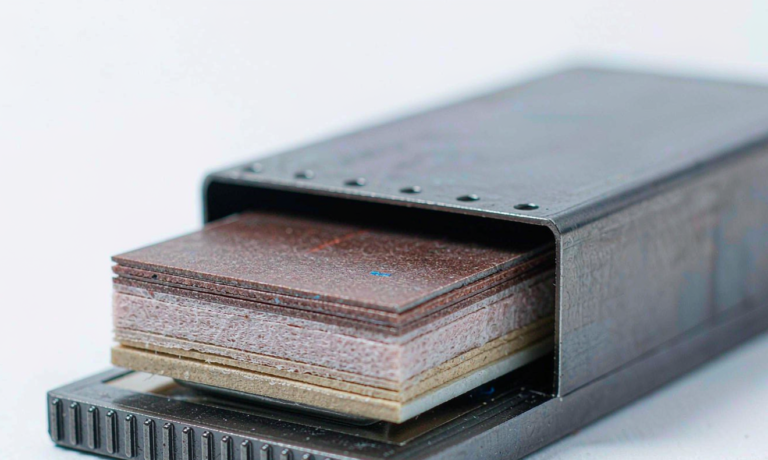
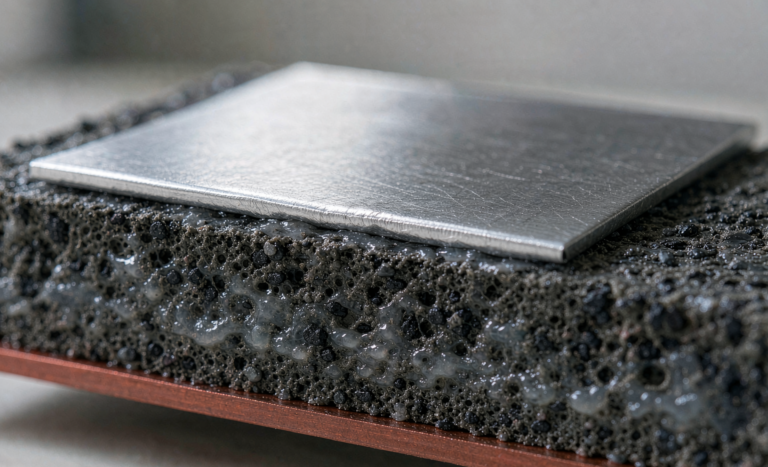
A semi-solid state battery is not a marketing halfway house between lithium-ion and full solid-state. It is a deliberate engineering trade: you replace most of the liquid electrolyte with a gel or polymer-ceramic quasi-solid membrane, keep a wetting agent for interfacial contact, and retain the roll-to-roll, slurry-coated cell architecture that the industry has spent two decades perfecting. That single decision — keep the line, change the electrolyte — is what makes the cost curve bend.
Where a full solid-state battery forces you into sulfide/dry-room processing, thin-film vapor deposition, or high-pressure sintering (each a capex and yield nightmare), semi-solid lets you coat a slightly different slurry on the same coater. The energy-density payoff is real — 300–360 Wh/kg at the cell, 220–260 Wh/kg at the pack — but the cost payoff is the quieter story, and it is the one that gets signed off.
Cell Material Cost — Less Cobalt, Less Solvent, More Silicon
The quasi-solid electrolyte cuts solvent mass by roughly 40–60% versus a conventional liquid cell. Solvent is not free, but the bigger lever is what the improved interfacial stability allows upstream. Because the gel membrane tolerates higher anode loading, my designs lean on silicon-blended anodes (up to 10–15% Si) and low-cobalt NMC (NMC 622 or 712), trimming cathode cobalt from ~12% toward ~5–8% without the dendrite anxiety that pure Li-metal anodes still carry.
On a 75 kWh passenger pack, moving from NMC 811 to a low-cobalt NMC with a semi-solid electrolyte and 12% silicon anode saves on the order of $180–320 in raw cathode and anode material at 2025 commodity prices, before you count the solvent reduction. None of this requires exotic supply chains — the cobalt and nickel are the same grades already flowing into existing gigafactories. That supply familiarity is itself a cost control: no qualification premium, no single-source risk.
Manufacturing Capex — Reusing the Li-ion Gigafactory
Here is the number program managers underestimate. A greenfield full-solid-state line is commonly quoted at 2.0–3.5× the capex of a comparable lithium-ion line, driven by dry rooms, inert-gas handling, and deposition tooling. A semi-solid line runs at roughly 0.9–1.1× the capex of a standard NMC line because the cell-forming and winding/stacking steps are unchanged. The only new capital is in the electrolyte mixing and coating head.
I tell EV clients bluntly: if your volume is below the millions-of-cells threshold where a dedicated solid-state line amortizes, semi-solid is the only “next-generation” chemistry that reuses the capacity you or your supplier already paid for. The depreciation that is already sunk keeps your $/kWh from carrying a second factory. For Horizon Power’s custom battery solution programs, this single fact has closed more quotes than any spec sheet.
Pack Integration Savings — Density Compounds Downstream
Energy density is a pack-level multiplier, not a cell-level trophy. Because semi-solid packs land at 220–260 Wh/kg versus ~160–190 Wh/kg for NMC and ~140–170 Wh/kg for LFP, the same usable kWh needs fewer cells, a smaller enclosure, fewer busbars, and a lighter structural tray.
Worked example: a 90 kWh pack. At NMC’s ~175 Wh/kg pack level you need about 514 cells of a given format; at semi-solid’s ~240 Wh/kg you need about 375 — a 27% reduction in cell count. That is 27% fewer laser welds, 27% fewer sense wires, a smaller BMS channel count, and a tray that weighs 12–18% less. Every one of those line items is a cost line. My rule of thumb: higher cell density saves 8–14% on pack overhead ($/kWh of enclosure, interconnect, and BMS hardware) independent of the cell price.
Thermal and Safety Overhead — Where the Quiet Savings Sit
The quasi-solid membrane raises thermal-runaway onset by roughly +30–50 °C versus liquid cells and halves the peak dT/dt during abuse. That safety margin is not just a compliance checkbox — it is a cost lever. A pack with a wider thermal envelope can use a lighter cooling plate, a smaller flame-arrestor budget, and a simpler pressure-relief architecture. Against standards like GB 38031, ECE R100, UL 2580, IEC 62133-2, and IEC 62619, the semi-solid pack passes with a thinner protection stack.
Transport is the other quiet saving. Cells qualified under UN38.3 T.1–T.8 and moved under IATA Section II (under 100 Wh per cell, under 35 kg gross) avoid the Class 9 premium handling that full solid-state pilot lines often trigger during early shipments. For an EV program spinning up pre-production builds, that is real freight and insurance money.
A Worked Cost-per-Usable-kWh Model
I never quote a pack on nameplate $/kWh. I quote on cost per usable kWh over the warranty life — call it cU, in $/(kWh·year) or $/usable-kWh. The model has four terms:
- Cell material + manufacturing amortization — typically $70–110/kWh at cell today, trending to $65–85/kWh as semi-solid scale matures through 2028.
- Pack integration overhead — enclosure, busbar, BMS, cooling: $18–28/kWh, pulled down 8–14% by the density advantage.
- Thermal/safety stack — $6–12/kWh, reduced by the wider runaway margin.
- Lifecycle derate — semi-solid delivers 800–1500 cycles at 80% retained capacity; divide total pack cost by usable kWh across that life to get the true cU.
For a 90 kWh pack at $95/kg cell, $22/kWh overhead, $9/kWh safety, and 1,200 usable cycles, the all-in pack cost lands near $11,200 and the cost per usable kWh-year over an 8-year warranty is roughly $1.17 — competitive with LFP on lifecycle cost while beating NMC on both range and pack mass. That is the number that survives a CFO review.
Supply Chain and Qualification Risk — The Hidden Cost Avoided
The cost everyone forgets is the cost of not being able to ship. Full solid-state pilot lines frequently strand programs on qualification cliffs: a new chemistry means a new UN38.3 T.1–T.8 dossier, fresh IEC 62133-2 and IEC 62619 testing, re-validation against GB 38031 and ECE R100, and a supplier audit every OEM treats as a six-to-nine-month event. Each of those delays is a line item — idle engineering, slipped launch, and often a fallback NMC pack designed in parallel as insurance. We see the same pattern shrink dramatically on the aviation side, where a semi-solid drone battery clears IATA Section II transport and FAA/EASA air-worthiness evidence far faster than an exotic solid-state cell ever could.
Because semi-solid keeps the same cathode, anode, and cell formats, the qualification package is an evolution, not a revolution. We reuse most of the existing test evidence and supplier certifications, which typically trims 30–50% off the requalification calendar and removes the parallel-fallback cost. For an EV program on a fixed launch date, that schedule certainty is frequently worth more than the last $3/kWh of cell price. It is also why, when a client asks Horizon Power for a custom battery solution, I lead with the qualification plan before the BOM — the BOM is the easy part.
Where the Optimization Stops — Honest Limits
I would be doing you a disservice if I implied semi-solid wins every column. On raw nameplate cell $/kWh today, mature LFP still undercuts it, and on absolute cycle life, LFP’s 2,000–3,000 cycles beat semi-solid’s 800–1,500. The optimization case is therefore duty-cycle specific: it is strongest for programs where pack mass, range, and fast-charge headroom carry a premium, and weaker for stationary or price-only fleets where LFP’s longevity dominates. Knowing which side of that line your program sits on is the first step of any honest cost model, and it is the question I always put to a client before quoting.
FAQ
How does semi-solid state battery cost compare to full solid-state?
Semi-solid reuses existing Li-ion gigafactory lines, so its manufacturing capex is roughly 0.9–1.1× a standard NMC line. Full solid-state typically needs 2.0–3.5× the capex for dry rooms, inert handling, and deposition. At today’s volumes, semi-solid is materially cheaper to produce at scale.
Is semi-solid cheaper than NMC lithium-ion for EV packs?
On cell nameplate price, NMC is still marginally cheaper today. But once you add pack integration, thermal overhead, and lifecycle cost, semi-solid’s higher density and safety margin close or reverse the gap — and it delivers 15–25% more range for the same pack mass.
What drives the capex advantage over full solid-state?
The cell architecture is unchanged: you coat a quasi-solid electrolyte slurry on the same coater, wind or stack the same way, and form in the same chambers. Only the electrolyte mixing and coating head are new capital. No dry room, no vapor deposition.
How do I model a custom battery solution cost for my EV program?
Quote on cost per usable kWh over warranty life, not nameplate $/kWh. Sum cell material + manufacturing amortization, pack integration overhead, thermal/safety stack, then divide by usable kWh across the cycle life (800–1500 cycles for semi-solid). Validate against UN38.3 T.1–T.8, IEC 62133-2, and GB 38031 before signing.
When will semi-solid reach price parity with LFP?
On nameplate cell $/kWh, parity is likely late this decade as scale improves yields. On lifecycle cost per usable kWh — the metric that matters for fleets — semi-solid is already competitive today where range and pack mass carry a premium.
Conclusion
Semi-solid state battery cost optimization ev packs is not about chasing the lowest cell price; it is about bending the cost curve at four points the spec sheet ignores — material mix, factory reuse, pack density, and thermal overhead. For vehicle programs that need next-generation range without next-generation factory risk, it is the most defensible engineering and economic choice on the table, and the same logic helps us price a high-energy drone battery against its duty cycle. If your team is scoping a custom battery solution and wants a worked cost model against your own duty cycle, that is exactly the kind of quoting problem we solve at Horizon Power.