Semi-Solid State Battery Pre-Lithiation Methods
Every semi-solid state battery I have built on the pilot line loses a measurable slice of its lithium during the very first charge. As a senior lithium battery engineer, I have watched coulombic efficiency on the formation cycle land at 85 to 92 percent for cells that pair a silicon-rich or lithium-metal anode with a composite electrolyte. That missing 8 to 15 percent never comes back, and it silently shrinks the usable capacity the customer pays for. Pre-lithiation, the act of adding a controlled lithium supplement before the cell is sealed, is the single most effective fix I know for this first-cycle loss. In this article I explain why the loss happens, the methods we use at Horizon Power to compensate it, and how to dose the supplement so you gain cycle life without compromising safety.
Why First-Cycle Loss Demands a Lithium Supplement
The root cause is the solid electrolyte interphase, or SEI, that forms on the anode during the first lithiation. In a graphite anode the SEI consumes roughly 8 to 12 percent of the available lithium as a one-time irreversible cost. Push the anode toward silicon, which a semi-solid composite film tolerates well, and that irreversible draw climbs to 15 to 25 percent because silicon’s immense volume swing keeps cracking and re-forming the interface. With a lithium-metal anode the problem flips: you start lithium-rich, yet side reactions with the semi-solid electrolyte still trap 5 to 10 percent of active metal as dead lithium. Any of these paths leaves the positive electrode holding lithium that the negative side can no longer balance. The cell then operates with an effective negative-to-positive capacity ratio below the design point, and the voltage window drifts toward plating. A lithium battery that loses its balance on day one ages badly, and the customer sees it as a defective product rather than chemistry behaving as expected.
Stabilizing the Composite Anode with Excess Lithium
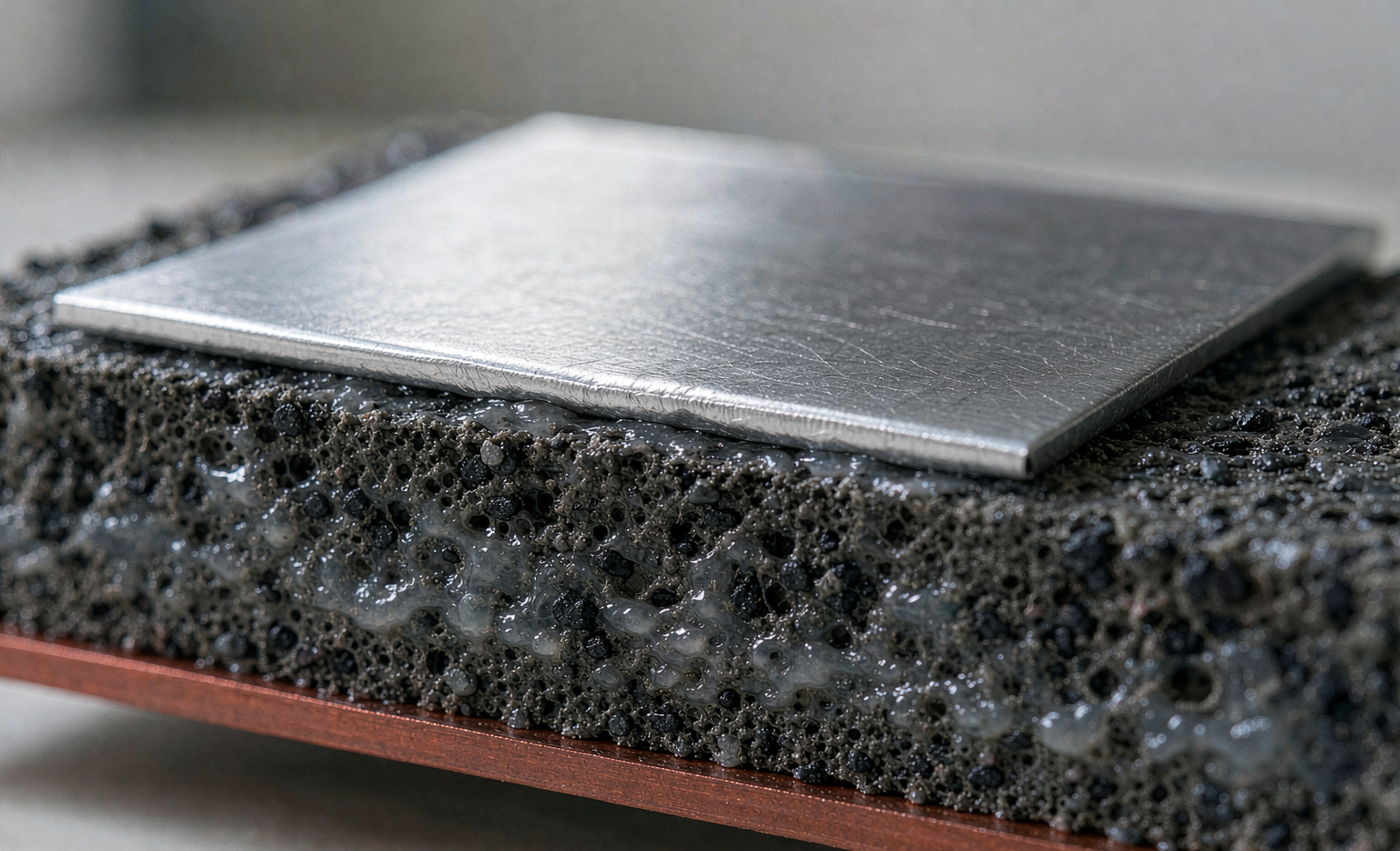
Pre-lithiation restores the balance by injecting extra active lithium equal to the irreversible loss plus a small margin. On a semi-solid state battery we treat the anode as the side that needs topping up. For a graphite composite we add just enough to refill the SEI budget. For a silicon-composite anode the supplement must cover both the SEI and the trapping sites inside the expanded silicon network, so the dose is several times larger per ampere-hour. For a lithium-metal anode the goal is different: we add a thin, uniform lithium layer so that the dead-lithium fraction formed on first cycle leaves a healthy live reservoir. The mechanism is simple to state and hard to execute. The supplement must be evenly distributed, chemically clean, and added at a stage where it cannot react with ambient moisture before the cell is sealed. At Horizon Power we decide the anode chemistry first, then size the supplement against measured first-cycle loss rather than a textbook average.
Common Pre-Lithiation Methods
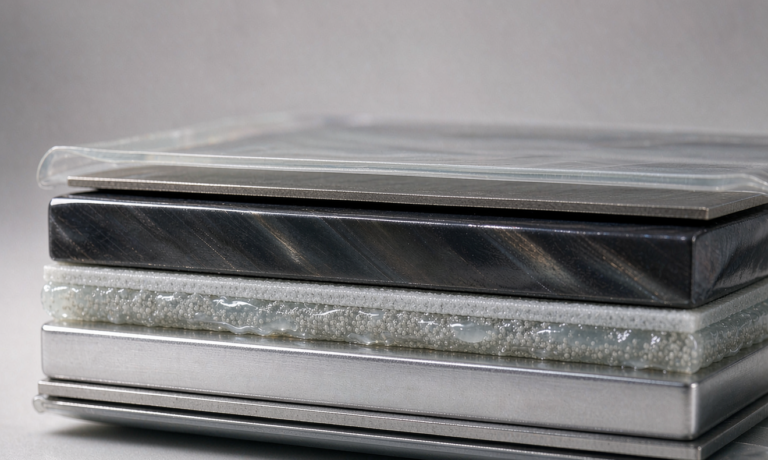
Four methods see real production use, and each trades control for cost. The first is lithium-foil contact, where a calendered anode stack is briefly laminated against lithium metal so the anode absorbs lithium through short-circuit-free diffusion. It is cheap and intuitive but hard to dose uniformly. The second is stabilized lithium metal powder, often called SLMP, sprinkled or coated onto the anode before stacking; the powder is passivated so it handles in air, then activates on first charge. This is our default for pilot runs because the dose is meterable. The third is a sacrificial lithium-containing cathode additive that releases lithium during formation and is later inert; it keeps the anode untouched but dilutes energy density. The fourth is electrochemical pre-lithiation in a temporary cell, which gives the tightest control of all but adds a process step and recycles the lithium source. For a semi-solid state battery built on a composite film, SLMP and foil contact integrate most cleanly with our existing coating and stacking lines, while electrochemical dosing earns its place only on premium cells where every milliamp-hour counts.
Engineering the Lithium Supplement Dose
Dosing is where engineering replaces guesswork. I start from the measured first-cycle irreversible capacity of the bare anode, expressed in milliampere-hours per gram, and multiply by the anode loading in grams per ampere-hour of cell capacity. To that I add a margin of 3 to 5 percent to cover lot-to-lot variation in the composite electrolyte and the anode. The result is the supplement in milliampere-hours that the anode must receive. I then convert to a physical dose: for SLMP at about 3.6 milliampere-hours per milligram, a 20 ampere-hour cell needing 12 percent supplement takes roughly 67 milligrams spread across the anode area. I keep the design N/P ratio at 1.05 to 1.12 after supplement, never below 1.0, because a negative electrode that runs short invites lithium plating on the next cycle. A lithium battery designed this way holds its capacity because the supplement pays the SEI tax up front instead of stealing it from the customer’s usable window.
Integrating Pre-Lithiation into Semi-Solid Manufacturing
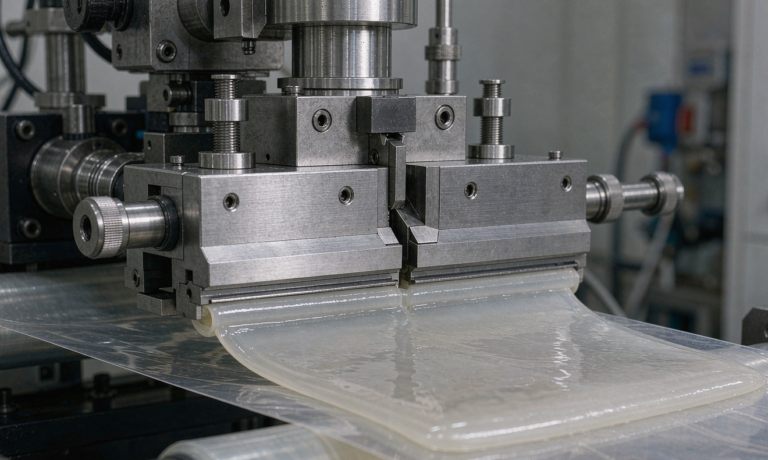
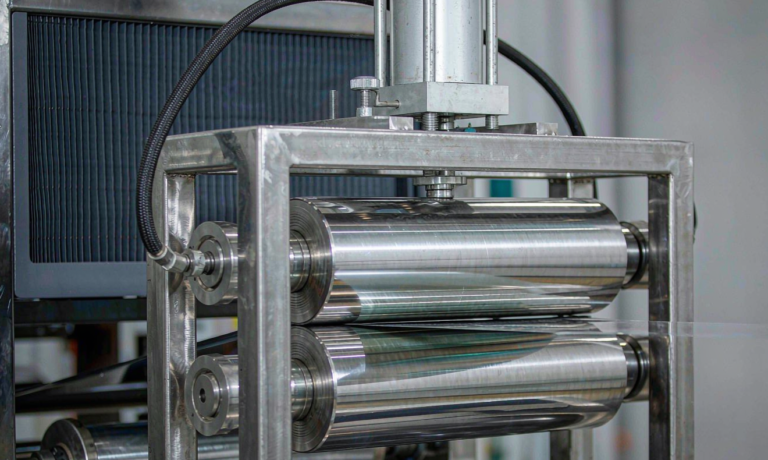
The supplement is only as good as the process that applies it. Lithium metal and SLMP react with water, so every pre-lithiation step at Horizon Power happens inside a dry room held below 1 percent relative humidity, with dew point below minus 40 degrees Celsius. We apply SLMP through a slot-die or comma coater tuned to the same 50 to 200 micron gap used for the cathode, then run a light calendering pass at 0.5 to 3 megapascals to seat the powder without crushing the composite film. The layer then goes straight into stacking and lamination so the reactive surface is encapsulated before it sees air again. Formation follows a gentle protocol: 0.1 to 0.2C at 25 degrees Celsius for the first two cycles, with differential capacity analysis and electrochemical impedance spectroscopy used to confirm the SEI has stabilized and no lithium plating occurred. Safety qualification still runs the full UN38.3 and IEC 62133 suite, because adding reactive lithium moves the abuse behavior and must be re-validated, not assumed.
Performance Gains and Validation
Done correctly, pre-lithiation changes the numbers that matter. Cells with a proper lithium supplement show first-cycle efficiency climbing from the low 90s to 98 to 99 percent, which translates directly into 8 to 15 percent more usable capacity at the pack level. More importantly for a custom battery solution, the capacity fade per hundred cycles drops because the anode no longer borrows from the positive electrode to feed a growing dead layer. In our validation, a semi-solid state battery with SLMP pre-lithiation reached 2000 to 3000 cycles at 80 percent depth of discharge with a fade rate near 0.02 percent per cycle, against 0.04 percent for the un-supplemented control. We confirm the gain with dQ-dV peaks that stay sharp and an impedance growth that flattens after the third cycle. The takeaway for any engineer is simple: measure the loss, dose against the measurement, and validate the result. A lithium supplement is not magic, it is accounting that the cell can finally balance.
Frequently Asked Questions
What is pre-lithiation in a semi-solid state battery?
Pre-lithiation is the deliberate addition of extra active lithium to the anode of a semi-solid state battery before the cell is sealed. The supplement pays the irreversible capacity cost of forming the solid electrolyte interphase on the first charge, so the customer receives the full designed capacity instead of a cell that starts life partly depleted. It is applied as lithium foil, stabilized lithium metal powder, a sacrificial cathode additive, or an electrochemical dose.
Why does a semi-solid state battery lose lithium on the first cycle?
The loss comes from the solid electrolyte interphase that forms on first lithiation. Graphite consumes 8 to 12 percent of its lithium building this layer, silicon composites consume 15 to 25 percent because of volume swing, and lithium-metal anodes trap 5 to 10 percent as dead lithium. None of that lithium returns to circulation, so the cell’s negative and positive electrodes fall out of balance on day one.
Which pre-lithiation method works best for mass production?
For most production lines, stabilized lithium metal powder, known as SLMP, offers the best balance of control and cost. It is passivated for safe handling and meterable through existing coaters. Lithium-foil contact is cheaper but less uniform, sacrificial cathode additives dilute energy density, and electrochemical pre-lithiation gives the tightest control at the price of an extra process step.
How much lithium supplement should I add to the anode?
Dose against measurement, not a rule of thumb. Multiply the measured first-cycle irreversible capacity of the bare anode by the anode loading, then add a 3 to 5 percent margin for lot variation. Convert that milliampere-hour target to a physical mass using the supplement’s specific capacity, and keep the resulting N/P ratio at 1.05 to 1.12. A 20 ampere-hour cell needing 12 percent supplement typically takes about 67 milligrams of SLMP.
Does pre-lithiation change the N/P ratio design?
Yes, and that is the point. The supplement is sized so that after the first-cycle loss the negative electrode still holds 5 to 12 percent more capacity than the positive electrode. Designing the N/P ratio around the post-supplement balance, rather than the bare anode, is what prevents lithium plating and keeps the cell safe across its life.
Is pre-lithiation safe under UN38.3 and IEC 62133?
It is safe provided the process is qualified, not assumed. Pre-lithiation adds reactive lithium, so the dry-room handling, encapsulation, and formation protocol must be tight. The cell must still pass the full UN38.3 and IEC 62133 test suite, because the abuse behavior shifts once reactive lithium is present. At Horizon Power we re-run the complete qualification on every supplemented design rather than carrying over prior approvals.
Further Reading
References