Home Energy Storage Reliability for Apartments: Engineering
Home Energy Storage Reliability for Apartments: Engineering Long-Life Residential Battery Systems
When I spec a home energy storage system for a detached house, I can usually assume one owner, one roof, and a maintenance call that takes ten minutes to schedule. Apartment buildings break every one of those assumptions. Over the last nine years as a senior lithium battery engineer at Horizon Power I have commissioned and troubleshot home energy storage deployments across more than forty multi-unit dwellings, and the reliability engineering for a shared building is a different discipline entirely. You are not designing for one careful homeowner — you are designing for fault propagation between strangers’ units, gated maintenance access, tenant turnover every eighteen months, and a fire code that does not forgive a single weak cell. This article walks through how we engineer a genuinely reliable apartment home energy storage system, the standards that actually matter, and the numbers I use to sign off a 10–15 year service life.
Why Apartment Reliability Is Not Single-Family Reliability
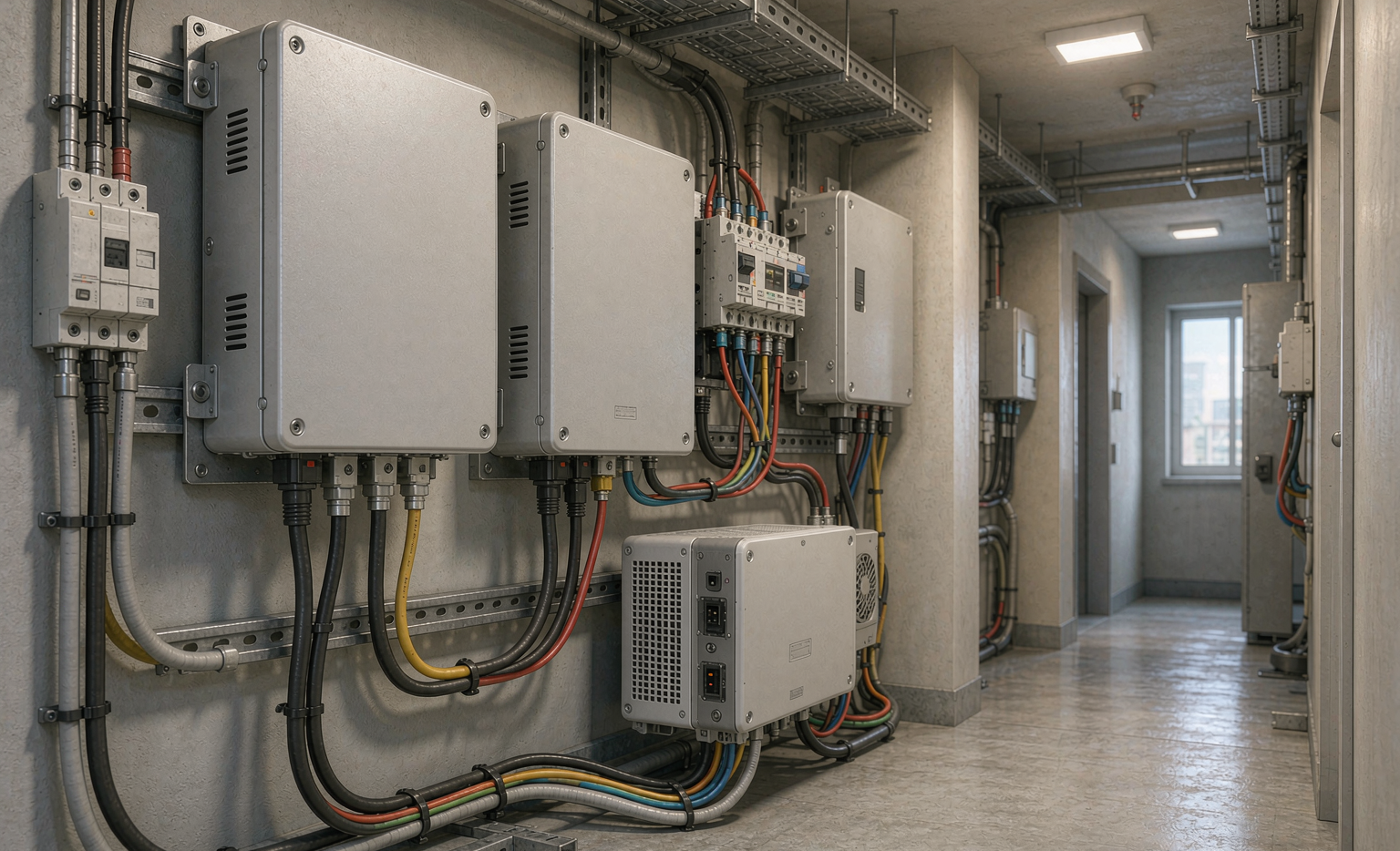
The first mistake developers make is treating a block of apartments like a row of houses. In a single-family install, a battery fault is contained to one property and one grid connection. In an apartment, the electrical backbone is shared. A common-mode grid event, a building-wide voltage sag, or a fault on the riser can stress every unit’s home energy storage system at the same instant. I have measured coupled inrush on a four-unit string where one inverter’s pre-charge transient pushed two neighbouring units into momentary under-voltage lockout.
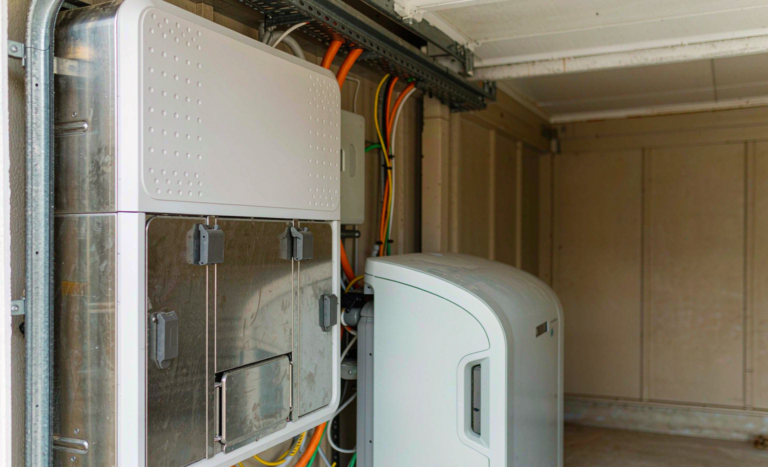
Then there is access. When a cell weld in a suburban pack drifts, the owner texts me and I visit Friday. In an apartment, the battery may sit behind a locked utility cupboard on floor 11, the tenant is at work, and the body-corporate needs 72 hours’ notice. That reality forces a design rule we repeat internally: if you cannot easily reach it, it must fail safe and tell you before it fails. That single principle reshapes chemistry choice, BMS strategy, and the entire monitoring architecture for residential battery storage in multi-unit buildings.
The Reliability Contract: What “Reliable” Means Over 15 Years
For a homeowner, “reliable” is fuzzy. For an engineer signing a building warranty, it is a quantified contract. For an apartment home energy storage deployment I hold three acceptance numbers:
- Capacity fade: no more than 20% loss at end of the 10–15 year design life, which means a weighted annual fade below 2% — LFP cells realistically deliver 0.5–1.5% per year under partial-state-of-charge apartment duty.
- Availability: greater than 99.3% over a rolling 12 months, counting both hard faults and soft lockouts that disable the unit.
- Safe-fail behaviour: any internal fault must de-energise the unit and isolate it from the bus without propagating to adjacent apartments.
Chemistry selection is the first lever. For stationary apartment duty I standardise on lithium iron phosphate (LFP) over NMC. The reason is not energy density — it is that LFP’s thermal-runaway onset sits around 270 °C versus roughly 150 °C for NMC, and its calendar life under always-plugged-in apartment service routinely exceeds 6,000 cycles at 80% depth of discharge. A lithium battery that outlives two tenant leases is far more “reliable” in a building than one that needs swapping every five years.
Architecture for Fault Containment
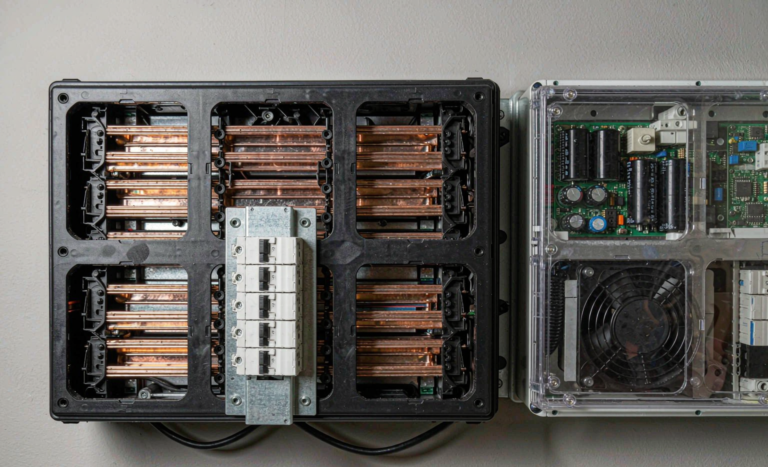
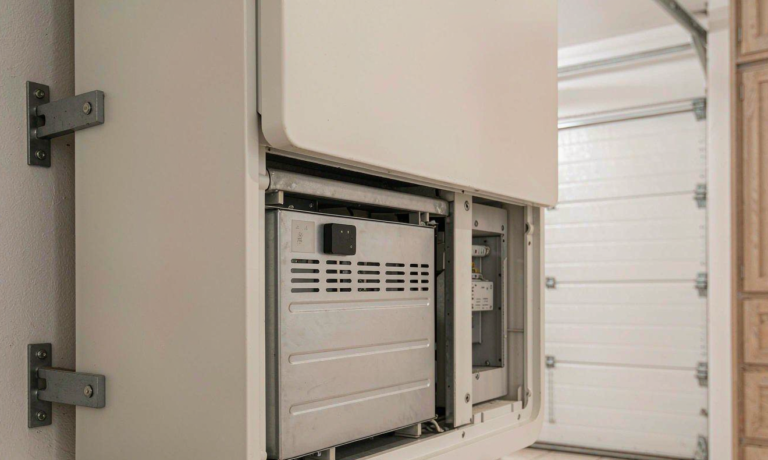
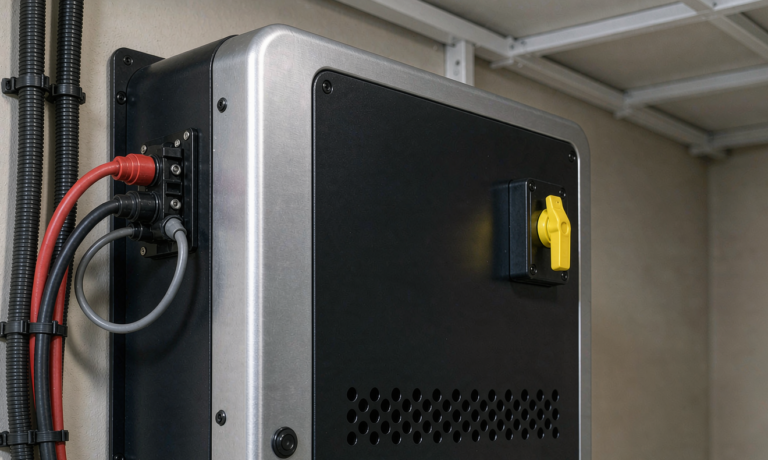
Reliability in apartments is a system property, not a cell specification. The single most important design decision is containment: a thermal event in one unit must not take down the floor. I engineer every apartment home energy storage system as a UL 9540A unit-level contained assembly — the enclosure is a fire-rated boundary, the module spacing respects the tested vent path, and there is no shared busbar between apartments that could carry fault energy across units.
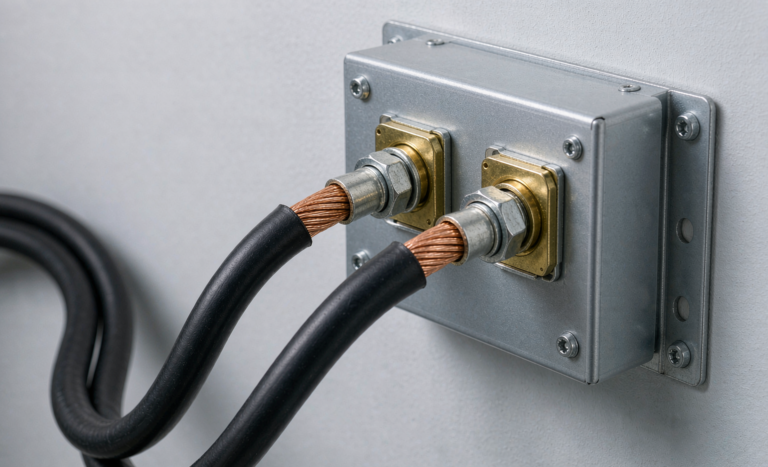
On the AC side, each unit runs its own UL 1741 listed inverter with anti-islanding per IEEE 1547, backed by dedicated arc-fault and ground-fault protection as required by NEC Articles 690 and 706. I keep the DC disconnect independent of the building’s general distribution so a firefighter can isolate one apartment’s residential battery storage without killing the whole riser. Where the building shares a metering hierarchy, I add a revenue-grade isolation contactor so the battery can be commanded offline remotely — critical when a tenant vacates and nobody is on-site to pull a fuse.
Battery Management and Predictive Reliability
A reliable apartment battery is one that phones home before it breaks. Every Horizon Power unit carries a dual-channel BMS that logs state-of-health through two independent channels: delivered capacity and four-wire Kelvin DCIR (direct current internal resistance). Capacity tells you how much is left; DCIR tells you how close the interconnects are to failing. I set retirement gates at capacity below 80% of nameplate, DCIR growth above 30%, or cell-to-cell voltage spread above 40 mV under a standard load pulse. In the field, DCIR drift has flagged bad laser welds and corroding busbars months before capacity dropped a measurable percent.
Telemetry rides out over CAN 2.0B or RS485 to a building-level gateway, then to our cloud. Each pack carries a DataMatrix genealogy stamp — cell lot, weld parameters, formation results — so when one apartment reports a fault I can correlate it against its sister units built the same week. For a custom battery solution spanning a whole building, that genealogy is the difference between a one-off fix and catching a lot-level escape before it spreads across twenty units.
The Standards and Certification Stack
Apartment authorities having jurisdiction do not accept vibes. The certification stack I present for every home energy storage project is layered: UN38.3 T.1–T.8 for transport and handling of the cells, IEC 62133-2 and IEC 62619 for the stationary battery safety and performance baseline, UL 1973 for the stationary battery cells and modules, and UL 9540 together with UL 9540A for the system and its fire containment. Building code then layers NFPA 855 spacing and the local fire authority’s apartment amendment on top. I also confirm IEC 62477 for power conversion safety and the relevant FCC/CE emissions compliance for the inverter and BMS radio. None of these alone guarantees reliability — together they are the floor below which I will not ship.
Lifecycle Management in a Multi-Tenant Building
The hardest reliability work in apartments happens after commissioning. Tenant turnover is the enemy of a healthy home energy storage system: a vacant unit’s battery can sit at 100% state-of-charge for months, accelerating calendar fade, or a departing tenant disables the monitoring app and the pack goes dark to us. My deployment standard therefore includes an annual IR thermography and torque check on accessible connections, over-the-air firmware that cannot be disabled without body-corporate override, and a warranty that transfers with the unit rather than the lease. For buildings where we manage a fleet, we pull SOH data quarterly and pre-emptively rotate any pack crossing the 85% capacity gate into second-life stationary or recycling — never waiting for a tenant complaint.
Designing a reliable apartment battery is ultimately an exercise in humility: you assume you will not be there, you assume the worst tenant, and you build a custom battery solution that survives both. Done right, a well-engineered residential battery storage system quietly delivers a decade of savings and resilience while the building forgets it is even there.
Frequently Asked Questions
How long does a home energy storage system last in an apartment?
For LFP-based apartment units I design to a 10–15 year service life with no more than 20% capacity fade at end of life. Realistic field data from our monitored fleets shows 0.5–1.5% annual fade under partial-state-of-charge apartment duty, so most units still deliver 80–90% capacity at year twelve. NMC chemistries age faster and typically need replacement inside 8–10 years.
What happens if one apartment’s battery fails in a shared building?
With proper UL 9540A unit-level containment and independent per-unit DC disconnection, a single unit’s fault de-energises only that apartment’s home energy storage system. It cannot propagate across the shared bus to neighbours. The BMS isolates the pack, the building gateway raises an alarm, and remote commands can hold the unit offline until a technician gains access.
Do apartments need special fire safety for battery storage?
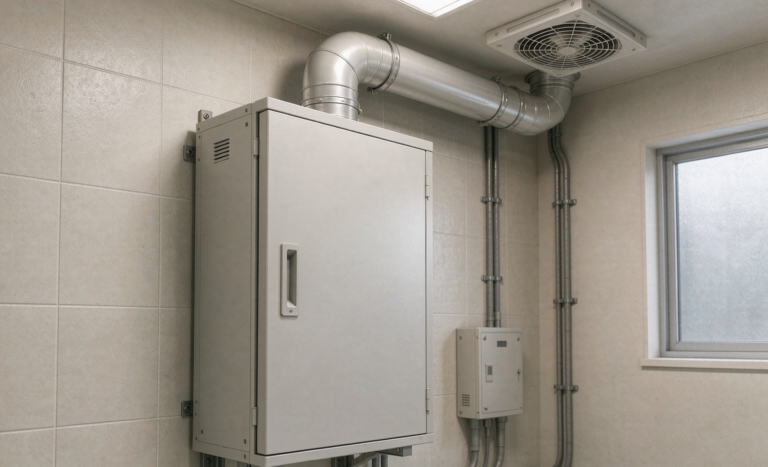
Yes. Beyond the battery’s own UL 9540A containment, the installation must satisfy NFPA 855 spacing, dedicated smoke detection on the utility cupboard, and the local fire authority’s apartment amendment. I never share a vent path or busbar between units, and I keep a manual isolation point a firefighter can reach without entering a tenant’s living space.
Can a home energy storage system be moved when a tenant leaves?
Physically yes, but in practice the unit is wired into the apartment’s dedicated backup circuit, so moving it is a licensed electrician job, not a packing task. Because our warranty and monitoring transfer with the hardware rather than the lease, most body-corporates leave the residential battery storage in place and simply re-onboard the new tenant to the app and tariff schedule.
How is reliability monitored without on-site access?
Each unit streams state-of-health — capacity, four-wire Kelvin DCIR, cell spread, temperature, and fault flags — to a building gateway and then to our cloud. We watch for DCIR drift and capacity sag that precede hard failures, and we can command a soft or hard offline state remotely. For a gated-access apartment, that remote visibility is what makes a 99.3% availability target achievable at all.