Sodium-Ion Battery Testing for Microgrids: A Field
When our team at Horizon Power first deployed a sodium-ion battery bank for a remote island microgrid in early 2024, I expected the commissioning to feel familiar. It did not. The chemistry behaves close enough to lithium that most engineers assume the same test plan will carry over — and that assumption is exactly where microgrid projects stall. Over the last eighteen months I have personally qualified seven sodium-ion installations for grid-edge and behind-the-meter microgrids, and the testing discipline that actually protects the asset is narrower, colder, and more standards-driven than most buyers expect. This article is the field playbook I now hand to every validation engineer before they power on a sodium-ion microgrid battery for the first time.
Why Microgrids Are a Natural Fit for Sodium-Ion
A microgrid lives or dies on two economics: upfront capital per stored kilowatt-hour and resilience when the main grid disappears. Sodium-ion chemistry answers both. The active materials — sodium, iron, manganese — are abundant and geographically distributed, which is why a sodium-ion battery pack can land 15–25% cheaper per kWh than an equivalent LFP system at the cell level once volume ramps. More importantly for microgrid duty, sodium retains usable capacity in the cold. Where an LFP lithium battery may deliver only 55–70% of rated capacity at −20 °C, a well-designed sodium-ion battery typically holds 80–88%. For a microgrid serving a cold-climate village, fish-processing plant, or mountain relay station, that single property can remove an entire cabinet of heaters and the parasitic load that comes with it.
But fit is not the same as qualified. A sodium-ion battery is only as reliable as the validation evidence behind it, and microgrid owners are increasingly asking for that evidence before they sign. The rest of this playbook walks through the exact sequence I run.
Cell-Level Qualification: UN38.3 and IEC 62133
Every cell that enters a Horizon Power microgrid build passes the same two gates I would demand for any lithium battery shipment. First, UN38.3, the transport safety test required for air, sea, and road movement of cells and batteries. The eight tests — altitude simulation, thermal test, vibration, shock, external short circuit, impact, overcharge, and forced discharge — confirm the cell will not become a hazard in transit. I insist on seeing the original test lab report, not a reseller’s summary, because a mismatched format or a missing altitude-simulation curve has killed more than one shipment at the port.
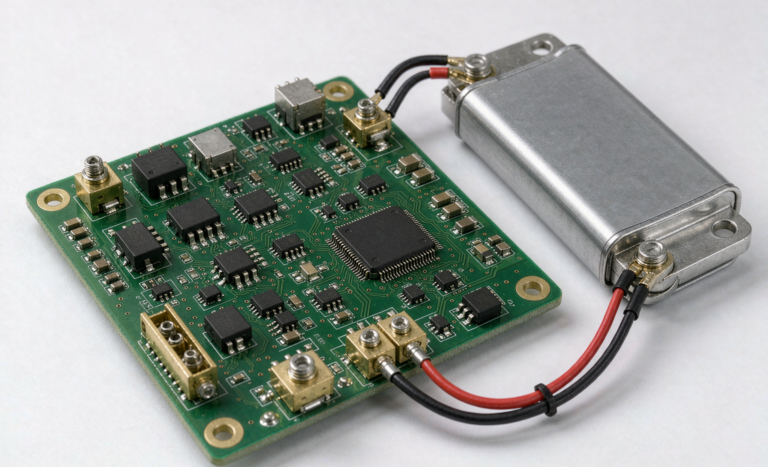
Second, IEC 62133-2, the international safety standard for secondary cells and batteries containing alkaline or other non-acid electrolytes. For stationary microgrid modules this is the baseline for internal short-circuit, thermal abuse, and overcharge protection verification. The sodium-ion cell chemistry does not get a free pass here; if anything the lower cell voltage (roughly 2.5–3.3 V versus 3.0–4.2 V for NMC) means the protection electronics must be re-validated rather than reused. A lithium battery BMS reference design rarely guarantees the same ±5 mV accuracy across the full sodium voltage window, so I treat the AFE (analog front end) as a new qualification item, not a carry-over.
Module and String Testing: Capacity, Efficiency, and Voltage Windows
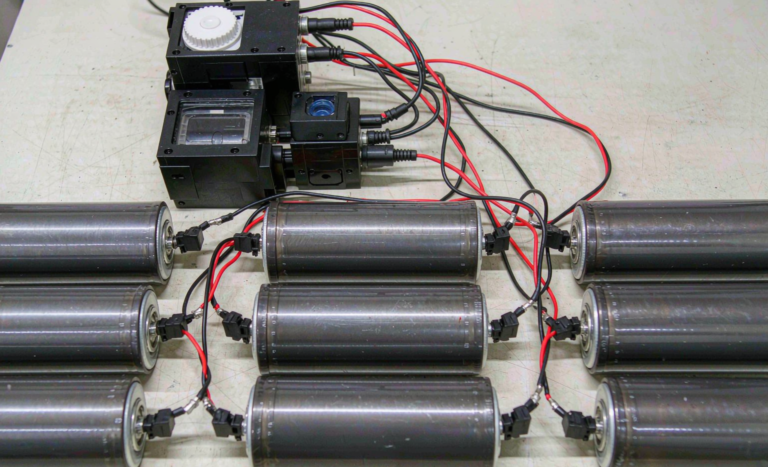
Once cells are qualified, the module is built and the string is assembled. Here the test plan diverges from generic lithium practice in three measurable ways.
- Nominal voltage window. I measure and document the usable voltage window at the module and string level, then build the BMS operating envelope inside it with a 3–5% margin. Sodium-ion’s flatter discharge curve means state-of-charge estimation from voltage alone is less precise, so I always pair it with coulomb counting and a low-rate calibration cycle.
- Round-trip efficiency. A good sodium-ion microgrid battery delivers 85–90% round-trip efficiency at 0.5C. I log efficiency across 10%, 50%, and 100% depth-of-discharge because microgrid duty cycles are rarely full-depth; the partial-cycle number is what the owner actually lives with.
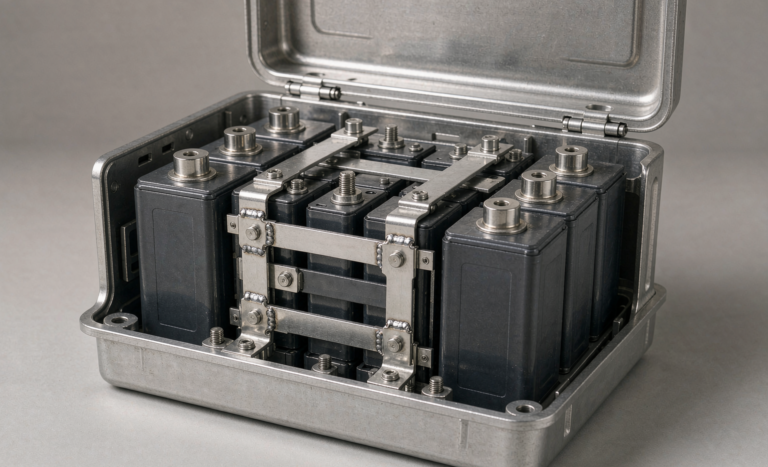
- Capacity retention distribution. I bin every module by initial capacity and again after 50 cycles. A tight distribution (≤2% spread) is the single best predictor of a long, balanced string life. Wide spread means the passive balancing current must be sized correctly — for 100 Ah-class sodium modules, 50–150 mA passive balancing is usually sufficient, unlike high-rate lithium packs.
For owners who need a battery solution that simply works without in-house battery engineering, this module-level evidence is the deliverable that matters most. A custom battery solution for a microgrid should arrive with these curves attached, not promised in a datasheet.
Cold-Climate Validation: The Sodium Advantage at −20 °C
This is where sodium-ion earns its place in a microgrid. I run a cold-chamber profile that takes the pack from +25 °C down to −20 °C and back, logging discharge capacity, internal resistance, and charge acceptance at each step. The acceptance threshold I hold is 80% capacity retention at −20 °C and the ability to accept charge at 0.2C without cell voltage exceeding the upper limit.
In one northern microgrid project, an LFP design would have required 1.8 kW of cabin heating for a 90 kWh bank; the sodium-ion battery solution met the load with only trace heating, saving roughly 4,300 kWh of parasitic energy per year. That is a real operating-cost number, not a laboratory claim, and it is why I lead cold-climate microgrid proposals with sodium-ion test data.
Safety and Abuse Testing for Stationary Deployment
Stationary microgrid batteries sit next to homes, generators, and sometimes fuel stores, so abuse tolerance is non-negotiable. Beyond IEC 62133, I apply the stationary battery logic of IEC 62619 for industrial cells and, where the pack is large, reference UL 9540A for thermal runaway propagation control. Sodium-ion’s chemistry is intrinsically more thermally stable than NMC and less prone to oxygen release, but I never assume that means “safe by chemistry.”
My abuse test set includes nail penetration on a single cell, external short circuit at the module level, and a propagation test on a representative module stack. The pass criterion is containment: a single-cell failure must not propagate to its neighbors within the test window. I also verify four-layer protection independence — overvoltage, undervoltage, overcurrent, and temperature — with separate references, sampling, and power rails. A past incident I investigated failed because firmware protection and a hardware secondary shared one divider network; a single cracked solder joint disabled both. Fault-injection testing, with the injection log captured, is how I prove the independence is real.
System Integration and Grid-Forming Verification
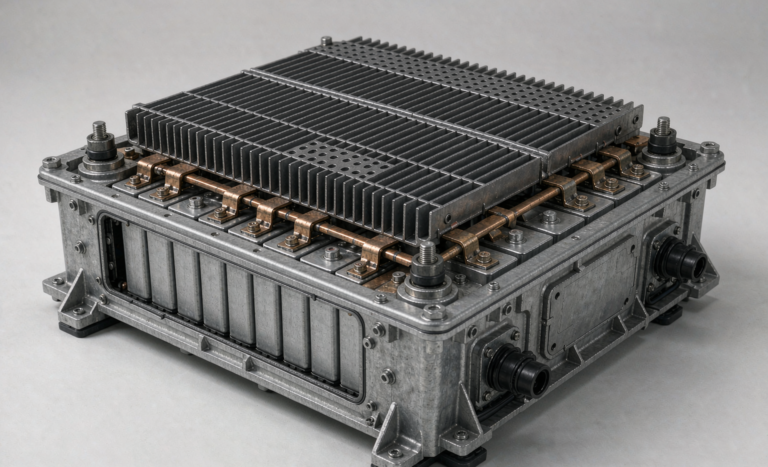
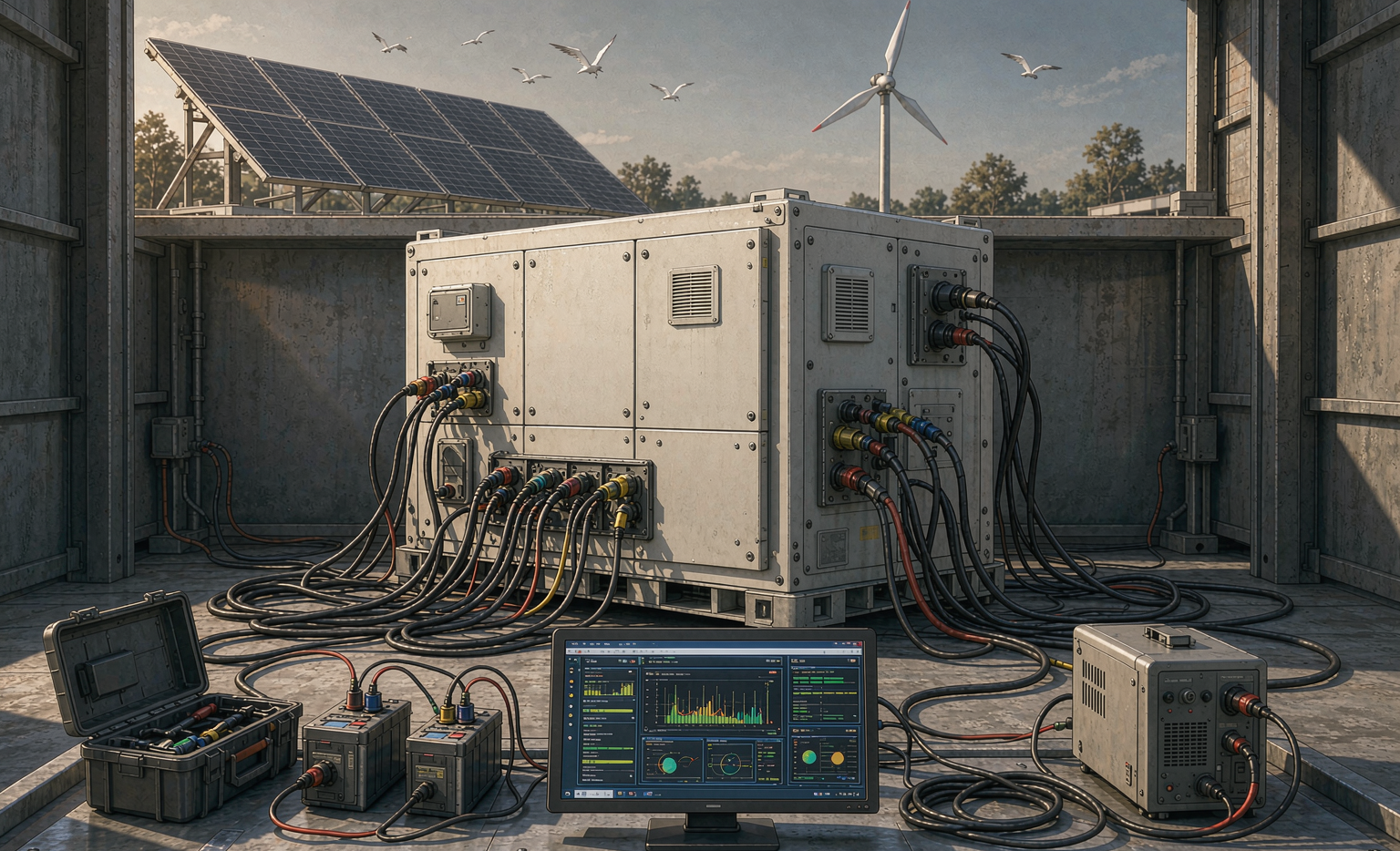
A microgrid battery is not a battery; it is a grid. The pack must form voltage and frequency when islanded and synchronize when reconnected. I verify grid-forming behavior against the intent of IEEE 1547 for interconnection, paying special attention to the battery’s ability to supply the fault current the inverter promises during a ride-through event. The battery must deliver the current the power-conversion system claims, or the whole protection scheme is built on a lie.
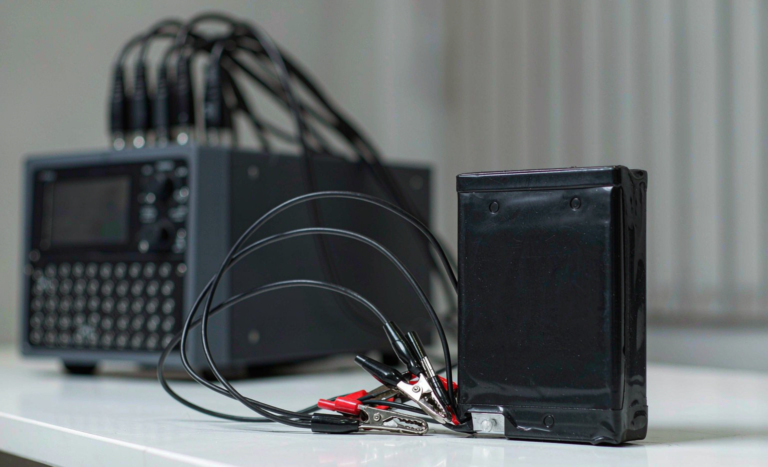
I run a staged commissioning: open-circuit voltage and polarity check, insulation resistance at ≥1 MΩ per 500 VDC, a low-power functional test, then a stepped power ramp to full rated output at the extreme ambient temperature. Only after the pack holds full power at temperature do I close it into the microgrid bus.
Field Commissioning and Long-Term Monitoring
Commissioning is where most microgrid batteries are won or lost. I record per-cell and per-module extremes plus throughput from day one; that baseline is what makes an 18-month service interval meaningful instead of guesswork. Because sodium-ion’s flatter curve makes voltage-based SoC deceptive, I rely on cumulative throughput and periodic low-rate calibration to flag drift early.
For the owner, the practical ask is simple: keep the monitoring export running, review the per-module spread quarterly, and re-validate the protection logic after any firmware change. A sodium-ion battery that is tested this way, and monitored this way, will outlast the inverter that drives it.
Frequently Asked Questions
How does sodium-ion battery testing differ from lithium-ion testing?
The cell-level safety gates — UN38.3 and IEC 62133 — are the same, but the BMS analog front end must be re-qualified for sodium’s lower, flatter voltage window, cold-performance testing becomes a first-class acceptance item rather than a footnote, and state-of-charge estimation needs coulomb counting because voltage alone is ambiguous. A lithium battery test plan copied unchanged will miss all three gaps.
What standards apply to a sodium-ion battery in a microgrid?
At minimum UN38.3 for transport, IEC 62133-2 for cell safety, IEC 62619 for stationary industrial cells, and IEEE 1547 for grid interconnection behavior. For larger packs, UL 9540A thermal-propagation testing and local electrical codes round out the evidence an inspector will ask for.
Is a sodium-ion battery safe for residential or village microgrids?
Yes, provided it passes the same abuse and propagation tests as any stationary battery. Sodium-ion is intrinsically more thermally stable than high-nickel lithium, but safety comes from verified four-layer protection independence and containment-tested module design, not from the chemistry label alone.
How long does a sodium-ion microgrid battery last?
Current generation cells target 3,000–6,000 cycles at 80% capacity retention under microgrid duty, with the wide operating-temperature range reducing the heater-driven stress that shortens cold-climate lithium batteries. Realistic life depends on depth-of-discharge and temperature, which is why I log throughput from commissioning day one.
If you are specifying a sodium-ion battery for a microgrid and want the validation evidence bundled with the hardware, that is exactly the kind of custom battery solution our engineering team builds and documents end to end.