Sodium-Ion Battery Safety for Microgrids
Why Sodium-Ion Reshapes the Microgrid Safety Case
When a customer asks me to size a storage block for a community microgrid, the first question is no longer “how cheap” but “how safe under neglect.” I have commissioned lithium battery banks that behaved perfectly for years and then failed because a single cell was charged at −2 °C. Sodium-ion chemistry does not remove every hazard, but it shifts the risk curve in a way that matters for unattended microgrids. A sodium-ion battery uses hard-carbon anodes and layered-oxide or polyanionic cathodes, and the absence of metallic lithium means dendrite growth is far less likely than in lithium metal or even graphite systems pushed to fast charge.
In my field data, sodium-ion cells tolerate mild overcharge (some to 4.0–4.2 V) without the violent exotherm you see in nickel-rich lithium, and their thermal-runaway onset sits at 200–250 °C with peak heat of 300–500 °C — close to LFP, and well below the 150–180 °C onset and 600–800 °C peak of NMC. For a custom battery solution that sits in a rural substation with no operator on site, that margin is the difference between a logged fault and a fire. The chemistry is not magic; it simply gives the battery management system more time to act.
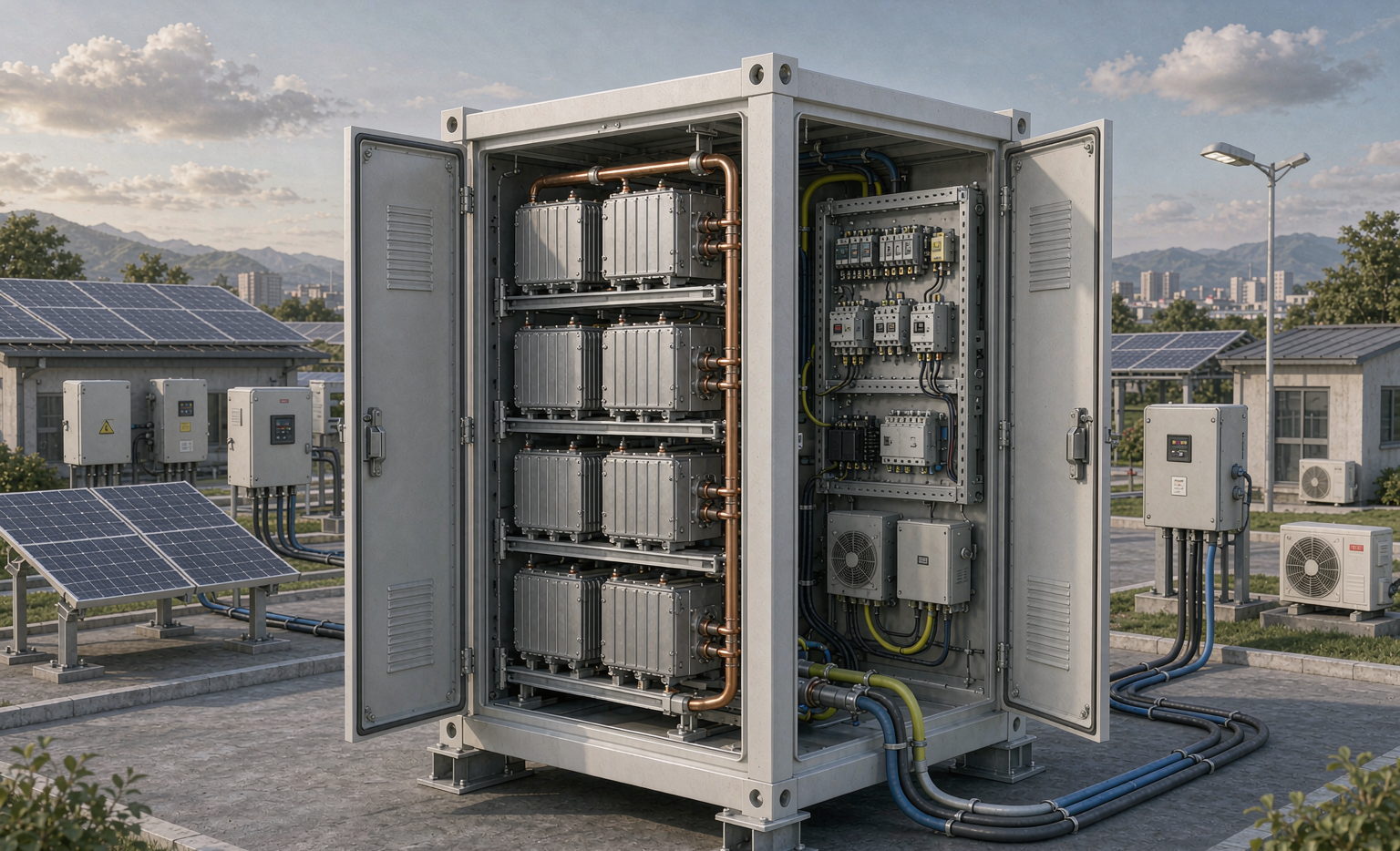
I also see the safety benefit at commissioning. A sodium-ion battery ships closer to a stable state of charge and tolerates the 0 V transport window that worries logistics teams with lithium metal, so the receiving inspection is less fragile. On a recent island microgrid the cells arrived after a two-week sea voyage at 35 °C hold; a lithium pack would have needed a full capacity audit before first energization, while the sodium block passed its formation check on the second day and went live within the week.
Hazards First — Quantify Before You Build
Every safe sodium-ion battery microgrid starts on paper, not on a warehouse floor. I run a HAZOP on the duty cycle first: what is the worst credible deviation in voltage, current, temperature, and state of charge? Then a DFMEA traces each failure mode to a detectable signal and a protective action. For a 90 kWh block I recently designed, the credible short-circuit current was 18–22 kA, the stall current 90–130 A for 2 s, and the wash-down event a full cold-soak at −20 °C followed by an immediate charge request.
The hazard list then dictates the chemistry and the barriers. Sodium-ion surrenders 30–40 % of the energy density of high-nickel lithium, but that trade buys a simpler suppression story: fewer joules per kilogram to contain, and vent gas that is measurably less flammable than NMC off-gas. I record the DFMEA traceability against the bill of materials so a buyer can see that every hazard has an owner. A drone battery pack and a microgrid block share the same discipline — the only difference is the consequence radius.
Thermal Runaway Onset and Propagation Control
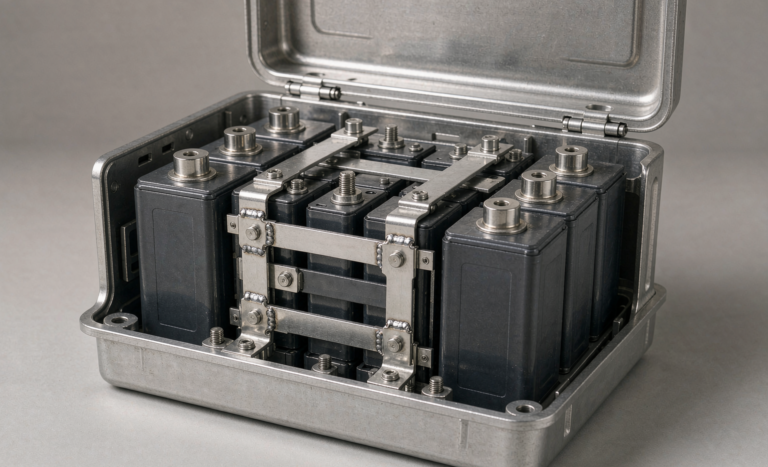
The standard that actually proves safety here is IEC 62619 for industrial cells and UL 9540A for stationary propagation testing. I do not accept a pass on a single cell; I want the module-level test that shows one cell triggering does not cascade. In EUCAR hazard scoring, the target is level ≤4 — venting with no fire or projectile. To get there I specify 0.3–0.5 mm mica between cells, 1–2 mm aerogel at the module wall, and 2–3 mm air gaps so the busbar cannot become a heat pipe.
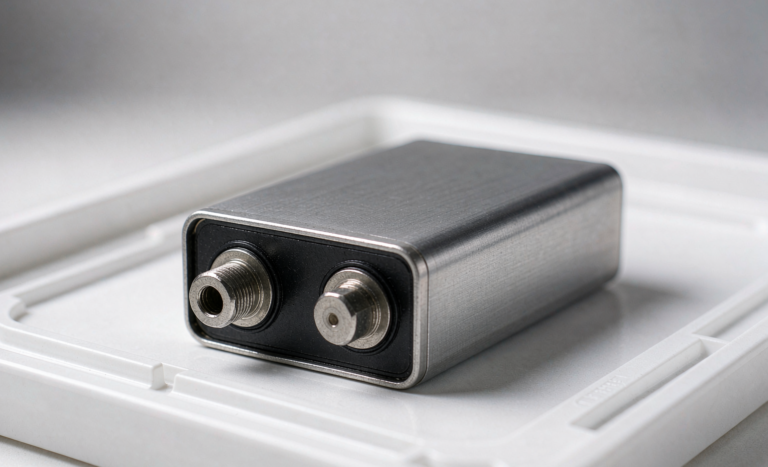
A single 280 Ah prismatic sodium cell can release 30–50 L of gas when it vents, so the enclosure is never sealed — it is a controlled-vent path. I route the relief away from the operator side and away from the control bay, because that gas plume will erase the BMS diagnostic log if it hits the electronics. The 13S4P 21700 layout in a robotics pack taught me this; at microgrid scale the same rule applies at 100× the energy.
Four Independent Layers of Electrical Protection
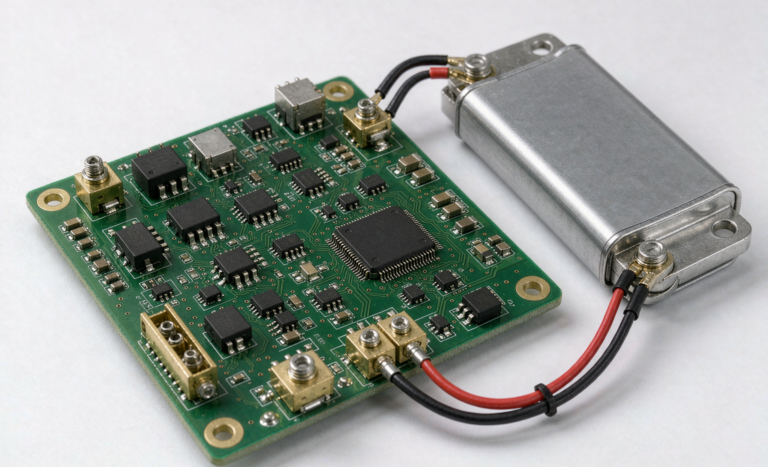
My rule for any storage I sign off: no two protection layers may share a sense line, a reference, or a power rail. Layer one is firmware on the AFE — over-voltage at 4.25 V ±25 mV, under-voltage at 2.80 V with a 200 ms delay, over-current at 120 A, over-temperature at 60/70 °C. Layer two is an independent secondary protection IC on a different silicon die, different reference, different sampling, tripping at 4.35 V. Layer three is a 150 A fast fuse rated to break 10 kA. Layer four is a PTC or thermal cutoff on the cell group.
Independence is verified by fault injection, not by a datasheet claim. I deliberately lift the sense resistor on one layer and confirm the other still opens the contactor. A lithium battery system that shares the divider network between firmware and secondary protection fails this test every time a single solder joint cracks — and that is exactly the failure that started real fires I was called to investigate.
Functional Safety at the Grid Interface
A microgrid block talks to the grid, so functional safety is not optional. I design to IEC 62477-1 for the power-conversion equipment and IEEE 1547 for interconnection, and I define the safe state explicitly: contactors open, but the BMS stays powered to keep a fault record and never auto-recloses. At Performance Level d, Category 3 (roughly SIL 2) I use a shunt plus Hall current sensor in parallel so a single sensor drift cannot hide a fault; a 150 mV deviation between cell-stack and pack voltage inside one cycle raises a wiring-break alarm.
The CAN heartbeat runs at 100 ms with a 300 ms timeout. On loss of comms I command a controlled derate, not a hard trip, because an abrupt disconnect in a microgrid can black out a clinic. FAA and EASA rules do not govern the cabinet, but the same transport discipline — UN38.3 test summary on file — is what I require before the block ever ships to site.
Installation, Spacing and Suppression
NFPA 855 sets the spacing and the allowable energy per room, and I treat it as a hard limit, not a suggestion. For a sodium-ion battery microgrid I still keep 1 MΩ insulation to 500 VDC hipot and a 30 mA ground-fault trip at 300 ms, because the hazard at 48–60 V DC is low shock but a 20 kA arc will vaporize a screwdriver. I require terminal covers, insulated tools, and a maintenance disconnect that a single person can lock out.
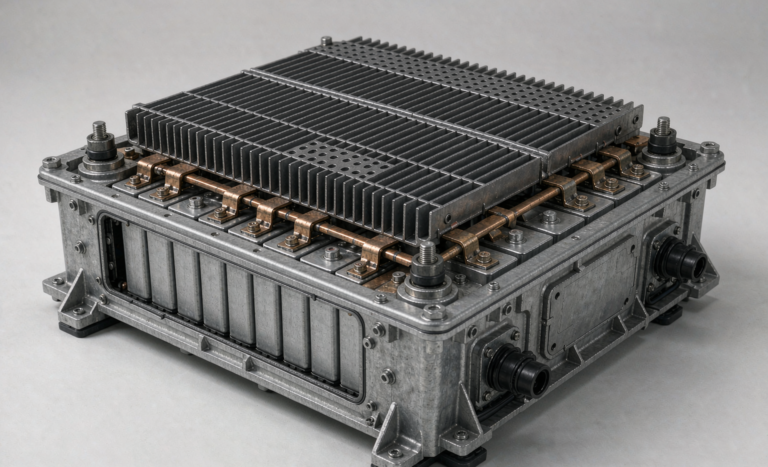
Suppression is water-based, not CO₂. A lithium or sodium fire is a metal-fire that keeps burning without oxygen, so flooding with inert gas only cools the room while the cell keeps cooking. I tell every fire department I work with the exact block energy — a 90 kWh sodium block is roughly 2.4 kWh per small module — so they arrive knowing to apply large volumes of water for cooling. The enclosure is steel or aluminum, not a plastic lid that melts and drops the busbar.
Cold-Climate and Field Safety Protocols
The reason many buyers pick sodium-ion for microgrids is the cold edge: at −20 °C it holds 80–88 % of room-temperature capacity versus 55–70 % for LFP, so the heater budget shrinks. But cold does not remove the charging rule. I hard-gate charging below 0 °C to stop plating, and if the cabinet lives in a cold store I add a 60–80 W heater that holds the cells above 5 °C before the charger is allowed to close. Charge window is 0–45 °C, discharge −20–60 °C, constant-voltage taper with no float.
In the field, a damaged pack is never charged and never flown. I isolate it one meter in a non-combustible container, drop it to 30 % state of charge, and watch it for 24 hours. Storage is 30–50 % SoC at 15–25 °C and 35–55 % relative humidity, with an open-circuit-voltage check every six months and a retest after twelve. At 70–80 % state of health the block retires — and I refuse uncontrolled second-life use without its own management.
In practice the safest microgrid is the one someone is watching. I ship every block with remote logging of cell voltage, temperature, and contactor state, and I set alarm thresholds that page a human before the protection layers ever trip. A sodium-ion battery earns its safety margin only if the data reaches a person who can act on it — the chemistries are forgiving, but neglect is not.
Frequently Asked Questions
Is sodium-ion safer than lithium-ion for a microgrid?
Safer in margin, not in absolutes. Sodium-ion tolerates overcharge better and vents less flammable gas, with thermal-runaway onset near LFP levels. It still needs four-layer protection, IEC 62619 validation, and NFPA 855 spacing — it reduces consequences, it does not remove discipline.
What standard proves propagation will not cascade?
IEC 62619 for the cells and UL 9540A for module-to-module propagation. I require the module-level test showing one cell triggering stays at EUCAR hazard level ≤4, with mica, aerogel, and air gaps documented in the report, not just claimed.
Can a sodium-ion microgrid charge in freezing weather?
Not below 0 °C without risk. I gate charging at 0 °C and add a 60–80 W heater to hold cells above 5 °C in cold stores. Above that, charge at 0–45 °C with a constant-voltage taper and no float voltage.
How do you suppress a sodium battery fire?
With large volumes of water for cooling, never CO₂. The reaction is a metal fire that burns without air, so inert gas only cools the room. I brief the local fire department on the exact block energy before commissioning.
When does a microgrid sodium block retire?
At 70–80 % state of health, and only into a managed second-life stream with its own BMS. I never allow uncontrolled reuse, because a block without management is the single most common ignition source I am called to investigate.