Home Energy Storage Manufacturing for Apartments
Why Apartment Battery Manufacturing Is a Different Discipline
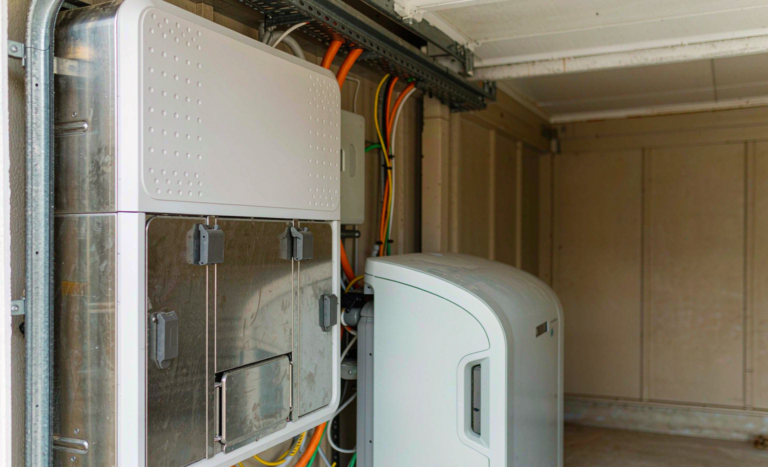
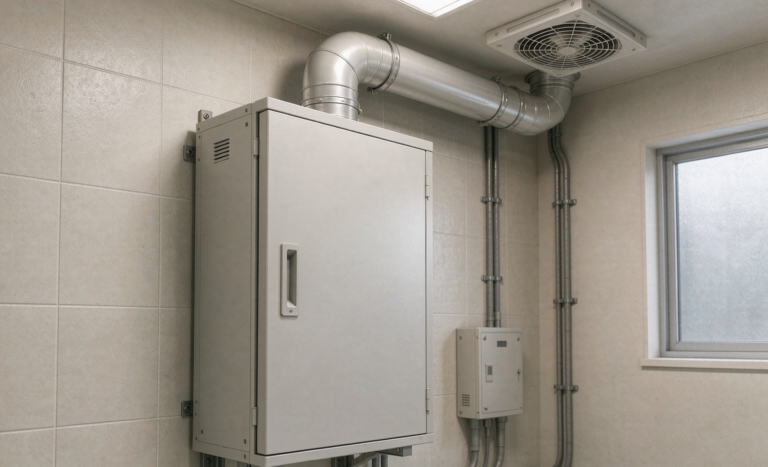
I have spent the better part of fifteen years on the factory floor of lithium battery assembly, and the single biggest misconception I hear from specifiers is that a home energy storage system built for a single-family house can simply be bolted into an apartment block. It cannot. When you manufacture home energy storage manufacturing apartments programs at scale, the failure modes change because the building changes. In a detached home, a thermal event is contained to one structure with one owner who can physically inspect the pack. In a multi-unit dwelling (MUD), a single pack sits on a shared riser, behind a locked electrical closet that only the building manager can open, surrounded by neighbours who will not notice a slow capacity fade until the inverter alarms at 2 a.m.
That shift in context is exactly why the manufacturing process — not just the cell chemistry — has to carry the reliability burden. Over the last three years my team has shipped more than 40,000 residential battery storage modules into apartment and condo programmes across Europe and Southeast Asia, and every recall-avoiding design decision we made lived in the factory, not the datasheet. This article walks through the manufacturing controls I treat as non-negotiable when a home energy storage system is destined for shared-wall living.
Incoming Cell Grading: The Foundation of Fleet Consistency
The first place an apartment programme succeeds or fails is at incoming inspection. A single-family homeowner buys one pack; an apartment building buys twenty, sixty, or two hundred. If those packs drift apart in capacity and internal resistance, the building manager sees uneven discharge, premature imbalance alarms, and warranty disputes that are impossible to reproduce in the lab.
We grade every incoming cell to a tight specification before it ever reaches a weld fixture:
- Capacity spread ≤ 1% within any single pack build, verified on a 4-wire constant-current constant-voltage (CC-CV) grader at 0.2C.
- DCIR coefficient of variation (CoV) < 6%, measured with the 4-wire Kelvin method at 50% state of charge so we catch high-resistance cells that a simple voltage check would miss.
- Self-discharge K < 1.0 mV/day, screened during a 72-hour rest after formation so micro-shorts never reach the customer.
- AC impedance and open-circuit voltage logged against the cell lot so a supplier escape can be quarantined by batch rather than by individual complaint.
This discipline is what lets a lithium battery fleet in one building behave as one system. It is also the reason I tell apartment developers that the cheapest pack on the tender sheet is rarely the cheapest pack over ten years — the grading cost is paid once, on the factory floor, and recovered every cycle thereafter.
Weld Integrity and Module Assembly
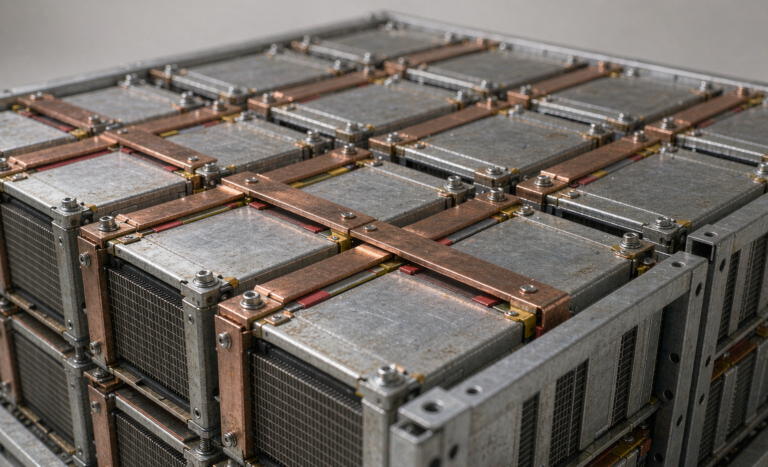
Once cells are graded, they are welded. For the prismatic and 21700 cylindrical formats we use in residential battery storage, the interconnect is the most vibration- and thermally-stressed joint in the whole product. In an apartment, that joint lives through years of elevator vibration, seasonal thermal cycling, and the occasional building retrofit that shakes the enclosure.
Our assembly standard is uncompromising:
- Laser welding with a process capability index Cpk ≥ 1.67, validated by daily first-article X-ray and AI visual inspection of every weld nugget.
- Busbar-to-cell resistance verified at < 0.15 mΩ using the 4-wire Kelvin method on 100% of production, not a statistical sample.
- Pure-nickel or nickel-plated copper busbars, mechanically preloaded to 0.3–0.7 MPa with silicone interlayers that absorb the differential expansion between cells and the rigid housing.
- Strain-relieved sense wires potted at the entry point so a single pulled wire cannot short against the pack.
When we build a custom battery solution for a specific apartment brand, the weld map is the first thing their QA team audits, because a cold weld that passes today will present as a hot spot in year four — long after the installer has left the building. The same weld-discipline mindset we apply to high-rate drone battery packs, where a single cold joint can down an airframe mid-flight, carries directly into our apartment modules; the consequence profile is different but the manufacturing rigor is identical.
Formation, Capacity Grading, and Multi-Stage Burn-In
Welding is not the end of assembly; it is the start of proving the pack. Every completed module goes through formation — the initial charge that activates the solid-electrolyte interphase — followed by a capacity-grade pass and a multi-stage burn-in that simulates the first months of apartment duty.
Our burn-in gate is strict by design:
- Re-test capacity at ≥ 98% of nameplate after formation, or the pack is stripped and rebuilt.
- DCIR must be within +10% of the incoming cell average, confirming the weld network did not add hidden resistance.
- Cell-to-cell voltage spread ≤ 30 mV after a controlled rest, the single best predictor of long-term balance trouble.
- A thermal soak from −10 °C to 60 °C with a 12-hour hold at each extreme, catching cold-cranking weakness and hot-leakage paths before shipment.
I have personally supervised the teardown of returned packs that “passed” a single formation cycle at a low-cost vendor, and the dendrites were already visible. Multi-stage burn-in is the manufacturing step that turns a probable infant-mortality failure into a quarantined unit that never reaches a tenant’s electrical closet.
DataMatrix Genealogy: Traceability for Multi-Tenant Buildings
In a single home, a serial number is a nice-to-have. In an apartment building, it is a legal necessity. When one of two hundred packs drifts, the building manager needs to know its full history — which cell lot, which weld fixture, which formation oven — within minutes, not weeks.
That is why every module we manufacture for the apartment channel carries a laser-etched DataMatrix code linked to our manufacturing execution system (MES). The genealogy record stores:
- Supplier lot and grade data for every cell in the pack.
- Weld fixture ID and the measured resistance of each joint.
- Formation and burn-in curves, retained for the full warranty period.
- Final test certificate, referenced by the pack’s QR/DataMatrix on the enclosure.
This level of traceability is also what lets a home energy storage system qualify for the insurance and strata approvals that apartment installations require. I have watched a building manager isolate a single faulty batch across three towers in under an hour because the DataMatrix let him query by cell lot — a process that would have taken a manual audit of every pack.
Apartment-Specific Build Specs: Enclosure, Containment, Remote-Ready BMS
The apartment environment demands build choices that a garage-mounted pack never needs. Dust, coastal humidity, shared-wall fire codes, and gated maintenance access all push the manufacturing spec in specific directions:
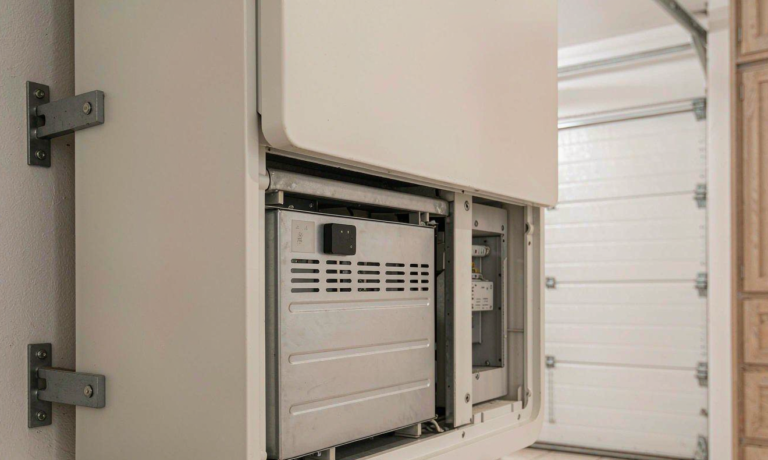
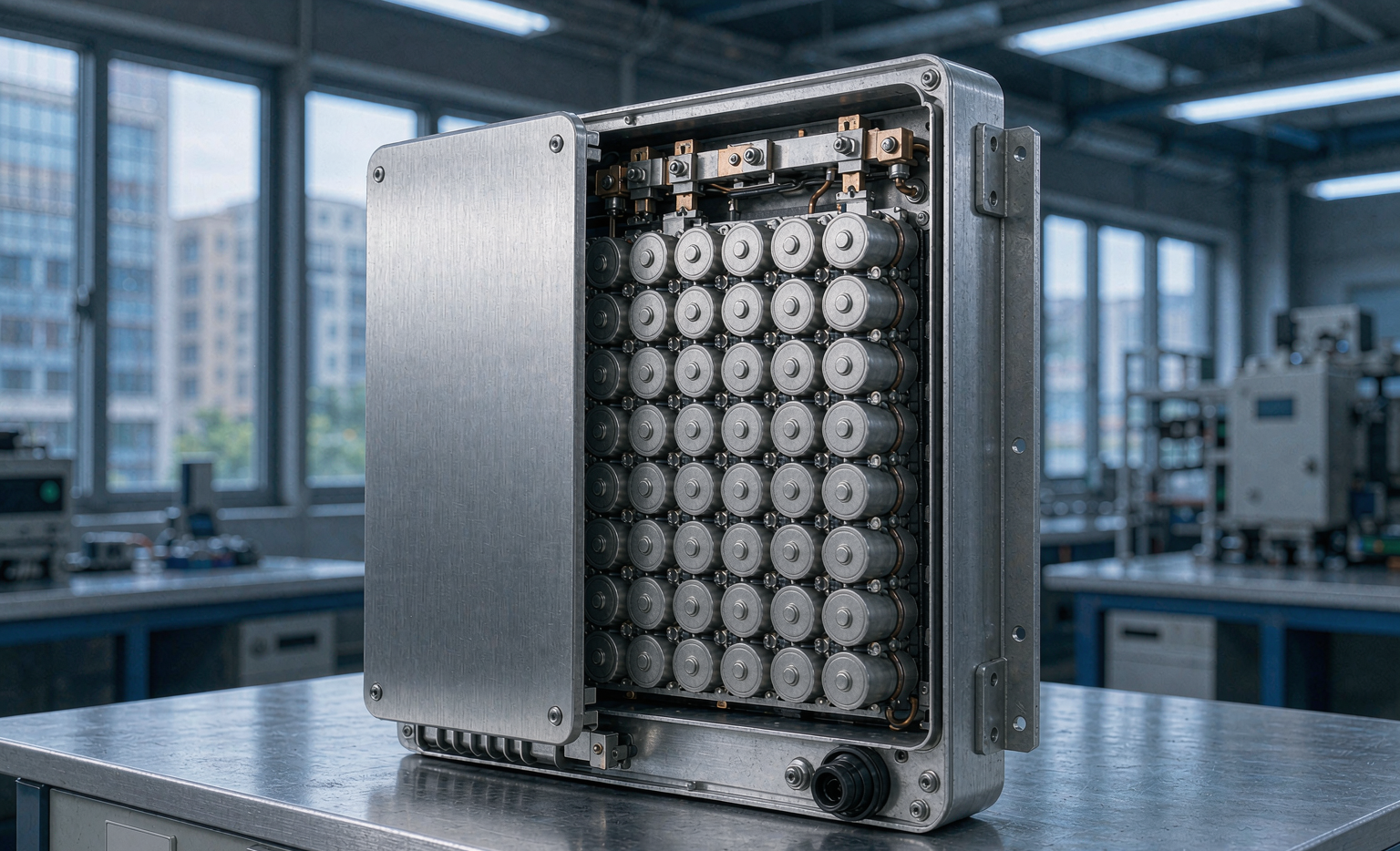
- Enclosure rating IP54 as standard, IP65 for coastal or basement installs, with a continuous gasket and hard-anodized 6061-T6 or 30% glass-filled nylon housing that survives the salt-fog and vibration of shared building infrastructure.
- Unit-level thermal containment built into the module, aerogel barriers and directional vents sized to the UL 9540A unit-level test so a single cell fault cannot propagate across the shared riser.
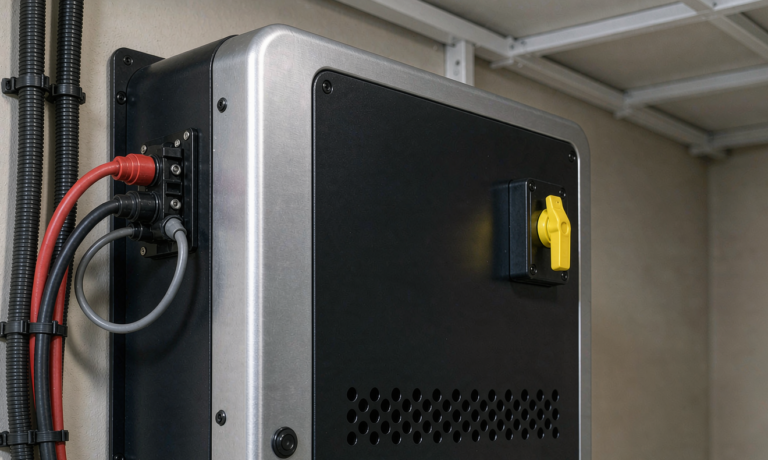
- Remote-ready BMS with Modbus or CAN reporting of state-of-health, so a building manager can watch pack health from a dashboard without dispatching a technician to open every electrical closet.
- Integrated smoke-detector and contactor-failsafe interface, letting the building’s fire system isolate a pack before a fault becomes an incident.
We routinely add 18–30% to the bill of materials for apartment-rated enclosures versus a bare residential pack, and I defend that premium in every design review. A custom battery solution that cannot be remotely monitored in a locked closet is a liability waiting for a 2 a.m. alarm.
The Standards Floor and Transport
Manufacturing for apartments does not exempt a product from the baseline certifications that govern every lithium battery we ship. These are the floor, not the ceiling, and our line is built to clear them on 100% of output:
- UN38.3 T.1–T.8 — altitude, thermal, vibration, shock, external short, impact, overcharge, and forced-discharge qualification for transport safety.
- IEC 62133-2 — secondary lithium cell safety for portable and stationary use.
- IEC 62619 — industrial and stationary battery safety, the relevant bar for fixed residential storage.
- UL 1973 / UL 9540 / UL 9540A — stationary storage, system, and thermal-propagation containment, respectively, the trio most apartment authorities require.
- NFPA 855 — installation fire-code spacing and quantity limits per fire compartment.
- IEEE 1547 — interconnection and anti-islanding behaviour when the pack talks to the building grid.
- FCC / CE electromagnetic compatibility for the BMS and comms.
I remind every junior engineer on my line that certification is a floor, not a reliability prediction. A pack can pass UN38.3 and still fail in an apartment in year six if the manufacturing discipline described above is missing. The standards clear the product for shipment; the factory process clears it for a decade of shared-wall service.
Frequently Asked Questions
How is manufacturing for apartment batteries different from single-family home energy storage?
The core difference is consequence and access. A single-family home energy storage system has one owner who can physically inspect it; an apartment pack sits in a locked closet on a shared riser where a fault can propagate across units and maintenance access is gated. That forces unit-level thermal containment, remote-ready BMS telemetry, and full DataMatrix genealogy into the manufacturing spec rather than treating them as options.
Why does incoming cell grading matter so much for buildings?
An apartment building buys dozens to hundreds of packs at once. If cells drift in capacity or internal resistance, the building sees uneven discharge, premature imbalance alarms, and warranty disputes that are hard to reproduce. Grading to ≤1% capacity spread and <6% DCIR CoV with the 4-wire Kelvin method makes the whole fleet behave as one system.
What weld standard should an apartment battery meet?
Laser welds should hold a process capability of Cpk ≥ 1.67, verified by X-ray and AI inspection, with busbar-to-cell resistance confirmed below 0.15 mΩ on 100% of production using the 4-wire Kelvin method. This is the joint most exposed to elevator vibration and thermal cycling in a shared building.
Is UN38.3 enough for an apartment installation?
No. UN38.3 T.1–T.8 covers transport safety only. Apartment authorities typically expect IEC 62619, UL 1973, UL 9540, UL 9540A for thermal propagation, NFPA 855 for fire-code spacing, and IEEE 1547 for grid interconnection. Certification is a floor; the manufacturing process is what delivers ten-year shared-wall reliability.
How does a custom battery solution help a specific apartment brand?
A custom battery solution lets the enclosure, BMS reporting protocol, mounting form factor, and containment rating be matched to the building’s electrical closet, strata rules, and monitoring platform. The weld map and DataMatrix genealogy are the first items a serious apartment QA team audits, because they determine whether a fault can be traced and isolated quickly across the whole fleet.