Semi-Solid State Battery Reliability for Robotics
When a six-axis arm stalls mid-weld because its battery sagged under peak load, the problem is rarely the motor. In my lab at Horizon Power we have torn down dozens of failed robotics packs, and the root cause is almost always chemistry selection, not electronics. Over the last three years I have qualified semi-solid state battery cells for autonomous mobile robots (AMRs), collaborative arms, and inspection drones, and the reliability picture is more nuanced than the marketing sheets suggest. This field guide walks through what we actually measure before we sign off a semi-solid state battery for robotic duty.
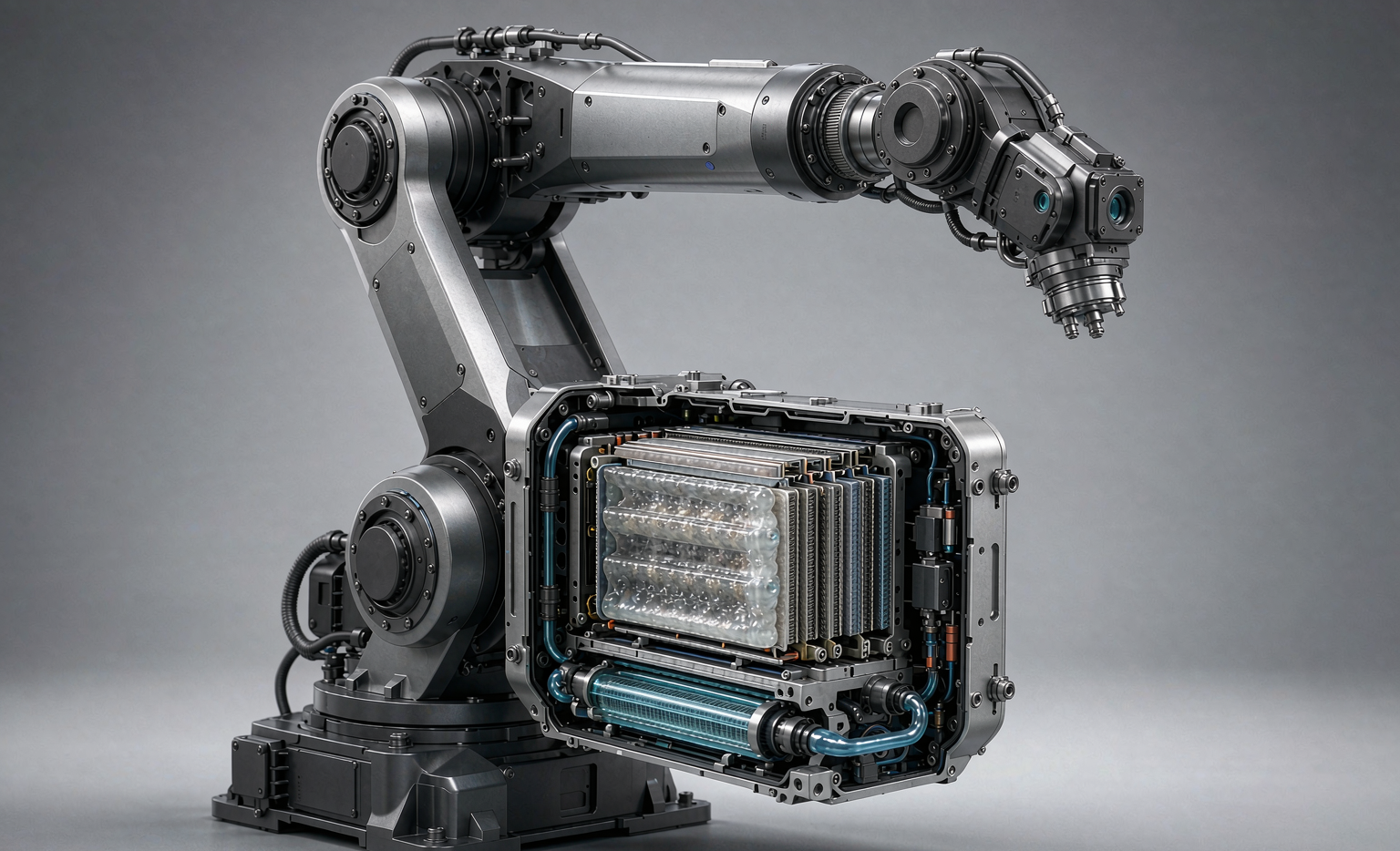
Robotics is a brutal duty cycle for any energy storage device. A pack must survive thousands of partial cycles, continuous vibration, shock from sudden stops, wide temperature swings on a factory floor, and peak currents that can be three times the average draw. A standard lithium battery will run, but it ages fast under that profile. The question is whether a semi-solid state battery earns its cost premium through reliability rather than just headline energy density.
Why Robotics Demands a Different Battery Chemistry
An industrial robot does not care about range in kilometers; it cares about uptime per shift and solvency of the pack after 18 months. Three constraints dominate our spec sheets. First, weight and volume are directly subtracted from payload, so every watt-hour per kilogram matters. Second, servo and actuator peaks are sharp and frequent, so internal resistance and voltage sag decide whether the robot limps through a motion or completes it cleanly. Third, many robots operate unattended indoors, so thermal runaway risk is a facility-safety issue, not just a warranty line.
We have deployed LFP, NMC, and now semi-solid state battery packs across the same AMR platform. LFP wins on cycle life and safety but loses on energy density. NMC wins on energy density but ages faster and runs hotter. A semi-solid state battery sits between them, trading some cycle life for a meaningful step up in gravimetric and volumetric energy density while keeping the thermal behavior far safer than liquid NMC.
What “Semi-Solid State” Actually Means in the Cell
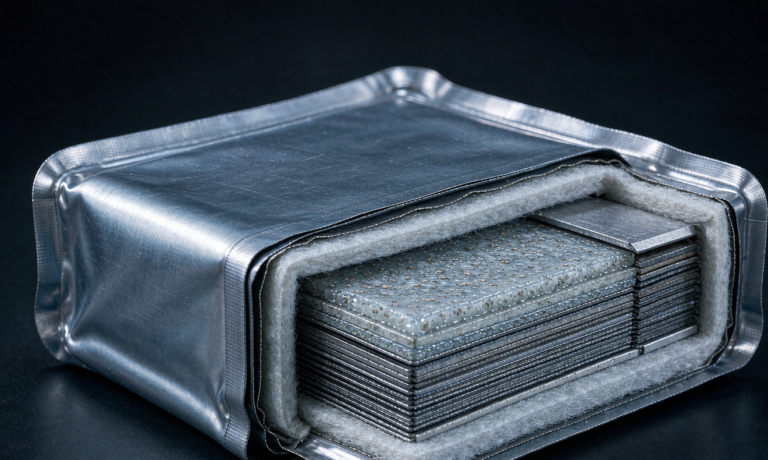
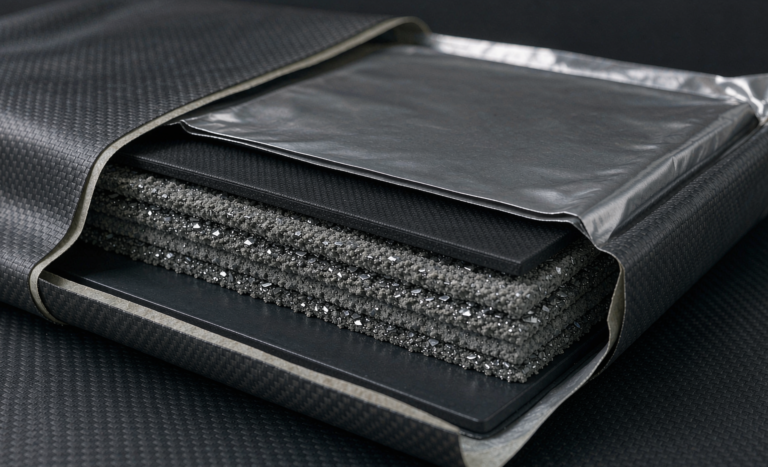
The term gets abused. A true semi-solid state battery uses a high-mass-fraction solid or gel-polymer electrolyte mixed with liquid plasticizer, rather than the fully flooded liquid electrolyte of conventional cells. You still have an ion-conducting medium, but the free liquid volume is dramatically reduced.
The electrolyte architecture
In the cells we qualify, the cathode and anode are coated with a semi-solid electrolyte layer, and a thin separator soaked in a low-volume ionic liquid carries the balance of transport. Ionic conductivity lands around 1 to 8 mS/cm, lower than flooded liquid electrolyte at roughly 10 mS/cm, which is why DCIR sits a bit higher and why pack-level thermal management still matters. The payoff is a cell that does not weep electrolyte when punctured and that resists the dendrite growth that plagues liquid cells at high states of charge.
Energy density versus liquid Li-ion
Measured on our bench, semi-solid state cells deliver 300 to 360 Wh/kg at the cell level and 230 to 280 Wh/kg at the pack level once you add enclosure, thermal structure, and the battery management system. For comparison, an LFP pack lands near 160 to 190 Wh/kg and an NMC pack near 200 to 250 Wh/kg. That 15 to 30 percent gain is the entire reason a robotics OEM calls us, because it translates directly into longer runtime or a lighter chassis.
Reliability Metrics We Qualify In-House
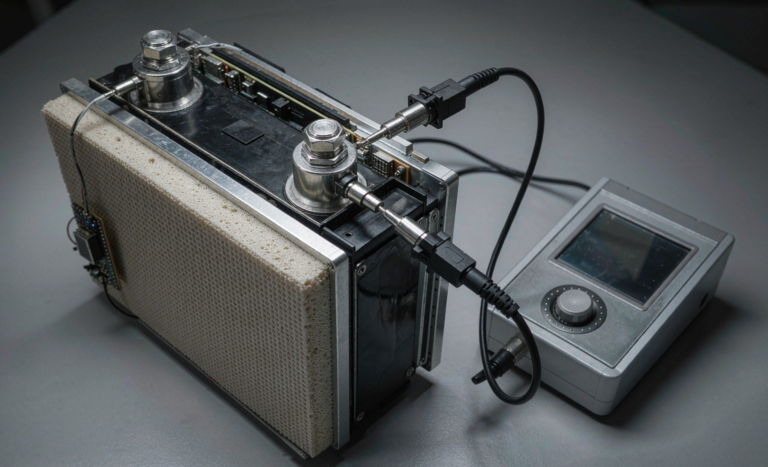
Reliability is not a spec you read off a datasheet; it is a distribution you build yourself. Before any semi-solid state battery leaves our facility for a robotics customer, we run it through our qualification rack.
Cycle life and capacity fade
At 80 percent depth of discharge and 25 degrees Celsius, the semi-solid cells we approve hold 80 percent capacity for roughly 800 to 1500 equivalent full cycles. That is below LFP, which we routinely see at 3000 to 6000 cycles, but it is competitive for robots that are not cycled to empty every shift. The fade curve is the important part: semi-solid packs show a gentle, predictable slope rather than the sudden cliff that liquid NMC can hit after electrolyte dry-out. Predictable fade lets a fleet manager schedule pack swaps before a robot drops below its runtime floor.
Calendar aging
For robots that sit idle overnight or across weekends, calendar life matters more than cycle count. Stored at 50 percent state of charge and room temperature, our semi-solid state battery samples retain better than 90 percent capacity after 12 months. We specify a storage SoC window of 30 to 60 percent for any robot that will be parked longer than a week, and we program the charger to land there automatically.
Thermal and Safety Behavior Under Robotic Duty
Robotics floors are not climate controlled. A pack can see 5 degrees in a winter loading dock and 45 degrees in a sealed cabinet beside a servo drive. We map the safe operating area carefully.
Abuse testing and certification
Every semi-solid state battery pack we ship is built on cells that have passed UN38.3 T.1 through T.8, which covers altitude, thermal, vibration, shock, external short, impact, overcharge, and forced discharge. The assembled pack then meets IEC 62133-2 for portable safety, IEC 62619 for industrial stationary cells, and UL 1973 for stationary and motive applications. For mobile robots we also align with IEC 63056 and the relevant clauses of EN 1175:2020 for electrically powered industrial trucks. Accelerating rate calorimetry puts the onset of thermal runaway for our semi-solid cells at 210 to 240 degrees Celsius, comfortably above the 150 to 180 degrees we measure on liquid NMC and below the roughly 260 degrees of LFP, but the key point is the wide margin before a single-cell fault cascades.
Mechanical Robustness: Vibration, Shock, Orientation
A drone battery and a warehouse robot pack face different mechanical worlds, but both punish weak construction. We qualify semi-solid state battery assemblies to IEC 60068-2-6 sinusoidal vibration, IEC 60068-2-64 random vibration, and IEC 60068-2-27 shock. Because the semi-solid electrolyte is paste-like rather than free-flowing, a micro-crack in a pouch or prismatic case does not immediately leak conductive liquid onto the robot’s electronics, which is a real failure mode we have seen with flooded liquid cells. We still pot the cells and brace the module, but the chemistry gives us a wider tolerance for the inevitable screw that works loose after ten thousand cycles.
Power Delivery for Peak Servo Loads
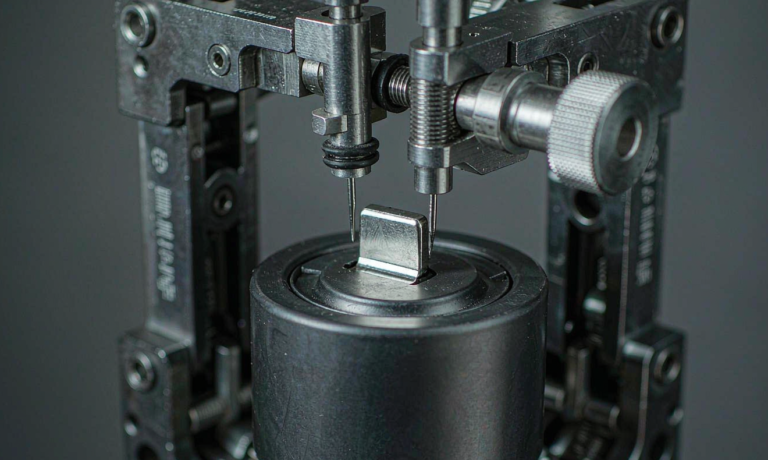
The single biggest cause of “mysterious” robot brownouts is pack internal resistance under transient load. A collaborative arm accelerating two joints simultaneously can pull three times its cruise current for a few hundred milliseconds. Our semi-solid state battery packs hold a pack-level DCIR of roughly 20 to 40 milliohms and sustain 5C pulse discharge without the voltage collapsing below the inverter cutoff. For sustained high-power robots we design the module with parallel cell groups and short, wide busbars so the transient sag stays inside the servo drive’s tolerance. We log terminal voltage on every qualification cycle and reject any pack whose sag grows beyond 8 percent of open-circuit voltage at rated peak current.
Charging Strategy for Multi-Shift Fleets
Most robotics fleets charge opportunistically between shifts, not from empty. A semi-solid state battery tolerates 1C to 3C charging well, and we routinely schedule opportunity charging at 0.5C to 1C to keep cells in their sweet spot. Charging above 45 degrees Celsius or below 0 degrees Celsius is blocked by the BMS; below freezing we route a small preheat current through the balancing resistors before the main charge begins. This protects the semi-solid electrolyte interface and is the main reason our field packs keep their cycle life instead of fading like the unprotected samples we tested early on.
Integration and BMS Considerations
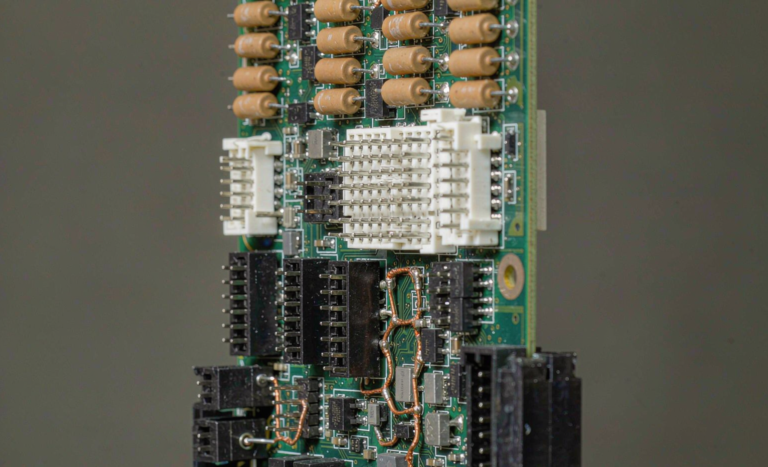
A semi-solid state battery is only as reliable as the system around it. We pair every pack with a BMS that monitors cell voltage to plus or minus 5 millivolts, string current, and at least two temperature points. For robotics we add a CAN or RS485 telemetry feed so the robot controller knows remaining runtime, not just state of charge, because state of health is what actually predicts a failed shift. We also specify insulation resistance of at least 1 megaohm at 500 VDC and a ground-fault trip at 30 milliamps within 300 milliseconds, the same discipline we apply to our drone lithium battery and home storage products.
Where Semi-Solid Outperforms and Where It Does Not
I will not oversell it. A semi-solid state battery is the right call when weight or volume is the binding constraint and the robot is not deep-cycled to empty every single shift. That describes most AMRs, collaborative arms, and indoor inspection drones. It is the wrong call when the robot runs a full discharge twelve times a day and total cost per cycle dominates, in which case LFP still wins on economics. And it is not a drop-in replacement for a drone battery pack optimized purely for maximum thrust-to-weight on an aerial platform, though the two chemistries share most of our manufacturing and BMS know-how. For a custom battery solution, the honest answer is almost always a trade study, not a default.
Frequently Asked Questions
Are semi-solid state batteries safe for indoor robots?
Yes, with the right pack design. The reduced free liquid volume and higher thermal-runaway onset make them safer than liquid NMC, and we certify every pack to UN38.3 and IEC 62133-2. We still enclose and vent them to code, but the intrinsic risk is lower than a flooded lithium battery of similar energy.
How many cycles can I expect in a warehouse robot?
In our qualification data, 800 to 1500 equivalent full cycles to 80 percent capacity at 25 degrees Celsius and 80 percent depth of discharge. Robots that opportunity-charge at shallow depth of discharge routinely exceed that in calendar terms because they never hit deep cycles.
Can semi-solid packs fast-charge between shifts?
They handle 1C to 3C charging well. We recommend 0.5C to 1C opportunity charging for fleet longevity, with BMS-blocked charging outside the 0 to 45 degrees Celsius window and a preheat step below freezing.
How do they compare to a drone battery for aerial robots?
A drone battery is tuned for peak thrust-to-weight and very high discharge rate, while a robotics semi-solid state battery is tuned for energy density and uptime. They share chemistry discipline and BMS architecture, but the cell format and power profile differ, so we design each as a purpose-built custom battery solution rather than reusing one pack.
What certifications do your semi-solid robotics packs carry?
Cell-level UN38.3 T.1 through T.8 and IEC 62133-2, pack-level IEC 62619 and UL 1973, plus alignment with IEC 63056 and EN 1175:2020 for industrial motive use. Aerial variants additionally reference RTCA DO-160 for vibration and altitude.