Semi-Solid State Battery Manufacturing for Aerospace
I still remember the first time a semi-solid state battery came off our pilot line and hit 410 Wh/kg on the formation cycle. As Karl Huang, Senior lithium battery Engineer at Horizon Power, I have spent the better part of a decade on the production floor — coating electrodes, troubleshooting dry rooms, and qualifying cells against the standards that actually matter when a battery leaves the ground. Semi-solid state battery manufacturing for aerospace is not a lab curiosity anymore; it is a discipline with hard tolerances, traceable process windows, and certification gates that decide whether a cell ever flies.
In this playbook I will walk through the process chain we run for aerospace-grade cells, the numbers we hold ourselves to, and the certification path that connects a stacked pouch to an FAA- or EASA-approved airframe. If you are sourcing power for an eVTOL, a high-altitude pseudo-satellite, or a long-endurance inspection aircraft, the manufacturing details below are the difference between a datasheet and a dependable product.
Why Aerospace Demands Semi-Solid State Chemistry
Conventional lithium battery packs are good, but they are built around liquid electrolytes that cap both safety margin and energy density. In aerospace, every gram of mass costs range, and every thermal runaway event is unacceptable. A semi-solid state battery uses a gelled, partially liquid electrolyte that retains ionic conductivity close to a liquid while dramatically reducing flammability. In our qualification runs we see energy densities of 360–420 Wh/kg versus the 250–300 Wh/kg typical of high-quality NMC lithium-ion — a 30–50% step that an airframe engineer feels immediately.
The trade is process complexity. You cannot just pour a known slurry and hope. The semi-solid electrolyte must be coated at controlled solids loading, the electrode must stay wet enough to bond yet dry enough to avoid bleed-out, and the whole line must live in a dry room tighter than most liquid-lithium plants. When a customer asks for a custom battery solution for a flight envelope we have never seen, the chemistry gives us headroom; the manufacturing discipline is what makes the headroom real.
The Dry-Room Process Chain: From Slurry to Stacked Cell
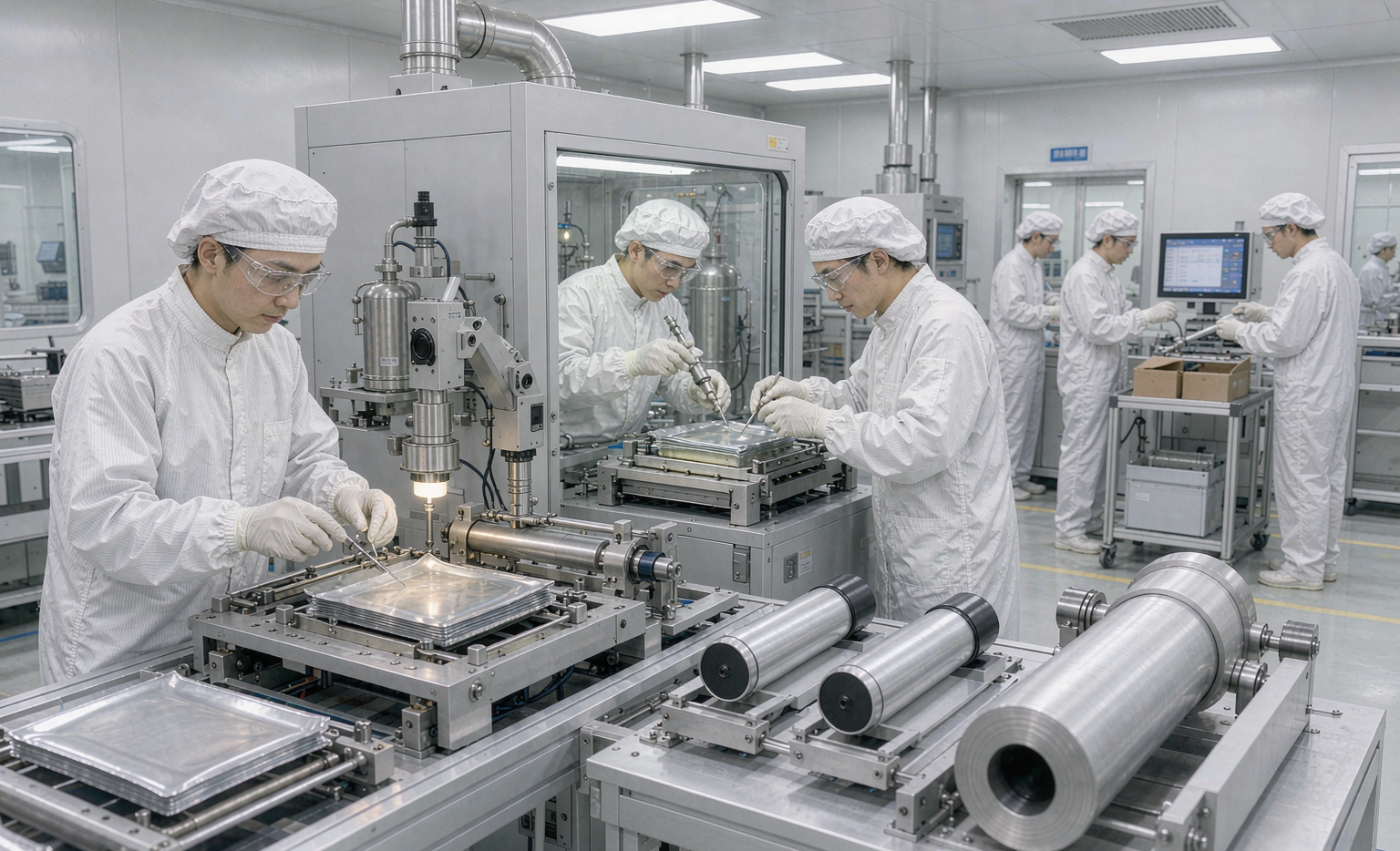
Aerospace semi-solid production starts long before coating. Our inbound cathode (NMC811 or LNMO) and anode (silicon-blended graphite) powders are conditioned at <1% relative humidity. The semi-solid electrolyte — a Li-ion conductive polymer suspended in a small fraction of solvent — is mixed under inert gas. We hold the mixing dew point below −50°C because water is the silent killer: it consumes lithium, forms HF, and quietly degrades cycle life.
- Mixing & degassing: dual-planetary mixer, vacuum pulled to −0.095 MPa, target solids loading 60–72%.
- Coating: slot-die on a continuous foil at 20–40 m/min, coat weight tolerance ±1.5 g/m².
- Calendering: roll compaction to a target porosity of 28–34%, measured inline by laser gauge.
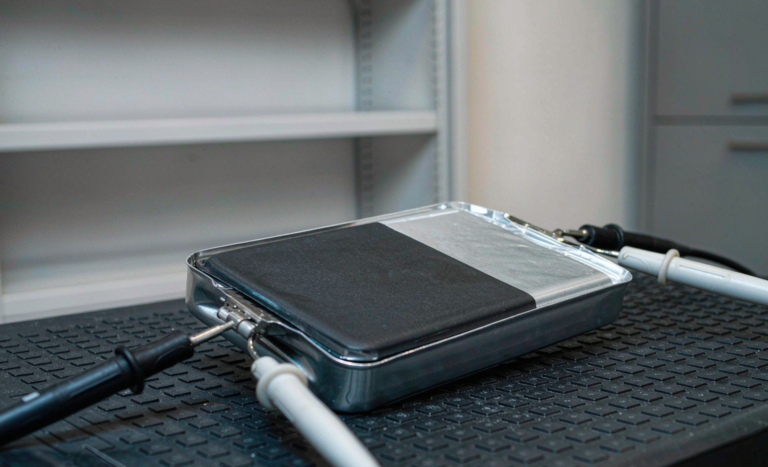
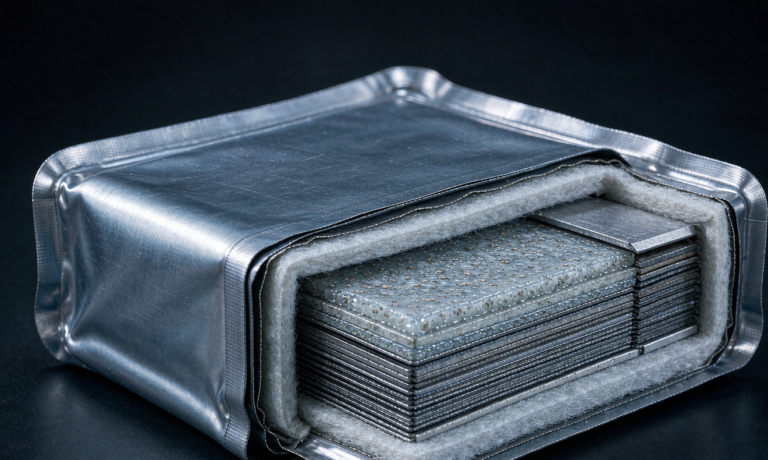
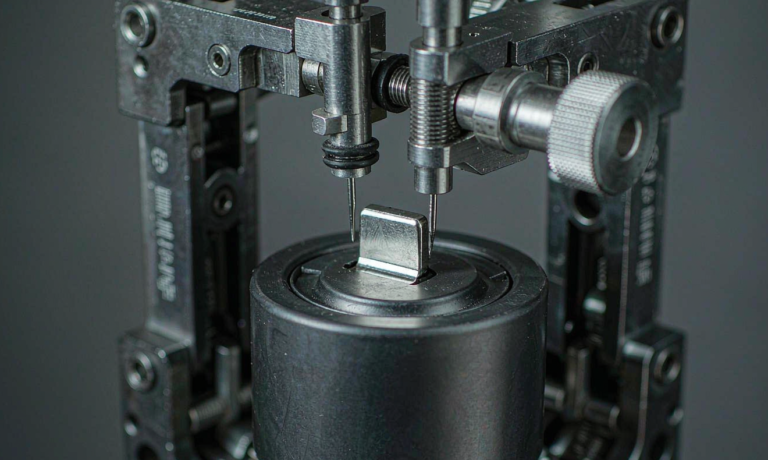
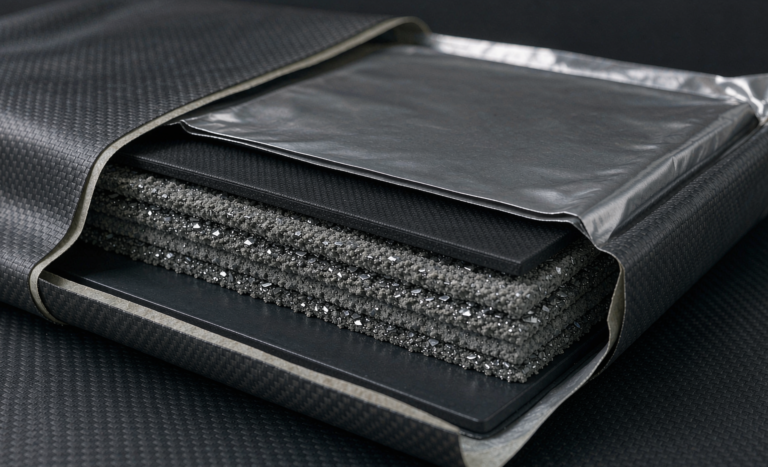
- Stacking & enclosure: zig-zag or Z-fold stacking into an aluminum-laminate pouch, then laser weld the tab.
This is the core of semi-solid state battery manufacturing, and every step is logged to a batch record. For aerospace we keep that record for the life of the program — there is no “we lost the lot trace.”
Electrode Coating and Calendering Tolerances
Coating is where most yield is won or lost. A semi-solid slurry is viscoelastic; if the slot-die lip clogs or the web tension drifts, you get streaks that become internal shorts later. We run a three-point beta gauge across the web width and reject any 5-meter section outside ±2% coat weight. Calendering then sets electrode density. Too loose and you lose energy; too tight and you fracture the semi-solid network and raise impedance.
In one eVTOL program we tightened calendering porosity from 34% to 30% and recovered 6% pack-level energy at the cost of 4% faster formation time. That kind of trade is exactly what a senior engineer negotiates with the airframer — and it only works because the line is stable enough to hold the new setpoint for 10,000 cells in a row.
Cell Assembly, Formation, and Degassing
After stacking, the pouch is vacuum-filled with the semi-solid electrolyte, lightly pressurized, and sent to formation. Formation is the first full charge that builds the SEI layer. For aerospace we run a slow, temperature-controlled formation at 25°C ±2°C over roughly 48 hours, then a degassing step that removes trapped solvent vapor and seals the pouch a second time.
We then hold cells at 40°C for a 7-day “soak and self-discharge” check. Any cell losing more than 5% SOC in that window is pulled. This single gate removes the weak population that would otherwise surface at altitude. It is unglamorous, but it is why a Horizon Power lithium battery cell can be trusted in a pressurization cycle it was never designed to survive.
Qualification Against UN38.3, IEC 62133, and Aviation Rules
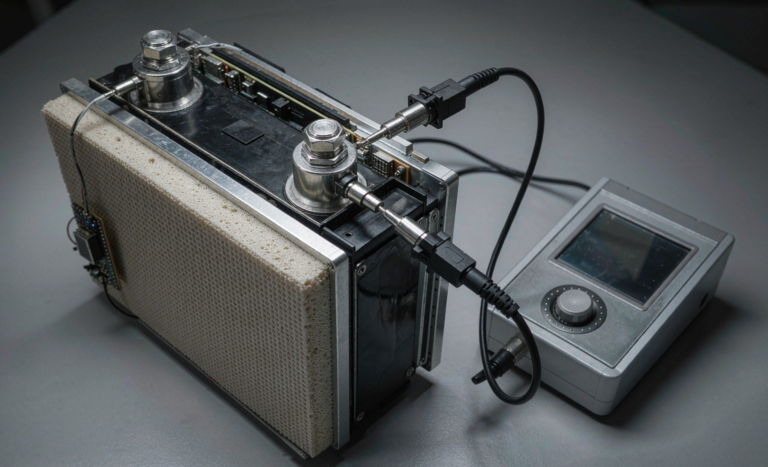
A cell does not fly because it is powerful; it flies because it is certified. The baseline is UN38.3, the transport test covering altitude simulation (11.6 kPa, simulating ~15,000 m), thermal test (−40°C to +75°C), vibration, shock, external short circuit, impact, overcharge, and forced discharge. We run UN38.3 at the cell and the pack level.
On the product-safety side, IEC 62133-2 governs secondary lithium cells for safe operation, while IEC 62619 and IEC 62660 cover industrial and traction performance. For aviation specifically, we align with FAA expectations (reference RTCA DO-160 environmental categories for airborne equipment) and EASA Special Condition VTOL battery safety objectives for eVTOL powertrains. EASA’s SC-VTOL expects a demonstrated single-cell thermal-runaway containment and a stated residual capacity after a contained event — so our packs are built with ceramic separators and intumescent barriers, not just ventilation.
The point for a buyer: ask for the test report, not the claim. A genuine aerospace semi-solid state battery ships with UN38.3 paperwork and an IEC 62133-2 file at minimum, plus a thermal-propagation test narrative that matches your airframe’s failure assumption.
Custom Battery Solutions and Cross-Pollination With drone battery Programs
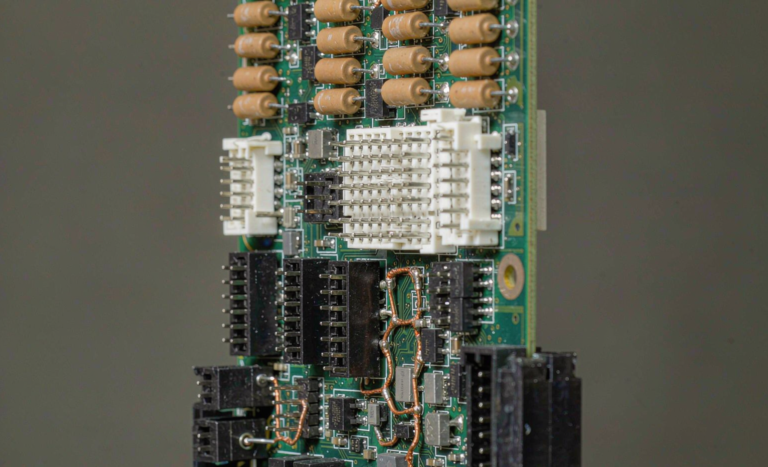
Every airframe is different, and off-the-shelf packs rarely fit. We deliver custom battery solution work as a co-engineering engagement: we take the mission profile (takeoff power, cruise draw, ambient range, recharge cadence) and design the module — series/parallel count, thermal interface, BMS communication (CAN or SMBus), and mechanical envelope. For high-altitude long-endurance aircraft the constraint is cold; for eVTOL it is burst C-rate.
There is real synergy with our drone battery programs. The same semi-solid chemistry that gives an inspection multicopter an extra eight minutes of flight also gives an eVTOL its margin on a hot-day go-around. We reuse the coating know-how, the formation recipe, and the UN38.3 dossier — then tune the mechanical and thermal package for the airframe. That reuse is why a small aerospace program can still get aerospace-grade cells without reinventing the line.
FAQ
How is semi-solid state manufacturing different from conventional lithium-ion?
The biggest difference is the electrolyte. A conventional lithium battery uses a fully liquid electrolyte; semi-solid state uses a gelled, partially liquid electrolyte that is coated and dried into the electrode. That changes mixing, coating, and dry-room requirements, and it raises the bar on process control — but it keeps most of the existing lithium-ion equipment alive, which is why we could stand up an aerospace line without building from zero.
What certifications does an aerospace semi-solid cell need?
At minimum, UN38.3 for transport and IEC 62133-2 for product safety, supported by IEC 62619 / IEC 62660 performance data. Aviation authorities add their own layers: FAA-aligned DO-160 environmental testing and EASA SC-VTOL thermal-propagation and containment expectations for crewed or nearby-crew flight. Treat the certificate set as a negotiation with your airframer, not a checklist you close once.
Why does the dry room matter so much in semi-solid state battery manufacturing?
Water in the line consumes active lithium and generates HF, which attacks the cathode and the semi-solid network. Because the semi-solid electrolyte still carries a small solvent fraction, it is sensitive to humidity during coating and filling. We run below −50°C dew point so the cell we form on Monday matches the cell we form in three months — that consistency is what qualification assumes.
Can semi-solid cells replace drone battery packs today?
Yes, in the right missions. Where flight time or payload matters more than the lowest possible cost, a semi-solid drone battery beats a standard lithium-ion pack on energy density and safety margin. The trade is price and charge rate, so we usually specify semi-solid for premium or safety-critical airframes and keep high-C liquid packs for training or high-cycle roles.
What energy density should I expect from an aerospace semi-solid cell?
In our current production window, 360–420 Wh/kg at the cell level, translating to roughly 280–330 Wh/kg at the pack level once you add structure, thermal material, and the BMS. The exact number depends on your discharge rate and the mechanical envelope; a slow cruiser beats a burst-rate eVTOL every time on pack-level density.