Home Energy Storage Manufacturing for Cabins
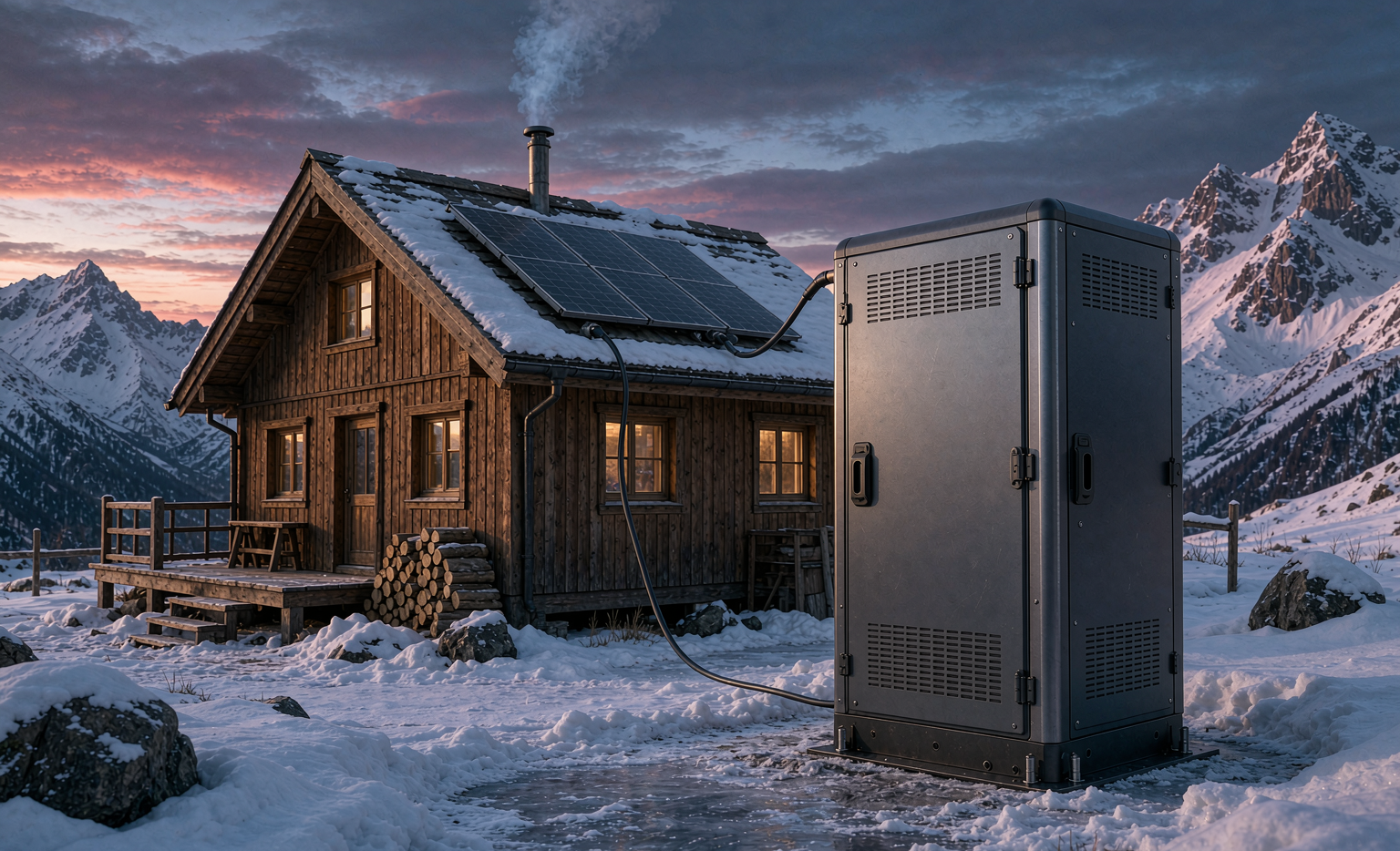
When a client in western Montana reached out about powering a remote off-grid cabin at 2,100 meters, the conversation was never really about kilowatts on a spec sheet. It was about whether the lights would come on in February after the system had sat idle for six weeks at −25 °C. After fifteen years building lithium battery packs for drones, grid storage, and industrial equipment, I have learned that home energy storage manufacturing for cabins is its own discipline — one that blends consumer-grade simplicity with the ruggedness of an industrial custom battery solution.
In this article I will walk you through exactly how we design, build, and validate cabin-grade storage systems on our production line. I will cover cell selection, pack architecture, thermal design, and the safety standards we certify against — the same engineering discipline we apply across our drone battery and stationary storage programs, adapted for the realities of off-grid living.
Why Cabins Need a Different Home Energy Storage Manufacturing Approach
A typical suburban home energy storage system is installed once, kept at a comfortable 20 °C, and cycled every day. A cabin battery lives a harder life. It may sit at 10% state of charge through a freezing winter, wake up in spring to a full charge, and then absorb irregular loads from a refrigerator, a water pump, and the occasional power tool. This duty profile changes the manufacturing priorities in ways that surprise engineers who only build grid-tied systems.
We design cabin packs for four non-negotiable properties:
- Wide temperature tolerance. Cells must survive −30 °C to +60 °C ambient without structural or electrochemical damage.
- Low self-discharge. A pack should lose less than 3% per month in storage so it is alive when the owner returns after a long idle.
- Robust BMS protection. With no daily supervision, the battery management system must be the silent guardian against over-charge, over-discharge, and cell imbalance.
- Field serviceability. Key components should be replaceable without specialized tooling or a factory return.
Cell Chemistry: LFP Is the Default for Cabin Storage
For almost every cabin project, we manufacture with lithium iron phosphate (LiFePO₄, or LFP). Compared with nickel manganese cobalt (NMC), LFP offers three decisive advantages for off-grid home energy storage that directly affect reliability in a remote setting:
- Thermal runaway threshold above 270 °C, versus roughly 150 °C for NMC — a far wider safety margin when the pack is unattended for months.
- 3,000–6,000 cycles at 80% depth of discharge, roughly double the typical NMC lifespan, which matters when a service visit costs a day of travel.
- Stable chemistry at low temperatures, with far lower risk of metallic lithium plating when charged within the correct window.
We qualify cells from every supplier against IEC 62619 (industrial secondary cells) and then verify the manufacturer’s cycle data with our own accelerated aging rig — 45 °C float at 0.5C for 1,000 hours. A custom battery solution only earns that name when the cell data is independently confirmed, not merely quoted from a datasheet. On one incoming lot we caught a 12% capacity shortfall this way and rejected the entire shipment before it reached the line.
Pack Architecture and BMS Integration
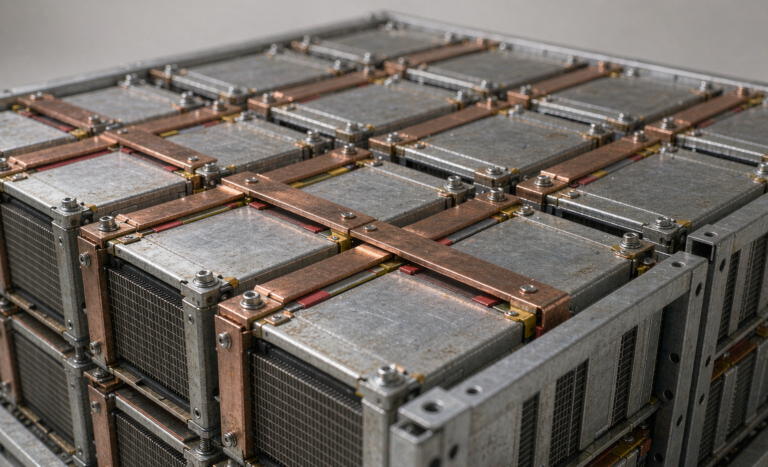
Most cabin systems we build are 48 V nominal, using 15 or 16 series LFP cells. The reasons are practical: 48 V keeps conductor current low (reducing copper loss and connector heating), while staying below the 60 V DC safety-limit threshold that triggers stricter electrical-code requirements in many jurisdictions.
The battery management system is the brain of the pack. Our cabin units use a 16-series BMS with:
- Individual cell-voltage monitoring at ±5 mV accuracy.
- Passive balancing at 50 mA, with active balancing optional above 10 kWh.
- Closed-loop temperature sensing on at least three points per module.
- CAN bus or RS-485 reporting to the inverter for state-of-charge (SoC) and state-of-health (SoH) visibility.
This is the same disciplined approach we use when qualifying a high-rate drone battery — except the sampling rates are slower and the enclosure is far larger. The engineering principle is identical: measure everything, protect every cell, and never trust a single sensor for a safety-critical decision.
Thermal Management and Enclosure Design
An early cabin install in the mountains taught us an expensive lesson. A pack placed the BMS board directly above the cell stack; in a +50 °C shed the board drifted out of spec and forced a field recall. We now separate the electronics bay from the cell bay by at least 25 mm of air gap and add a thermal barrier between them.
For cold climates we specify self-heating cells or a low-wattage pad heater controlled by the BMS, which warms the pack to 0 °C before allowing any charge current. This protects against lithium plating and is now a standard option on every cabin home energy storage system we ship north of the 45th parallel.
The enclosure is IP65-rated, with a condensate drain, a vented-but-sealed cable gland, and UV-stable polycarbonate. We pressure-test each enclosure to 1.2 bar before it leaves the line, and we salt-spray the external hardware for 96 hours to confirm corrosion resistance.
State-of-Charge Strategy for Intermittent Occupancy
Cabins are used in bursts, so SoC management is where most failures actually originate. We program the BMS with two distinct profiles: a “storage” profile that holds 50–60% SoC and enters a low-power sleep mode, and an “active” profile that permits full 10–90% cycling when the owner is present. The transition is automatic based on detected load and charge activity.
Before a known long idle — a winter away or a multi-month absence — we recommend a manual balance cycle so all cells arrive at storage voltage within 10 mV. This single step prevents the slow capacity divergence that eventually trips the BMS low-voltage cutoff and strands the user with a “dead” but physically healthy pack. For a custom battery solution in a remote location, preventing a service call is the highest-value feature we offer.
Qualification and Safety Standards We Certify Against
No home energy storage manufacturing program should ship without certification. Our cabin packs are validated against the standards that matter for stationary, unattended installations:
- UN38.3 — transport safety, tests T.1 through T.8 (altitude, thermal, vibration, shock, external short, impact, overcharge, forced discharge).
- IEC 62619 — industrial stationary battery safety and performance.
- IEC 62485 — stationary battery installation and operational safety.
- UL 9540A — thermal runaway fire-propagation testing, increasingly required by North American authorities having jurisdiction.
- IEC 62133-2 — secondary cell safety for contained applications.
We keep a test-report binder per production batch, and an independent laboratory re-audits our line every eighteen months. For the aviation-grade discipline that applies to our drone battery line under FAA RTCA DO-160 and EASA SC-VTOL expectations, we mirror the same lot-to-serial traceability here — every cell lot is traceable to the finished unit’s serial number.
Field Deployment and Commissioning Checklist
Manufacturing does not end at the loading dock. Every cabin system ships with a commissioning card. As the installing engineer, I recommend the following sequence:
- Verify the inverter’s charge-voltage window matches the BMS setpoints (54.0–56.0 V for 16S LFP).
- Confirm SoC reads above 30% before the first heavy load is applied.
- Test the heating-pad activation at −10 °C ambient if installed in a cold region.
- Log the first 72 hours of charge/discharge to establish a baseline SoH reading.
- Set the BMS low-voltage cutoff to 44.0 V to protect against deep discharge during long idle periods.
Cost, Warranty, and Total Cost of Ownership
Owners often compare our LFP cabin packs against sealed lead-acid (SLA) on upfront price. The comparison rarely survives contact with reality. An SLA bank delivering usable capacity in cold weather might last 300–500 cycles; an LFP home energy storage system delivers 3,000–6,000. On a $/usable-kWh-over-life basis, LFP is typically one-third the cost, and it weighs roughly half as much, which matters when the pack is carried up a trail to the cabin.
We back our cabin packs with a 10-year limited warranty covering 70% retained capacity, provided the BMS logs show operation within the certified window. The warranty is only as good as the data, so we encourage owners to keep the RS-485 logging active — it converts a vague “it stopped working” call into a precise root-cause diagnosis.
Frequently Asked Questions
How long does a home energy storage system last in a cabin?
A well-built LFP cabin pack delivers 3,000–6,000 cycles. For a weekend-use cabin, that translates to 10–15 years of service before capacity drops below 80%. Low self-discharge and proper winter storage are the two biggest factors in reaching the upper end of that range.
Can I expand the capacity later?
Yes. We design our cabin custom battery solution with parallel-ready busbars and a master BMS that supports daisy-chained modules. You can typically double capacity without replacing the original pack, provided the additional modules share the same cell generation and firmware.
What size system do I need for a weekend cabin?
For a cabin with LED lighting, a small refrigerator, and phone charging, a 5 kWh home energy storage system paired with 600 W of solar is usually sufficient. Add electric heat, a well pump, or power tools, and you should budget 10–15 kWh with a matching inverter.
How do you protect the battery during a long winter idle?
We recommend storing at 50–60% SoC, enabling the BMS sleep mode, and maintaining a small solar trickle. The low self-discharge design loses under 3% per month, so the system wakes ready in spring without a generator or shore-power visit.
Whether you are powering a weekend retreat or a year-round off-grid home, the fundamentals of home energy storage manufacturing for cabins come down to one principle I repeat to every junior engineer on the line: build the pack you would trust to start your own heater in a blizzard. That discipline — verified cells, protected every cell, certified every batch — is what separates a reliable system from a liability.