Lithium Battery for Electric Pallet Jacks and Walkie Stackers
Why Walkie Pallet Jacks Deserve a Battery Built Differently
I have spent the better part of fifteen years on warehouse floors, not just in the lab, and the single mistake I see OEMs make is treating a walkie pallet jack like a small forklift. It is not. A walkie pallet jack or a walkie stacker is a pedestrian-operated, low-lift machine that performs dozens of short, shallow discharge cycles every shift. The motor pulls hard for three seconds, rests for twenty, and repeats. That duty profile is brutal on lead-acid and ideal for a well-designed lithium battery pack. When a client asks me to specify power for a new electric pallet jack, the first thing I do is map the duty cycle, because the battery chemistry and the battery management system have to be chosen around it, not around a generic catalog number.
Lead-Acid versus Lithium in a Pedestrian Truck
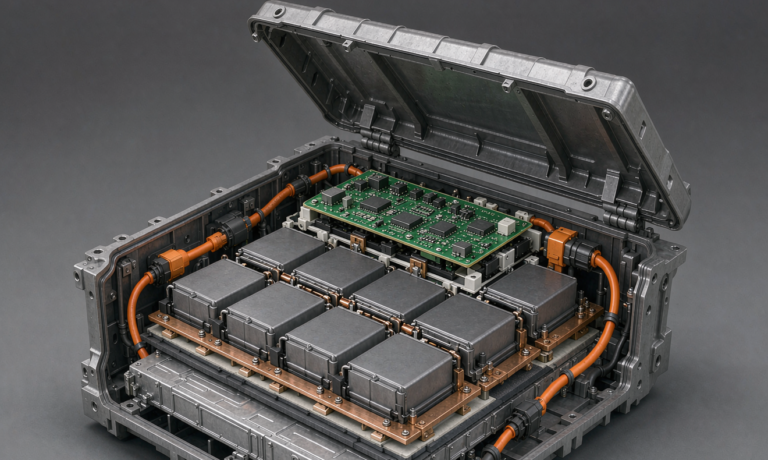
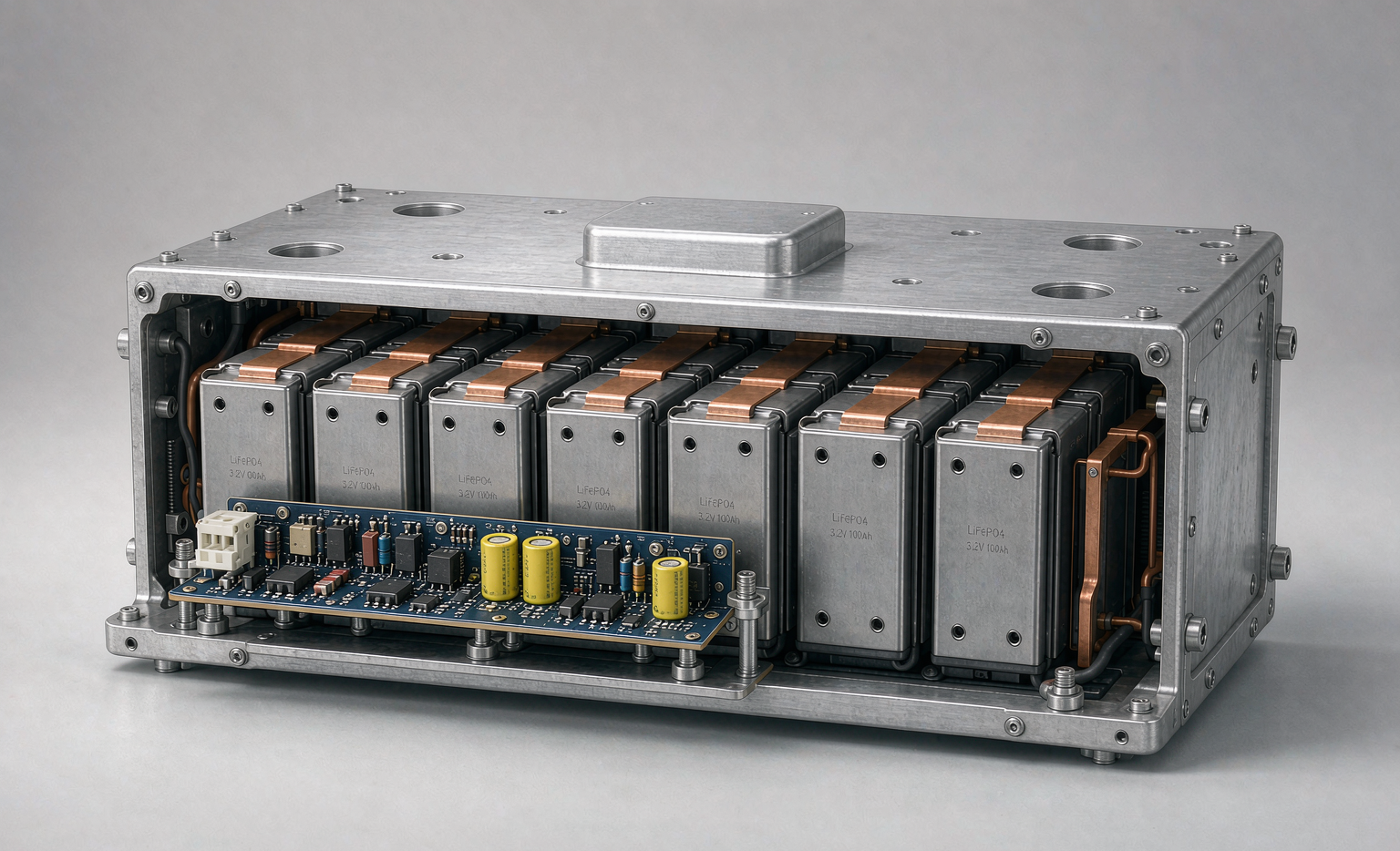
The oldest electric pallet jacks still run on flooded or AGM lead-acid. They work, but they punish the operator. A lead-acid pack delivers only about 50 percent of its nameplate capacity if you respect the 80 percent depth-of-discharge rule, and it wants a full, cool, eight-hour recharge plus an equalization cycle. In a three-shift distribution center that means battery swapping, a vented charging room, and acid handling. A lithium battery pack using LiFePO4 (LFP) chemistry changes the economics. LFP tolerates partial-state-of-charge cycling, accepts opportunity charging during breaks, and returns 90 percent or more of its rated energy every cycle. Over a 2,000 to 4,000 cycle service life the cost per pallet moved drops sharply, which is the number a warehouse controller actually cares about.
Sizing Voltage and Capacity for the Real Load
Most walkie pallet jacks run on 24 V systems, while walkie stackers and higher-capacity models move to 36 V or 48 V to keep current manageable under load. I size the pack in watt-hours, not amp-hours alone, because the motor controller and the lift pump define the peak demand. A typical 2.5 ton walkie pallet jack draws 40 to 70 A while driving and spikes to 90 to 120 A during the initial traction surge. I multiply the average draw by the planned run time, add a 25 percent margin for cold-start and degraded cells, and then confirm the continuous discharge rating of the lithium-ion battery cells exceeds the steady-state current with headroom. For a custom battery solution I also watch the connector and busbar temperature rise at the rated current, because a pack that is electrically correct but thermally tight will fail in year two, not year eight.
What the BMS Must Actually Do
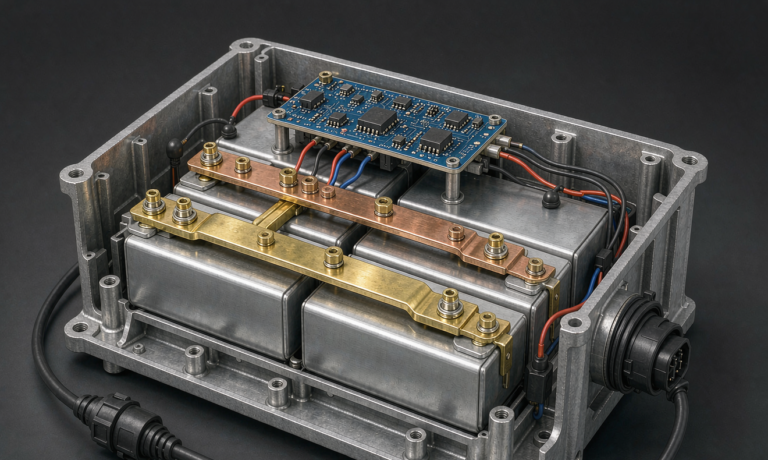
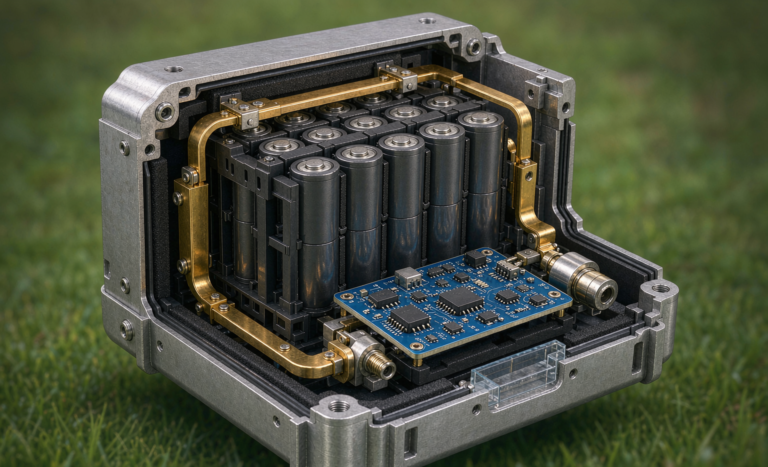
A lithium battery pack is only as safe as its battery management system. On a walkie pallet jack the BMS has three jobs that matter more than the marketing specs. First, it limits inrush. The DC traction motor and the hydraulic pump have a large inductive kick at startup, and without current limiting the contactor welds and the cells sag. Second, it balances. Even grade-A cells drift after a few hundred partial cycles, and passive or active balancing keeps every parallel group within a tight voltage window so the pack ages evenly. Third, it protects. Over-current, over-temperature, and under-voltage cutoffs must trip fast and reset cleanly. I specify a BMS with a reliable communication link, usually CAN or RS485, so the truck controller can read state of charge and state of health instead of guessing from pack voltage. A battery management system that only disconnects on catastrophe is not good enough for a machine an employee stands behind all day.
Opportunity Charging and Multi-Shift Operation
The biggest operational gain from a lithium-ion battery in a walkie pallet jack is that you stop swapping batteries. In a facility running two or three shifts, I design the pack so a ten-minute charge during a break returns enough energy for the next run, and a full recharge fits inside a standard meal window. This removes the charging room, the lift table, and the second or third pack per truck. It also removes a leading cause of lead-acid failures: operators who never finish the charge. The trade-off is that the custom battery solution must be rated for high charge current and the charger must be matched to the cells, ideally with temperature-compensated charging so the pack is not cooked in a hot dock in summer.
Safety, Sealing, and the Standards That Apply
Warehouse trucks live in dusty, damp, and sometimes refrigerated environments, so the enclosure matters. I normally specify an IP54 or IP65 enclosure depending on whether the pack sits low on the chassis where washdown occurs. On compliance, every lithium battery pack we ship for this application is built to UN38.3 for transport, tested to IEC 62133 for portable cell safety, and where the market requires it, evaluated against UL 2580 for vehicular traction batteries. For any unit that travels by air as service stock we follow the IATA and FAA guidance on state of charge limits, and for units moving under EASA-regulated logistics we apply the same transport ceilings. None of these standards are optional in my view; they are the floor for a product a person stands behind.
Field Lessons from Retrofit Programs
When I retrofit an older electric pallet jack from lead-acid to a lithium battery pack, the failure I see most often is not the cells, it is the wiring. The original harness was sized for the sagging voltage of a tired lead-acid battery, and when a stiff lithium pack arrives the contactor and fuse ratings suddenly matter. I re-rate the main fuse, add a pre-charge resistor on the controller input, and verify the charger is lithium-compatible before the first cycle. The second lesson is thermal. A walkie stacker that lifts in a freezer to minus 20 degrees Celsius needs cells rated for low-temperature charge, or I spec a heated pack. Get those two things right and a lithium-ion battery conversion outlasts the truck it powers.
Total Cost of Ownership Over the Truck Life
The question every procurement manager asks is what the lithium battery pack actually costs per year, and the honest answer needs the whole life cycle on the table. Lead-acid looks cheap on the invoice but hides three costs: the spare packs you buy so trucks never sit charging, the vented and supervised charging room, and the labor to water and equalize cells. A lithium-ion battery removes the spares and the watering, shrinks the charging footprint to a wall outlet, and keeps delivering rated capacity long after lead-acid has faded to half. When I build the business case for a client I model energy per pallet move, pack replacements avoided, and downtime saved, and in a two-shift operation the custom battery solution usually pays back inside eighteen months. The exact number depends on shift count and local electricity price, but the direction is never in doubt once opportunity charging is in play.
Frequently Asked Questions
What voltage is a walkie pallet jack battery usually?
Most walkie pallet jacks use a 24 V lithium battery pack, while walkie stackers and heavier-duty models commonly move to 36 V or 48 V to keep current and cabling losses down under higher lift loads. I confirm the voltage against the motor controller before designing the pack.
How long does a lithium battery for a pallet jack last?
A well-built LFP lithium-ion battery in this duty cycle typically delivers 2,000 to 4,000 full-equivalent cycles. Because walkie trucks run shallow, frequent cycles, real service life is usually measured in years of shifts rather than charge counts, and opportunity charging does not shorten it the way it destroys lead-acid.
Can I retrofit my existing electric pallet jack to lithium?
Yes, in most cases, provided the charger is replaced or reprogrammed for lithium chemistry and the main fuse and contactor are re-rated for the stiffer pack voltage. I also add a pre-charge circuit on the controller input during any retrofit to protect the electronics.
Is a lithium pallet jack battery safe indoors?
LFP chemistry is inherently stable and, when built with a proper battery management system and a sealed enclosure rated to IP54 or higher, is safe for indoor and refrigerated warehouses. Compliance to UN38.3 and IEC 62133 is the baseline I require for any unit we ship.
Should the battery be heated for cold storage use?
If the truck works below about 0 degrees Celsius, especially if it charges in the cold, I specify low-temperature charge-rated cells or a heated lithium battery pack. Charging a standard cell near freezing without heating damages capacity permanently, so this is a real design decision, not an option.
Why not just use the same battery as a forklift?
A forklift has a deep, sustained lift load and a different energy envelope than a pedestrian walkie truck that does many shallow cycles. A custom battery solution sized for the walkie duty cycle costs less, charges faster in short breaks, and fits the lower chassis, which is why I treat the two as separate engineering problems.
Further Reading
References