Battery Solution for Electric Ice Resurfacers
For most of the last seventy years, the machine that lays down a fresh sheet of ice has relied on an internal combustion engine burning propane or gasoline. As an engineer who designs lithium battery packs for cold-environment equipment, I have watched the ice resurfacer become one of the most logical yet most demanding electrification targets. A resurfacer works indoors, in a sealed arena, surrounded by spectators and skaters, and it runs on a tight, repeating schedule. That combination makes a clean battery solution not just an environmental upgrade but a practical operational one.
Why the Ice Resurfacer Is a Strong Electrification Candidate
The strongest argument is indoor air quality. A propane resurfacer emits carbon monoxide and nitrogen oxides directly into the rink bowl, where they can accumulate during a busy session. An electric machine produces none of that at the point of use. The second argument is noise: an electric drive is far quieter, which matters for figure-skating events and community rinks that double as event spaces. The third is duty cycle. A resurfacer follows a predictable, repeating pattern of short, intense cycles, which is exactly the kind of load profile that a well-designed lithium battery handles well.
How an Electric Resurfacer Loads the Battery
Before we size a pack, we have to understand where the energy goes. A full-size resurfacer carries several independent loads. The conditioning blade drive shaves and cuts the ice surface. Hydraulic pumps lift the conditioner, drive the augur that moves snow, and actuate the wash-water system. A separate traction motor drives the wheels. Finally, the wash-water pump and the resurfacing towel drive consume power continuously while the machine is on the ice.
In my testing, the conditioner and hydraulics draw the hardest. Peak electrical demand lands in the 20 to 40 kW range for a full-size machine, while traction adds another 15 to 30 kW during acceleration. Energy per resurfacing cycle runs about 3 to 6 kWh depending on sheet size and shave depth. A busy municipal rink that resurfaces 8 to 14 times a day therefore needs a pack that can deliver both high peak power and repeated moderate-depth discharges without overheating.
Pack Architecture: Voltage, Capacity, and Cell Choice
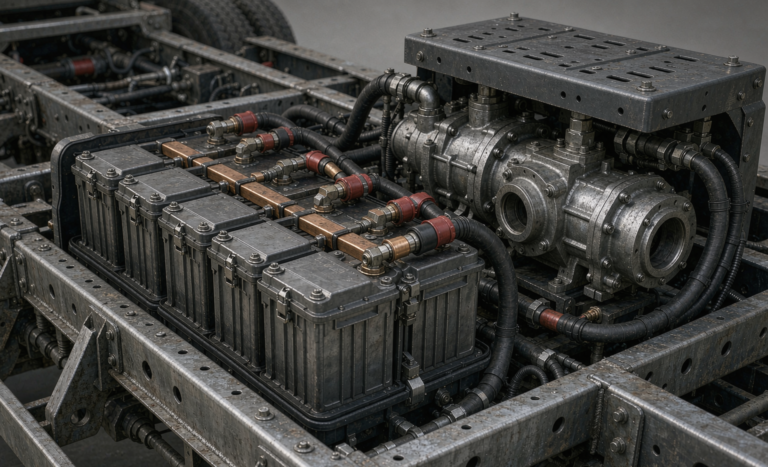
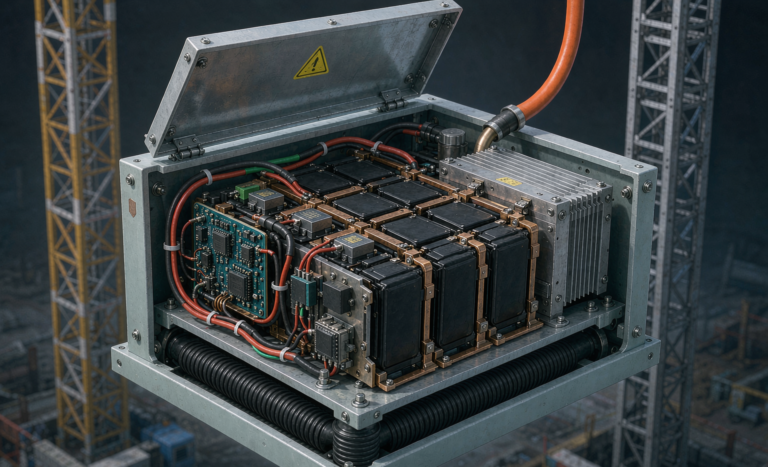
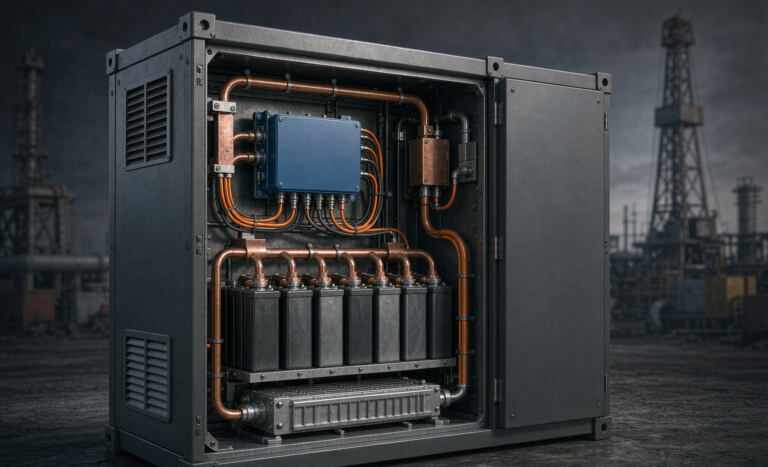
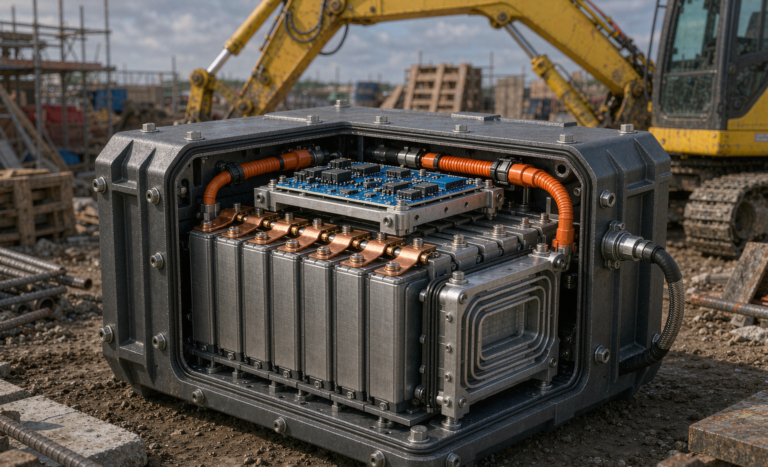
For a full-size resurfacer, we typically design a nominal pack voltage of 400 to 600 V, which keeps conductor sizes and contactor ratings reasonable while supporting the peak power demand. Smaller training-rink machines can use 48 to 96 V architectures. Usable capacity lands in the 40 to 80 kWh band for the full-size units, with pack mass around 350 to 600 kg once enclosure, cooling, and safety hardware are included.
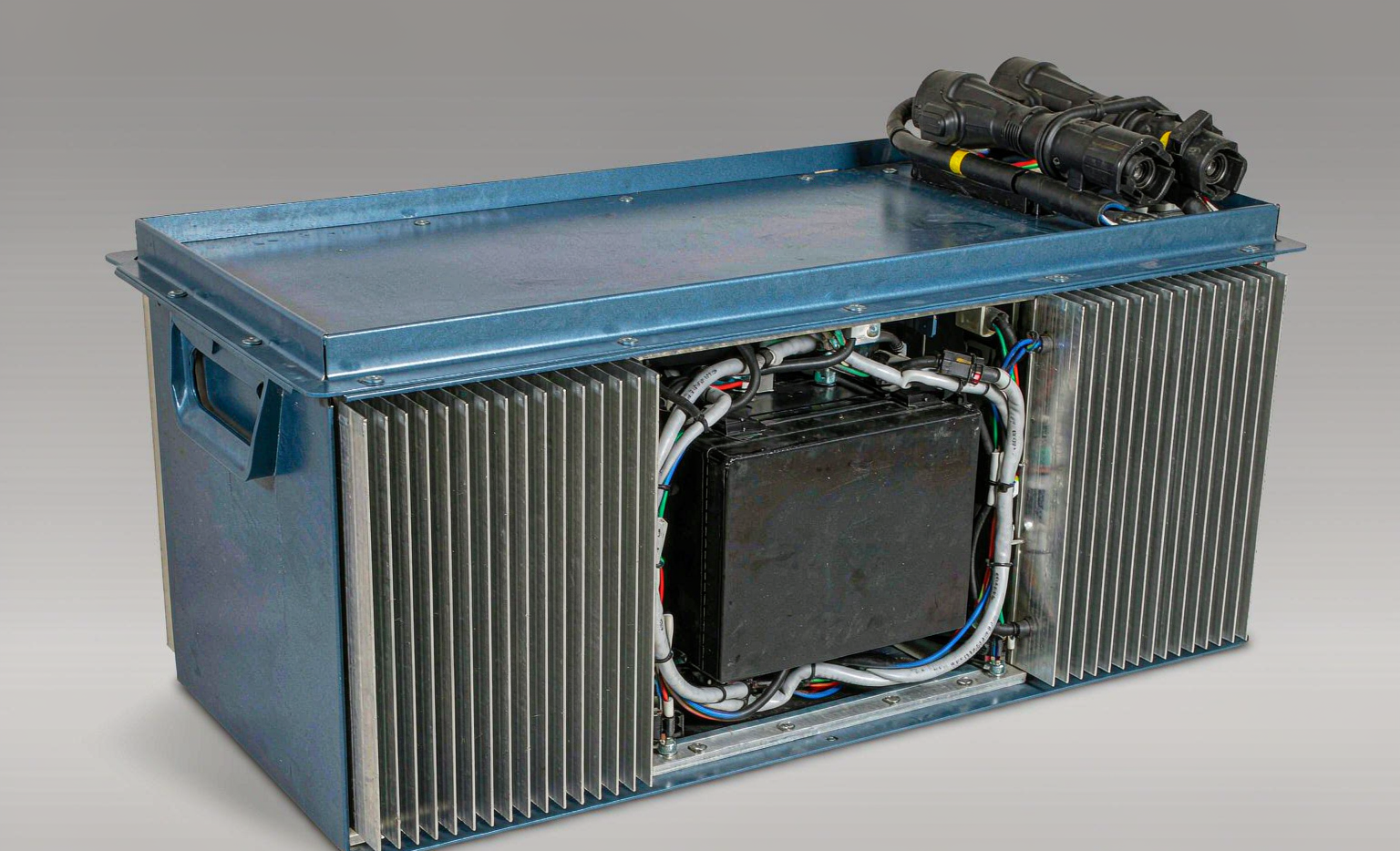
Cell chemistry is the key decision. Nickel-manganese-cobalt cells retain more usable capacity at low temperature, which helps in a minus 10 degrees Celsius rink. Lithium iron phosphate cells give longer cycle life and a stronger safety margin, which matters when the pack sits inside a public building. For arena fleets where 3000 or more cycles and simple safety are the priority, I lean toward lithium iron phosphate. When the machine has a tight mass budget and needs maximum energy density, nickel-manganese-cobalt is the alternative. Either way, the cells are built into finned modules inside an IP-rated enclosure that resists slush and cleaning water.
Cold-Weather Performance and Thermal Management
Rink ambient temperature usually sits between minus 5 and minus 10 degrees Celsius. The good news is that a resurfacer battery generates internal heat during operation, so it tends to stay in its comfort zone while working. The real risk is the cold soak between sessions, when the pack sits idle in a cold equipment bay.
Discharge capacity fade at minus 10 degrees Celsius is roughly 10 to 20 percent for lithium iron phosphate and somewhat less for nickel-manganese-cobalt, which we cover with a modest capacity margin. Charging is the stricter constraint. Most lithium cells should not be charged below 0 degrees Celsius without active heating, so we add a pad or wrap heater, or a small liquid loop, that pre-conditions the pack with a low draw before the main charge begins. The same UN38.3 and IEC 62133 qualification I apply to drone and aviation packs also governs this arena battery, though the thermal-runaway scrutiny that FAA and EASA demand for aircraft is not required here.
Charging Strategy Between Sessions
The repeating schedule of a rink is an advantage for charging. Instead of one overnight fill, we use opportunity charging: the machine plugs into a 30 to 60 kW DC charger during public skating or between events and reaches a useful state of charge in one to two hours. We deliberately avoid long dwell at 100 percent and keep the pack in a 20 to 90 percent window, which is the single biggest lever for extending cycle life.
For multi-machine fleets, a depot charger with simple load management prevents the building service from being overloaded when two or three resurfacers charge at once. The grid-tied charger itself should meet the relevant stationary battery standards so that the arena electrical inspector signs off without surprises.
Safety and Compliance in an Enclosed Arena
Running a large lithium battery inside a public building raises fair questions. We address them with layered design. The pack enclosure is rated IP54 or better so that melting slush and cleaning water cannot reach the cells. Modules are separated with thermal barriers so that a single cell fault cannot cascade. A manual service disconnect and an emergency contactor give arena staff a clear way to de-energize the machine.
On the standards side, transport and handling follow UN38.3, and cell-level safety follows IEC 62133. For the industrial pack we also design to UL 1973, and if the charger is grid-tied we consider UL 9540A fire testing for the energy storage portion. None of these are optional in my workflow; they are the baseline that lets an operator deploy the machine with confidence and insurance coverage.
Total Cost of Ownership for Arena Operators
The business case is straightforward. There is no propane or gasoline to buy, and an electric drivetrain has far fewer moving parts than an engine, which cuts maintenance. Energy cost per resurfacing cycle typically lands around 0.30 to 0.60 US dollars versus the fuel cost of a propane machine. For a busy rink, that difference plus reduced maintenance produces a payback of roughly two to four years. We spec the battery for a 5 to 8 year or 3000-cycle warranty, after which capacity usually remains high enough for a second-life role such as arena backup power.
Every arena is different, so the right answer is a custom battery solution sized to the specific machine, sheet dimensions, and daily cycle count. The engineering is well understood, and the operational upside is clear.
What battery capacity does an electric ice resurfacer need?
A full-size electric ice resurfacer typically needs 40 to 80 kWh of usable capacity to cover 8 to 14 daily resurfacing cycles, while smaller training-rink machines can use far less. The exact size depends on sheet dimensions, shave depth, and how many sessions the rink runs per day.
How long does it take to charge an electric resurfacer between sessions?
With a 30 to 60 kW DC charger, an opportunity charge between sessions usually takes one to two hours. Keeping the pack in a 20 to 90 percent window rather than charging to full extends battery life and fits naturally into a rink schedule.
Can lithium batteries operate reliably at rink temperatures?
Yes. Discharge capacity at minus 10 degrees Celsius fades only about 10 to 20 percent for lithium iron phosphate, which we cover with a capacity margin. Charging below 0 degrees Celsius requires active pre-heating, which is built into the pack design.
Is an electric ice resurfacer safe to run indoors?
Indoor operation is actually one of its main advantages because it produces no exhaust. Safety is handled with an IP54 or better enclosure, thermal barriers between modules, a manual service disconnect, and compliance with UN38.3, IEC 62133, and UL 1973.
Which cell chemistry is better for arena resurfacers, LFP or NMC?
Lithium iron phosphate is usually the better choice for arena fleets because of its long cycle life and strong safety margin inside a public building. Nickel-manganese-cobalt wins when pack mass is tightly constrained and maximum energy density is required.
How much does it cost to operate an electric ice resurfacer compared to propane?
Energy per resurfacing cycle typically costs about 0.30 to 0.60 US dollars, and maintenance is lower because there is no engine. Busy rinks often see payback in two to four years, with a battery warranty of 5 to 8 years or 3000 cycles.
Further Reading
References