Lithium Battery for Cordless Hedge Trimmers
As a senior lithium battery engineer, I have spent years designing packs for outdoor power equipment. Cordless hedge trimmers place unusual demands on a lithium battery pack because the load is intermittent, the tool is held close to the body, and the device lives outdoors. In this article I explain how we select cells, design the battery management system, and validate packs so a hedge trimmer runs safely through a full season. Whether you build trimmers or specify a custom battery solution, the engineering below applies directly to your next design.
Why a Hedge Trimmer Needs a Different Battery Profile
Most garden tools draw current in short bursts. A hedge trimmer is different. The blade motor pulls a steady medium load while cutting, then spikes when it meets a thick branch, then drops to zero when you lift off. That on and off rhythm stresses a lithium battery pack more than a constant draw of the same average power. In my lab we measure these current steps with a logging shunt and design the pack so the voltage never sags below the tool cutoff during a branch spike. A pack sized only for average load will trip the trimmer protection and feel weak. The right lithium battery for cordless hedge trimmers is therefore built around peak current, not just watt hours.
The ergonomics matter too. The battery often sits at the handle or in a backpack frame, close to the user’s face and hands. That placement raises the bar for vent safety, surface temperature, and vibration isolation. We treat the pack as a worn device, not a stationary module, and that shapes cell choice, enclosure, and the battery management system from the first sketch.
Cell Selection for High Rate Outdoor Packs
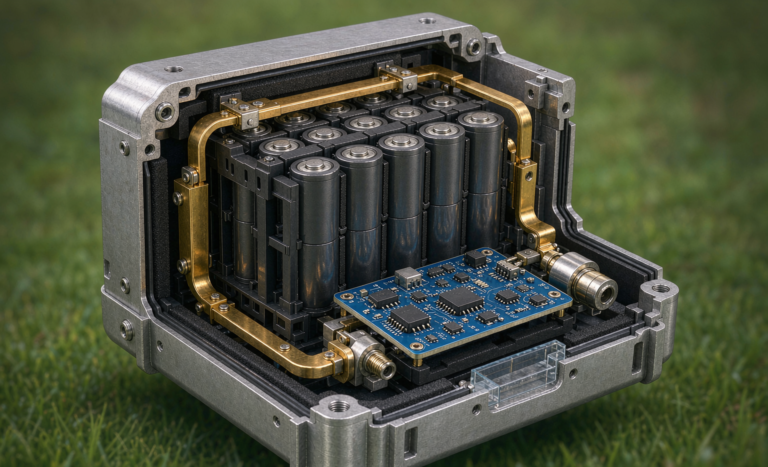
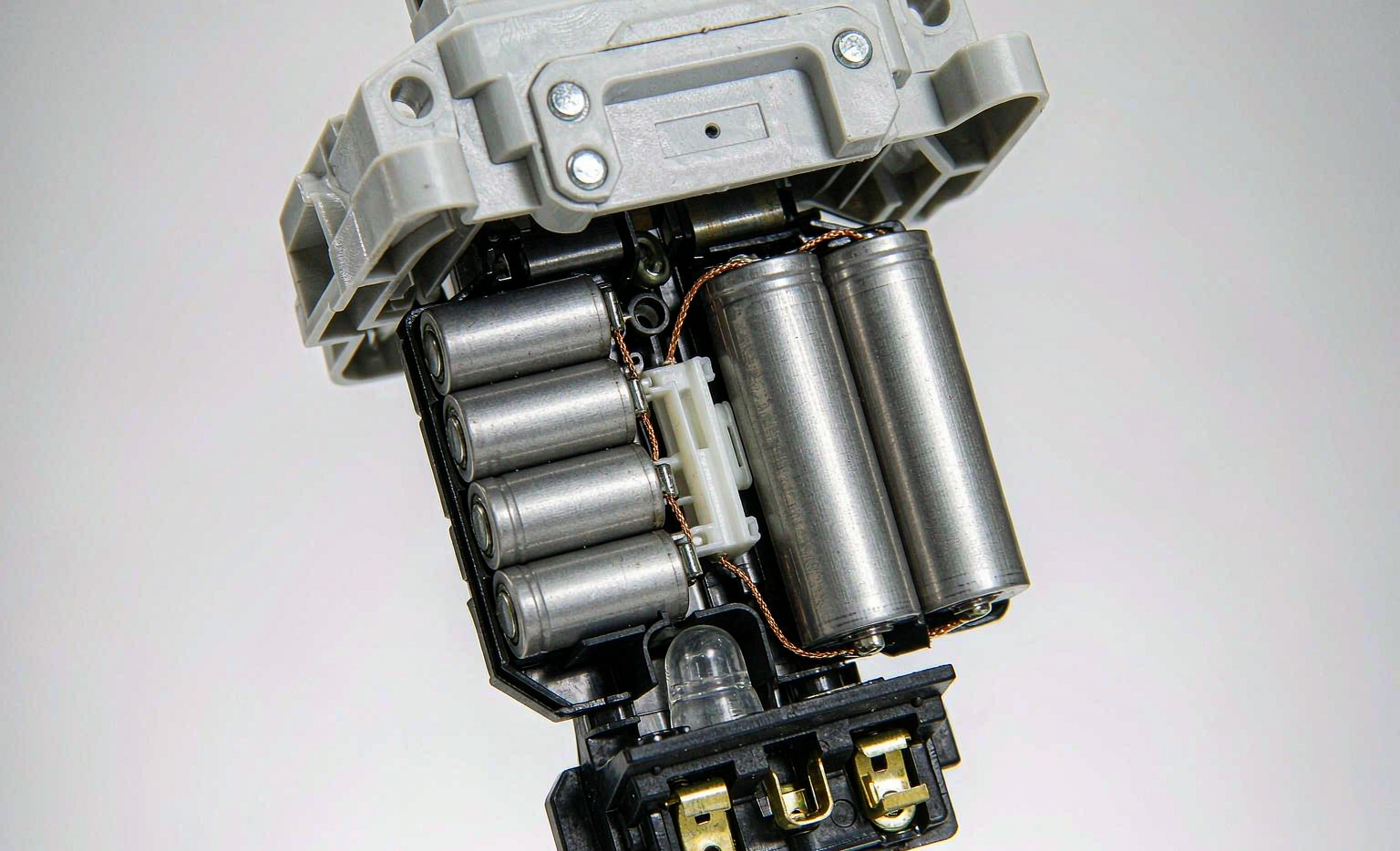
For a cordless hedge trimmer we almost always use cylindrical 18650 or 21700 lithium ion cells. They tolerate the mechanical shock of a tool dropped on grass, they dissipate heat through the steel can, and they are available with high continuous discharge ratings. A typical trimmer pack runs at 18 volt or 36 volt nominal, built from 5 or 10 series groups. We select cells rated for at least 15 ampere continuous and 25 ampere pulse so the blade never starves on a thick cut.
Capacity is a trade between runtime and weight. A 2.5 ampere hour 21700 cell gives a good balance: enough energy for a suburban hedge session and low enough mass that the tool stays comfortable. We group cells by internal resistance within 5 milliohm so the pack ages evenly. Mismatched resistance is the quiet cause of early capacity loss in cheap packs, and it is the first thing I check when a returned unit underperforms.
Every cell lot is verified against IEC 62133 for portable safety and sampled for the UN38.3 transport test sequence before it enters a production pack. Those two standards are not optional for a brand that ships globally, and they are part of how we qualify a custom battery solution rather than a generic one.
Battery Management System Requirements for Cutting Tools
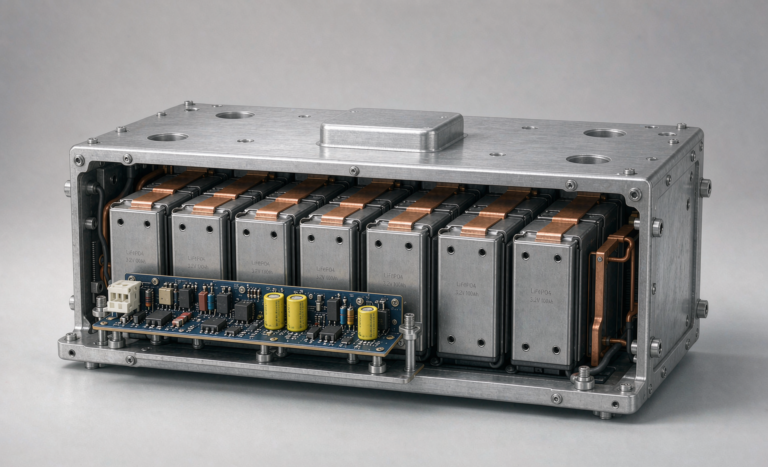
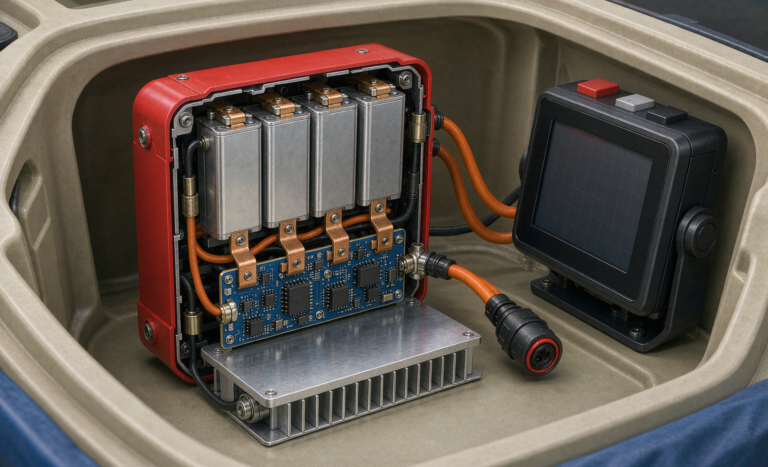
The battery management system in a trimmer pack does more than count voltage. It must watch per group voltage, pack current, and cell temperature, and it must react in milliseconds when the blade jams. We set the over current threshold just above the normal branch spike so a real stall trips the pack while normal cutting never does. A slow or poorly tuned threshold is why some trimmers stutter on dense growth.
We also add a secondary hardware fuse and a temperature cutoff near 60 degrees Celsius. Outdoor use means the pack can start cold and heat fast under load, so the thermal window has to be wide but firm. The communication between pack and tool matters as well: a simple single wire or I2C handshake lets the trimmer read state of charge and remaining runtime, which users rate as highly as raw power. In our experience the management system, not the cells, decides whether a lithium battery for cordless hedge trimmers feels premium or cheap.
Thermal Behavior Across the Seasons
Hedge trimming happens at the edges of the comfortable temperature range. Cold mornings reduce available capacity because lithium ion chemistry slows at low temperature, and hot afternoons raise the risk of thermal rise under load. We characterize every pack from minus 10 to 50 degrees Celsius and publish the derating curve to the product team. Below about 0 degrees Celsius we limit charge current to protect the cells, and above 45 degrees Celsius we trim discharge to hold temperature down.
This is where a custom battery solution beats an off the shelf brick. By mapping the real duty cycle of a hedge trimmer, we place the temperature sensor where heat actually builds, usually near the center group, and we size the enclosure vents for the worst afternoon, not the lab average. The result is a pack that keeps cutting through a long summer session without a thermal shutdown.
Mechanical Ruggedness, Ingress Protection, and Vibration
A hedge trimmer battery lives a hard life. It is dropped, kicked by branches, soaked by dew, and shaken by the motor for hours. We specify an enclosure rated to at least IPX4 for splash resistance, with sealed gaskets around the connector and vent. Internal foam padding isolates the cells from high frequency vibration that would otherwise fatigue welds over a season.
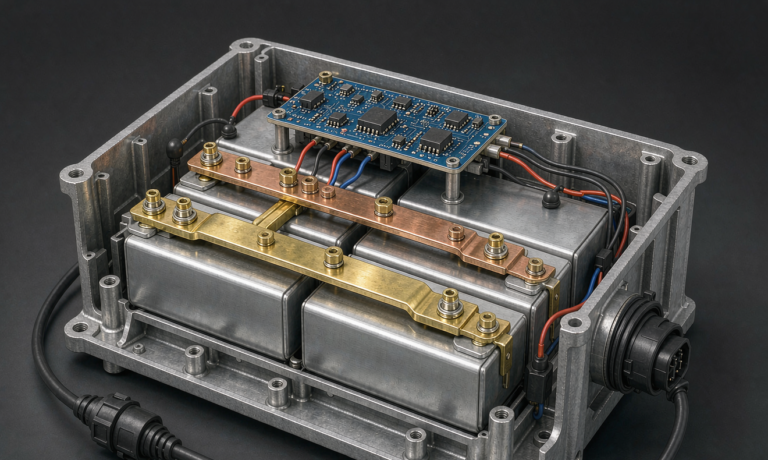
The interconnects deserve special care. We use nickel strip spot welds or bus bars rated above the peak current with margin, and we proof test joints with a pull gauge and a thermal camera under load. A loose joint is the most common field failure I have traced in competitor packs. For a lithium battery for cordless hedge trimmers, mechanical integrity is as important as electrical spec, because the tool is never handled gently.
Cycle Life, Storage, and Compliance
A homeowner trims perhaps twenty times a year, so a pack may sit for weeks between uses. We design for 500 full cycles and recommend storage at about 40 percent state of charge in a dry place above freezing. Long storage at full charge accelerates calendar aging, and we say so plainly in the manual. The cells we choose hold above 80 percent capacity at 500 cycles under this pattern, which covers several seasons of normal use.
On the compliance side, every pack we ship passes UN38.3 for air and ground transport and carries IEC 62133 documentation. For markets under FAA or EASA rules, we label state of charge and watt hour clearly so travelers and carriers handle the pack correctly. These steps are routine for a serious custom battery solution and they protect both the brand and the user when a pack crosses a border or a checkpoint.
What voltage is best for a cordless hedge trimmer battery?
Most consumer trimmers use 18 volt or 36 volt lithium packs. Eighteen volt suits light residential hedges, while 36 volt gives the headroom for thick branches and long sessions without voltage sag. We match voltage to blade length and expected duty, not to a marketing number.
How many cells are in a typical hedge trimmer battery pack?
A common 18 volt pack uses 5 series groups, often 5 series 2 parallel for around 2.5 ampere hour. A 36 volt pack doubles that to 10 series. The exact count depends on the target runtime and the cell size, 18650 or 21700, chosen for the tool.
Can I use the same lithium battery pack for different trimmer models?
Often yes if the voltage, connector, and communication protocol match. We design a custom battery solution with a consistent mechanical and electrical interface so one pack family serves several tools, which lowers cost and spare part confusion for the user.
How should I store a hedge trimmer lithium battery in winter?
Store it indoors above freezing at about 40 percent charge. Avoid a full charge for long storage and never leave it in a freezing shed, because low temperature plus high charge accelerates aging and can prevent a normal start in spring.
Is a hedge trimmer lithium battery safe to fly with?
Generally yes if it is under the watt hour limit and carried in cabin baggage, per FAA and EASA guidance. Keep it at partial charge, protected from short circuit, and check the carrier rules before travel. Packs above the limit need freight handling.
How long does a cordless hedge trimmer battery last?
Expect 30 to 60 minutes of cutting per charge for a 2.5 ampere hour pack, and 500 cycles or several seasons with proper storage. Runtime drops in cold weather, so we size capacity with a margin for winter use.
Further Reading
References