Drone Battery Cost Optimization for Delivery Drones: Fleet
When operators ask me how to lower the cost of a delivery drone battery, they usually expect a chemistry answer — switch to LFP, or wait for semi-solid. After fifteen years building packs for logistics fleets, my first reply is different: the dominant cost driver is not the cell, it is how many packs you buy, how hard you cycle them, and what you do with them once they leave the aircraft. A single drone battery costs a few hundred dollars. A fleet of 200 aircraft, each carrying two packs plus a spares float, is a six-figure inventory that degrades whether you fly it or not. Real drone battery cost optimization for delivery drones starts with treating the pack as a managed asset, not a disposable part.
Why Delivery-Drone Cost Optimization Is a Fleet-Logistics Problem
The framing above changes the optimization target. Instead of squeezing 3% out of cell cost, we manage the whole asset life: inventory sizing, rotation discipline, second-life reuse, and the avoided cost of in-flight failures. The cell is maybe 40% of a drone battery’s lifetime cost once you add screening, storage, failures, and end-of-life handling. The other 60% lives in how the fleet operates around it.
This is the lens I use when a customer asks for a custom battery solution built around their delivery cadence rather than a generic off-the-shelf pack. We do not start with volts and amp-hours; we start with sorties per day, turnaround time, and what happens on the worst day of the quarter. That operational profile dictates how many packs exist, how they age, and where the money leaks.
Sizing the Pack Inventory — The N+Spares Model
The first number that matters is how many packs you need per airframe. I model it from duty cycle, not guesswork. A delivery drone flying four sorties a day at a 25-minute mission each needs roughly 100 minutes of pack time daily. If a full charge-and-cool cycle takes 70 minutes, one pack cannot support one aircraft — you need at least two in rotation, plus a buffer.
I use a simple rule: packs per aircraft = ceil(daily flight minutes ÷ (usable minutes per pack − turnaround)) + spares float. For a 200-aircraft fleet at 100 flight-minutes per day with a 70-minute usable cycle, that is 2 packs in service per drone, plus a 15% spares float for failures and balancing, totalling about 460 packs. Shaving the float from 15% to 8% looks like a 32-pack saving on paper, but it raises the chance that a degraded pack grounds an aircraft on a peak day. The right float is an insurance premium, not waste.
Charge turnaround is the hidden lever. Every minute you cut from cool-down by improving thermal headroom lets one pack serve more sorties, which can remove an entire spare tier. That is why I design delivery packs with a thermal envelope rated for back-to-back missions rather than a single flight — it pays back in inventory count, not just performance. A lithium battery that tolerates rapid re-charge without aging penalty quietly shrinks the whole fleet’s pack requirement.
Hot-Swap Rotation and Duty Cycling to Maximize Pack Life
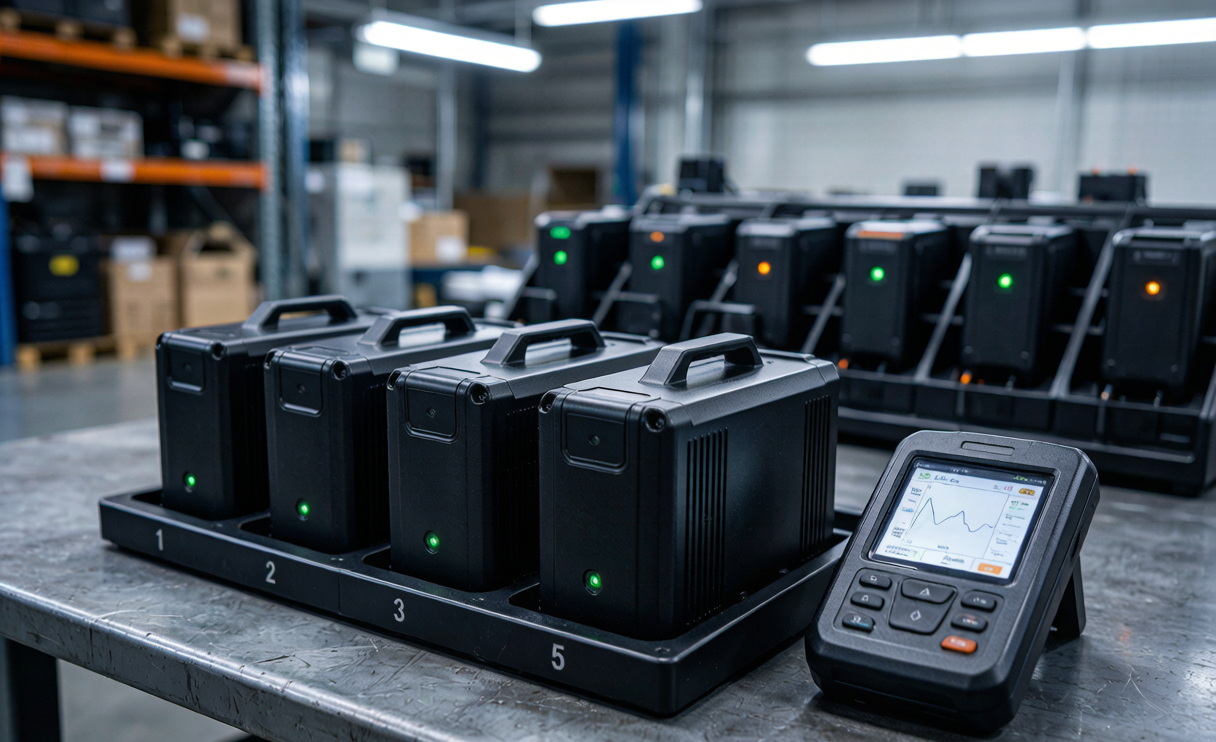
Once the inventory exists, how you rotate it decides whether packs reach 800 cycles or die at 400. The mistake I see most is opportunistic swapping — grabbing whichever pack is charged — which lets a few packs accumulate cycles far faster than the rest. The fix is round-robin rotation with per-pack cycle counting.
I specify a duty-cycling rule: no pack exceeds the fleet mean cycle count by more than 10%. BMS-logged serial numbers or a simple depot scanner enforce it. In a 2025 deployment we moved a 120-pack fleet from free-swap to round-robin and lifted mean end-of-life capacity from 78% to 85% State of Health, because wear distributed evenly instead of concentrating in a handful of abused units.
Storage state of charge matters as much as cycling. Packs held at 100% between sorties age faster; I hold spares at 3.80–3.85 V per cell (about 50–60% SoC), which halves calendar aging versus full charge. Depots that store at ambient rather than a cool room see 12–18% more capacity loss over a year. These are cost levers hiding inside the warehouse, not the drone. A well-managed drone lithium battery program quietly outperforms a cheaper one that is mishandled on the shelf.
Second-Life Cascading — Aviation Packs Into Ground Roles
The single biggest untapped saving is second-life cascading. A delivery drone battery is retired from flight at roughly 80% State of Health for safety margin, but an 80% pack is still a perfectly good energy store for ground duties. I route retired aviation packs into warehouse AGVs, ground-station UPS, and depot lighting — roles with lower peak-power and crash-risk demands than flight.
The engineering work is real: you re-house the cells in a simpler enclosure, add a basic BMS without the aviation-grade redundancy, and re-rate capacity honestly. But the cell cost is already sunk. In one client program, 140 retired 6S packs (each originally about 240 Wh) cascaded into a 33 kWh ground buffer that deferred a 9,000 USD grid upgrade. The aviation cells that would have been recycled at near-zero value instead delivered a second 18-month service life.
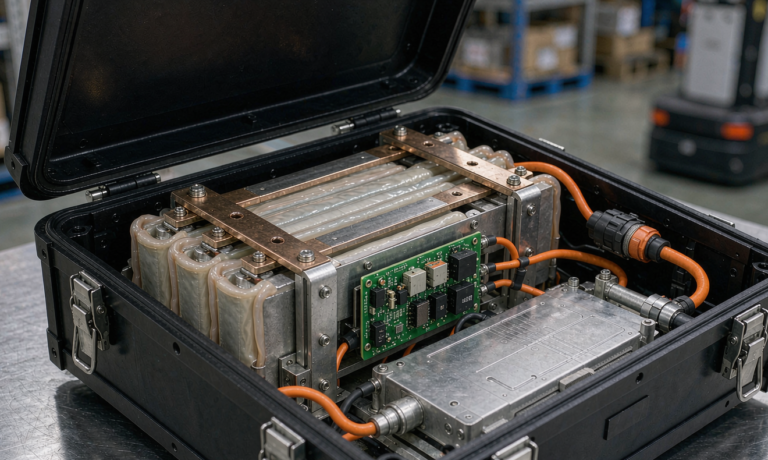
This only works if you design for it from day one. I build aviation packs with cell blocks that unclip from the flight enclosure, so cascading is a re-housing job, not a teardown. Specifying that interchangeability up front is the difference between second-life being profitable and being a parts nightmare. The custom battery solution I deliver for delivery fleets always includes this cascading path, because it is where the largest recurring saving hides.
Failure-Cost Economics — Pricing a Single Mid-Mission Drop
The hardest cost to defend in a spreadsheet is the cost of a failure you avoided. A delivery drone battery that sag-drops at 40 meters does not just lose one package — it risks the airframe, the payload, a potential fire investigation, and a regulatory incident report. I quantify this as expected failure cost = P(failure) × consequence, and I size spares and inspection budgets against it.
Concretely: if a fleet flies 50,000 sorties a year and a mid-mission pack failure costs an estimated 4,000 USD in aircraft, payload, and downtime, then even a 0.1% failure rate is 200 incidents and 800,000 USD of annual risk. Spending 120,000 USD on tighter incoming screening, per-pack telemetry tags, and a conservative retirement gate is trivial against that. This is why I never present battery cost in isolation — the avoided incident cost dwarfs the component saving.
I set the retirement gate from field data, not a calendar. Packs retired at 80% SoH by capacity alone waste 15–20% of usable life; packs kept past a 2.6 mΩ DCIR rise or a 2.5 mV per day self-discharge threshold invite the very failures we priced above. The gate is a balance, tuned per fleet from its own telemetry. A disciplined lithium battery program is cheaper precisely because it refuses to gamble on the last few percent of pack life.
Building the Lowest Net-Cost Battery Program
Pulling the levers together, the lowest net-cost program is rarely the cheapest pack. It is the one that optimizes the whole loop: inventory sized to duty cycle with a deliberate spares float, round-robin rotation that equalizes wear, 50–60% storage SoC for spares, second-life cascading into ground roles, and a telemetry-driven retirement gate that prices failure correctly.
Standards anchor the economics, not just compliance. UN 38.3 T.1–T.8 testing, IEC 62133-2, and IEC 62619 give the safety baseline; FAA and EASA 100 Wh air-transport bands plus IATA Section II govern how packs ship and fly. Designing to those from the start avoids the re-test and re-certification costs that quietly inflate a “cheap” program later. A drone lithium battery engineered for the full regulatory envelope costs a little more up front and saves multiples in avoided rework. This is the complete picture of drone battery cost optimization for delivery drones: treat the pack as a managed asset across its whole life, and the savings compound.
Frequently Asked Questions
How many spare batteries should a delivery drone fleet keep?
I size spares from duty cycle, not a fixed ratio. Compute packs-in-service from daily flight minutes divided by usable cycle time, then add an 8–15% float for failures and balancing. The float is insurance against grounding aircraft on peak days, not excess inventory.
What is second-life cascading for drone batteries?
It is routing aviation-retired packs — typically at about 80% State of Health — into lower-demand ground roles like warehouse AGVs, UPS buffers, or depot lighting. The cells’ cost is already sunk, so a second service life defers capital upgrades and avoids near-zero-value recycling.
Why does rotation discipline affect battery cost?
Free-swap picking lets a few packs accumulate cycles faster and die early, wasting sunk cost. Round-robin rotation with per-pack cycle counting distributes wear evenly, lifting mean end-of-life capacity and extracting more flights per purchased pack.
At what point should a delivery drone battery be retired?
I retire on field data, not calendar age: typically at 80% capacity, or earlier if DCIR rises past about 2.6 mΩ or self-discharge exceeds 2.5 mV per day. That gate balances usable life against the cost of an in-flight failure, which far exceeds the component saving.
Does compliance testing add cost or save it?
It saves it. Designing to UN 38.3, IEC 62133-2, IEC 62619, and FAA/EASA bands from the start avoids re-test and re-certification expenses later. A program that skips this pays multiples in rework when it scales or crosses borders.