Home Energy Storage Cost Optimization for Farms
Fifteen years ago, when I first started helping agricultural clients size their power systems, most farms treated batteries as an afterthought — a backup for the pump and little more. Today, as a senior lithium battery engineer at Horizon Power, I see the opposite problem: operators installing oversized home energy storage systems that never pay back because nobody modeled the load profile first. Farm economics are unforgiving. You are not optimizing a kilowatts-per-dollar spreadsheet; you are protecting a margin that swings with milk price, diesel cost, and the weather. This guide walks through the engineering and procurement decisions I use to make a home energy storage system on a farm actually turn a profit, not just sit in a barn humming.
Start With the Load Profile, Not the Battery
The single biggest cost mistake on farms is buying capacity before understanding consumption. I ask every client for 12 months of utility bills and, where possible, a sub-metered reading of the three loads that dominate agricultural sites: water pumping, ventilation or cooling, and processing equipment. A dairy farm I advised in 2024 was running a 30 kW booster pump in short 8-minute bursts six times an hour. That duty cycle, not the nameplate, dictates the inverter’s surge rating and the battery’s C-rate.
Once we have the load shape, we separate critical loads (milking, refrigeration, animal welfare) from deferrable loads (batch heating, irrigation that can shift to midday). A well-designed battery energy storage setup only needs to cover critical loads during outages and shave the most expensive grid hours the rest of the time. For that dairy, covering critical loads needed 18 kWh; covering everything would have meant 60 kWh. The smaller design cut the bill by roughly 40% and paid back in 4.2 years instead of 9.
Match Chemistry and Cycle Life to the Duty Cycle
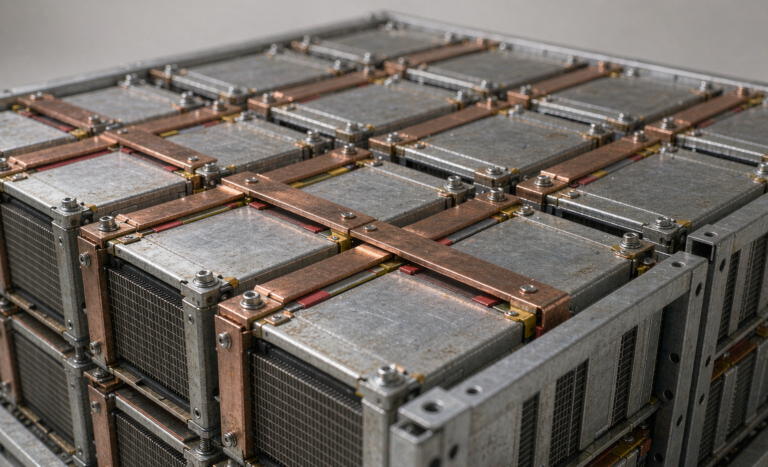
For most farm installations I spec lithium iron phosphate (LFP) cells. They tolerate the daily partial-cycling that agriculture demands, hold up in unconditioned outbuildings better than nickel-based chemistries, and deliver 4,000–6,000 cycles at 80% depth of discharge. A lithium battery pack rated for 6,000 cycles at one cycle per day gives you about 16 years of service — longer than the typical payback window, which matters for the lifetime cost model.
Round-trip efficiency is where small numbers become big money. A system at 95% efficiency loses 5% of every stored kilowatt-hour; at 88% it loses 12%. On a farm storing 20 kWh/day across 3,650 days, that 7-point gap is roughly 5,100 kWh of wasted energy — real money when you are arbitraging time-of-use tariffs. I insist on inverters and battery management systems that hold efficiency above 90% across the 10–90% state-of-health band, not just at the factory-fresh peak.
Use Time-of-Use Arbitrage and Self-Consumption Together
The cleanest saving on a farm comes from stacking two value streams. First, solar battery storage captures midday photovoltaic excess that would otherwise be exported at a low feed-in tariff and replays it during evening peak rates. Second, if your utility has time-of-use pricing, the battery shaves the top tier. In a region with a 4:1 ratio between peak and off-peak kWh price, even a modest 10 kWh daily shift saves more per year than many operators expect.
I model both together because they interact. Oversizing for arbitrage alone can leave you with a battery that is full at noon and useless at the 6 p.m. price spike. The fix is a controller that prioritizes self-consumption up to a target state of charge, then reserves headroom for the evening peak. That logic is a software setting, not a hardware cost — another reason to get the configuration right rather than just buying bigger.
Right-Size Inverters and Avoid Redundant Conversions
AC-coupled versus DC-coupled is a genuine cost lever. On a retrofit where solar and storage are added separately, AC-coupling is simpler but adds a conversion stage (about 3–5% loss each way). On a greenfield barn, DC-coupling the array straight into the battery inverter removes a stage and improves yield. I generally recommend DC-coupling for new builds and AC-coupling only when the existing inverter cannot be touched.
Inverter surge rating is the other silent cost. Agricultural motors — pumps, augers, compressors — draw 3–7x running current at startup. Undersize the inverter and it trips; oversize it and you paid for capacity you use for two seconds a day. I size to the largest motor’s locked-rotor current with a 1.25 safety factor, then confirm the battery’s pulse discharge can support it without voltage sag.
Don’t Skip the Certifications and the Thermal Envelope
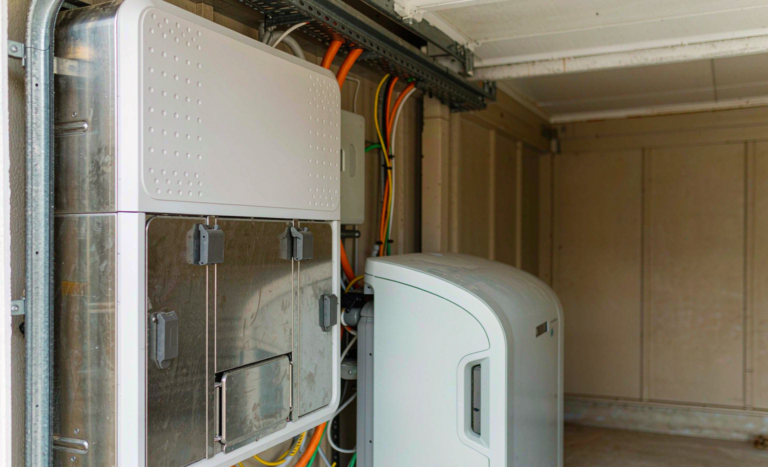
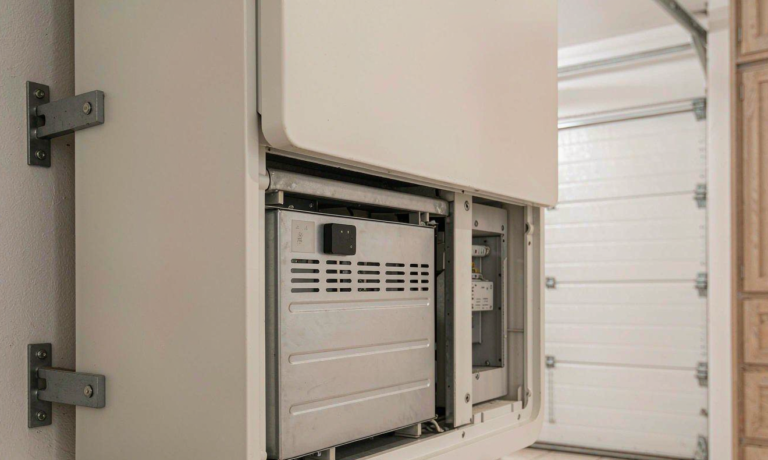
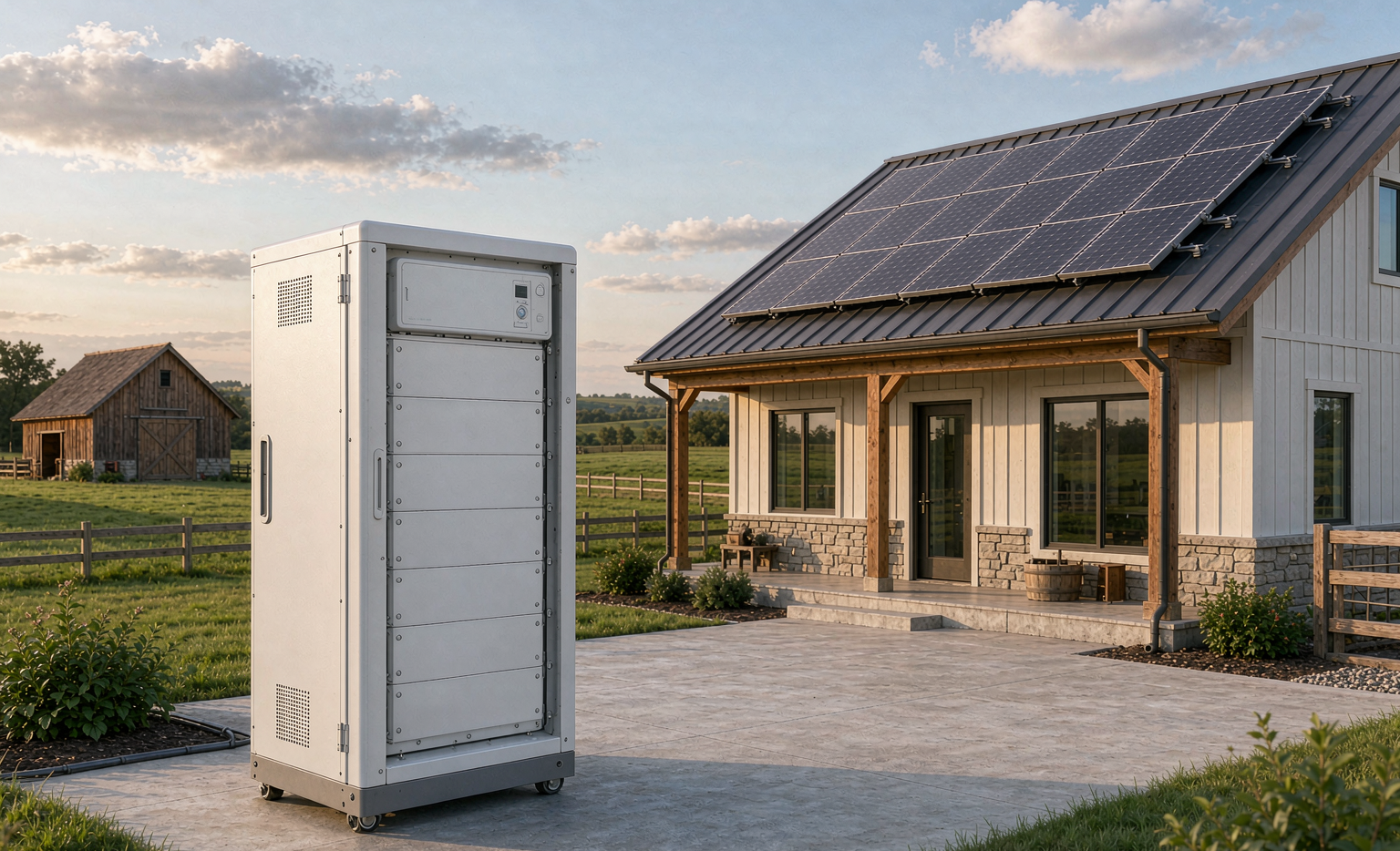
Farm batteries live hard lives. A home energy storage cabinet in a barn sees dust, humidity, rodents, and temperature swings that a climate-controlled garage never sees. I only specify enclosures rated to at least IP54, with the cells themselves validated to UN38.3 for transport safety and IEC 62619 for industrial battery safety. For the power conversion, IEC 62109 and UL 9540A matter because they govern how the system fails safely — a thermal runaway event in a hay barn is not a warranty discussion, it is a catastrophe.
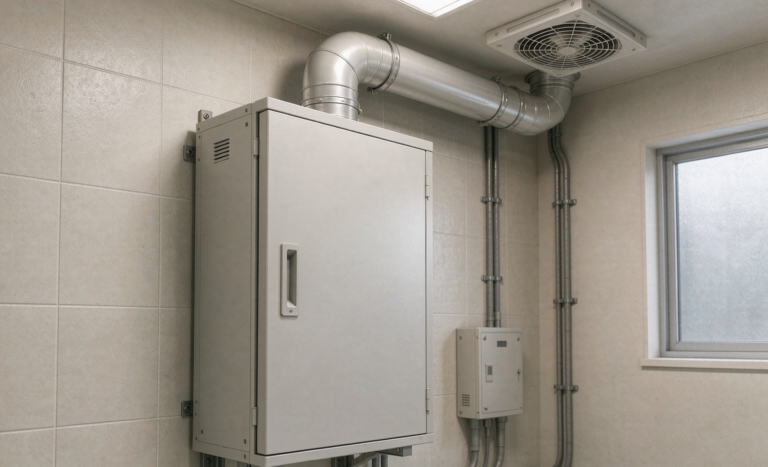
Ventilation is cheap insurance. Even LFP benefits from staying below 35°C; every 10°C above that roughly doubles the aging rate. A simple shaded, ventilated enclosure or a small fan on a thermostat extends pack life more than most operators credit. I have seen two identical installations diverge by three years of useful life purely on enclosure placement.
Financing, Incentives, and the True Payback Number
The number a farmer cares about is simple: years to break even. I build the model from five inputs — installed cost per kWh, daily shifted or self-consumed kWh, the value per kWh (tariff spread or diesel displaced), degradation-adjusted replacement reserve, and any grant or accelerated depreciation. In my experience, well-specified farm systems land between 4 and 7 years; anything quoted under 3 years usually hides a load assumption that will not survive a real harvest season.
Where grid connection is weak or distant, the comparison is not against a tariff but against diesel. A battery energy storage system paired with solar displaces generator runtime that can cost 0.30–0.50 per kWh all-in once you include fuel, maintenance, and the value of not hauling jerry cans. In those cases the payback often beats grid-arbitrage projects because the displaced cost is so high.
FAQ
How much home energy storage does a typical farm need?
There is no single answer without the load profile, but most working farms I size land between 10 kWh for a small hobby operation and 60–100 kWh for a dairy or irrigated acreage with critical loads. Size to critical loads first, then add capacity only for arbitrage you have confirmed pays.
Is lithium or lead-acid better for a farm battery system?
For daily cycling, lithium — specifically LFP — wins on cycle life, efficiency, and weight, and it tolerates partial state of charge without sulfation damage. Lead-acid is cheaper upfront but rarely survives agricultural duty cycles economically. I only recommend lead-acid for truly infrequent backup.
Can a home energy storage system run my well pump during an outage?
Yes, if the inverter is sized for the pump’s startup surge and the battery has the capacity for the runtime you need. This is exactly why I sub-meter motors before specifying — the surge rating, not the tank size, is usually the constraint.
What maintenance does a farm battery storage system need?
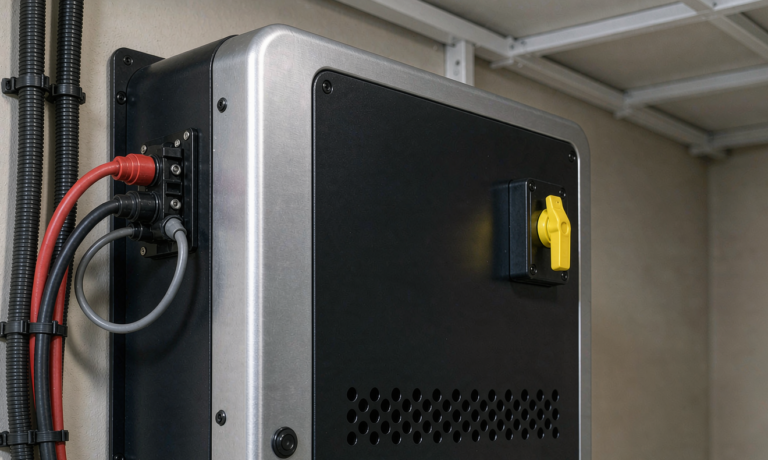
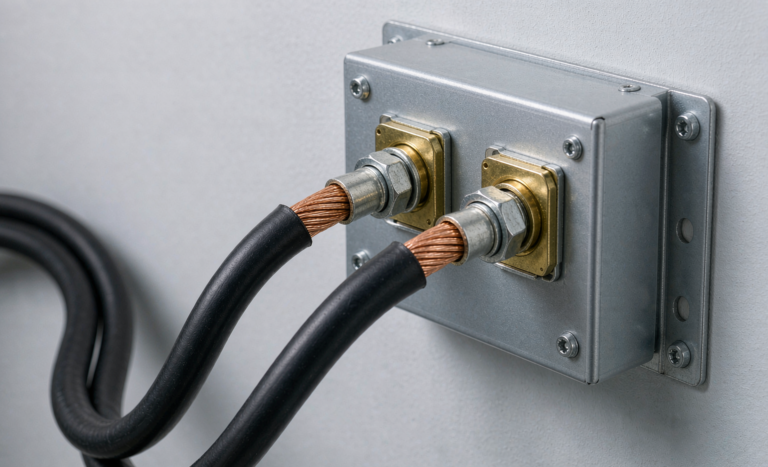
Minimal but non-zero: keep the enclosure clean and ventilated, check torque on terminals annually, and review the BMS state-of-health report each season. A lithium battery pack with a good management system needs far less than lead-acid, but the enclosure and connections are where farms get into trouble.