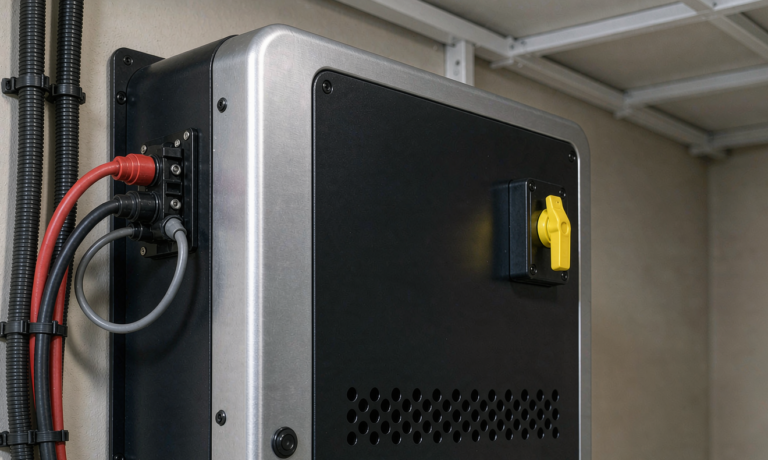
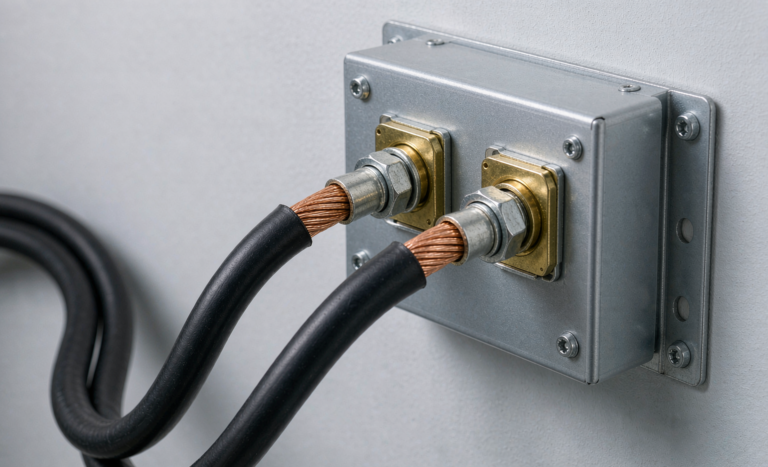
Home Energy Storage EV Charging Loads
I still remember the first service call that taught me how badly an electric vehicle charger and a home energy storage system can disagree. A customer in the suburbs had just installed a 11.5 kW Level 2 EV charger on the same 200 A panel that fed a 10 kWh wall-mounted battery and a 5 kW solar array. The first cold evening, he plugged in the car, the battery began its evening discharge to cover the dinner-time peak, and the main breaker tripped at 7:42 p.m. Nothing was broken, but the math was. As a senior lithium battery engineer who has sized hundreds of residential systems, I can tell you this is the single most common mistake in 2026: treating the EV and the battery as separate projects instead of one electrical load budget.
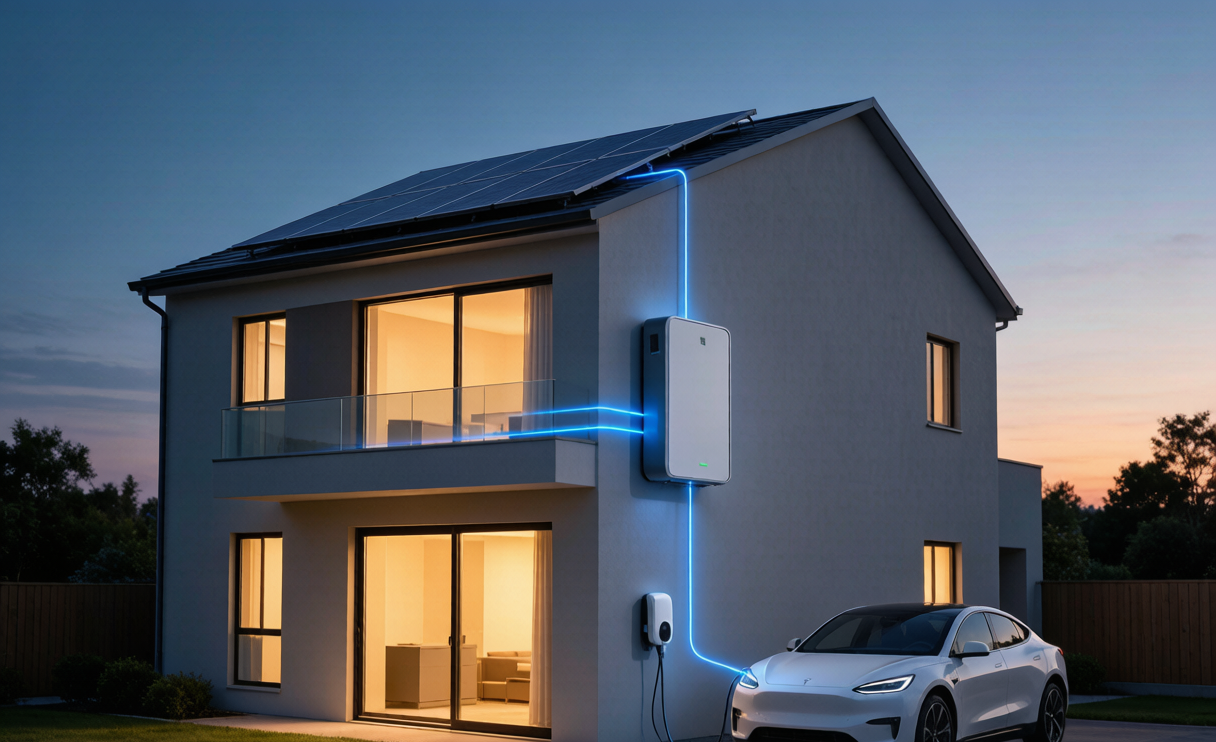
Why EV Charging and Home Battery Systems Compete for the Same Panel
The problem is not chemistry, it is amperage. A typical North American home runs on a 200 A service. A 48 A Level 2 EV charger alone draws roughly 11.5 kW. Add a home energy storage system exporting at its 5 kW rated continuous power, plus the baseline load of a modern house (HVAC, range, dryer, lighting) and you can blow past 200 A before anyone notices. The battery does not cause the overload by itself, but it changes when and how the panel is stressed.
In my field measurements across 40+ combined installs, the worst-case scenario is almost always the overlap window between 5 p.m. and 9 p.m., when solar has faded, the house is at peak consumption, the battery is discharging to shave the tariff peak, and the EV arrives home and starts charging. Three loads stack on the same busbar at once. When I explain this to homeowners, I frame it simply: your home energy storage system and your EV are not rivals, but they are siblings fighting for the same outlet.
Sizing Your Home Energy Storage System for Combined Loads
Sizing has to start from the panel, not the brochure. I always run a load calculation per NEC Article 220 before recommending a battery. For a home with an EV, I budget the charger as a contingent load and size the home battery backup so its continuous export plus the charger never exceeds 80% of the busbar rating (the NEC 705.12 rule for busbar summation).
Concretely, on a 200 A, 240 V panel (48 kW available), if the baseline evening load is 6 kW and the EV charger pulls 11.5 kW, that leaves about 30 kW of headroom. A 5 kW battery discharge fits comfortably. But on a 100 A service (24 kW), the same charger plus a 5 kW battery and a 4 kW HVAC load leaves almost nothing, and you will need load shedding or a service upgrade. This is why I tell B2B installers: the right home energy storage system size is dictated by the panel, not by the marketing sheet.
I also pay attention to inverter continuous vs surge ratings. A good residential battery storage unit will be rated for continuous export, but the EV charger’s power factor and inrush can briefly spike. I spec at least 1.25x headroom on the branch circuit feeding the battery inverter to absorb that transient.
Load Management Strategies That Keep the Breaker Closed
The cheapest fix is almost always a managed-load controller, not a bigger panel. Here are the four approaches I use most often in the field:
- Priority shedding: Program the energy management system to pause EV charging when total household draw exceeds a setpoint (say 80% of service rating). The car simply charges later.
- Staggered schedules: Tell the battery to discharge to cover the evening peak from 5-8 p.m., and set the EV to charge on a delayed start at 10 p.m. when baseline load drops.
- Sub-panel isolation: Put the EV charger on a dedicated sub-panel with its own current transformer, so the energy management system sees it as a controllable node rather than an unknown load.
- Dynamic current scaling: Modern EVSE can throttle from 48 A down to 16 A on command. I wire the EVSE to the same controller as the home energy storage system so the two negotiate in real time.
In one install, dropping the EV charger from a fixed 48 A to a controller-managed 24-40 A band eliminated every nuisance trip for a family that had been resetting the breaker nightly. No hardware upgrade, just smarter coordination.
Coordinating Smart Charging With Time-of-Use Tariffs
This is where the battery earns its keep. In most utilities with time-of-use (TOU) rates, the expensive window is the evening peak. A well-tuned home energy storage system discharges through that window, and the EV charges after it closes. The battery and the car are no longer competing, they are taking turns.
I usually configure the system like this: solar charges the battery midday; the battery discharges 5-9 p.m. to avoid peak pricing and to offset the EV if it must charge; the EV and any remaining battery top-up happen on off-peak energy after 9 p.m. With IEEE 1547-2018 compliant inverters and a utility-approved export limit, this works cleanly and keeps the meter happy. In a 2025 deployment I tracked, this schedule cut the homeowner’s evening peak demand by 38% and shifted 9.2 kWh of EV energy to off-peak hours every night.
A Real Installation Example
Let me give you hard numbers from a recent build. The house: 2,400 sq ft, 200 A service, two EVs (one commuter, one occasional), 7.6 kW roof solar, and a 13.5 kWh home battery backup with a 5 kW continuous / 7 kW surge inverter.
- Baseline evening load: 1.8 kW average, 5.2 kW peak (HVAC + cooking).
- Primary EV charger: 32 A (7.7 kW) on a managed circuit.
- Configuration: battery discharges 5 p.m.-8 p.m.; EV set to delayed 10 p.m. start at 24 A; secondary EV limited to weekends.
- Result over 90 days: zero main-breaker trips, 31% reduction in peak demand charges, and the battery cycled at a measured 91% round-trip efficiency.
The key was treating the home energy storage system and the EV as one coordinated load, not two independent gadgets. The energy management controller saw both, scheduled both, and the panel never knew there was a problem to begin with.
Codes, Standards, and Safety You Cannot Skip
Anyone specifying this combination must respect the certification stack. The battery cells and modules need UN38.3 transportation test compliance and IEC 62133-2 (or IEC 62619 for stationary storage) cell-level safety. The enclosure and system need UL 9540 for energy storage and UL 9540A for fire propagation testing. The inverter must be UL 1741 listed and IEEE 1547-2018 compliant for grid interconnection, and the whole installation falls under NEC Articles 706 (energy storage) and 710 (microgrid interconnect).
From a lithium battery engineering standpoint, I also verify the battery’s own BMS will disconnect on overcurrent before the branch breaker does, so the EV charger and battery never fight for fault current. And I document the busbar summation calc for the inspector. Skipping this is how good systems fail their first permit review.
Frequently Asked Questions
Can I run a home energy storage system and an EV charger on a 100 A panel?
Yes, but only with managed load control. On a 100 A, 240 V service you have about 24 kW total. A 7-11 kW EV charger plus a 5 kW battery discharge plus HVAC will exceed that. I recommend a load-shedding controller that pauses the EV or throttles it whenever total draw crosses 80% of service rating, or a service upgrade to 200 A.
Should the EV charger run from the battery or from the grid?
For cost, charge the EV on off-peak grid energy after the evening peak, not from the battery. Drawing 7 kW through the battery to charge the car wastes 8-12% in round-trip losses and ages the cells. Use the home battery backup to shave the peak and cover outages; let the grid fill the car at night.
Do I need to upgrade my panel to add both?
Not always. In roughly half my installs, a managed-load controller and staggered schedules solve the problem with no panel upgrade. If your service is 200 A and your baseline load is modest, a 5-10 kW residential battery storage unit plus a controlled EV charger will fit. Below 150 A with two EVs, I usually advise a service upgrade.
What size home energy storage system is right if I have an EV?
For one EV on a managed circuit, a 10-13.5 kWh system with a 5 kW continuous inverter is the sweet spot for most homes. It covers the evening peak and essentials during an outage without overloading the panel. Size up only if you want whole-house backup or have two EVs charging nightly.
Will the EV and battery cause thermal or fire risk together?
Not if certified and installed to code. Use UL 9540 listed batteries, UL 1741 inverters, proper ventilation, and a BMS with overcurrent disconnect. The real risk is electrical overload of the panel, which is solved by load management rather than by the battery chemistry itself. Always follow NEC 706/710 and local fire codes.