Home Energy Storage for Apartment and Condo Owners
As a senior lithium battery engineer who has spent the last dozen years designing pack architectures for everything from delivery drones to 48V telecom banks, I get asked one question more than any other lately: “Karl, I live in an apartment or a condo – can I even have a home energy storage system?” The short answer is yes, but the path is completely different from a single-family homeowner with a garage, a main panel, and no one to ask for permission. Renters and condo owners run into HOA bylaws, landlord approval, shared metering, and fire codes that simply do not apply to a detached house. In this guide I will walk through what actually works in 2026, what quietly fails, and how to specify a home battery backup that stays compliant and genuinely useful without tearing up the building.
Why Apartments and Condos Are a Different Engineering Problem
When I design a home energy storage system for a detached house, the battery sits in a garage or on an exterior wall, the inverter ties into a dedicated sub-panel, and the only person who needs to sign off is the homeowner and the local inspector. In a multi-unit building, three constraints change the entire design:
- Shared infrastructure. You rarely own the meter, the panel, or the service entrance. In most apartments the utility feed is master-metered by the building, so you cannot legally back-feed or interconnect a grid-tied battery without the owner’s cooperation.
- Fire and life-safety codes. Multi-family dwellings fall under stricter rules. In the U.S. that means NFPA 855 (installation of stationary energy storage) and the relevant fire-sprinkler and egress requirements, which get tighter above a certain battery energy threshold.
- Landlord and HOA consent. Even a portable unit sitting in a closet usually requires written permission, because the building’s insurance and liability exposure change the moment a high-energy lithium pack is on the premises.
None of this makes storage impossible. It simply means the right solution is usually smaller, portable, and off-grid-by-design rather than a whole-house grid-tied installation.
The Two Realistic Approaches: Portable vs. Permanent
In my field notes from 2026 deployments, apartment and condo owners succeed with one of two models. Pick the wrong one and you will either waste money or get shut down by the HOA.
1. Portable power stations (plug-and-play)
A portable residential battery storage unit – essentially a UL 1973 / IEC 62619 certified lithium pack with a built-in inverter and AC outlets – is the entry point for most renters. Capacities of 2 to 5 kWh cover a fridge, router, laptop, and a few lights for 8 to 20 hours during an outage. Because it plugs into a wall socket and is not permanently wired, it usually does not trigger electrical-permit or interconnection rules. I have seen tenants run these in studio apartments with zero building approval beyond a friendly email to the landlord.
2. Permanent wall-mounted systems
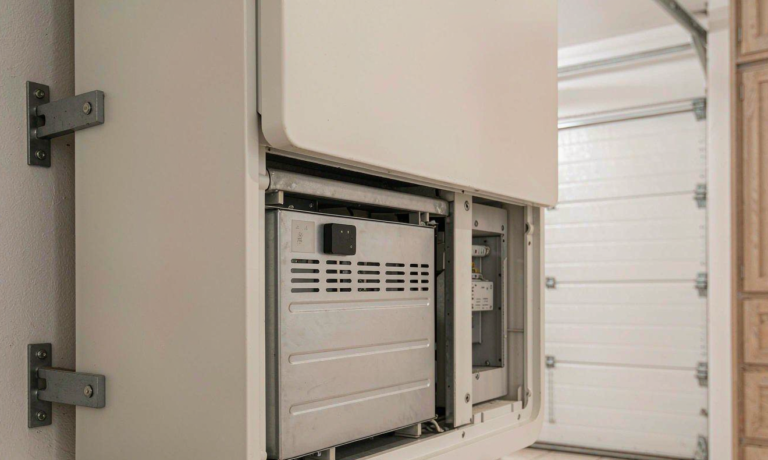
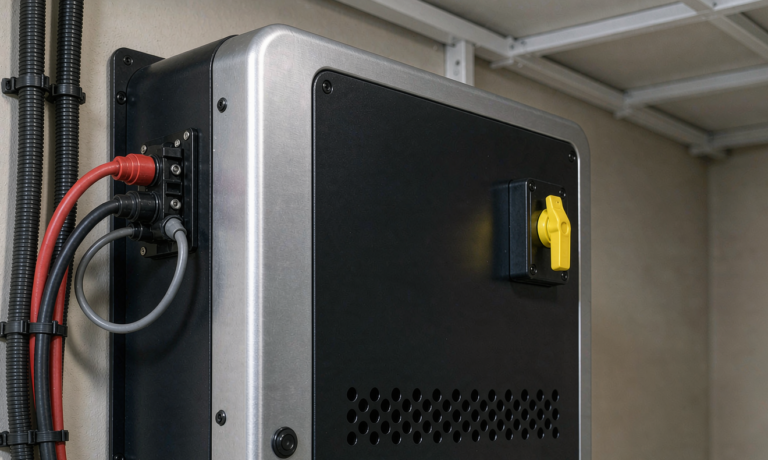
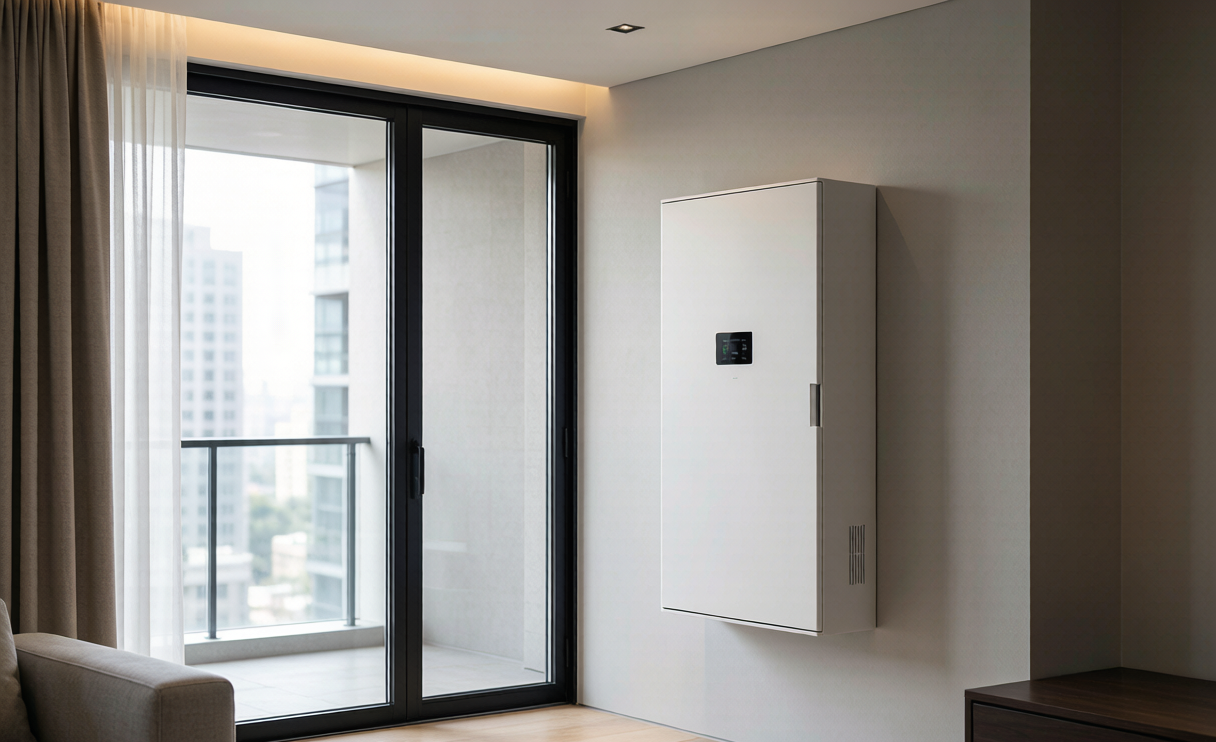
Condo owners who actually own their unit can sometimes install a fixed home energy storage system on a non-load-bearing interior or garage wall, especially in townhome-style condos with a dedicated panel. This requires a licensed electrician, a building permit, HOA architectural approval, and a battery under UL 9540. Sizes of 10 to 13.5 kWh start to make sense here because you can shift some of your own consumption and ride through longer blackouts.
Sizing a Home Energy Storage System for a Rental or Condo
Sizing is where most people overspend. For an apartment, I do not start with “how big a battery can I buy” – I start with a critical-loads list. Here is the method I use with clients:
- List essential loads. Fridge (~150W running, 600W compressor surge), internet/router (~15W), laptop (~60W), phone charging (~10W), a few LED lights (~40W). Total steady draw is often under 300W.
- Multiply by hours of autonomy. If you want 12 hours of backup, 300W x 12h = 3.6 kWh of usable energy. After the 90% depth-of-discharge that good LFP allows, you need roughly a 4 kWh unit.
- Add inverter headroom. The surge from a fridge compressor can hit 1,200W for a fraction of a second. Size the inverter’s continuous rating at 1,500 to 2,000W even if your average load is tiny.
For condo owners with a permanent install, I size to a typical 10 to 13.5 kWh block, which covers critical loads for a day or shifts 30 to 50% of evening consumption off a time-of-use peak. A full whole-house backup in a shared building is rarely worth it – you cannot power the building’s shared systems anyway.
Safety Standards You Must Verify Before You Buy
This is the part I refuse to compromise on. A lithium battery in a multi-family building is a life-safety device, not a gadget. Before I recommend any unit, I check the certification sticker against these standards:
- UN38.3. The baseline transport safety test (T.1-T.8) covering altitude simulation, thermal, vibration, shock, external short, impact, overcharge, and forced discharge. Without it, the pack should never have shipped.
- IEC 62133-2. Safety requirements for portable secondary lithium cells and batteries. Confirms the cell-level abuse tolerance.
- IEC 62619. The industrial stationary-battery safety standard. For anything you leave plugged in 24/7, this is the one I want to see.
- UL 9540 / UL 9540A. The system-level energy-storage safety and fire-propagation standards. In North America, a permanent install is essentially non-negotiable without these.
- UL 1973. Stationary and motive battery safety – common on the portable power-station packs that renters use.
I also look for a proper battery management system (BMS) with over-voltage, under-voltage, over-current, and cell-balancing, plus a UL 94 V-0 flame-retardant enclosure. If a vendor cannot produce the test report, I walk away – and I suggest you do the same.
Working With Your HOA, Landlord, and Local Code
The engineering is the easy part. The politics is where deployments die. My playbook:
- Lead with safety, not savings. When I help a client approach an HOA, we present the UL/IEC certification package and a one-page fire-safety summary first. Savings come second.
- Offer a portable-first pilot. Many landlords will approve a non-permanent unit because it leaves with you at move-out and creates no building modification.
- Know the energy threshold. Some jurisdictions exempt small stationary batteries (often under a few kWh) from the full NFPA 855 review. A 5 kWh portable unit frequently sits under that line.
- Document everything. Keep the interconnection agreement (if any), the permit, and the installer’s license on file. It protects you at resale and during insurance renewals.
What a Real Apartment Deployment Looks Like
Last winter I consulted on a 9th-floor condo in a building where the HOA had already banned permanent wall-mounted batteries after a neighboring building’s scare. We specified a 3.6 kWh portable home battery backup with an IEC 62619 cell pack and a 2,000W pure-sine inverter. The resident kept it in a hall closet on a non-combustible shelf, used it only during the building’s twice-yearly fire-panel tests and the two storm outages that season, and reported 14 hours of fridge-plus-internet runtime. The HOA never needed to be involved because nothing was mounted or wired. That is the realistic win for most apartment dwellers: a quiet, compliant, genuinely useful layer of resilience.
For condo owners with ownership rights, the better long-term play is a permanent 10 to 13.5 kWh home energy storage system paired with a UL 1741 / IEEE 1547-compliant inverter, but only after the HOA’s architectural committee and the local permitting office sign off. The payback there comes from time-of-use arbitrage and outage avoidance, not from powering the whole floor.
Frequently Asked Questions
Can renters legally install home energy storage in an apartment?
Yes, in most cases, if you use a portable, non-permanently-wired unit and get your landlord’s written consent. A plug-in power station does not require an electrical permit because it is not hard-wired into the building. A permanent wall-mounted battery is a different story and needs permits plus HOA or landlord approval.
What size home battery backup do I need for an apartment?
For most apartments, 2 to 5 kWh of usable capacity covers critical loads – fridge, internet, lights, and device charging – for 8 to 20 hours. Start by listing your essential loads in watts, multiply by your desired hours of autonomy, then add roughly 10% for inverter losses.
Which safety certifications matter most for a condo or apartment battery?
At minimum, look for UN38.3 (transport), IEC 62133-2 (cell safety), and IEC 62619 or UL 1973 (stationary/motive pack safety). For any permanent install, UL 9540 and UL 9540A are effectively required in North America, and the building will reference NFPA 855.
Will a home energy storage system lower my electric bill in a rental?
Only if you can control your own consumption timing and the building allows it. Most renters use storage purely for backup power. Condo owners with a permanent, meter-level install can capture time-of-use arbitrage, but apartment renters on a master meter usually cannot.
Do I need to tell my insurance company about a residential battery storage unit?
Yes. Notify both your renter’s or homeowner’s insurer and, for condos, the HOA’s master policy carrier. A certified, portable unit is usually a non-event, but undisclosed high-energy storage can void coverage after a claim. Documentation protects you.