Home Energy Storage for Blackout-Prone Regions
If you live somewhere the grid blinks out more often than it should, you already know the difference between an inconvenience and a problem. A two-hour flicker is annoying. A twelve-hour blackout in a heatwave or a three-day outage after a storm is a genuine risk to food, comfort, medical equipment, and income. I’m Karl Huang, Senior lithium battery Engineer at Horizon Power, and over the last nine years I’ve spec’d, tested, and field-deployed battery systems for utilities, telecom sites, and thousands of residential installs. The question I get most from homeowners in storm belts, wildfire corridors, and aging-grid cities is simple: what does a home energy storage system actually need to look like if the power is going to fail on you regularly? This guide is the straight answer I give them.
Why Blackout-Prone Regions Need a Different Storage Strategy
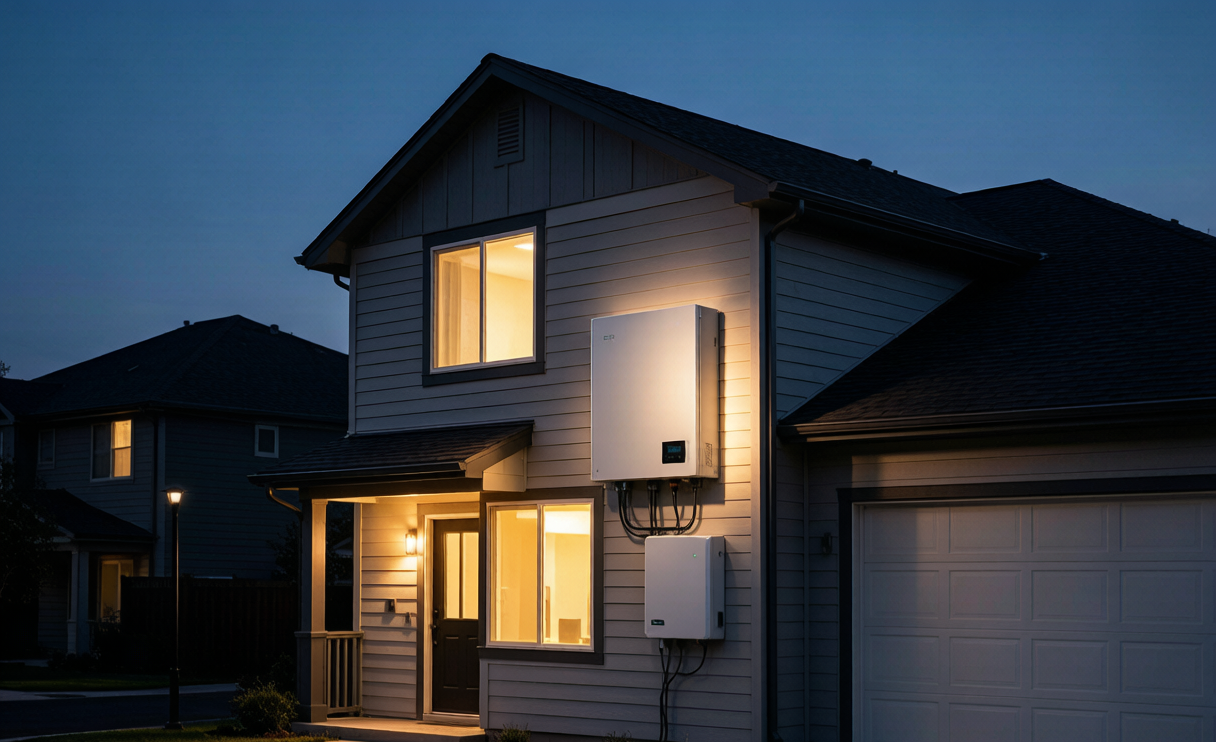
The standard advice — buy a small battery, cover a few circuits — is written for places where outages are rare. In a blackout-prone region, your home battery backup is not a nice-to-have; it is core infrastructure. That changes three design priorities: capacity headroom, cycle durability, and the speed and reliability of the transition from grid to battery.
When I audit a site in, say, coastal Florida or the rural Philippines, I assume a minimum of 20–40 outage events per year and at least one multi-day event annually. That duty cycle is brutal on cheap packs. A system built for a grid that fails twice a decade will be dead in three years. We design for the worst week, not the average day.
Sizing Your Home Battery Backup for Real Outage Durations
Capacity math is where most buyers go wrong. They size to daily solar self-consumption and forget that during a blackout, solar alone may not be enough if the panels are shaded or the days are short. Here is the engineering rule I use:
- Critical loads (8–12 hours): refrigeration, internet, lights, phone charging, a well pump or medical device. Typically 2–5 kWh/day.
- Overnight bridge (12–24 hours): add heating/cooling fan circuits and modest comfort loads. Budget 6–10 kWh.
- Multi-day resilience (48–72 hours): you need 15–30 kWh, and you must be able to recharge from solar or a generator mid-event.
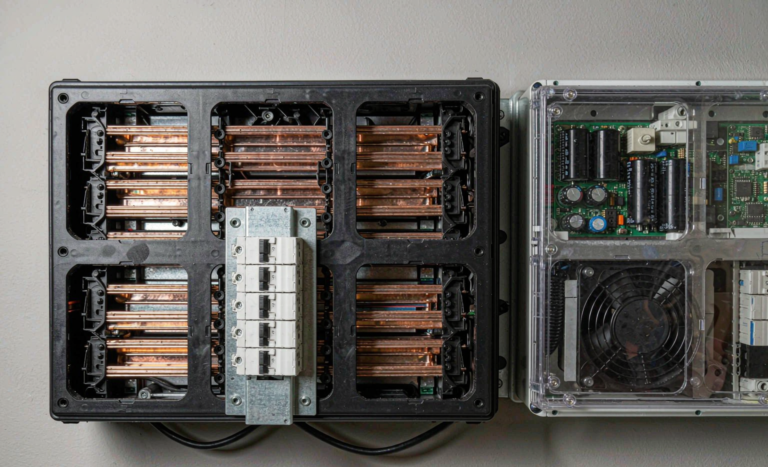
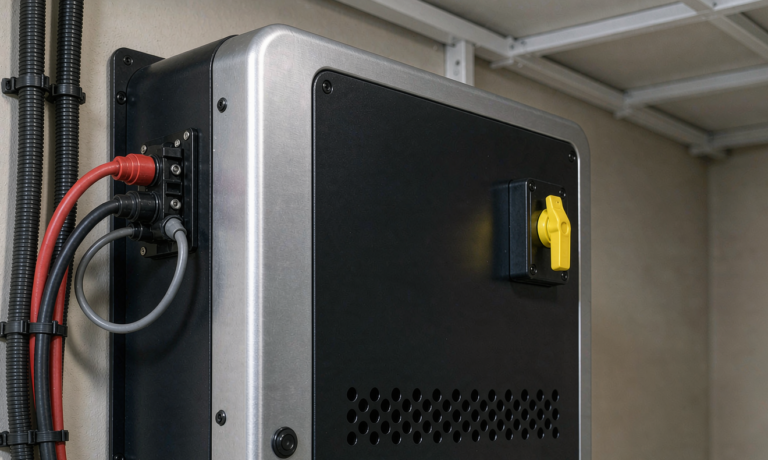
For a blackout-prone home, I usually recommend starting at a 10 kWh home energy storage system module and planning to stack to 20–30 kWh. Our stackable LFP racks let an installer add capacity without rewiring the busbar — a feature I insist on because outage frequency tends to rise over a home’s lifetime, not fall.
Chemistry Choice — Why LFP Is the Safe Bet for Frequent Cycling
For backup duty with frequent cycling, lithium iron phosphate (LFP, LiFePO4) is the only chemistry I spec for homes. The reasons are concrete:
- Cycle life: 4,000–6,000 cycles to 80% state of health at 25°C, versus roughly 1,000–1,500 for many NMC packs under the same abuse.
- Thermal stability: LFP cathode stays stable past 250°C, far above the onset of thermal runaway for nickel-based cells. In a blackout-prone region where first responders may be overwhelmed, that margin matters.
- Calendar life: 10-year warranties are realistic because LFP degrades slowly even when parked at 100% SOC.
Every pack Horiclear Power ships meets UN38.3 (Tests T.1–T.8 for transport safety), IEC 62133-2 for portable cell safety, IEC 62619 for industrial stationary cells, and UL 1973 for stationary battery systems. Those aren’t marketing badges — they are the certifications an inspector will ask for when you pull a permit.
Inverter and Transfer Switch Architecture for Seamless Backup
The battery is only half the system. The inverter and transfer logic decide whether your lights flicker for a second or stay perfectly steady. For blackout-prone homes I spec a hybrid inverter with sub-20-millisecond transfer to backup, compliant with IEEE 1547 (interconnection) and IEC 62109 (safety of power converters). In the U.S., that pairs with UL 1741 SB listing and NEC Articles 706 and 710 for energy storage.
There are two topologies:
- AC-coupled: easiest retrofit to an existing solar array; the battery sits behind a second inverter on the loads panel. Slight efficiency loss but fast to install.
- DC-coupled: battery and PV share one inverter bus; higher round-trip efficiency (often 92–95% vs 88–90% AC-coupled) and better performance when the grid is down and you must run loads purely on sun plus storage.
For a home that loses power often, I lean DC-coupled when we’re building from scratch, and AC-coupled when the solar is already paid for and permitted.
Smart Load Management During Extended Outages
Capacity is finite, so behavior matters as much as hardware. A good home energy storage controller should let you set priority tiers and automatically shed non-critical loads when state of charge drops below a threshold (I default to 20% SOC for the cutoff, leaving reserved capacity to restart the inverter cleanly).
Pair this with a generator interlock if you expect outages longer than your battery can bridge. I’ve deployed hybrid setups where a 3–5 kW generator tops the bank for two hours daily during a week-long grid failure, keeping a 20 kWh system effectively “full enough” to run refrigerators, well pump, and communications the whole time. The key is the inverter’s built-in AC charge port — no manual juggling of extension cords.
Real-World Lessons From the Field
A few things I’ve learned that the spec sheets don’t tell you:
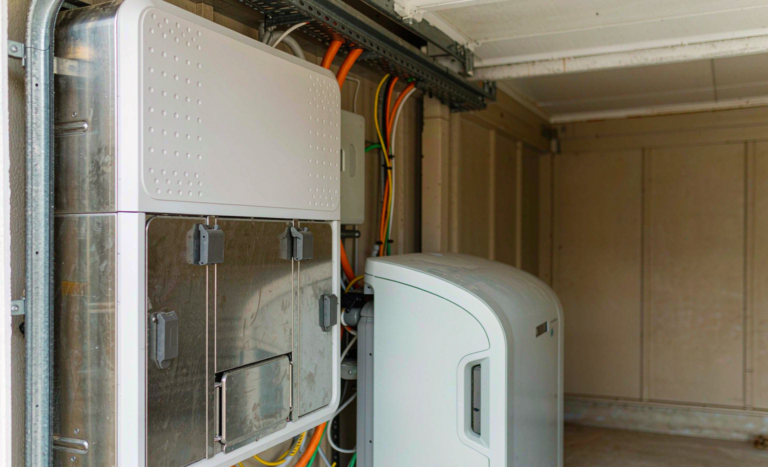
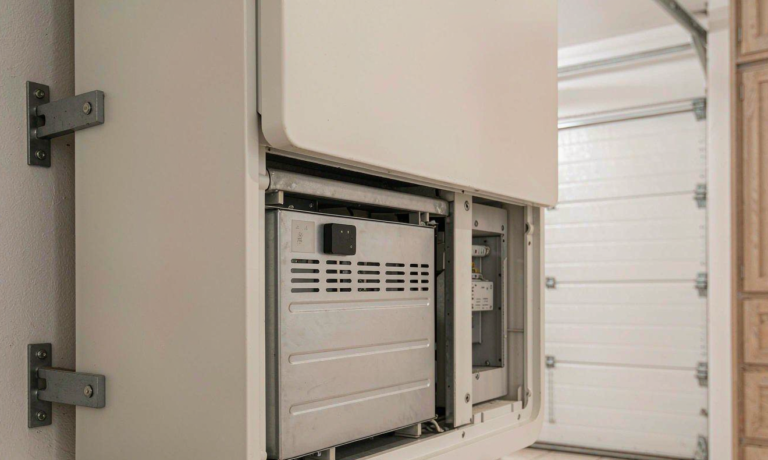
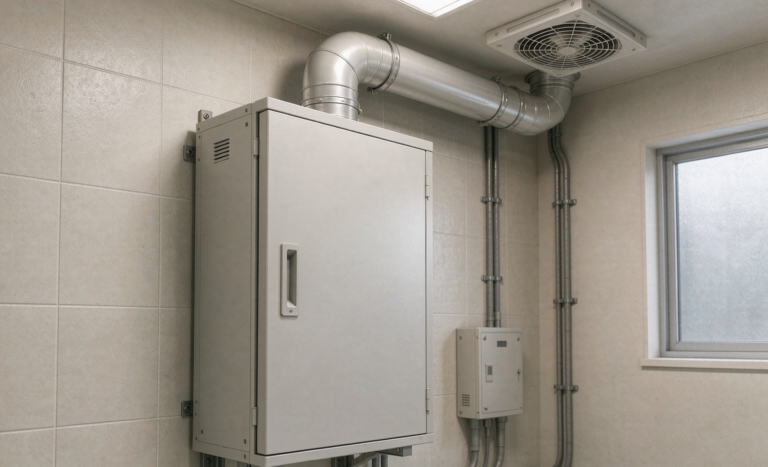
- Temperature kills more banks than blackouts do. Install the cabinet in a climate-controlled or ventilated space. At 40°C, cycle life can halve versus 25°C. IEC 62477-1 thermal management guidance is a good baseline.
- Venting and clearance. Even safe LFP needs the clearance and fire separation called out in UL 9540A. Don’t bury the cabinet in a sealed closet.
- Test monthly. A backup you never exercise quietly dies. I tell clients to run a controlled grid-off drill once a month and watch the SOC curve. If it doesn’t hold, you find out in peacetime, not during the next storm.
- Monitoring saves the warranty. Cloud telemetry that flags cell imbalance early has caught more failing modules for my clients than any annual inspection.
None of this is exotic. It is disciplined engineering applied to a region that simply demands more of its power equipment than the average suburb.
FAQ
How big a home battery backup do I need for frequent blackouts?
For a blackout-prone home, start at 10 kWh and plan to scale to 20–30 kWh. Size to your critical loads first (typically 2–5 kWh/day), then add capacity for overnight and multi-day resilience. If you expect more than 48 hours without grid power, you also need a solar or generator recharge path.
Is LFP really better than NMC for backup power?
For home backup with frequent cycling, yes. LFP delivers 4,000–6,000 cycles versus roughly 1,000–1,500 for many NMC cells, plus far higher thermal stability. That combination of longevity and safety is exactly what a blackout-prone region requires.
Will my home energy storage system work during a blackout if it’s sunny?
Yes, if it’s properly configured. A hybrid inverter with backup functionality will run your loads on solar plus battery even with the grid down. DC-coupled systems do this most efficiently. Without that backup-mode design, some grid-tied inverters shut off entirely for safety when the grid fails.
Do I need a permit and inspection for a home energy storage system?
In most regions, yes. You’ll typically need compliance with UL 9540 / UL 9540A, NEC Articles 706 and 710, and local fire codes. Certified equipment and a licensed installer make approval straightforward and keep your warranty valid.
Can I add more capacity later as outages get worse?
You should plan for it. Stackable LFP rack modules let you expand from 10 kWh to 30 kWh or more without replacing the inverter or rewiring the busbar. I treat expandability as a mandatory feature for any blackout-prone installation.