Home Energy Storage Maintenance for Cabins
Why Cabin Energy Systems Fail Differently
I have spent more than a decade designing lithium battery packs for off-grid and residential storage applications, and if there is one environment that quietly destroys more batteries than any other, it is the seasonal cabin. A cabin system rarely fails because the battery was badly made. It fails because of how it lives: long idle periods at an unfavorable state of charge, unheated winters that push cells below their charge-temperature limits, dusty summers that clog ventilation paths, and owners who arrive for a two-week holiday expecting a system that has been asleep for six months to behave like it did in spring. home energy storage maintenance for cabins is therefore not a copy of the residential checklist you will find for grid-tied systems. It is its own discipline, and it rewards owners who treat the battery as an electrochemical asset with a memory, not a black box bolted to the wall.
In my factory work we run accelerated aging on LiFePO4 packs destined for off-grid installations, and the failure signatures from “cabin-style” duty cycles — months at 100% or 0% state of charge, cold charging events, occasional deep discharges — are distinct and predictable. Almost all of them are preventable with a maintenance routine that costs perhaps two hours per year. This article is that routine, condensed from what our service engineers do during warranty inspections.
Know Your Battery Chemistry Before You Maintain It
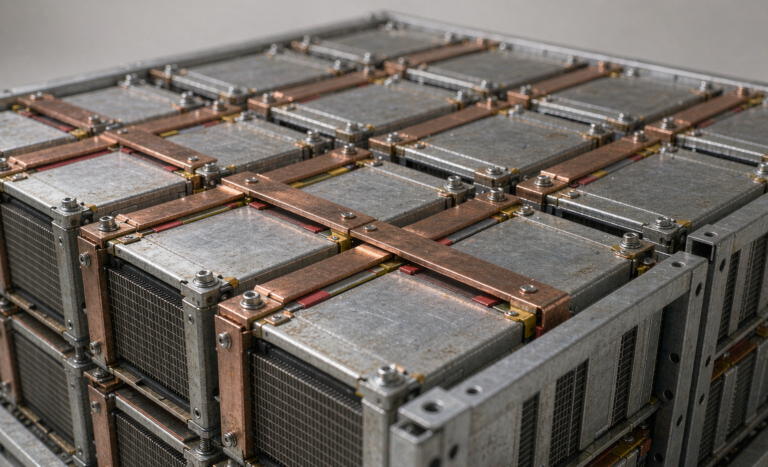
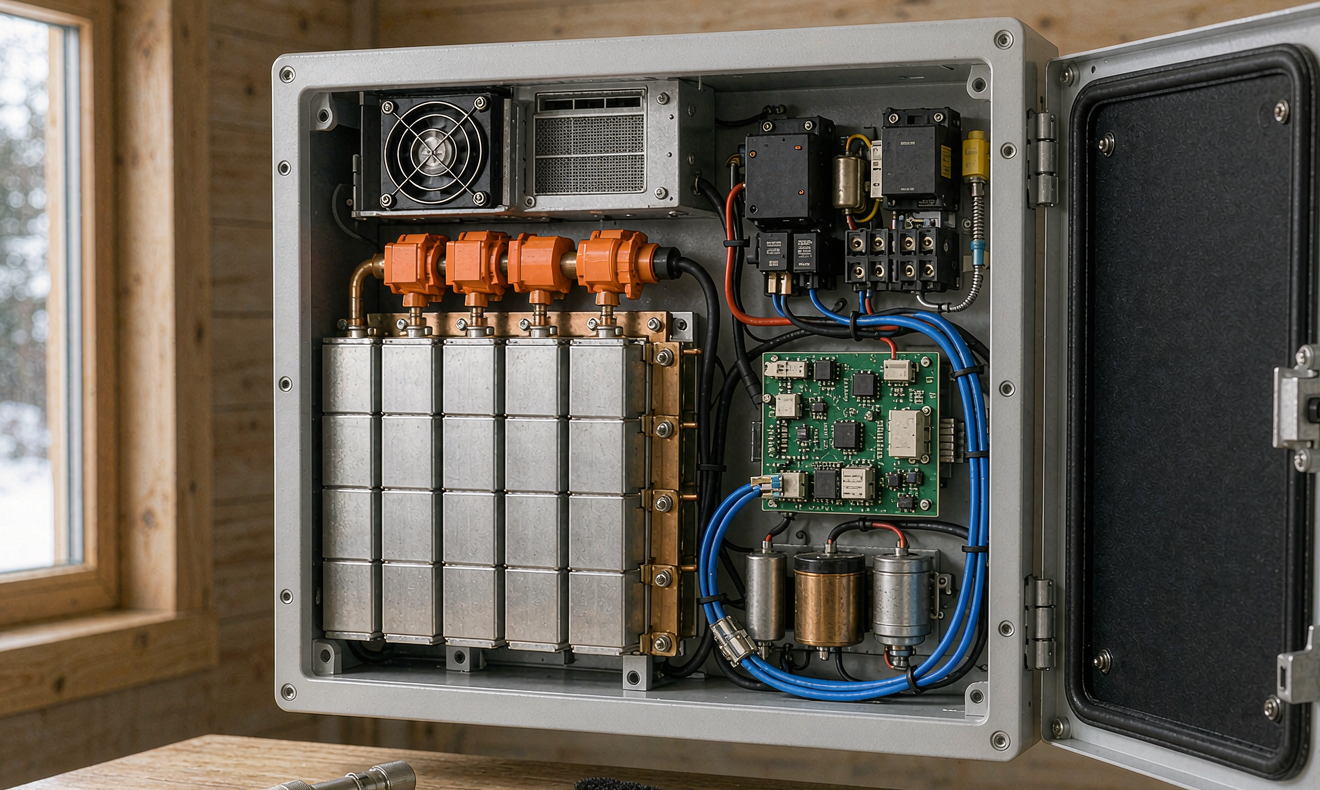
The first step of any credible maintenance plan is understanding what is inside the enclosure. The overwhelming majority of modern home energy storage units — and every unit we ship — uses lithium iron phosphate (LiFePO4) cells, typically in a 15S or 16S series configuration for a 48 V nominal bus. LiFePO4 dominates for good reasons: excellent thermal stability, 3,000 to 6,000 cycle life depending on depth of discharge, and a flat discharge voltage curve around 3.2 V per cell that keeps inverters happy. But that flat curve is also why you cannot judge state of charge by voltage alone, and it is why the battery management system (BMS) inside your cabinet is the real maintenance interface.
A few systems still use NMC (nickel manganese cobalt) chemistry, which offers higher energy density in a smaller footprint but demands stricter thermal and SOC management. If your cabin battery is NMC, tighten every interval in this article by roughly 30% — NMC degrades measurably faster at high storage SOC and has a narrower safe charging temperature window. Whatever the chemistry, the pack should have passed UN 38.3 transport testing before it ever reached you, and a residential unit worth installing will additionally comply with IEC 62133-2 cell-level requirements and UL 1973 or IEC 62619 at the system level. If you cannot find those certifications on the nameplate or datasheet, that is the first maintenance finding: the pack itself is a risk regardless of how well you care for it.
The Seasonal Maintenance Calendar for Cabin Systems
Cabin systems live on a different clock than primary residences, so I structure home energy storage maintenance around three anchor points rather than a monthly schedule.
Before departure (end of season)
The single most damaging thing a cabin owner can do is walk away with the battery at 100% SOC. Stored at full charge and 25 °C, LiFePO4 loses capacity roughly 2–3% per year; stored at full charge and 35 °C, that loss can triple. My rule is simple: bring the battery to 40–60% SOC before you lock the door. Most BMS units or their companion apps let you set a charge limit — configure the inverter to stop charging at 55% for the off-season. Then disable all phantom loads (standby inverters, routers, satellite equipment); a 20 W parasitic drain will pull a 10 kWh pack from 55% to genuine empty in about seven months, and a lithium battery left at 0% SOC for a winter can fall below the BMS undervoltage lockout and refuse to wake at all.
On arrival (start of season)
Resist the urge to plug in and charge immediately. First perform the visual and electrical inspection described below, then check the cell voltages through the BMS app. If any cell reads below 2.5 V, or the pack voltage is under the manufacturer’s recovery threshold, follow the documented low-voltage recovery procedure — usually a slow, current-limited charge at C/20 — rather than a full-power charge. If the cabin sat through freezing temperatures, the battery core must be above 0 °C before charging; charging LiFePO4 below freezing causes metallic lithium plating on the anode, which permanently reduces capacity and, in severe cases, creates internal shorts. Quality packs include a self-heating pad or a BMS-enforced charge inhibit below 0 °C; verify which one yours has before the first cold season, not during it.
Mid-season (once, if you are there more than six weeks)
A quick 10-minute check — visual inspection, app review of cell balance and temperatures, and a ventilation-path check — catches the small drifts (a loosening terminal, a drifting cell, a clogged intake screen) before they become season-ending failures.
The 10-Minute Visual and Electrical Inspection
This is the core of practical home energy storage maintenance, and it needs no special equipment beyond a multimeter and the BMS app.
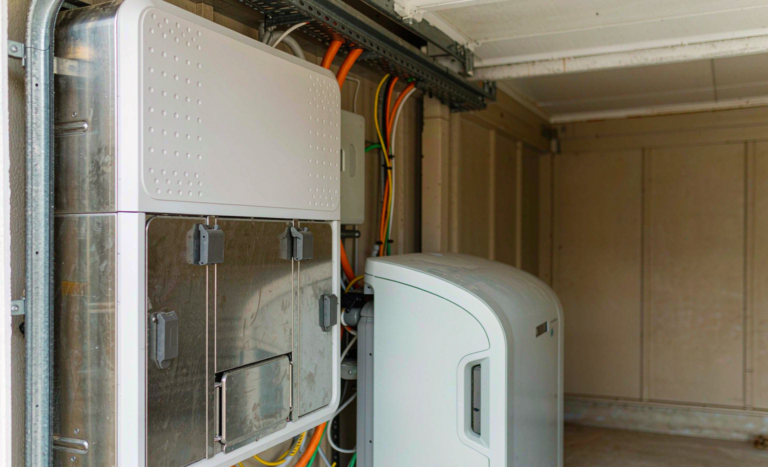
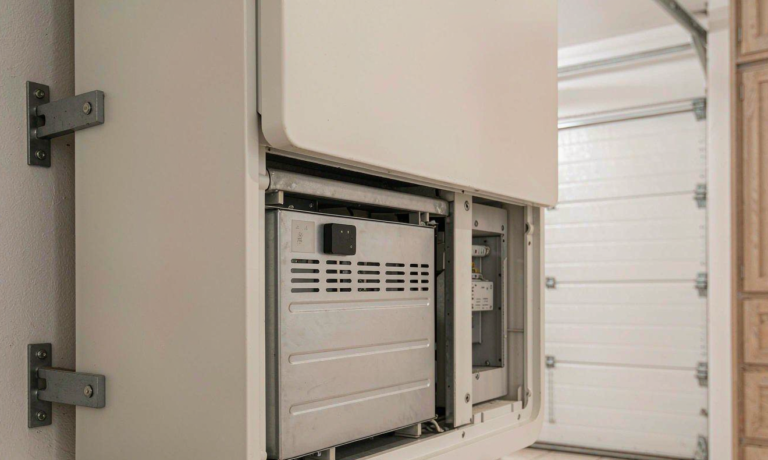
- Enclosure and mounting: Look for corrosion on the cabinet, water stains under the unit, and evidence of rodent entry — cabin batteries attract mice looking for winter shelter, and chewed communication cables are a top-three service call in our off-grid fleet. Confirm the unit is still rigidly mounted; wall anchors loosen in freeze-thaw cycles.
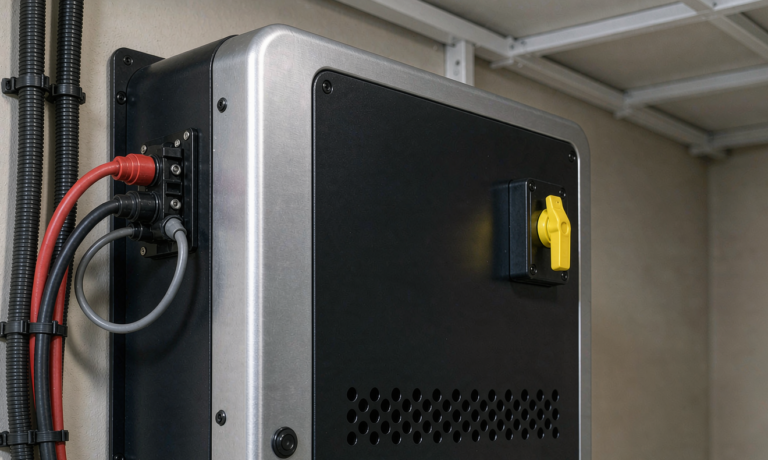
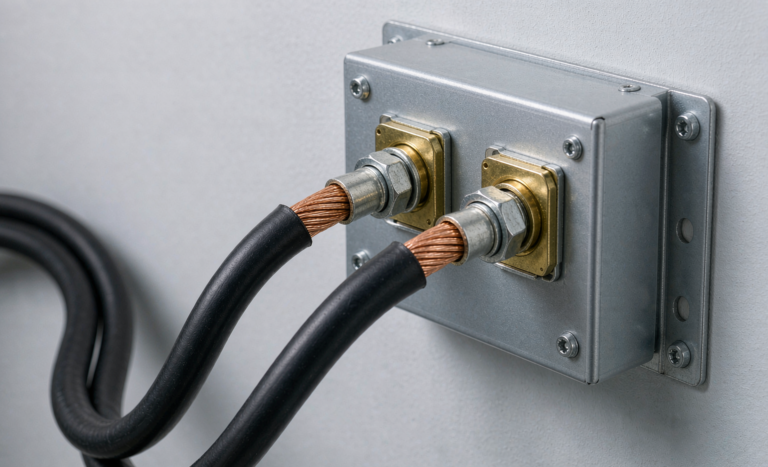
- Terminals and busbars: With the system off, check that power terminals are tight. For bolted M8 terminals on a 48 V system, torque to the manufacturer spec, typically 8–12 N·m. Re-thermal-scan or hand-check for warmth after an hour of heavy load — a warm lug is a resistive connection in the making. Look for white-green oxidation on copper; clean with an electrical contact cleaner and re-protect with a thin layer of no-ox-id grease, never with ordinary petroleum jelly.
- Cell balance via the BMS app: Note the highest and lowest cell voltages. Healthy LiFePO4 at rest should show under 30–50 mV spread across the pack. A spread above 80 mV at partial SOC means one cell is drifting — log it, and if it grows across visits, plan a capacity test or an BMS-driven balance cycle.
- Temperature check: In the app, compare cell temperatures against ambient. More than about 8 °C above ambient at rest suggests a parasitic load, a failing MOSFET, or blocked cooling — all worth investigating.
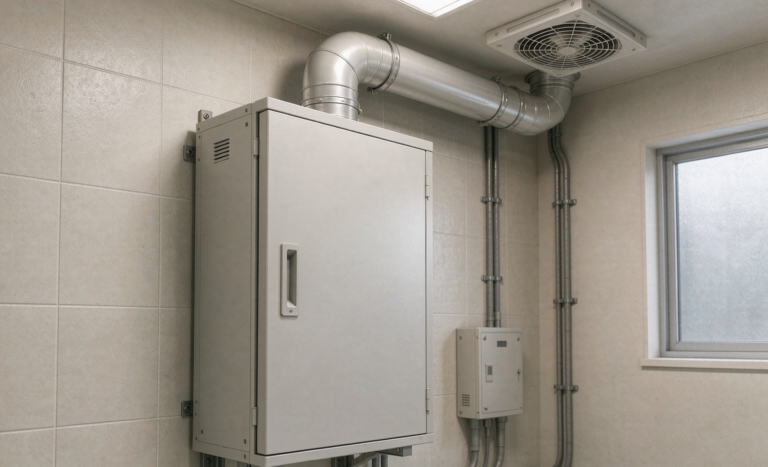
- Ventilation and clearances: Brush dust off intake screens and heat-sink fins, and confirm the manufacturer’s clearance distances (usually 200–300 mm above and around) have not been reclaimed by stored gear. Most home energy storage failures I inspect are thermal problems before they are electrical ones.
- DC and AC connections: Check breaker terminals and inverter DC inputs for discoloration. Infrared thermometers are inexpensive; a scan of lugs and breakers under load, looking for anything more than ~20 °C above ambient, is the fastest predictive tool an owner can own.
Capacity Testing: The Only Honest Health Metric
Voltage tells you almost nothing about lithium battery health — that flat LiFePO4 curve means a 20%-degraded cell and a fresh cell look nearly identical at rest. The honest metric is delivered capacity. Once a season, ideally, run a controlled capacity test: charge to 100% (balanced), then discharge through a known load — your inverter running a fixed resistive load such as a 1,000 W heater is fine — while the BMS logs amp-hours until the cut-off voltage. Compare the delivered Ah or Wh against the nameplate rating.
My thresholds: above 90% of rated capacity, the pack is healthy and the calendar can continue untouched. Between 80% and 90%, the pack is aging normally if the system is more than four or five years old; log the number and shorten your test interval to twice a season. Below 80%, the pack has reached the industry-standard end-of-life definition used in UL 1973 and most warranty documents — time to contact the supplier about warranty terms, which typically run 5 to 10 years or a defined cycle count, whichever comes first. One warning: never judge capacity from a single partial discharge. A pack discharged only 30% and then “extrapolated” by the app will overstate or understate true health, especially with LiFePO4’s plateau.
Internal resistance is the secondary metric worth trending. Many BMS units report per-cell DC internal resistance (DCIR). Track the numbers rather than judging a single reading — what matters is that cells age together. If one cell’s DCIR rises 30% above the pack average, that cell will heat more, drift more, and eventually drag the whole pack into imbalance. Catching it early turns a warranty cell replacement into a routine event instead of an emergency.
Cold Weather, Heat and Humidity: Protecting the Enclosure Year-Round
Cabins expose batteries to temperature extremes that grid-tied basements never see. The operating envelope for LiFePO4 is roughly −20 °C to 60 °C for discharge, but only 0 °C to 45–55 °C for charge, and the sweet spot for longevity is 15–30 °C. Three practical defenses:
- Placement: Install the battery on an interior wall, off exterior-facing surfaces, ideally above the frost line of the cabin’s thermal envelope. A cabinet on an uninsulated exterior wall will see 45 °C+ in summer sun and −15 °C in winter — both degrade cells, and one prevents charging entirely.
- Self-heating or thermal management: If the cabin will experience sub-zero charging windows, specify a pack with an integrated heating film and BMS-controlled preheat. This is a standard option in our off-grid product line and worth every dollar; it eliminates the lithium-plating failure mode entirely.
- Moisture discipline: Condensation is the silent killer in three-season cabins that go unheated in shoulder months. Confirm the enclosure IP rating (IP21 minimum indoors; IP54 or better for semi-sheltered installations), keep breather vents unobstructed, and if your climate swings hard, a low-watt anti-condensation heater or a small dehumidifier in the battery room is cheap insurance. Any sign of rust-colored weeping from the enclosure bottom deserves immediate investigation — it usually means a gasket has failed.
Solar Charging, Inverters and the Settings That Extend Battery Life
Most cabin systems charge from solar through an MPPT controller, and the controller’s charge-profile settings determine a large share of long-term battery health. Three settings matter most. First, absorption voltage: for a 16S LiFePO4 pack, 56.0–56.8 V (3.50–3.55 V per cell) is the correct ceiling — anything above 57.6 V is a configuration error that will trip the BMS and stress cells. Second, float: LiFePO4 does not want a float charge at all; set float to 53.6–54.4 V or disable it. Holding cells at full absorption voltage for hours daily is the single fastest chemical-aging mistake I see in the field. Third, low-voltage disconnect: set the inverter cut-off at 44.8–46.4 V (2.8–2.9 V per cell), not at the BMS’s 2.5 V hard floor. Arriving at the BMS floor regularly accelerates degradation, while a higher inverter cut-off costs almost nothing in usable energy.
If your system supports it, program a “cabin mode” charge profile: bulk charge to 90% during active use, drop to 55% SOC during absence, and enable the BMS’s storage function if available. Some premium systems — and every custom battery solution we engineer for off-grid clients — expose these profiles natively; if yours does not, the settings above get you 90% of the benefit manually.
When to Service, When to Replace, and How Warranties Actually Work
Call a professional when you see any of the following: a cell voltage below 2.0 V at rest (deep over-discharge — the pack needs assessment before recharge, not just charging); persistent imbalance above 100 mV that balancing does not correct; swelling visible on the enclosure or a bulging panel; a burnt smell or heat discoloration at any terminal; repeated BMS trips under normal loads; or any moisture ingress. These are not DIY items. A resistive joint that is warm at 2 kW is a fire risk at 5 kW, and only a qualified technician should open a pack enclosure.
On warranties: read the throughput clause, not just the year count. Most home energy storage warranties combine a term (5–10 years), a cycle count (often 4,000–6,000), and an energy throughput figure, ending at 70–80% retained capacity. Cabin systems usually fail the time clause first, simply because low utilization means low cycle accumulation. Keep your annual capacity test numbers — a documented log is the difference between a smooth warranty claim and a argue-the-data dispute.
Finally, when replacement day comes, size the new pack against how you actually used the old one. Cabin owners chronically oversize for guests they host twice a year, and an oversized pack in a part-time cabin spends its life at partial SOC with slow imbalance drift. Right-sizing — often a smaller pack plus better generator integration — is cheaper, safer, and easier to maintain.
Frequently Asked Questions
What is the ideal state of charge to store a cabin battery over winter?
Store LiFePO4 packs at 40–60% SOC, ideally 50%, in a location that stays between 10 °C and 25 °C. At this SOC the electrolyte is at its most stable and cell aging is minimized. Never store at 100% (accelerated calendar aging) or at 0% (risk of falling below the BMS undervoltage lockout, which can permanently disable the pack).
Can I charge my lithium battery when the cabin is below freezing?
No — not until the cells themselves are above 0 °C. Charging LiFePO4 below freezing plates metallic lithium onto the anode, permanently reducing capacity and creating long-term safety risks. Use a pack with an integrated self-heating function or a BMS charge-inhibit below 0 °C, and let the cabin warm up before switching the charger on.
How often should a cabin home energy storage system be serviced?
Three touchpoints per year: a full inspection and SOC adjustment before departure, an inspection plus low-voltage recovery check on arrival, and a 10-minute mid-season check if the stay exceeds six weeks. Add one controlled capacity test per year. That is the entire routine — about two hours annually.
My BMS app shows one cell drifting lower than the others. Is that serious?
A spread under 50 mV at partial SOC is normal for LiFePO4. Watch it across visits. If the gap exceeds 80–100 mV and grows despite the BMS balancing function, the drifting cell may have elevated internal resistance or reduced capacity, and the pack should be capacity-tested and possibly serviced under warranty before the imbalance strands you mid-season.
How long should a quality cabin lithium battery last?
A well-maintained LiFePO4 home energy storage pack delivers 3,000–6,000 cycles — roughly 8 to 15 years of part-time cabin use. The calendar, not the cycle count, is usually the limiting factor: capacity typically fades to 80% around year 8–10 even at modest utilization, which is why disciplined storage SOC and temperature management, the two levers that control calendar aging, matter more for cabins than for any other application.