Home Energy Storage Manufacturing for Farms
I have spent the better part of twelve years on lithium battery production lines, and farm projects are the ones that humble people fastest. A residential battery that behaves beautifully in a climate-controlled garage can fail in eighteen months in a milking parlour, and the reason is almost never the cell. It is the ammonia in the air, the pressure-washer the farmhand uses on a Saturday, the irrigation pump that pulls six times its running current every morning at 05:00, and the mice that think a warm inverter cabinet is an excellent address.
This article is about the manufacturing decisions behind an agricultural-grade home energy storage system, written from the production side of the bench rather than the marketing side. I will walk through how the farm environment reshapes cell selection, how we seal and protect electronics against barn air, why the joining method matters more than most datasheets admit, how we turn the BMS into a manufactured deliverable instead of a firmware afterthought, and what I refuse to ship without at end of line. Every figure here reflects hardware I have qualified or rejected.
What Farm Duty Actually Asks of a home energy storage battery
A suburban home battery sees a fairly boring life: one or two shallow cycles a day, ambient temperatures between 15 and 30 °C, clean air, and a grid that behaves. A farm battery sees none of that. When we instrument farm sites before we quote, the data we get back usually looks like this:
- Duty cycle depth. Grain dryers, milk cooling tanks and irrigation pumps push 80–95 % depth of discharge most days of the season, then the pack sits nearly idle for weeks in winter.
- Inrush events. A 5.5 kW submersible pump motor can pull 30–35 kW for 400–600 ms on start. That is a 6–7× inrush, and it recurs several times an hour during irrigation season.
- Air chemistry. Ammonia in a dairy barn regularly sits at 10–25 ppm and spikes past 50 ppm during manure agitation. Hydrogen sulphide is present at lower levels but is far more aggressive to copper and silver.
- Particulate load. Feed dust, chaff and silica from gravel yards. Fine dust that passes a G3 filter will coat a PCB and, combined with morning condensation, becomes mildly conductive.
- Weak grid. Long rural feeders with 4–8 % voltage sag under load, frequent single-phase spans of 300 m or more, and diesel gensets with 8–12 % voltage THD that some inverters refuse to synchronise with.
- Washing. IP65-rated cabinets destroyed by a hot pressure washer at 80 bar aimed at the cable gland.
When a customer asks me for a home energy storage system for a farm, my first job is translating those six realities into a manufacturing specification. The cell choice is only the beginning of that translation, and it is the part of residential battery storage that most suppliers skip.
Cell Selection: Why LFP Wins the Farm, and Where It Still Needs Help
For stationary agricultural work I specify LFP prismatic cells almost without exception. The reasons are unglamorous and correct: LFP’s olivine structure gives a flat 3.2 V plateau, a thermal decomposition onset around 270–300 °C versus roughly 150–200 °C for NCM, and cycle life that comfortably clears 6,000 cycles at 0.5C/80 % DoD at 25 °C. A 280 Ah prismatic LFP cell also gives us a large-format, low-parallel-count architecture, which matters enormously for a lithium battery that has to survive ten years in a dusty building.
Fewer parallel strings means fewer current-sharing problems. In a 30 kWh pack built from 280 Ah cells we are running 1P104S or 2P52S, not 20P. That is a real manufacturing advantage: every parallel connection is a place where a slightly higher resistance cell steals current, runs hotter, and ages faster than its neighbours, and the pack is only as good as its worst branch.
Grading and Binning Are Not Optional
Cells arrive from the cell maker with a 5–8 % spread in capacity and a wider spread in DC internal resistance. If you build a pack from ungraded cells, the pack’s usable capacity is set by the weakest cell on the first day, and the imbalance grows from there. Our incoming process is:
- Capacity grading at 1/3 C discharge at 25 ± 2 °C, cells binned into 1 % capacity bands (roughly 2.8 Ah at 280 Ah).
- DCIR measured at 1 kHz and at a 10-second 2C pulse, binned to within ±5 % of the batch median, typically around 0.35 mΩ.
- Self-discharge screening: 28-day open-circuit storage, rejecting anything above roughly 3 % per month, which is where micro-short defects reveal themselves.
- Visual and dimensional inspection for can dent, weld-pad contamination and burr height below 0.1 mm.
That last point sounds trivial and it is not. A 0.2 mm burr on a terminal pad becomes a pressure point under compression and, two years later, a hotspot.
Mechanical Design and Ingress Protection: Dust, Ammonia and Vermin
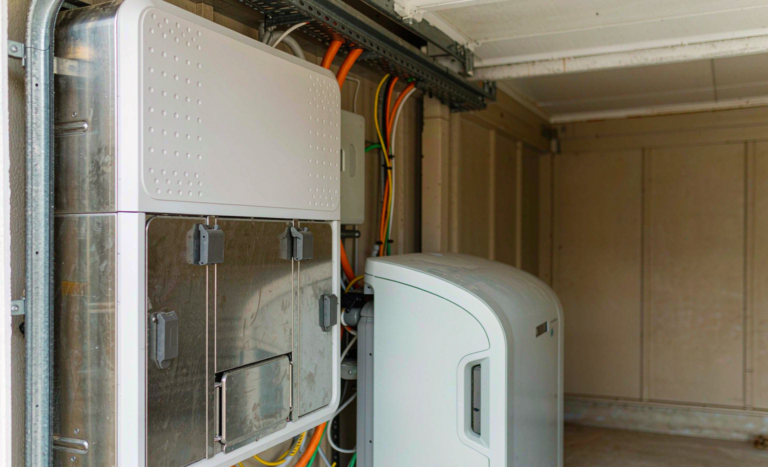
An agricultural enclosure has to satisfy three enemies simultaneously: chemical attack, particulate ingress, and biology. Our default production answer is a powder-coated cold-rolled steel cabinet for general agricultural use, upgraded to 316L stainless wherever the pack lives inside a livestock building or within 5 km of a coast.
Sealing Strategy: Gasket Geometry Beats Heroic Potting
Teams often reach for full potting as a first answer. I use it selectively: potting a BMS board in silicone gives excellent moisture and corrosion protection but destroys serviceability and adds 2–4 kg. For most farm packs we do this instead:
- Enclosure rated to IEC 60529 IP66 and, for wash-down areas, IP66/IP69K on the door face; NEMA 250 Type 4X where the customer is in North America.
- Closed-cell EPDM or silicone sponge gasket with 25–30 % compression, a continuous groove (no mitred corners with gaps), and a drip lip above the door seam.
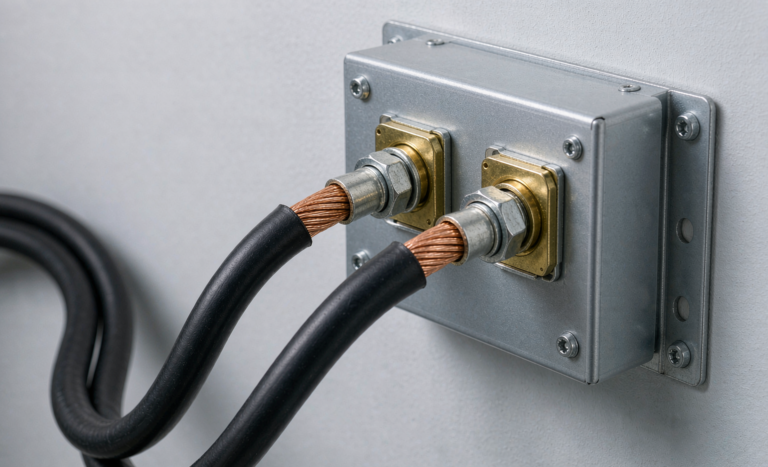
- Metric cable glands at IP68 with integrated strain relief and a documented torque, plus a downward-facing service loop so water never tracks along the cable.
- A GORE-style hydrophobic vent with an ePTFE membrane so the cabinet can breathe through daily thermal cycling without pumping humid barn air inside.
- Positive-pressure or desiccant-assisted drying where the site has condensation risk: a 10–20 g desiccant pack sized for the internal free volume, replaced at the annual service.
Corrosion Protection for Barn Air
Ammonia and hydrogen sulphide attack copper, and silver-plated contacts tarnish badly in sulphur. On farm builds we use tinned copper conductors, gold-flashed signal contacts, and a conformal coating on every electronic assembly qualified to IPC-CC-830B at 50–125 µm dry film thickness. Where the pack sits in a livestock building, we add a flowing mixed gas corrosion test per IEC 60068-2-60 and an H₂S exposure screen per IEC 60068-2-43 as part of design validation, not just as a cell-level formality.
Coastal farms go further: ISO 9227 neutral salt spray for 480–1,000 hours on coated coupons and on the assembled door, with a post-test creep limit of 2 mm from the scribe. I have rejected otherwise good powder-coat systems at 480 hours because scribe creep hit 4 mm, and that rejection saved a customer a rust-perforated cabinet in year three.
Vermin
Rodents are an under-rated failure mode. Our manufacturing rules are simple: no exposed copper anywhere, all internal harnesses in braided sleeving rated to at least 125 °C, UL 94 V-0 insulation on every wire, and any external conductor inside metal or UV-stabilised conduit. A chewed sense lead is an intermittent BMS fault that costs more to diagnose than the entire wire.
Joining the Pack: Laser Welding, Bolted Busbars and Torque Traceability
Here is where a lot of contract manufacturers quietly lose the plot. A home energy storage battery that carries 100–200 A continuous through a poorly made joint will heat at that joint, oxidise, heat more, and eventually trip or burn. We run two joining processes and choose by duty:
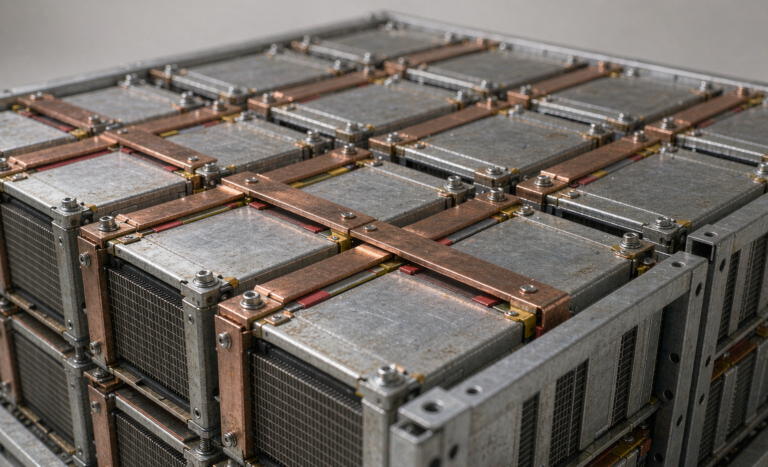
- Laser-welded cell-to-busbar joints for high-vibration and sealed architectures. Nickel-plated copper busbars, 0.3 mm, weld penetration targeting 20–40 % of the tab thickness, pull-test sampling at ≥ 50 N on a 10 mm tab, and microsectioning every 200 welds to confirm nugget geometry.
- Bolted busbar joints where serviceability matters and the farm’s own technician may replace a module. M6 or M8 fasteners, calibrated torque drivers at ±3 % accuracy, torque-angle logging, and a witness mark. We do not allow impact drivers near a battery on any line I own.
Every torque value and every weld parameter is written to the MES against the pack serial number. When a pack comes back in year seven with a warm terminal, I want to know which tool made that joint, on which shift, at what torque. That is what makes a custom battery solution different from a commodity box, and it is why good battery pack design is really a data problem before it is an electrical one.
We also design for the inrush I mentioned earlier. Busbar cross-sections are sized not for continuous current but for the 15-second thermal mass during a 6× motor start, and we specify contactors with a DC switching rating well above pack voltage, because DC arcs do not self-extinguish on a zero crossing the way AC does.
The BMS as a Manufacturing Deliverable, Not a Firmware Afterthought
A BMS solution for a farm battery has to be specified at the same time as the mechanical design, not handed to the software team after the tooling is cut. The functions I insist on before we release a design to production:
- Inrush-tolerant protection curves. Trip thresholds that ride through a 500 ms 6× motor start without nuisance-tripping, while still clearing a genuine short in under 5 ms.
- LFP-appropriate charging windows. Hard charge inhibit at 0 °C, reduced-current window from 0 to 5 °C at 0.05–0.1C, and a self-heating pad of 60–150 W for cold-climate sites. Charging LFP below freezing plates lithium metal, and no amount of warranty language will undo it.
- Generator and weak-grid tolerance. Wide AC input window, ride-through of 8–12 % THD from a diesel genset, and configurable anti-islanding that satisfies IEEE 1547 and UL 1741 in North America.
- State-of-health tracking. Coulomb counting corrected by periodic full-charge capacity measurement at a defined reference temperature, logged so the farmer can see capacity fade year over year.
- Remote diagnostics. Cell-level voltage and temperature telemetry over RS-485 or CAN, with a fault ring buffer of at least 500 events. Rural service calls are expensive; remote triage pays for itself twice a season.
On the line, the BMS gets a functional test before it ever sees a cell: simulated overvoltage, undervoltage, overcurrent, short-circuit, and sensor open-circuit faults, each verified to trip inside its specified window. Boards that fail this station never enter a pack, because a board that misreads one cell voltage will quietly destroy that pack’s usable capacity.
End-of-Line Validation: What I Refuse to Ship Without
Every finished pack leaving our line clears the same gate. I have cut these tests into the process over years, usually after a failure taught me why they were needed:
- Dielectric withstand (hipot). 2U + 1,000 V AC applied for 60 seconds between the high-voltage circuit and the enclosure, per the approach used in UL 1973 and IEC 62485. Any flashover and the pack goes to teardown, not to rework.
- Insulation resistance. 500 V DC, with a pass threshold of at least 100 Ω/V of maximum working voltage, and in practice we look for hundreds of MΩ on a fresh pack.
- Leak test. Pressure-decay on the sealed enclosure, typically 1.5 kPa with a decay below roughly 100 Pa in 60 s, which is what makes the IP66 rating real rather than printed.
- Capacity verification. A full 0.5C charge and discharge at 25 °C, with delivered capacity inside ±3 % of nameplate.
- Burn-in cycling. 24–72 hours, at least three full cycles, with cell divergence at end of discharge under 50 mV under load across the string.
- Full functional test. Contactor operation, pre-charge timing, comms handshake with the inverter, and a simulated grid-loss transfer.
- Documentation pack. Serial-linked MES record, cell batch codes, torque and weld data, and test results, retained for 10–15 years.
That last item is why I push back when a buyer asks us to skip burn-in to save a week. Burn-in is where infant-mortality defects surface: a marginal weld, a BMS with a drifting reference, a cell with a micro-short. Finding those on my bench costs a labour hour; finding them on a farm in harvest season costs the farmer a season.
Compliance, Transport and the Farm-Specific File
Agricultural buyers are increasingly asked by insurers and rural utilities for evidence, not assurances. The file we assemble for a farm build normally includes:
- Cell and pack safety: IEC 62619 for industrial and stationary secondary lithium cells and batteries, with IEC 62133-2 where the pack is also used in portable or mobile agricultural equipment.
- Stationary installation: UL 1973 for the battery, UL 9540 for the system, and UL 9540A test data on thermal runaway propagation characteristics. In the US, NFPA 855 governs siting and separation distances once you exceed its thresholds.
- Transport: UN38.3 test summary covering T1 through T8, plus IATA DGR documentation at ≤30 % state of charge for UN3480 air consignment. Almost every pack still moves by road and sea, but the test file is the same.
- Environment: IEC 60068-2 series for vibration, shock, damp heat and corrosive-gas exposure.
- Grid interconnection: IEEE 1547 and UL 1741, plus whatever the local rural utility requires for export limiting.
- Emerging: EU Battery Regulation 2023/1542 digital battery passport data, which is now a manufacturing data problem rather than a legal one. If your MES cannot produce a material declaration per pack serial, you will be retrofitting your data layer later.
Commissioning Feedback: What the Field Teaches the Factory
The loop closes when the commissioning data comes back. We ask every farm installer to send us the first 90 days of telemetry, and three patterns show up over and over:
- Packs undersized for inrush rather than for energy. The kilowatt-hours were right and the peak kilowatts were wrong, so we now size on a 15-second peak-power histogram, not on daily energy alone.
- Cabinets sited in direct afternoon sun on a west-facing barn wall, adding 15–20 °C to internal temperature and cutting calendar life. We now ship a shading and siting note with every unit, and we specify a ventilated sun shield for those walls.
- Generators that would never synchronise because of THD, discovered on day one rather than in design review. We added a genset compatibility checklist to the pre-order engineering form.
None of that is exotic. It is the ordinary discipline of building hardware for people who cannot afford a failure, and it is the same discipline we apply whether we are shipping a home battery backup unit for a dairy or a drone battery for survey work over the same fields. The environment changes; the method does not.
Frequently Asked Questions
What makes farm home energy storage manufacturing different from standard residential production?
Three things: corrosion protection for ammonia and hydrogen sulphide, ingress protection against dust and pressure washing, and power electronics sized for motor inrush rather than for steady loads. The cell chemistry is usually the same LFP; everything around it has to be built for a barn instead of a garage.
How long will a farm home energy storage battery actually last?
With LFP cells, 0.5C-class daily cycling and good thermal management, expect 6,000 cycles or more to 80 % of original capacity, which on a farm with strong seasonality usually translates to 12–15 years of service. The parts that fail first are rarely the cells: it is fans, contactors, gaskets and connectors.
Can I install the battery inside a livestock building?
Yes, but the specification has to change. We move to 316L stainless or heavy-coated enclosures, tinned copper throughout, conformal-coated electronics qualified to IPC-CC-830B, and we validate against IEC 60068-2-43 and IEC 60068-2-60 corrosive-gas exposure. Ventilation and separation distances also have to respect NFPA 855.
Do I need a generator as well as a battery on a farm?
Most farms with critical loads keep a genset for multi-day outages. The important part is that the battery and the genset are engineered together: the inverter has to tolerate the genset’s voltage THD, and the transfer logic has to prevent the two sources fighting. That is a design-review item, not an afterthought.
How much maintenance does an agricultural system need?
An annual service is realistic: check gasket compression and cable gland torque, replace desiccant, inspect air filters and fan operation, verify insulation resistance, and pull the BMS fault log. Budget for fan replacement around year five and contactor replacement around year ten.
Can the same production line build a custom battery solution for other agricultural equipment?
Yes, and this is where a flexible line earns its keep. The same LFP cells, laser welding cell, torque-traceable assembly stations and end-of-line test rigs that build a stationary home energy storage system can build traction packs for electric utility vehicles or a semi-solid state battery prototype for a customer who wants higher energy density, without re-qualifying the whole process.