Home Energy Storage Reliability for Farms
When I first started installing battery systems for off-grid and hybrid farms a decade ago, most growers treated energy storage as an afterthought — a few lead-acid banks stuffed into a shed, hoping they would survive the next winter. They rarely did. As a senior lithium battery engineer at Horizon Power, I have since commissioned home energy storage systems for dairy operations, irrigated orchards, and remote livestock stations across three continents, and the single lesson that repeats is this: reliability is not a feature, it is the entire product. A farm that loses power during a pump cycle or a cold-storage window does not just lose comfort — it loses inventory, livestock welfare, and income. This article distills what I have learned about building home energy storage reliability for farms that actually holds up across seasons, loads, and grid outages.
Why Farms Need Reliable Home Energy Storage
Agricultural loads are unforgiving. Unlike a suburban home that draws a fairly predictable evening curve, a farm swings hard: a 7.5 kW irrigation pump kicks on at dawn, a 4 kW milking parlour runs twice a day, a 1.5 kW well pump cycles unpredictably, and a walk-in cooler hums around the clock. When the grid is unstable — as it is in much of rural America, Australia, and parts of Southeast Asia — these loads translate into voltage sags that wreck sensitive electronics and missed pump windows that wilt a crop.
A well-designed home battery storage system smooths those swings. It stores cheap or self-generated solar energy and delivers it the instant a motor surges, without waiting for the utility. In my field data, farms with properly sized storage see generator runtime drop by 70–90%, and that alone pays back the system in fuel and maintenance savings within three to five years. Reliability here means the battery answers every surge, every time, for a decade.
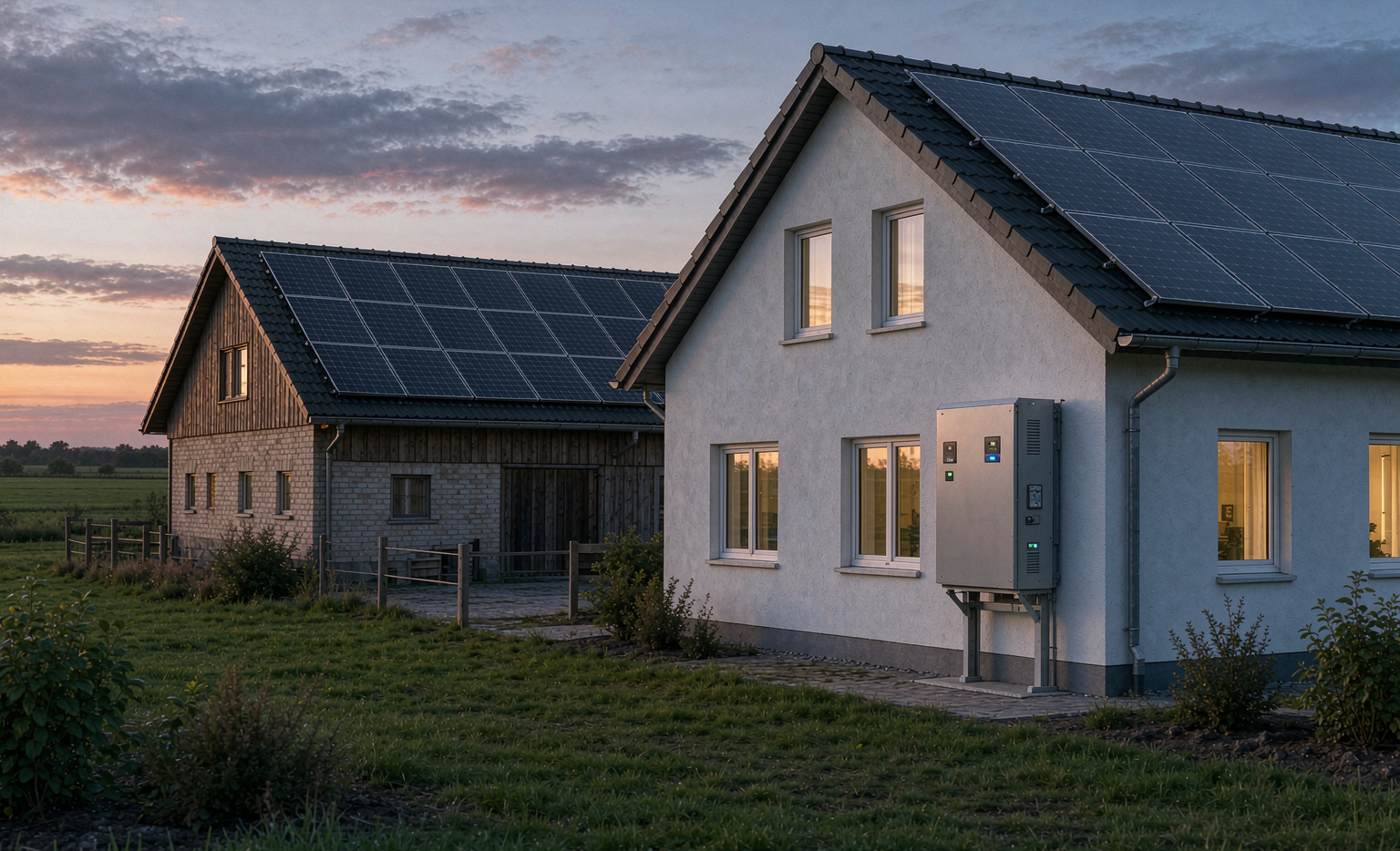
I learned this the hard way on a goat dairy in the Pacific Northwest. Their grid dropped for eleven hours during a spring ice storm; the old lead-acid bank was dead by hour four and the milking parlour went cold. We rebuilt the property around a 28 kWh LFP residential energy storage array the following summer. Two winters later, when the same storm returned, the parlour never blinked. That single event paid for the upgrade in avoided vet bills and dumped milk alone.
Core Components of a Farm-Grade Energy Storage System
Before we talk numbers, let’s agree on the building blocks. A dependable solar battery storage installation for a farm is more than a battery box:
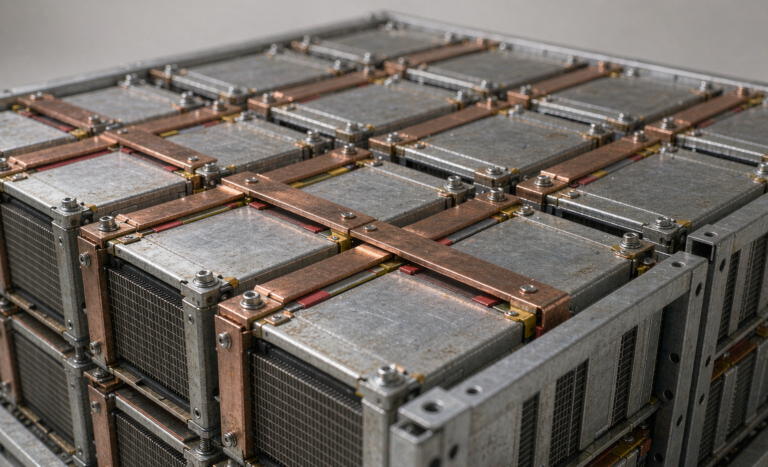
- Battery modules — the chemistry that stores energy (I recommend lithium iron phosphate, LFP, for stationary farm use; more on that below).
- Battery management system (BMS) — the guardian that balances cells, limits temperature, and cuts off faults. This is where most reliability is won or lost.
- Hybrid inverter / charger — converts DC battery power to AC loads and manages grid, solar, and generator inputs seamlessly.
- Energy management controller — the brain that decides when to store, when to sell, and when to ride through an outage.
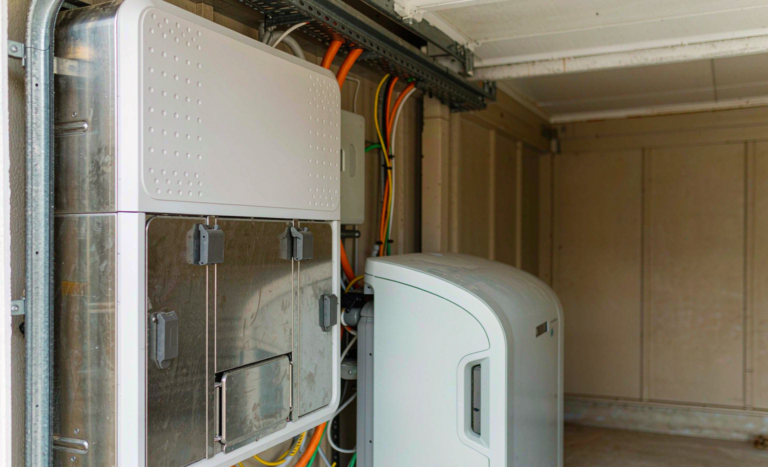
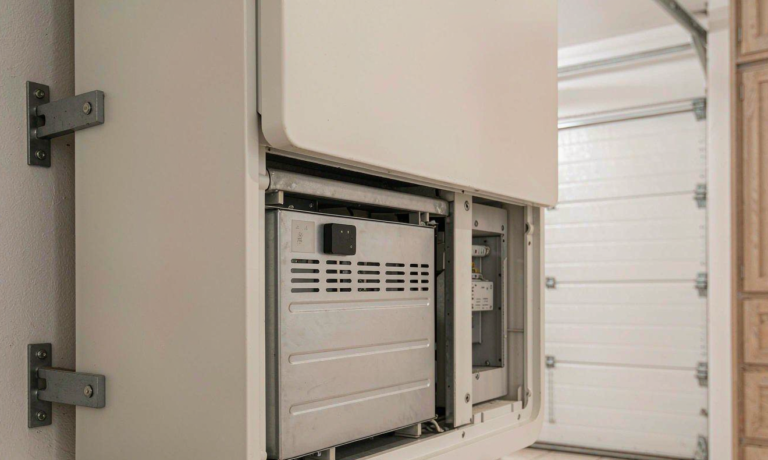
- Enclosure and thermal path — a ventilated, vermin-proof cabinet rated for dust, humidity, and temperature swings.
I tell every farmer the same thing: spend your reliability budget on the BMS and the enclosure, not on the flashiest inverter. A mediocre inverter with a great BMS will still protect your load. A great inverter with a weak BMS will eventually start a fire.
One detail growers overlook is communication. A BMS that cannot report cell voltage to the controller is half a BMS. I spec systems with a wired CAN or RS485 bus between modules and controller, not wireless, because a barn is a noisy RF environment and a dropped packet at 2 a.m. should never mean a silent fault. Wired telemetry is boring, and boring is reliable.
Sizing Your Battery Storage for Agricultural Loads
Sizing is where most DIY installs fail. You cannot size a farm battery from a “average household” calculator. You must size to the worst plausible day, not the average one. My method:
- List every continuous load with its wattage and daily run-hours (e.g., cooler 1,500 W × 24 h = 36 kWh/day).
- List every surge load and its starting current (pumps and compressors can pull 3–5× running watts for seconds).
- Define autonomy — how many sunless or grid-down hours must you survive? For a dairy, I specify a minimum of 24 h at critical load; for irrigation, 12 h is often enough because pumps run in daylight.
- Add the round-trip loss (typically 8–12%) and a 20% depth-of-discharge reserve so you never fully drain LFP cells.
For a representative 40-acre produce farm with a cooler, well pump, and small processing shed, I typically specify a 30–40 kWh energy storage system with a 10 kW continuous / 18 kW peak inverter. That covers overnight cooling and one grid outage without cycling the battery below 15% state of charge — the zone where degradation accelerates.
Battery Chemistry Choices: LFP vs. Others for Rural Use
Farmers often ask me whether to use NMC (nickel manganese cobalt) or LFP (lithium iron phosphate). For stationary home energy storage, my answer is almost always LFP, and the reasons are engineering, not marketing:
- Thermal stability — LFP tolerates higher temperatures and is far less prone to thermal runaway. In a barn that hits 40 °C in summer, that margin matters.
- Cycle life — quality LFP delivers 4,000–6,000 cycles at 80% capacity, roughly double typical NMC. Over a 10-year farm horizon that is the difference between one replacement and none.
- Cost per cycle — although LFP is slightly heavier and lower energy density, its $/cycle is 30–50% lower.
- Safety — LFP is non-combustible under nail-penetration tests that melt NMC.
There are niches for NMC — weight-sensitive mobile or aviation packs, which is why Horizon Power also builds drone battery packs — but for a barn wall, LFP wins on every axis that affects home energy storage reliability for farms.
Certifications and Safety Standards That Matter
Reliability is partly a paper problem. A battery that cannot show its certifications is a liability, and insurers in most markets will not cover a non-compliant install. The marks I require on every farm system we ship:
- UN38.3 — transport safety testing for lithium cells and batteries. Non-negotiable for freight.
- IEC 62619 — the international safety standard for industrial lithium battery systems; covers thermal runaway propagation and BMS fault response.
- UL 9540 / UL 1973 — the North American benchmarks for energy storage systems and stationary cells.
- IEC 62133 — secondary cell safety, often requested alongside 62619.
- IP rating — I specify IP54 minimum for barn environments, IP65 where hosing-down or dust is routine.
When a farmer tells me “the cheap unit online had no papers,” I walk them through the failure modes: a cell that vents in a closed shed, a BMS that never isolates on a short, an enclosure that lets mice nest on busbars. Certifications are the cheapest insurance you will ever buy.
Maintenance and Monitoring for Long-Term Reliability
Lithium systems are often sold as “maintenance-free,” which is true only in the narrow sense of no watering or equalizing. Real reliability comes from monitoring:
- Cell-level voltage logging — drift of more than 30 mV between cells in a parallel string signals a failing module before it strands you.
- Temperature trends — a cabinet that runs 5 °C hotter each summer than the last is losing its thermal path.
- State-of-health (SoH) — track capacity fade; plan replacement at 80% SoH, do not wait for failure.
- Firmware — keep the BMS and inverter controller updated; we push fixes for imbalance algorithms that extend pack life.
On a 60 kW orchard install I monitored remotely, the dashboard flagged a single module climbing 0.2 °C/hour above its neighbours. We swapped it under warranty at month 14 — before it ever tripped the farm offline. That is what reliability looks like in practice: catching the small signal.
Real-World Deployment Lessons From the Field
Three lessons from jobs I have personally supervised:
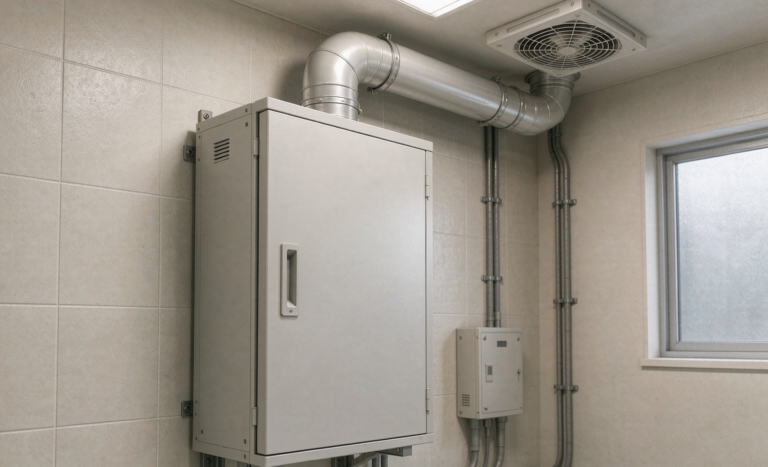
1. Ventilation beats air conditioning. On a remote station in outback Australia, the owner wanted a sealed, cooled room. I insisted on a passive vented cabinet with a thermostatically controlled fan instead. Four summers later it has never overheated, and there is no compressor to fail. Passive thermal design is more reliable than active cooling you have to maintain.
2. Keep the generator, but shrink it. Farmers fear going fully off-grid. I do not argue — I right-size the generator to 30% of peak and let the home battery storage handle the 90% case. The generator now starts a few times a year instead of daily, and its engine life tripled.
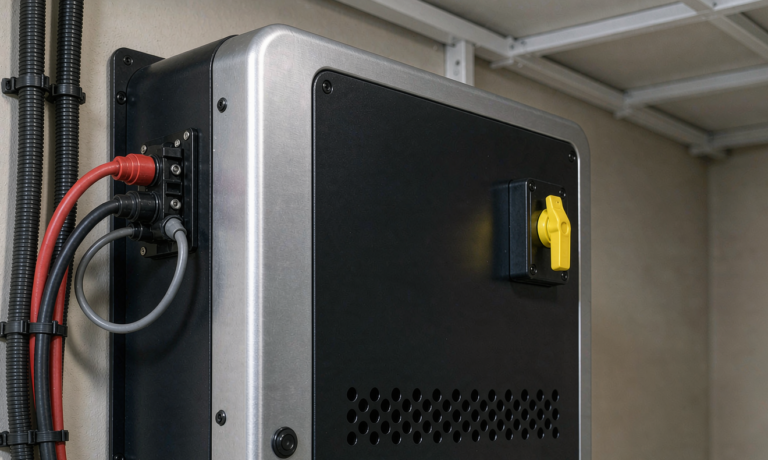
3. Train one person. Every reliable farm system has a named human who knows how to read the dashboard and flip the manual isolation switch. Technology fails when nobody owns it. The farms with the best uptime are the ones where the owner checks the app with their morning coffee.
Frequently Asked Questions
How long does a farm home energy storage system last?
A quality LFP energy storage system sized with a 20% reserve typically delivers 10–15 years or 4,000–6,000 cycles before reaching 80% capacity. Inverter and enclosure life often exceeds the battery, so plan for one battery replacement inside a 15-year horizon.
Can home battery storage run an irrigation pump directly?
Yes, provided the inverter’s surge rating covers the pump’s starting current, which can be 3–5× running watts. I size the inverter’s peak output to the largest motor on the farm plus a 20% margin, and I prefer soft-start drives on pumps to cut that surge in half.
Is home energy storage reliability for farms worth it off-grid?
Almost always. The moment you price a failed cold-storage cycle, a lost irrigation window, or a generator repair call, a properly sized system pays back in fuel, spoilage avoided, and labour. The reliability dividend — not the energy arbitrage — is the real return for most farms.
What certifications should I insist on for a barn install?
At minimum UN38.3 for transport, IEC 62619 (with IEC 62133) for cell safety, and UL 9540 / UL 1973 for the North American market, plus an IP54+ enclosure. Do not accept a system that cannot show current test reports.
How much capacity do I actually need?
Size to your worst plausible 24-hour critical load plus round-trip loss and a 20% reserve, not to your annual average. For most small-to-mid farms that lands between 20 kWh and 50 kWh of usable storage with a 8–15 kW inverter.