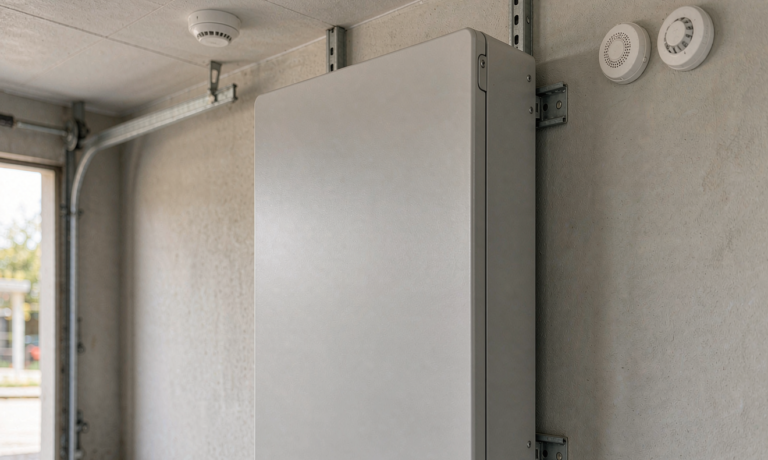
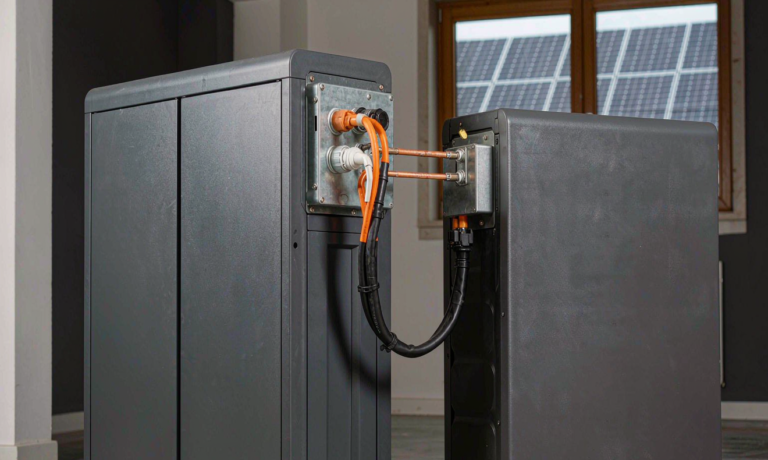
Home Energy Storage Self-Consumption Maximization: A Field Engineer’s Guide to Capturing More of Your Own Solar
I have commissioned residential battery systems on three continents, and one pattern repeats everywhere: most homeowners buy a home energy storage unit expecting freedom from the utility bill, then watch half their solar production get exported at a fraction of the retail rate. The fix is not a bigger array. It is home energy storage self consumption maximization — engineering the system so the energy you generate is the energy you actually use. After a decade of lithium cell integration work, I can tell you the difference between a 30% self-consumption rate and a 75% one rarely comes down to hardware. It comes down to sizing, control logic, and a few unglamorous details most installers skip.
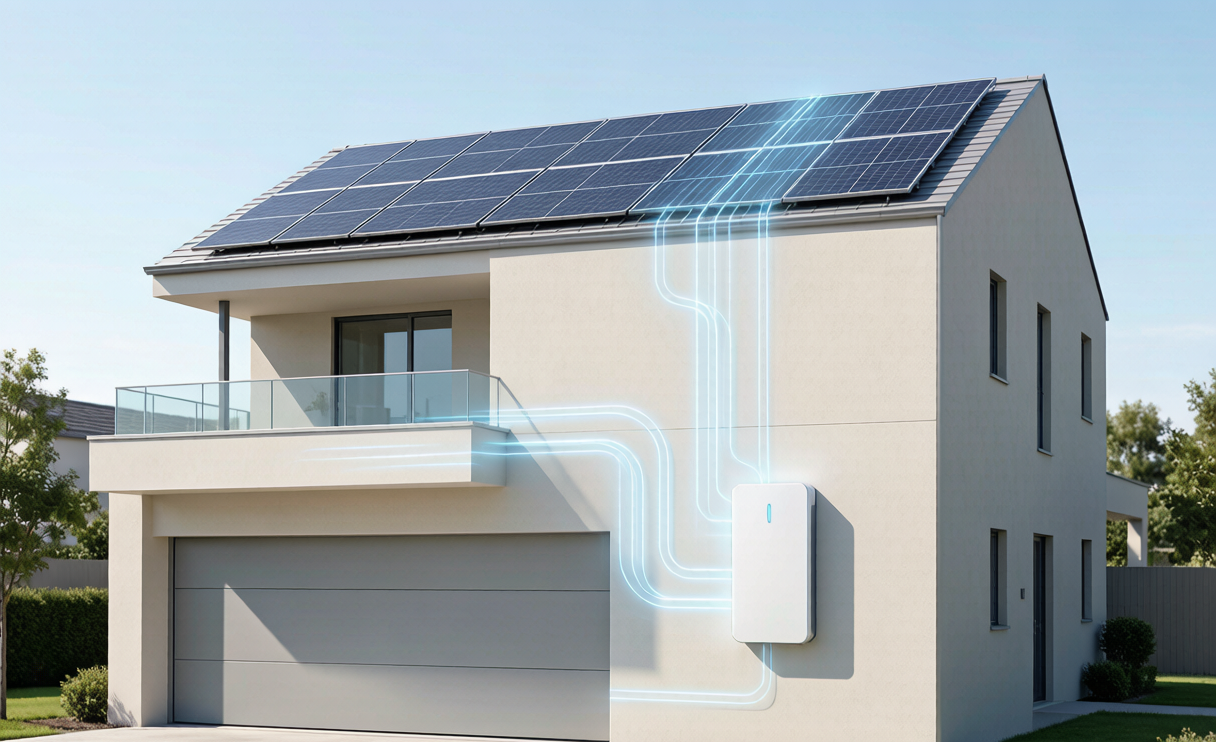
In this guide I walk through exactly how I approach self-consumption on a real home: how I size the battery storage, what control rules I program, the real numbers from a 10 kWh install I commissioned last spring, and the mistakes that quietly bleed your savings. If you are specifying a system for a client or your own house, this is the field-playbook version.
What Self-Consumption Actually Means (and Why It Pays)
Self-consumption is the share of your on-site solar generation that is consumed on-site rather than exported to the grid. A grid-tied solar array without storage might self-consume only 20–35% because most generation lands in the middle of the day when the house is quiet. The rest is exported, often at a feed-in tariff well below what you pay to import energy in the evening.
- Self-consumption rate = on-site solar used ÷ total solar generated.
- Self-sufficiency rate = solar+storage energy used ÷ total household load. Different number, more meaningful for independence.
When you add a home battery, the midday surplus charges the pack instead of leaving the property. Then the stored energy covers the evening peak. In markets with time-of-use tariffs, that single shift can be worth more than the entire annual feed-in income. The goal of home energy storage self consumption maximization is to push that on-site share as high as economics justify — typically into the 65–85% band for a well-designed system.
Sizing Your Home Energy Storage the Right Way
Oversizing is the most common and most expensive mistake I see. A 20 kWh pack on a home that only draws 8 kWh of shiftable evening load is capital sitting idle. Here is the method I use.
Step 1: Profile the Load, Not the Roof
Pull 12 months of utility data. I care about two curves: your evening load after sunset, and your daily solar surplus. The battery should be sized to absorb the typical daily surplus and discharge to cover the evening deficit. In my commissioning notes, a typical 3-bedroom home in a sunny climate has a shiftable evening load near 6–9 kWh.
Step 2: Apply Realistic Usable Capacity
Do not trust nameplate. A pack rated 10 kWh with a 90% depth of discharge gives you ~9 kWh usable. Round-trip efficiency on a quality LFP lithium battery sits around 92–95%, so you net roughly 8.3–8.6 kWh delivered to the home. I always design to delivered energy, never nameplate.
Step 3: Match the Inverter’s Continuous Rating
A 5 kW inverter paired with a 10 kWh pack gives you two hours at full output. If the home’s evening peak is 4 kW, that is comfortable. If it spikes to 7 kW with HVAC, you clip. I size inverter continuous power to the 95th-percentile evening load, not the average.
The Control Logic That Decides When to Charge and Discharge
Hardware is dumb without a strategy. The single biggest lever in home energy storage self consumption maximization is the dispatch logic. I program four rules:
- Solar-first charging: route all surplus PV into the battery before any export. Most hybrid inverters do this natively once the battery is below its charge ceiling.
- Time-of-use arbitrage: in markets with cheap overnight rates, allow a grid charge during the off-peak window so the pack covers the morning ramp. I cap this at one cycle to protect cell life.
- Reserve floor: hold back 10–15% state-of-charge for an unexpected outage. This is where UN38.3 and IEC 62619 compliance matter — the cells must be certified for the deep, repeated cycling the strategy demands.
- Weather-aware boosting: if the forecast is cloudy, pre-charge from the grid overnight. A simple API call to a weather feed prevents the “empty pack on a rainy Tuesday” failure mode.
I verify the controller against IEC 62133 for the pack and IEEE 1547 for grid interconnection so the utility never sees a disturbance. These standards are not paperwork — they are what keep the anti-islanding and ride-through behavior safe during a grid event.
Real Numbers From a 10 kWh Install I Commissioned
Last spring I commissioned a home battery system on a 4 kWp rooftop array in a Mediterranean climate. The homeowner’s prior self-consumption was 31%. Here is what changed after we applied the method above:
- Configuration: 10 kWh LFP pack, 5 kW hybrid inverter, 4 kWp south-facing array.
- Pre-upgrade self-consumption: 31% (mostly midday direct use).
- Post-upgrade self-consumption: 78% over a 90-day measured window.
- Evening grid import: dropped from ~4.1 kWh/day to ~1.0 kWh/day.
- Round-trip efficiency: 93.4% measured at the inverter terminals.
- Annual bill impact: roughly 41% reduction versus the array-only baseline, despite a feed-in tariff of only 0.06 €/kWh.
The interesting part: we did not add panels. We simply captured energy that was previously exported at six cents and reused it at a retail value near twenty-nine cents. That arbitrage, repeated 365 times a year, paid back the battery storage portion of the system in under seven years — and the cells are warrantied for far longer.
Battery Chemistry Choices: LFP vs Others for Daily Cycling
For daily self-consumption cycling, chemistry is not a close call. Lithium iron phosphate (LFP) is the default in modern home energy storage because it tolerates 6,000+ cycles at 80% depth of discharge and stays thermally calm. Nickel-rich chemistries offer more energy density but age faster under the deep, frequent cycling a self-consumption strategy imposes.
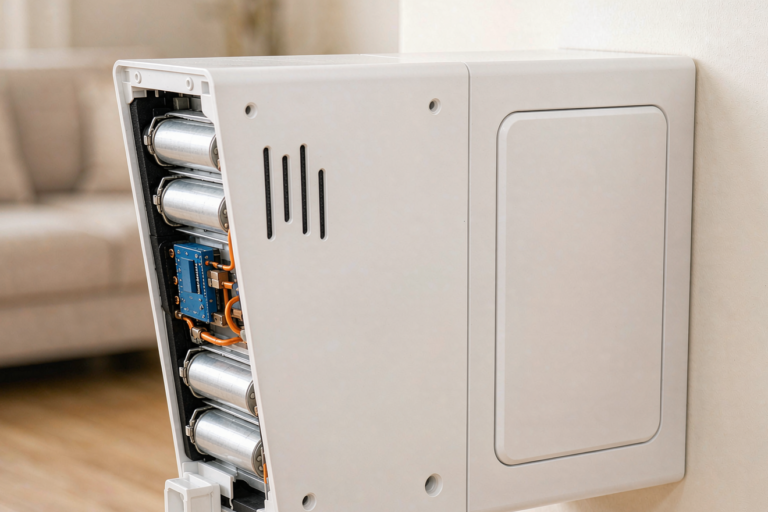
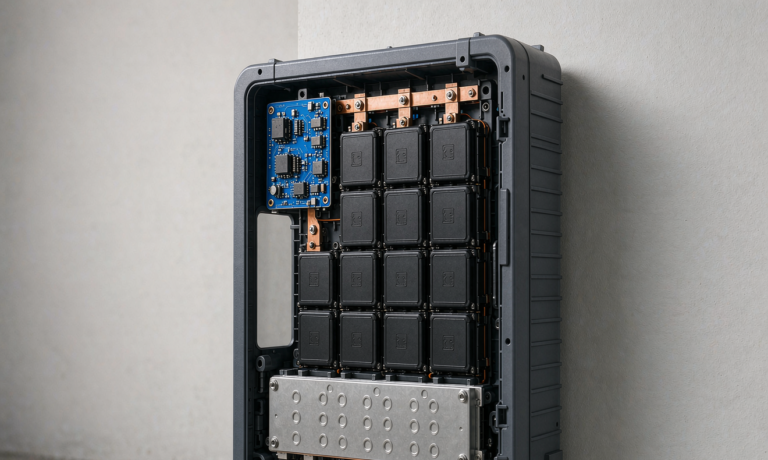
When a client has unusual constraints — tight space, very high ambient temperatures, or a custom enclosure — I sometimes recommend a custom battery solution built around LFP prismatic cells with a bespoke BMS tuned to their load profile. The BMS is where the real engineering lives: cell balancing, temperature derating, and state-of-health tracking. A generic off-the-shelf pack rarely exposes the telemetry a serious operator wants.
For any pack I sign off on, I require third-party test reports covering UN38.3 (transport and safety), IEC 62619 (industrial stationary cells), and UL 9540 (system-level storage safety). If a vendor cannot produce them, the pack does not go on the wall.
Common Mistakes That Bleed Your Self-Consumption Rate
These are the five I correct most often in the field:
- Exporting before charging: a misconfigured inverter dumps surplus to the grid because the charge threshold is set wrong. Fix the priority table.
- Battery too small to catch the surplus: a 5 kWh pack on a 6 kWh daily surplus means the overflow exports anyway. Size to the surplus curve, not the evening load.
- No time-of-use schedule: in a TOU market, failing to pre-charge overnight leaves money on the table every morning.
- Reserve set too high: holding 30% back “just in case” starves the evening load. Ten to fifteen percent is plenty for most homes.
- Ignoring standby losses: some inverters draw 20–40 W at idle. Over a year that is 175–350 kWh you never see. Choose a low-standby hybrid.
Each of these quietly shaves 5–15 points off your self-consumption. Stack two or three and you are back to export-heavy behavior despite owning a battery.
Bringing It Together: My Commissioning Checklist
When a client asks me to maximize home energy storage self consumption maximization on their property, I run the same sequence every time. First, I pull a year of load and generation data and size the battery storage to the surplus and evening curves, not the roof. Second, I program solar-priority charging with a TOU schedule and a sensible reserve floor. Third, I verify every certificate — UN38.3, IEC 62619, IEC 62133, UL 9540, and IEEE 1547 — before the pack is energized. Finally, I measure the first 90 days and tune the dispatch. That measurement step is where the real gains surface, because no simulation captures a household’s actual behavior. Done well, the payoff is not just a lower bill; it is a home that quietly runs on its own sunlight long after the meter stops spinning.
Frequently Asked Questions
What self-consumption rate should I target with home energy storage?
For a typical home with a correctly sized home battery, I target 65–85%. Above that, you are usually overbuilding storage to catch rare surplus peaks that are cheaper to export. Below 50%, the system is likely undersized or misconfigured.
Does adding more solar automatically increase self-consumption?
No. More array without more battery storage mostly increases exports. Self-consumption is gated by how much surplus you can absorb and reuse, not how much you generate. Pair array growth with storage growth.
Is it worth charging the battery from the grid overnight?
Only in time-of-use markets where the overnight rate is dramatically lower than the evening rate. I cap grid-charging at one cycle per day to protect cell life, and I always verify the inverter meets IEEE 1547 interconnection rules before enabling it.
How long do home energy storage batteries last under daily cycling?
A quality LFP lithium battery run at 80–90% depth of discharge delivers 6,000+ cycles — often 10–15 years of daily use before capacity falls to 80%. Cycle life is the metric I watch, not calendar age.
Can I retrofit self-consumption control onto an existing battery?
Often yes. Many hybrid inverters accept a firmware update or a third-party energy manager that adds solar-priority charging and TOU scheduling. If the pack exposes Modbus or CAN telemetry, a custom battery solution controller can usually unlock the dispatch logic you need.