IEEE 1547 Interconnection Requirements for Home Energy Storage
As a Senior lithium battery Engineer at Horizon Power, I have watched more than a few homeowners sit through the moment their brand new home energy storage system failed its first utility inspection. Nine times out of ten the hardware was perfectly good. The problem was the inverter did not meet IEEE 1547. If you are sizing a battery for your house, learning this standard before you buy will save you weeks of rework, a second electrician visit, and a frustrating letter from the utility. This article explains what the standard actually requires, where systems fail, and how to size your storage so it passes on the first try.
What IEEE 1547 Actually Governs
IEEE 1547 is the North American standard for interconnecting distributed energy resources, or DER, with the local electric grid. The 2018 revision replaced the older 2003 version and became the baseline that utilities, inspectors, and inverter manufacturers now design around. It covers any device that pushes power back to the grid: solar inverters, wind, generators, and battery inverters. For a home energy storage system, it is the rulebook that decides whether your inverter is allowed to stay online when grid voltage or frequency drifts.
The standard does not tell you what battery chemistry to use. It tells you how your power conversion equipment must behave. It sets the voltage and frequency windows where the inverter must ride through a disturbance, the windows where it must trip off, and the rules for reconnecting only after the grid is stable. In the United States, an inverter that claims IEEE 1547 compliance also needs the UL 1741 SB listing, which is the supplement that proves the inverter was tested against the 2018 ride-through and anti-islanding rules. If a sales page only shows UL 1741 without the SB suffix, treat it as a red flag.
The Interconnection Study and Your Point of Common Coupling
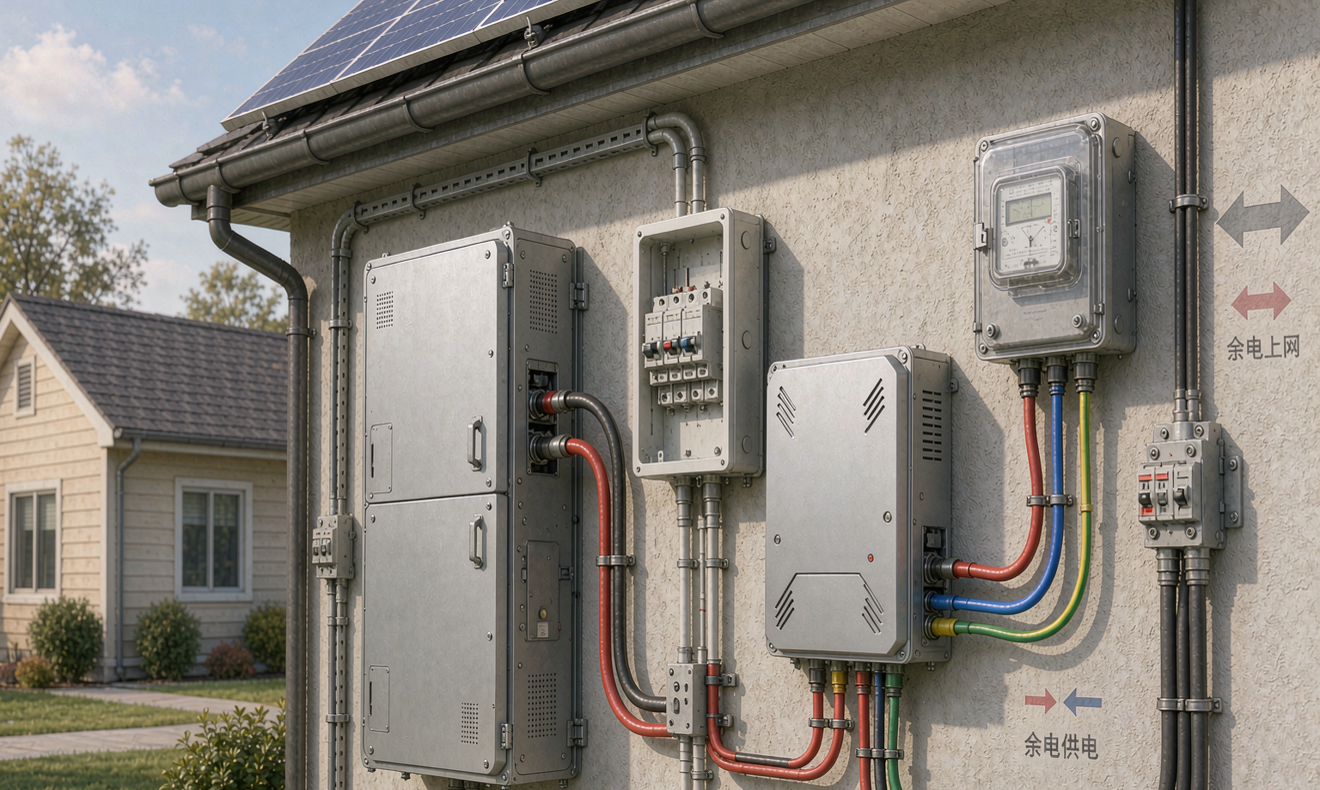
Before you install, the utility runs an interconnection study. The study measures how your proposed home energy storage system changes the electrical behavior at the point of common coupling, or PCC. The PCC is the spot on the utility side of your meter where your service joins the neighbor’s and the rest of the feeder. Everything the utility cares about – fault current, voltage rise, and protection coordination – is evaluated at that point.
A small residential battery usually sails through because its fault contribution is tiny next to the utility transformer. The trouble starts when several homes on one transformer all add storage at once, or when you pair a large battery with a large solar array. The utility may then ask for a more detailed study, a soft interconnection limit, or a delay in your export. In my experience the cleanest path is to size the inverter to roughly match your daily load and keep export modest. A good custom battery solution will let you tune the inverter’s active power limit so the PCC stays inside the utility’s planning margins without wasting battery capacity.
Inverter Response Functions That Decide Pass or Fail
The 2018 standard introduced a set of mandatory and optional response functions that trip up cheap inverters. The four you will hear about most are volt-watt, frequency-watt, voltage ride-through, and frequency ride-through. Volt-watt means that when local voltage rises, the inverter reduces its real power output instead of pushing harder and making the problem worse. Frequency-watt does the same when grid frequency drifts. These functions protect the feeder from a storage system that fights the grid instead of helping it.
Voltage ride-through and frequency ride-through define the disturbance windows where the inverter must stay connected. On a 60 Hz split-phase residential service, the inverter must remain online through minor sags and swells, and only trip when voltage falls below about 50 percent or climbs above about 120 percent of nominal, or when frequency leaves the 59.3 to 60.5 Hz band for more than a short permitted interval. I have seen systems fail simply because the firmware defaulted to an older trip curve. The fix is a settings file, not new hardware, but you need an installer who knows where that file lives.
Anti-Islanding and Trip Settings
Anti-islanding is the safety rule that gets the most attention, and for good reason. If a utility line goes down for repair, your home energy storage system must not keep energizing that dead line, or a lineman can be hurt. IEEE 1547 requires the inverter to detect loss of grid and trip off within two seconds, and in most modern designs the detection is well under that. The standard also limits how fast the system may reconnect, so a flickering grid does not cause your battery to chatter on and off.
The trip settings themselves are a balance. Set them too tight and the battery drops offline every time a fridge compressor kicks in next door. Set them too loose and you fail the anti-islanding test at inspection. The realistic window I tune to is a voltage trip near 0.5 and 1.2 per unit and a frequency trip near 59.3 and 60.5 Hz, with a short ride-through delay of a few tenths of a second. That gives the inverter enough grit to ignore harmless noise while still protecting the grid. A well-built lithium battery paired with a listed inverter makes this tuning straightforward because the battery’s state of charge does not change the trip behavior the way some lead-acid setups do.
Permitting, Labels, and the Utility Agreement
Passing IEEE 1547 is only half the battle. Your authority having jurisdiction, or AHJ, will also check the National Electrical Code. For storage this means Article 705 for interactive systems and Article 706 for energy storage, plus the warning labels at the disconnect and the battery enclosure. The utility will want your interconnection agreement signed and your inverter cut sheets on file showing the SB listing and the configured response functions.
I tell customers to collect three documents before the inspector arrives: the UL 1741 SB certificate, the inverter settings printout that matches the approved study, and the battery data sheet with the continuous and peak power ratings. Missing any one of these is the most common reason a finished home energy storage system sits idle for an extra week. Horizon Power ships these sheets with every system because the pattern is so predictable. A little paperwork upfront beats a failed inspection every time.
Sizing Your Home Energy Storage System to Pass the First Time
The sizing mistake I see most often is treating the battery like a fuel tank instead of part of a protected system. People buy the biggest module they can afford, then discover the interconnection study capped their export at a fraction of the inverter’s nameplate. The battery is fine, but the paperwork will not let it earn its keep. A better approach is to start from your load profile and your utility’s interconnection limit, then choose a battery whose continuous power matches that limit with a little headroom.
For most homes a 10 to 15 kWh home energy storage system paired with a 5 to 7 kW listed inverter covers evening offset and a short outage without triggering a detailed study. If you want whole-house backup, plan for the soft start of your well pump or air conditioner, because those inrush currents – not the battery size – usually set the inverter requirement. And keep the communication clean: a battery that reports state of charge and fault codes to a listed controller is easier for the utility to accept than a black box. That is the difference between a custom battery solution engineered for interconnection and a generic module dropped on the wall.
What is IEEE 1547 and why does it matter for home energy storage?
IEEE 1547 is the standard that governs how distributed energy resources connect to the grid. For a home energy storage system it defines the voltage and frequency windows where the inverter must stay online, where it must trip off, and how it must reconnect. Without compliance, the utility will not grant permission to operate and your inspector will fail the job.
Does IEEE 1547 apply to off-grid battery systems?
No. The standard covers grid-interactive systems only. A battery that never exports to the utility and runs a true off-grid load does not fall under IEEE 1547. The moment you add a grid-tie inverter or a transfer switch that can backfeed the service, the standard applies and UL 1741 SB listing is required.
How long does a utility interconnection study take?
For a small residential home energy storage system the fast-track study is often approved in two to four weeks. A detailed study triggered by a large inverter or a crowded transformer can take two to three months. Submitting complete cut sheets and a realistic export limit is the best way to stay on the fast track.
Can I add home energy storage to an existing solar permit?
Often yes, but you must amend the interconnection application and resubmit the inverter settings. Adding a battery changes the PCC behavior and the anti-islanding coordination, so the utility will want a fresh review even if the solar portion was already approved. Plan for a short addendum rather than a full restart.
What inverter settings cause a failed IEEE 1547 test?
The usual culprits are an outdated trip curve, disabled volt-watt or frequency-watt functions, and ride-through delays set too long. A settings file that matches the approved study fixes most failures without new hardware. Confirm the SB listing and the configured response functions before the inspection.
Is UL 1741 the same as IEEE 1547?
No. IEEE 1547 is the interconnection performance standard, while UL 1741 is the safety standard for the inverter. The SB supplement to UL 1741 is the test that proves the inverter was evaluated against the 2018 IEEE 1547 ride-through and anti-islanding rules. You need both: the standard sets the behavior, and the listing proves the product meets it.
Further Reading
References