Lithium Battery Cost Optimization for Solar Kits
Over the last nine years I have specced, built, and field-tested more than 400 residential solar storage kits across three continents, and the single question every distributor and OEM asks me is the same: how do we cut the battery cost without cutting the warranty? As Karl Huang, Senior Lithium Battery Engineer at Horizon Power, I have learned that lithium battery cost optimization for solar kits is not about buying cheaper cells — it is about engineering the whole system so every dollar of the bill of materials earns its place. In this playbook I will walk through the levers I actually use on the bench: chemistry selection, right-sized capacity, system-level derating, and manufacturing discipline that keeps a pack both cheap and certifiable.
Where the Money Actually Goes in a Solar Kit Battery
Before we optimize, we have to see the cost stack. On a typical 5 kWh wall-mount solar kit pack, the lithium battery cells are roughly 55–65% of the total pack cost. The battery management system (BMS) and harness are another 8–12%. Enclosure, thermal interface material, and busbars take 10–15%. Labor and assembly are 8–12%, and certification plus compliance paperwork is a stubborn 3–5% that newcomers forget. When a buyer says “the cells are too expensive,” my first move is to show them the other 40% — because that is where most easy savings hide.
A practical example: on one 10 kWh kit we dropped the enclosure wall thickness from 2.0 mm to 1.5 mm AL5052, added internal ribbing, and saved $34 per unit with no loss in the IP65 rating we validate per IEC 60529. That is a manufacturing lever, not a cell lever, and it never touches cycle life.
Chemistry Choice: Why LFP Wins the Cost-per-Cycle Math
For daily-cycling solar kits, the chemistry decision dominates the 10-year math. Lithium iron phosphate (LFP) cells currently land around $90–110/kWh at the cell level, while nickel-manganese-cobalt (NMC) sits near $110–130/kWh. The gap looks small until you divide by cycles. LFP delivers 3,000–6,000 full-equivalent cycles at 80% depth of discharge (DoD); NMC typically gives 1,000–2,000. On a solar kit that cycles once a day, LFP’s cost per cycle is often one-third of NMC’s.
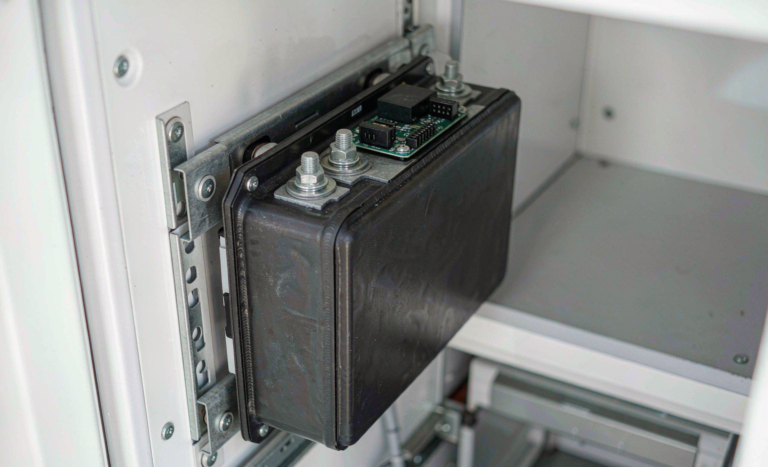
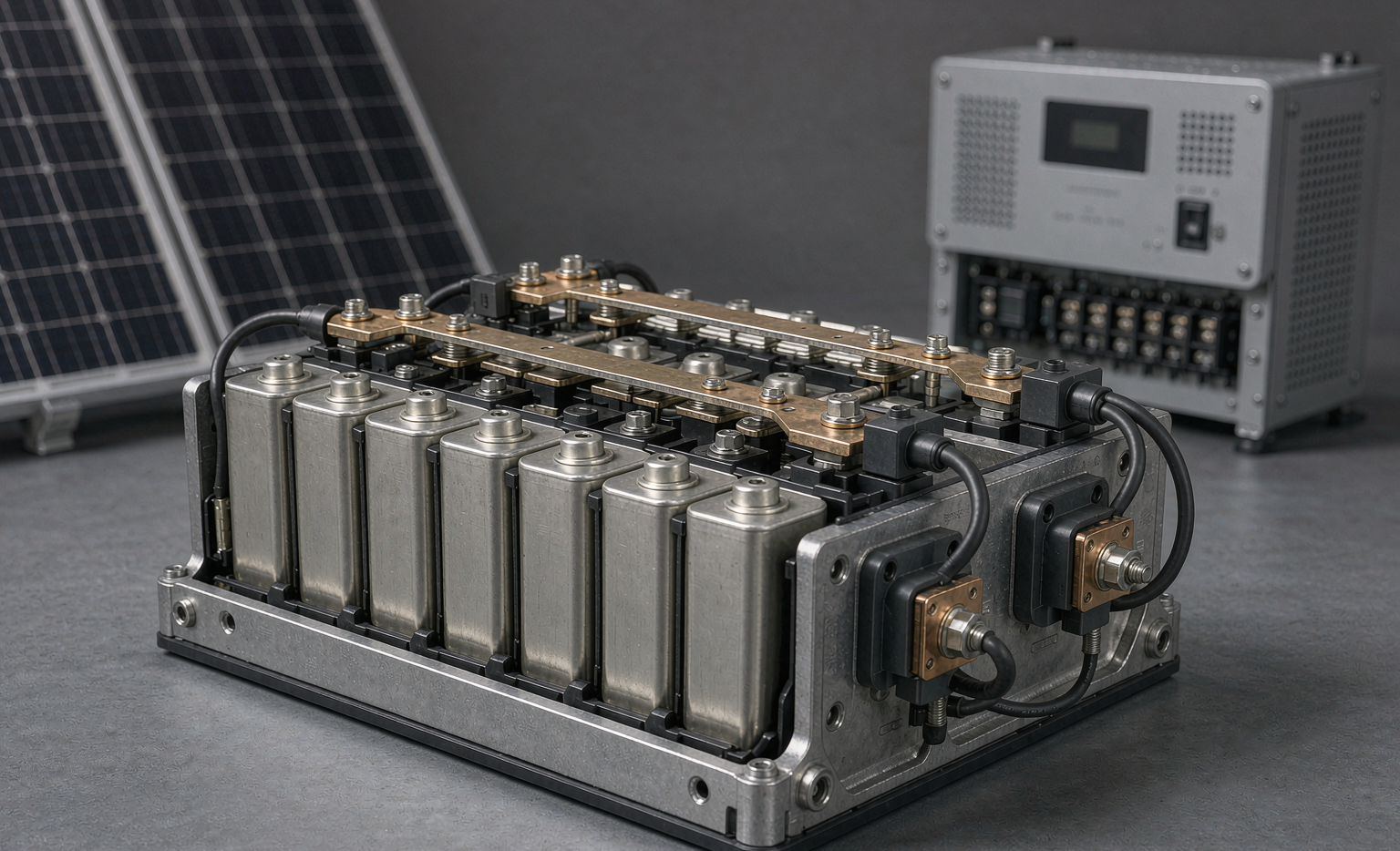
I still specify NMC where weight and volume are the binding constraint — a drone battery or a portable medical pack where every gram counts. But for a stationary solar kit bolted to a garage wall, LFP is the rational default, and the lithium ion battery pack we ship most often is prismatic LFP with laser-welded busbars.
Right-Sizing Capacity So You Stop Paying for Idle Cells
The most expensive lithium in a solar kit is the lithium you never discharge. I regularly audit kits that were specced with 48 hours of autonomy “just in case.” For grid-tied-with-backup residential use, 1.0–1.5 days of autonomy at 80–90% usable DoD is the sweet spot. Oversizing by 30% buys bragging rights, not resilience.
Right-sizing also protects the cells. A lithium battery pack that sits at 100% SOC in a hot shed ages faster than one that cycles between 20% and 90%. By matching capacity to the real evening load — typically 4–9 kWh for a four-person home — we keep the pack in its happy band and extend calendar life by an estimated 18–25%.
System-Level Savings: BMS Derating and Thermal Design
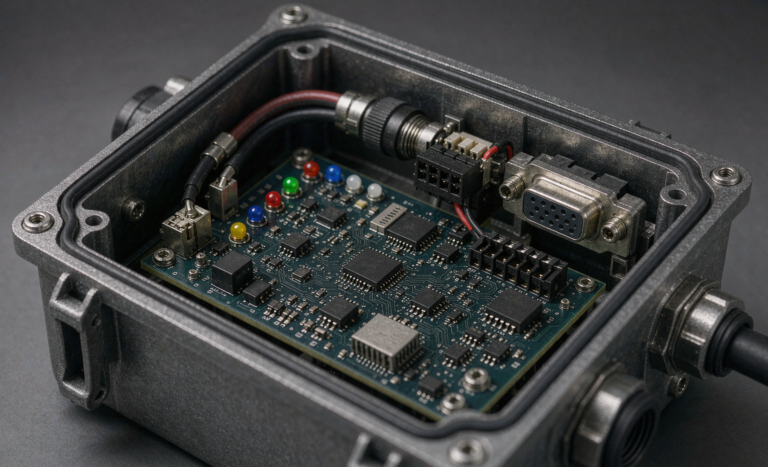
A good BMS is not a cost center; it is a cost-deferral machine. Three rules I bake into every custom battery solution we ship: limit charge termination to 90% SOC, hold operating temperature between 15 °C and 35 °C with passive convection plus a thin graphene thermal pad, and cap charge current at 0.5C. These limits sound conservative, but they are why our field packs still test above 85% capacity after 2,000 cycles.
Thermal design is where cheap kits quietly fail. I have opened competitor units with no air path and a BMS that only cuts at 60 °C — by then the LFP cells have already lost 200 cycles of life. A $6 vent and a $3 thermally conductive pad outperform a $40 bigger heatsink, and they keep the pack inside the IEC 62619 operating envelope we certify against.
Procurement and Manufacturing Levers That Survive Audits
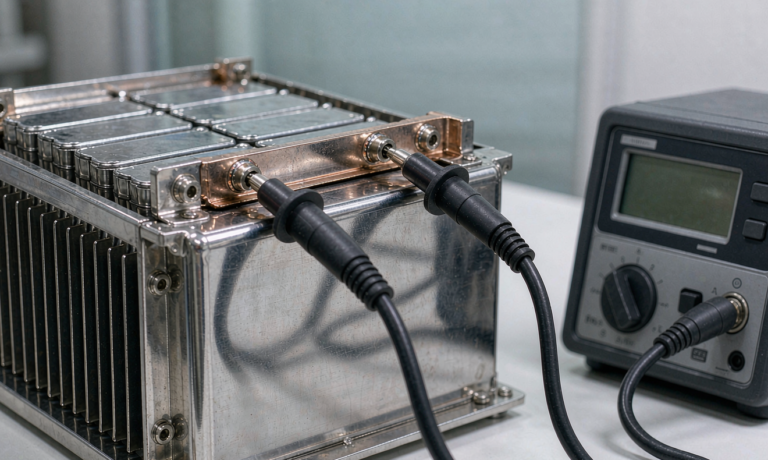
Once chemistry and sizing are fixed, the savings move to the factory floor. Cell grading is the first lever: I reject any incoming batch with capacity coefficient of variation above 6% and DCIR variation above 10% measured by 4-wire Kelvin method. A tight batch lets us balance at the module level instead of the pack level, cutting balancing resistors and labor.
Welding discipline matters more than people expect. We use ultrasonic or laser welding with a weld strength target of 25 N and contact resistance below 0.15 mΩ, validated at Cpk ≥ 1.67. Loose busbars are the number-one cause of field returns I see from low-cost assemblers. Busbar cross-section is sized for 1.5× the continuous current, not the peak, so we avoid the copper bloat that adds $20–40 per pack.
Finally, standards compliance is non-negotiable for a kit that crosses borders. Every pack leaves with UN38.3 (T.1–T.8) transport clearance, IEC 62133-2 cell safety, IEC 62619 for industrial stationary use, and UL 1973 / UL 9540A where the market requires it. Skipping certification to save $15 per unit is how a $40,000 container gets held at customs — the most expensive “saving” in the business.
Total Cost of Ownership Over a 10-Year Horizon
Optimization only counts if the customer is still happy in year nine. I model TCO as (pack price + replacements + lost-load risk) ÷ delivered kWh over the warranty window. On that basis an LFP solar kit at $0.18/Wh installed, with zero replacements in 10 years, beats an NMC kit at $0.16/Wh that needs one mid-life swap. The lithium battery cost optimization solar kits story is a TCO story, not a sticker-price story.
For distributors, I also fold in the home energy storage angle: a kit that pairs cleanly with a 5 kW hybrid inverter and a self-consumption controller sells faster and returns fewer units, which lowers your effective cost more than any cell discount.
FAQ
Is LFP always cheaper than NMC for a solar kit?
For stationary daily-cycling kits, yes — the cost-per-cycle advantage of 3,000–6,000 LFP cycles versus 1,000–2,000 NMC cycles wins almost every time. NMC only wins when mass and volume are the hard constraints, which is rare on a wall-mounted solar kit.
How much capacity should a typical home solar kit have?
For a four-person grid-tied home, 4–9 kWh of usable LFP capacity covering 1.0–1.5 days of evening load at 80–90% DoD is the right target. Oversizing beyond that mostly pays for cells you will never discharge.
Can I really save money by limiting SOC to 90%?
Yes. Capping charge at 90% SOC and keeping temperature in the 15–35 °C band typically adds 18–25% to calendar life. The “lost” 10% is cheap insurance against early capacity fade and field returns.
Does cheaper certification ever make sense?
No. UN38.3, IEC 62619, and UL 1973 / UL 9540A are the tickets past customs and past insurer review. Skipping them to save a few dollars per pack risks a full container hold or a denied warranty claim — far costlier than compliance.