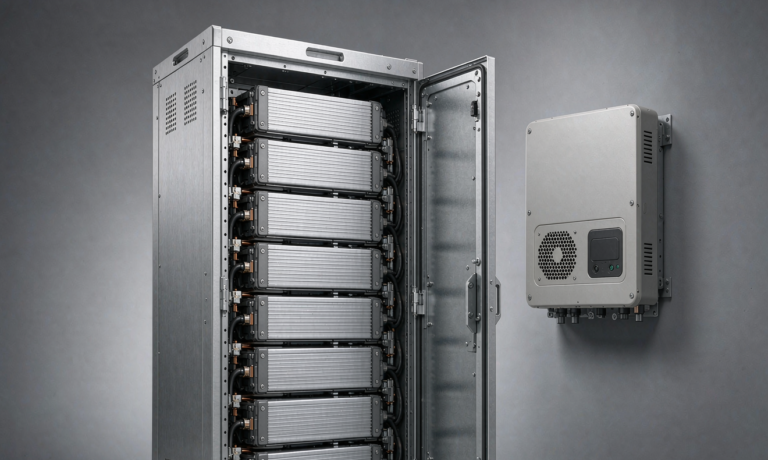
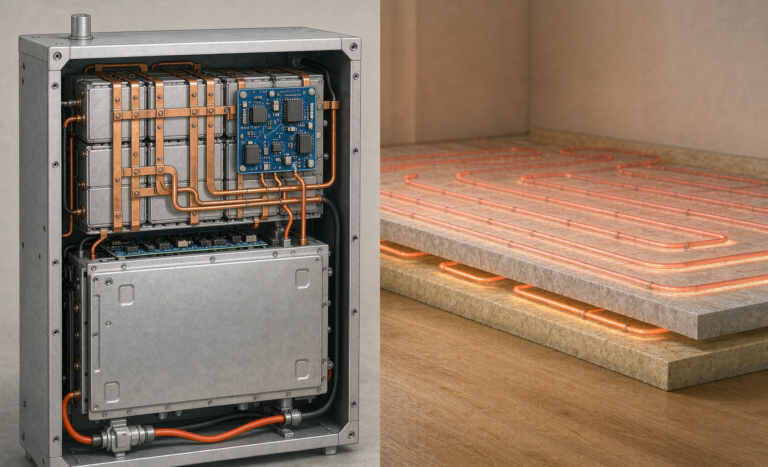
UL 9540A Fire Testing for Home Energy Storage Systems
When a homeowner asks me whether a residential battery cabinet is safe to mount against a garage wall, I rarely answer with chemistry alone. The decisive evidence usually comes from a test standard called UL 9540A. I have stood beside a test chamber and watched cells vent, and the gap between a unit that fails quietly and one that turns a garage into a fire scene comes down to how that unit behaved during UL 9540A evaluation. This guide explains what UL 9540A actually measures, how its four test tiers fit together, and how to read the resulting report before you commit to a home energy storage system.
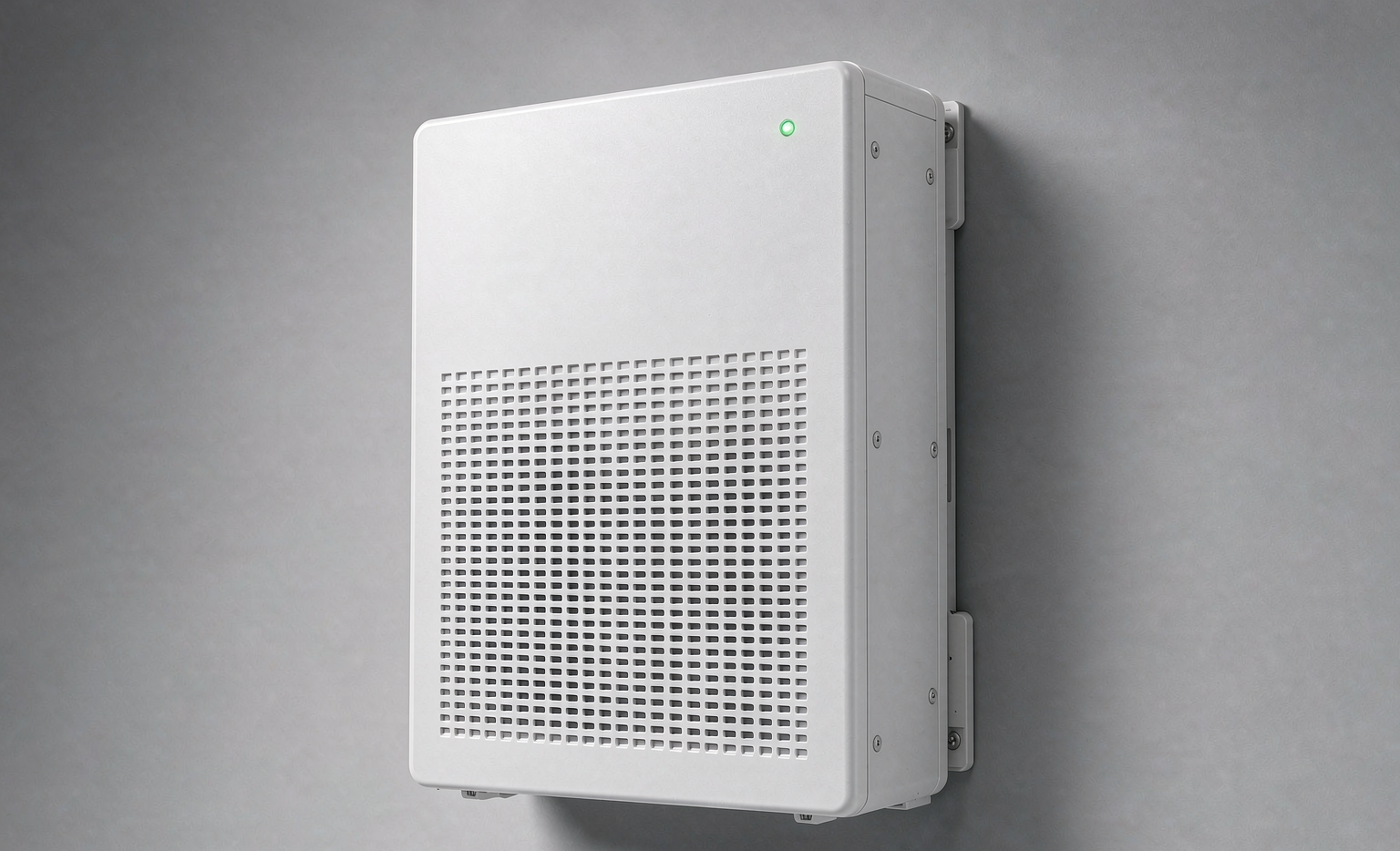
What UL 9540A Actually Measures
UL 9540A is formally titled the Standard for Test Method for Evaluating Thermal Runaway Fire Propagation in Battery Energy Storage Systems. Those two words, “test method”, matter. UL 9540A is not a pass or fail product listing. It is a procedure that produces data. The listing standard for the hardware itself is UL 9540, and a unit cannot carry a UL 9540 mark without appropriate cell and module level evidence behind it.
What UL 9540A generates is measurable behavior: heat release rate in kilowatts, the composition and volume of vented gas, peak surface temperatures, and a clear yes or no on whether thermal runaway propagated from one cell to the next, from one module to the next, and from one unit to an adjacent unit. In my experience a single well-run installation level test answers more real questions than a stack of datasheets, because it reflects the clearances, walls, and ventilation of an actual site rather than a bare rack in a laboratory.
The standard is deliberately chemistry agnostic. Lithium iron phosphate and nickel manganese cobalt cells are both tested under the same trigger logic, which is why a lithium battery pack and a sodium-ion design can be compared on equal terms when a client is choosing between them.
The Four Tier Test Ladder Explained
UL 9540A is organized as a ladder, and each rung narrows the uncertainty left by the one below it.
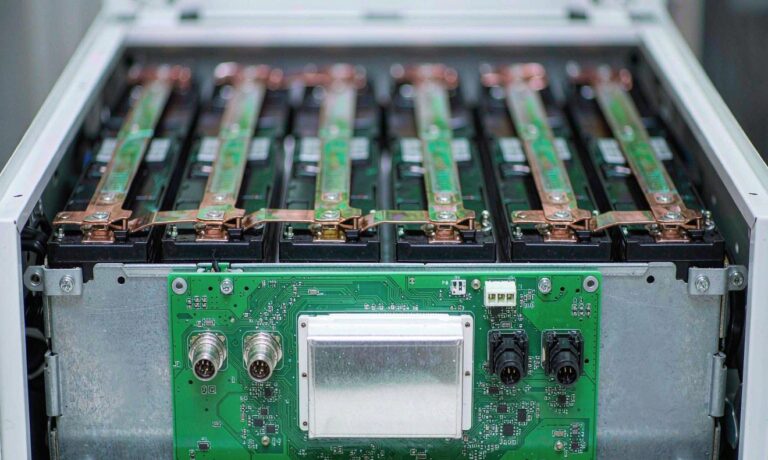
- Cell level. A single cell is forced into thermal runaway with an internal heater or a controlled nail penetration, while instrumentation records vent gas composition, temperature, and mass loss.
- Module level. A module is assembled with one triggered cell, and the laboratory observes whether runaway spreads to neighboring cells inside that module.
- Unit level. A complete energy storage unit is tested to see whether failure travels from module to module within the enclosure.
- Installation level. The unit is placed in a representative installation, with the wall, ceiling, and spacing the manufacturer intends, and the laboratory checks whether fire or deflagration reaches the wall or an adjacent unit.
The scale and the instrumentation change at each rung, but the underlying question never does: does the failure stay put, or does it travel? A design that stays put at unit level yet travels at installation level tells you the enclosure is doing its job while the surrounding layout is not.
Why the Installation Level Test Matters Most at Home
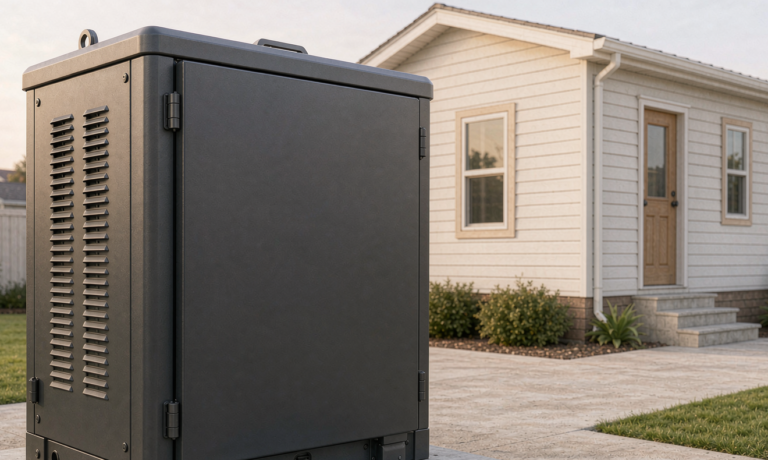
For residential battery storage, the installation level test is the one that shapes real world requirements. Many homeowners install a home battery backup against a garage wall or in a utility room, and those spaces are confined, share a wall with living areas, and have limited airflow. The installation level test reproduces exactly that geometry.
Two outcomes drive code decisions. The first is fire spread to the adjacent wall or the neighboring unit. The second is gas behavior. Cells vent hydrogen, carbon monoxide, carbon dioxide, and light hydrocarbons, and if those gases accumulate in a closed space, a deflagration can do more structural damage than the original thermal event. An installation level test that shows no propagation, combined with proper ventilation, is what allows a designer to argue for tighter clearances than the default table in the fire code.
This is why I treat a claimed two foot clearance with suspicion unless the report supports it. Clearance is not a marketing number. It is a conclusion drawn from a specific installation level result, and it is only valid for the enclosure, spacing, and suppression arrangement that were actually tested.
How UL 9540A Connects to UL 9540, NFPA 855, and the Fire Codes
The standards family is easy to confuse, so I keep the roles separate in my own engineering notes.
- UL 9540 certifies the energy storage system as a product and is the listing mark you look for on the nameplate.
- UL 9540A is the test method that generates the fire propagation data behind that listing.
- NFPA 855 is the installation standard for stationary energy storage systems, and it references both documents above.
- IFC Section 1207 and IRC Section R327 are the model code sections that jurisdictions adopt for commercial and residential installations respectively.
It also helps to know what sits outside this family. UN38.3 governs transport of lithium cells by air, sea, and road. IEC 62133-2 covers cell and battery safety for portable applications. I use both documents constantly, but neither evaluates whether a wall mounted home battery will spread fire to a stud wall. That question belongs to UL 9540A.
Design Choices That Change the Test Outcome
When a client asks me to influence a UL 9540A result, the levers are mostly mechanical and thermal rather than electronic.
- Cell chemistry. LFP cells have a higher thermal runaway onset temperature and a milder reaction than high nickel NMC. Chemistry changes the size of the problem, not the test procedure.
- Cell and module spacing. Air gaps and thermal barriers interrupt the heat path between cells and between modules.
- Enclosure design. A steel enclosure with a defined vent path and a deflagration panel directs hot gas away from occupants and structures.
- Detection and suppression. Early gas or smoke detection paired with a clean agent or aerosol system can interrupt propagation inside the unit.
- State of charge. Tests at one hundred percent state of charge represent the worst case, and results at a lower state of charge should never be used to claim a safer outcome.
Reading a UL 9540A Report as a Buyer
Manufacturers summarize UL 9540A in a sentence or two of marketing copy, and the summary is usually true but incomplete. When I review a report for a project, I read it in a fixed order.
- Which tiers were tested? Installation level testing is the expensive part, so some suppliers quietly skip it.
- What trigger was used, and at what state of charge? A nail penetration at fifty percent state of charge is not equivalent to an internal heater at full charge.
- Was propagation observed, and at which tier did it stop?
- Was gas composition quantified and was deflagration evaluated, or was only fire spread measured?
- Does the report support the clearances and ventilation printed in the installation manual?
If a supplier cannot answer those five questions with the report in hand, the certification claim is not yet useful to your authority having jurisdiction. I have seen projects delayed for weeks over exactly this gap between a marketing claim and the underlying test data for a home energy storage system.
Frequently Asked Questions
What is the difference between UL 9540 and UL 9540A?
UL 9540 is the product certification standard, and its mark appears on a listed energy storage system. UL 9540A is the test method that evaluates thermal runaway fire propagation and produces the supporting data. In short, UL 9540 certifies the product and UL 9540A measures how it behaves when a cell fails.
Does UL 9540A produce a pass or fail result?
No. UL 9540A is a test method that reports data rather than a binary verdict. It records whether propagation occurred, along with heat release, temperatures, and gas measurements. Fire codes and authorities having jurisdiction then apply those findings, which is why one report can support different outcomes depending on the installation.
Is UL 9540A testing required for a home energy storage system?
Requirements depend on the adopted code and the jurisdiction. NFPA 855 and the residential sections of the model codes reference UL 9540A data when clearances, wall ratings, or protection are specified. Many authorities now expect installation level evidence for indoor residential units, so it is safest to assume it will be requested.
What is the installation level test in UL 9540A?
The installation level test places a complete unit in a representative arrangement with the intended wall, ceiling, and spacing, then evaluates whether fire or deflagration reaches the wall or an adjacent unit. Because it reproduces the real geometry, it is the tier that most directly informs separation distances and room protection requirements.
How does UL 9540A affect required separation distances?
Fire codes publish default separation distances, and UL 9540A installation level results can justify reductions when they demonstrate no propagation to the wall or a neighboring unit. The reduction is only valid for the exact enclosure, spacing, and protection arrangement that was tested, so it must match the installation manual.
Can a home battery pass UL 9540 but fail UL 9540A?
Yes, in practical terms. A unit can hold a UL 9540 listing while its installation level UL 9540A test shows propagation to a wall at the default clearance. The product is still usable, but the designer must increase spacing, add a rated barrier, or improve ventilation to satisfy the authority having jurisdiction.
Further Reading
References