Lithium Battery for Cordless Pool Cleaners
Robotic pool cleaners have moved from corded to cordless over the last decade, and the battery pack is now the single biggest factor in how well a unit cleans. As a senior lithium battery engineer at Horizon Power, I have designed sealed packs for several robotic cleaner OEMs, and the core challenge is never energy density alone. The real work is building a lithium battery for pool cleaners that survives full submersion, chlorine and salt exposure, and a daily charge and discharge cycle for years. In this article I explain how we size the pack, choose the cell chemistry, waterproof the enclosure, and meet the safety standards that actually matter for a device that spends its life underwater.
Why a Cordless Pool Cleaner Needs a Purpose-Built Pack
A corded cleaner drags a floating cable behind it, which tangles on steps and ladders and creates a trip hazard near the pool edge. Removing the cable solves those problems but forces the cleaner to carry its own energy, and a generic power tool pack will not survive the job. The pack sits inside a sealed shell that is repeatedly submerged, knocked against tile, and exposed to chemically treated water. It must be pressure tolerant, corrosion resistant, and safe even if a seal eventually fails. That is why we treat the lithium battery for pool cleaners as a custom battery solution rather than an off the shelf module.
Cell Chemistry Choices for Submerged Operation
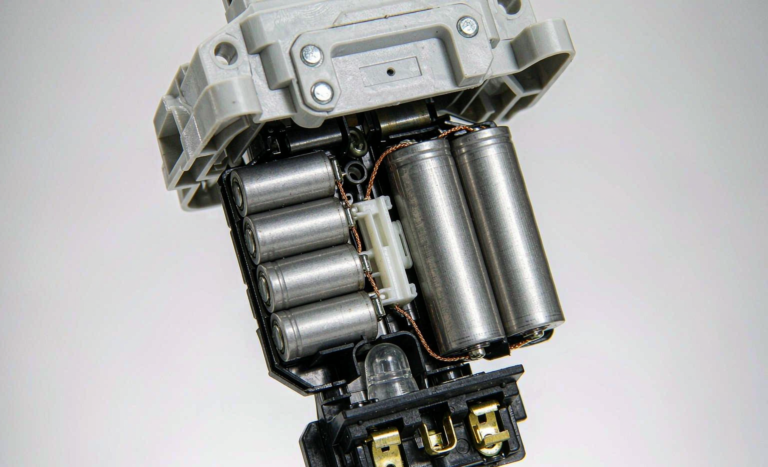
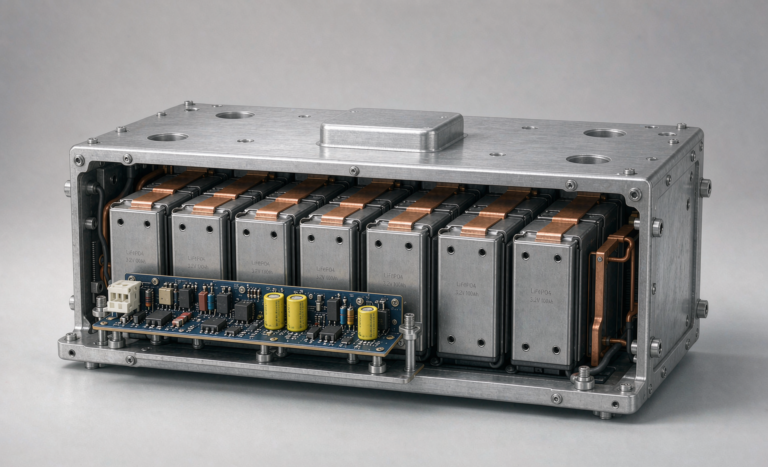
Most robotic cleaners use cylindrical 18650 or 21700 cells. The two realistic chemistries are nickel manganese cobalt (NMC) and lithium iron phosphate (LFP). NMC offers 200 to 260 watt hours per kilogram, which lets us hit long runtime in a small, light form factor that the cleaner can still carry and still float near neutral buoyancy. LFP trades some energy density for roughly 2000 or more cycles and excellent thermal stability, which appeals to brands that sell on lifespan and safety. For a cordless pool cleaner battery where water provides passive cooling and runtime sells the product, we usually recommend 21700 NMC as the balanced choice, with LFP reserved for budget or safety focused lines.
Voltage and Capacity Sizing for Runtime
A typical robotic cleaner motor and pump draw 40 to 80 watts during a cleaning cycle. We normally build a 7S configuration, which gives a 25.9 volt nominal pack, and size capacity from 5 to 10 ampere hours. That yields 130 to 260 watt hours, which translates to about 1.5 to 3 hours of cleaning per charge for most residential pools. The exact number depends on pump pressure, brush load, and whether the unit climbs walls. We model the worst case climb current before fixing capacity, because a pack that looks fine on flat bottom cleaning will collapse on a wall climb. This is where a custom battery solution earns its keep, matching the pack to the motor rather than forcing the motor to fit a catalog cell.
Waterproofing and Pressure Equalization
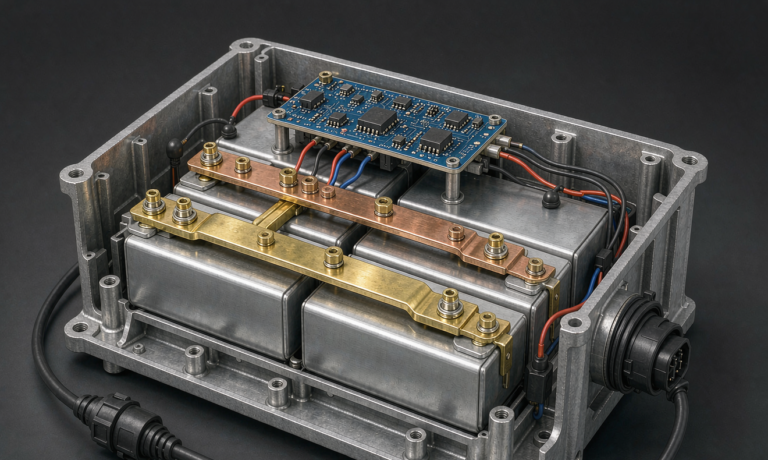
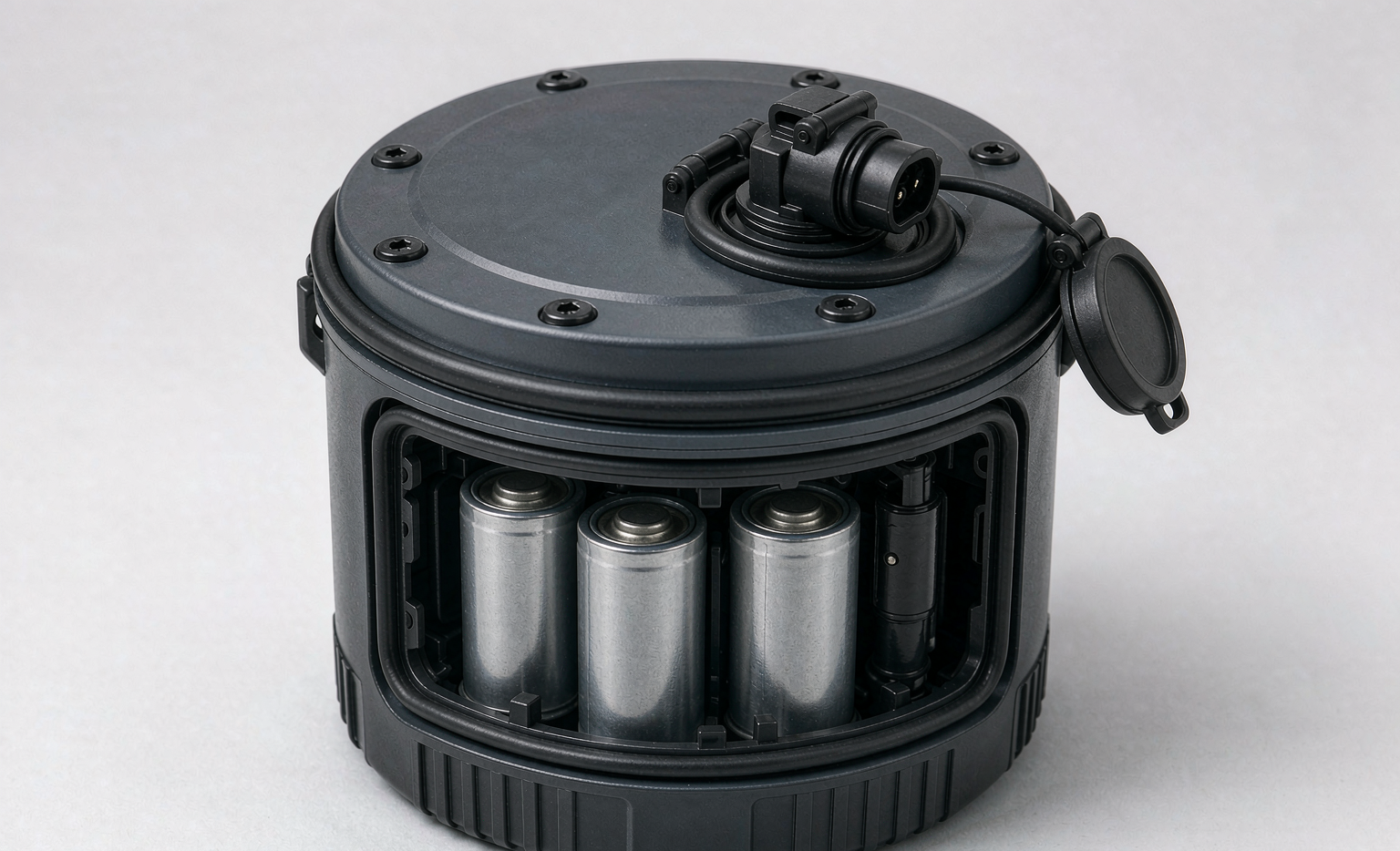
The enclosure must meet IP68, meaning continuous submersion beyond one meter, and many cleaners operate at one to two meters depth. We achieve this with a gasket sealed shell, often ultrasonic welded or potted with epoxy or polyurethane, and a submersible rated circular connector for charging. The subtle problem is pressure equalization: as the unit sinks, trapped air compresses and can squeeze the gasket inward, while surfacing does the reverse. We vent the air space through a hydrophobic breathable membrane that equalizes pressure but blocks water and dust. Without that vent, a perfectly sealed shell can still weep at the seams after a few dozen depth cycles.
Corrosion Resistance in Chlorinated and Salt Water
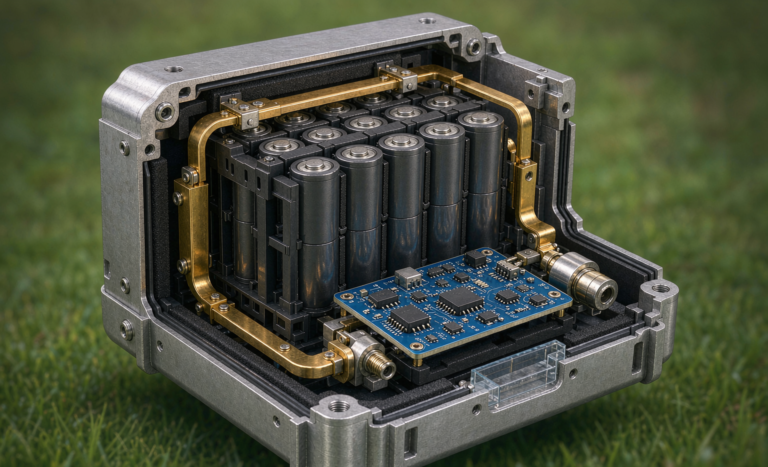
Pool water is aggressive. Chlorine and, worse, salt from oceanfront pools accelerate corrosion on any bare metal. We specify 316 stainless steel fasteners, nickel plated busbars, and a conformal coating on every printed circuit board inside the pack. The battery management board is potted so no trace is exposed. After a cleaner is used in a salt pool, we advise a fresh water rinse of the shell, because the salt that dries on the seam is what eventually finds its way inside. A lithium battery for pool cleaners lives or dies on these small material choices, not on the cells themselves.
Battery Management and Charging
The battery management system is the brain that keeps the pack safe. It monitors every cell for over voltage, under voltage, over current, and over temperature, and it performs passive or active cell balancing so the series string stays even across hundreds of cycles. Charging uses a constant current then constant voltage profile with a smart charger that terminates correctly instead of trickle feeding. We add a low temperature charge cutoff below 0 degrees Celsius, because lithium plating during a cold charge is the fastest way to destroy a pack. A full recharge from empty typically takes two to four hours, which fits the once a day cleaning routine most owners actually follow.
Safety Standards and Compliance
Three standards govern almost every pack we ship. UN38.3 is mandatory for transporting lithium cells and batteries by air, sea, or road, and it requires a sequence of altitude, thermal, vibration, shock, external short, impact, and overcharge tests. IEC 62133 covers the safety of portable cells and battery packs, including internal short and abuse tolerance. IEC 60529 defines the IP rating we cite for waterproofing. Depending on the market, the finished cleaner also needs CE or FCC electromagnetic compliance, and some regions reference UL 2054 for household battery systems. We keep test reports for all of these on file, because a retail buyer or distributor will ask for them before a purchase order is signed.
Winter Storage and Long Term Care
Pools in colder regions sit idle for months, and battery neglect during that window causes most premature failures we see in warranty returns. We tell owners to store the pack at 30 to 50 percent state of charge in a cool, dry place, and to top it up every three months so it does not fall into deep discharge. A pack left at full charge in a hot shed ages faster, and a pack left empty for winter may not wake up in spring. The same lithium battery for pool cleaners that gives three years of weekly use will fail in one season if stored empty and hot.
What voltage is best for a cordless pool cleaner battery?
A 25.9 volt nominal pack built on a 7S lithium ion configuration is the most common choice, because it balances motor efficiency with a safe, easily charged voltage. Smaller units may use a 22.2 volt 6S pack, while larger commercial cleaners can run higher, but 7S remains the sweet spot for residential robotic cleaners.
How long does a lithium pool cleaner battery last per charge?
For a typical 5 to 10 ampere hour pack, expect 1.5 to 3 hours of cleaning, which covers most residential pools in a single cycle. Runtime drops when the cleaner climbs walls or works in a large pool with heavy debris, so we size capacity against the worst case climb current rather than flat bottom cleaning.
Is an IP68 rating enough for full submersion?
IP68 certifies continuous submersion beyond one meter, which covers normal pool depths, but the rating is only as good as the enclosure design. We add a pressure equalization vent and pot the electronics, because a shell that is sealed but not pressure compensated can still weep at the seams after repeated depth cycling.
Can I use a regular power tool battery in a pool cleaner?
No. A power tool pack is not rated for submersion, chlorine exposure, or the sealed pressure environment of a cleaner shell. Using one risks water ingress, corrosion, and unsafe operation underwater, which is exactly why a purpose built lithium battery for pool cleaners is required.
How many charge cycles will the battery deliver?
An NMC pack typically delivers 500 to 1000 full cycles, while an LFP pack can exceed 2000 cycles. Real world life depends on depth of discharge, storage state of charge, and whether the low temperature charge cutoff is respected, so careful winter storage matters as much as chemistry.
How should I store the battery in winter?
Store it at 30 to 50 percent charge in a cool, dry location and recharge it every three months to prevent deep discharge. Avoid leaving it fully charged in a hot shed or fully empty through the cold season, since both paths shorten the pack’s usable life.
Further Reading
References