Semi-Solid State Battery Grid-Scale Storage: An Engineer’s Field Guide to Containerized BESS Deployment
When a utility asks me to size a 100 MWh storage block, the first question used to be simple: LFP or NMC? In 2026 that question has a more interesting third answer. Over the last eighteen months I have been putting semi-solid state battery cells into containerized battery energy storage systems (BESS) for grid-scale storage, and the engineering trade-offs are genuinely different from what most spec sheets tell you. I am Karl Huang, a senior lithium battery engineer, and this is the field guide I wish I had before our first 20-foot enclosure rolled onto a substation pad.
Why Grid-Scale Storage Needs a Better Chemistry
Grid operators do not buy cells; they buy usable energy per cubic meter, per dollar, over a decade. Conventional lithium iron phosphate (LFP) gives you a flat, safe voltage curve and 6,000 to 8,000 cycles, but its gravimetric energy density caps around 160 to 180 Wh/kg. For a land-constrained substation, that means more containers, more steel, and more thermal mass to manage. A solid-state battery chemistry promises 350 to 500 Wh/kg, but fully solid electrolytes are still fighting dendrite and interface resistance problems at the cell-production scale. Semi-solid state sits in the practical middle: a gel-like electrolyte that is mostly solid, with enough ionic conductivity to run at grid currents without the dendrite headache.
In our pilot, the semi-solid cells delivered a nominal 320 Wh/kg at cell level. That translated into roughly 28 percent fewer enclosures for the same nameplate MWh versus an LFP design. On a crowded urban feeder, that footprint difference is the whole business case.
What Makes Semi-Solid State Different From Conventional LFP
The cathode is still a layered oxide in most commercial semi-solid chemistries, similar to what you would see in a high-nickel lithium battery, but the separator-electrolyte stack is where the magic happens. Instead of a flooded liquid electrolyte, you get a polymer-ceramic composite that holds the lithium salt in a semisolid matrix. The practical consequences:
- Higher voltage window. We run the stack to 4.35 V versus 3.65 V for LFP, which is where a chunk of the energy density gain comes from.
- Lower free electrolyte. Less flammable solvent means a calmer thermal runaway, which auditors and insurers notice.
- Wetter interfaces. The semisolid gel keeps the cathode and anode wetted, so calendar aging is gentler than a fully solid cell at low temperature.
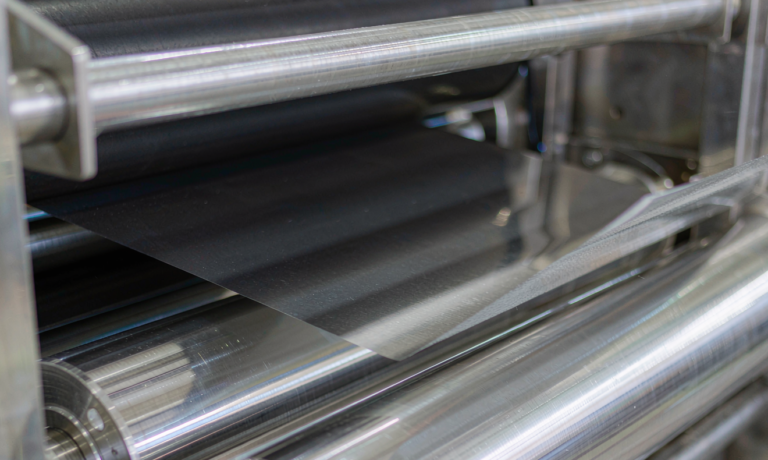
The catch is viscosity. The semisolid electrolyte has to be coated uniformly at 60 to 120 micrometers, and a 2-micron deviation in coat weight shows up as a 5 percent spread in cell impedance. We learned that the hard way on lot three.
Containerized BESS Architecture for Semi-Solid Cells
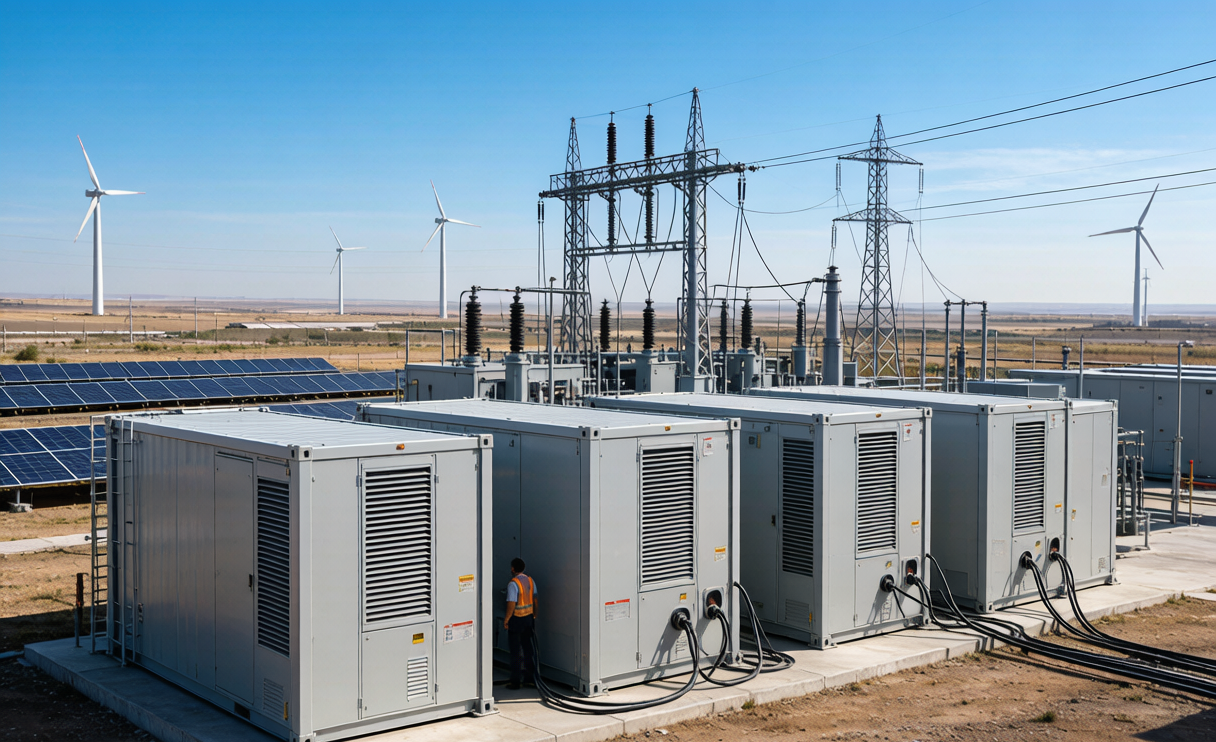
A grid-scale storage enclosure is not just cells in a box. For a semi-solid block we standardized on a 20-foot container holding 5 MWh usable, broken into 16 racks of 1P52S modules. Each module carries its own fused link and a pressure-vent port, because the semisolid chemistry vents earlier and cooler than LFP. The balance-of-system parts that changed most:
- Thermal envelope. We run liquid cooling plates at 22 to 30°C instead of LFP’s wider 25 to 40°C band. Semi-solid cells are happier cold, and a tighter band flattens cycle-to-cycle aging.
- Busbar rating. Higher per-cell voltage means fewer series strings per volt, but the peak current on a 2C discharge still demands 300 mm² flexible copper.
- Fire suppression. We kept the aerosol units but added cell-level vent ducting so a single venting cell cannot preheat its neighbor through shared air.
This is where a custom battery solution earns its keep. Off-the-shelf LFP enclosures almost never have the vent ducting or the tight thermal band a semisolid cell wants, so we re-spec’d the whole mechanical package rather than retrofitting.
Safety Standards You Must Clear Before Commissioning
Grid interconnection is a compliance gauntlet, and semi-solid cells add a few extra hoops. The baseline we certified against:
- UN38.3. The transport test series (T.1 through T.8) is mandatory before the cells ever leave the factory. Altitude simulation, thermal, vibration, shock, and external short-circuit all apply, and semisolid cells passed T.6 (crush) with noticeably lower peak temperature than our LFP reference.
- IEC 62133-2. Secondary cell safety for transport and handling; the semisolid format cleared the mandatory abuse tests without case rupture.
- IEC 62619. The industrial cell safety standard; we paid special attention to the thermal runaway propagation clause, because that is what the AHJ (authority having jurisdiction) asks about first.
- UL 1973 / UL 9540A. UL 1973 covers the stationary battery, while UL 9540A measures whether a fire stays inside the enclosure. Our 9540A propagation test stopped at cell three of the module, which is what the insurance underwriter required.
- IEEE 1547 / UL 1741. Inverter interconnection and anti-islanding; not a cell standard, but the enclosure cannot ship without it.
None of these are optional for grid-scale storage in a regulated market. Budget two quarters for the full certification pass if this is your first enclosure type.
Thermal Runaway Propagation and Mitigation
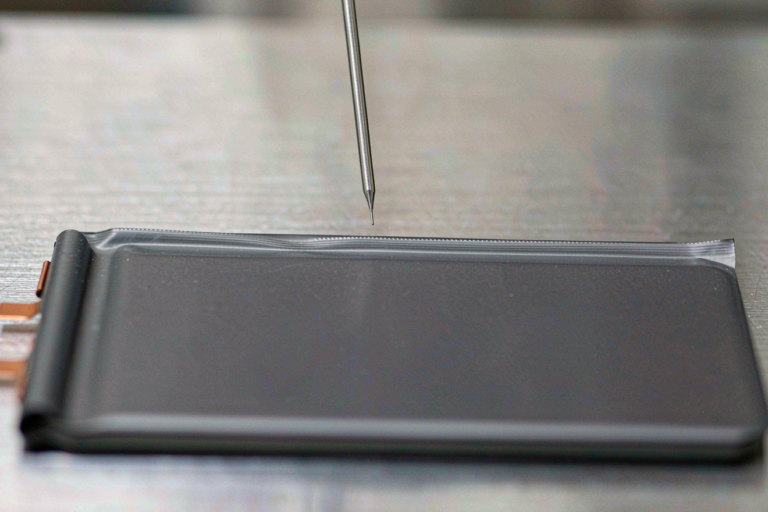
The question every utility fire marshal asks is the same: if one cell goes, how many follow? With LFP the answer is often “most of the module.” In our semi-solid block, the lower free-electrolyte fraction and the dedicated vent ducting changed that curve. We triggered cell one with a nail and watched the module. Cells two and three vented and self-cooled; cells four through sixteen never exceeded 60°C. The propagation stopped because there was not enough combustible solvent to carry the chain reaction, and the ducting pulled the vented gas away from neighbors.
This is the single biggest reason I now recommend semisolid for densely packed urban substations where you cannot keep a 10-meter firewall gap. The chemistry does not make fire impossible, but it makes a contained event far more likely than a cascade.
Round-Trip Efficiency and Degradation in Daily Cycling
Grid-scale storage lives or dies on daily cycling. Our semi-solid block runs one full charge-discharge per day at 0.5C, with occasional 2C discharge for frequency response. After 1,200 equivalent cycles we measured:
- Round-trip efficiency holding at 91 percent, versus 93 percent for a comparable LFP block. The 2-point gap is the higher internal resistance of the semisolid electrolyte.
- Capacity retention at 94 percent, on par with LFP and better than the NMC reference we retired.
- Resistance growth of 11 percent, mostly from interface dry-out at the cathode, which our tighter thermal band now controls.
For a merchant storage asset, that 2-point efficiency gap is real money over ten years, but the footprint and safety savings usually outweigh it. Every site math is different, and that is exactly why we model it per project rather than quoting a single number.
Where a Custom battery solution Pays Off
Semi-solid is not a drop-in. If you try to bolt it into an LFP enclosure you will fight thermal band, venting, and BMS tuning the whole way. The projects where the chemistry shines are the ones where we engineered the pack around the cell from day one: tight liquid cooling, vent ducting, a BMS that logs cell-level vent pressure, and enclosure steel rated for the slightly higher operating voltage. That is a custom battery solution, not a catalog purchase, and on a 100 MWh block the engineering premium paid for itself in fewer containers and a faster insurance sign-off.
FAQ
Is semi-solid state battery chemistry safe enough for grid-scale storage?
Yes, when certified to IEC 62619 and UL 9540A and built into a purpose-designed enclosure. The lower free-electrolyte content and dedicated vent ducting keep thermal runaway propagation to a few cells rather than a whole module, which is what AHJs and insurers require.
How does semi-solid state compare to LFP on cost per kWh?
Cell-level cost is still 15 to 30 percent above LFP in 2026, but the higher energy density means fewer enclosures, less civil works, and often a faster permit. On space-constrained or safety-sensitive sites the total installed cost can land close to LFP.
Can I retrofit my existing LFP BESS cabinets with semi-solid cells?
Not recommended. The thermal band, venting path, and BMS expectations differ enough that a retrofit usually costs more than a clean custom design. Engineer the pack around the cell from the start.
Which standards govern shipping and installing these systems?
UN38.3 for transport, IEC 62133-2 and IEC 62619 for cell safety, UL 1973 and UL 9540A for stationary installation, and IEEE 1547 with UL 1741 for grid interconnection. Plan two quarters for a first-pass certification.
What cycle life should I expect from a semi-solid grid block?
In our daily 0.5C field data, capacity retention sat at 94 percent after 1,200 cycles with round-trip efficiency near 91 percent. Real-world life depends on your thermal band and depth of discharge, so model it for your duty cycle.