Home Energy Storage Testing for Farms
When a dairy farmer in Wisconsin called me last spring, his third “barn-grade” battery had swollen after one winter and the milking parlor lost power during a cold snap. The vendor blamed the weather. I blamed the test plan—or the lack of one. Home energy storage testing for farms is not the same discipline as testing a pack for a suburban garage. A farm is a hostile, intermittent, high-penalty environment: deep-well pumps pull 5–8× running current on start, irrigation motors surge, tractors and ATVs charge on uneven schedules, grain dryers draw steady multi-kilowatt loads, and the whole site sits far from utility-grade power with lightning, dust, rodents, and a 40°C annual temperature swing thrown in. If the battery fails, the cost is not an inconvenience—it is spoiled milk, frozen pipes, or a dead well.
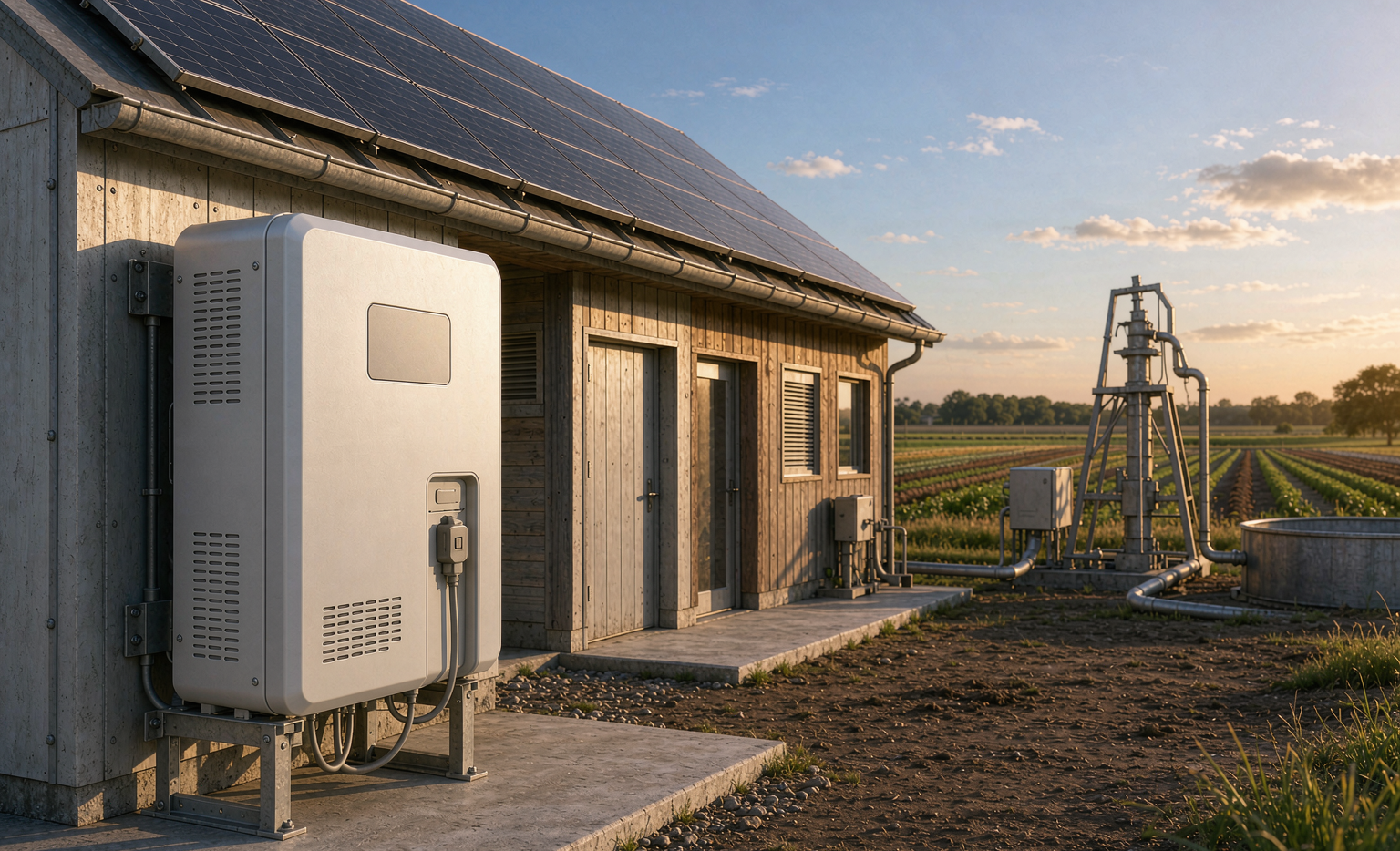
Over the past nine years as a senior lithium battery engineer at Horizon Power, I have commissioned and torn down dozens of agricultural storage systems. This article is the validation protocol I now run before any home energy storage system leaves our floor for a farm. It is opinionated because the field data forced it to be. My goal is simple: make “tested for farms” mean something a grower can actually rely on.
Why Farms Break Batteries That Pass Bench Specs
A bench spec sheet tells you a cell is good at 25°C under a clean constant-current load. A farm never offers that. The first failure mode I see is motor inrush: a 1.5 HP submersible pump rated at 1.1 kW can draw 6–8× its running current for 200–400 ms on every start. A pack sized only to running watts sags, the inverter trips, and the pump controller brownouts. The second is partial-state-of-charge (partial-SoC) cycling: solar charging is interrupted by clouds, the generator bridges gaps, and the battery lives between 30% and 70% SoC far more than a textbook 80%–20% cycle. The third is thermal shock—a battery that charges warm in the afternoon and cools to −15°C overnight accumulates mechanical stress at the weld and seal interfaces.
Any credible home energy storage testing for farms program has to replay these conditions, not just quote a datasheet. That is the difference between a pack that looks compliant in a slide deck and one that survives a fourth Wisconsin winter.
First Gate — Incoming Cell Grading Before Assembly
Every farm pack starts with cell grading, and I mean real grading, not a vendor’s lot certificate. For LFP cells we measure three things on every incoming lot:
- Capacity grading — full constant-current/constant-voltage (CC-CV) formation at 0.2C, sorted into CoV < 6% within a pack. A pack with 4% capacity spread ages into a 15% spread within a year because the weakest cell hits top-balance cutoff first.
- DC internal resistance (DCIR) — measured with 4-wire Kelvin fixturing (never 2-wire, which adds contact resistance and lies to you). Pack-level DCIR CoV must stay < 10%. A high-IR cell heats disproportionately under pump inrush and becomes the thermal weak point.
- Self-discharge K-factor — stored at 45°C for 7 days, accept only K < 1.0 mV/day. High self-discharge cells quietly drain a pack that sits idle between irrigation seasons and show up as “mystery” winter capacity loss.
We tag every graded cell with a DataMatrix code so the genealogy follows the pack into the field. This single step removes most of the early-life failures I used to see in returned lithium battery farm units.
Replaying the Real Farm Duty Cycle in the Lab
Before a home energy storage system ships, we build a duty-cycle recorder, drop it on a representative farm for two weeks, and capture the actual current trace. Then we replay that trace on the test bench at 1.2× duration compression. For a typical mixed farm the profile looks like:
- Pre-dawn quiet (parlor lights, controllers): 0.3–0.8 kW.
- Dawn milking surge: 4–7 kW for 45 min, with pump inrush spikes to 9 kW.
- Midday solar soak: net charge at 3–6 kW, interrupted 6–10×/day by cloud.
- Irrigation block: 3 kW steady for 2–4 h in summer.
- Evening loader/tractor charging: 2–3 kW, often at 50–70% SoC (partial-SoC).
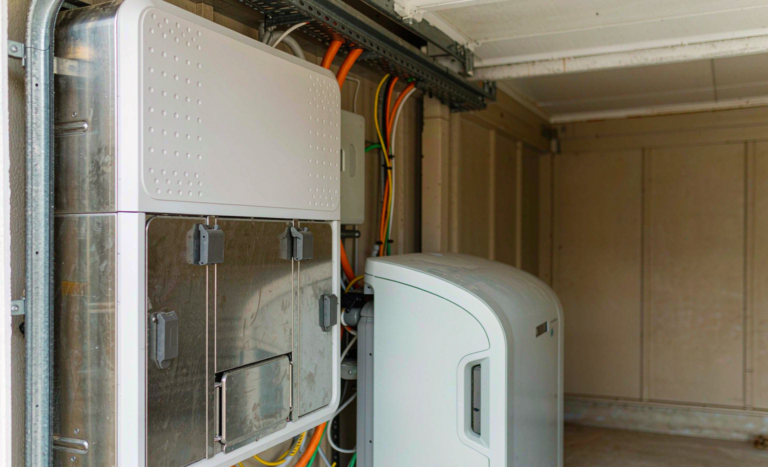
We gate the pack on three numbers from the replay: terminal voltage must never sag below the inverter’s low-voltage cutoff minus a 5% reserve; cell-to-cell temperature spread under inrush must stay < 8°C; and round-trip efficiency at the real duty C-rate must hit 88–93%. If a farm needs odd voltages or a non-standard footprint—say a 48V bank bolted into an old milk house—that is where a custom battery solution earns its keep: we design the S/P string and busbar around the recorded trace instead of forcing the farm around a catalog pack.
Abuse Qualification and the Standards Floor
A farm battery sits unattended next to flammable feed and flammable gas. Abuse qualification is not optional. Our floor for any residential battery storage unit shipped to agriculture is:
- UN38.3 T.1–T.8 (altitude, thermal, vibration, shock, external short, impact, overcharge, forced discharge) — the transport baseline, identical in spirit to what we apply to our drone battery packs before air freight.
- IEC 62133-2 — secondary-cell safety, the anchor for portable and stationary lithium.
- IEC 62619 — industrial stationary cell safety, the right standard for a pack that runs 16 h/day.
- UL 1973 (stationary storage), UL 9540 / UL 9540A (system and propagation fire test), NFPA 855 (installation quantity/distance), IEEE 1547 (grid interconnection), and NEC 690/706 (PV and storage wiring).
We run nail-penetration and crush on a sample of every production lot and require no propagation beyond the adjacent cell. On LFP chemistry the thermal-runaway onset sits near 270°C versus roughly 210°C for NMC, which is exactly why I specify LFP for anything a farmer cannot constantly watch. The same IATA Section II 30% SoC handling and FAA/EASA cross-link rules we use for drone battery logistics apply to shipping these cabinets.
Environmental Stress Screening for Rural Sites
Bench-clean is not field-real. Our environmental stress screening (ESS) for farm units includes:
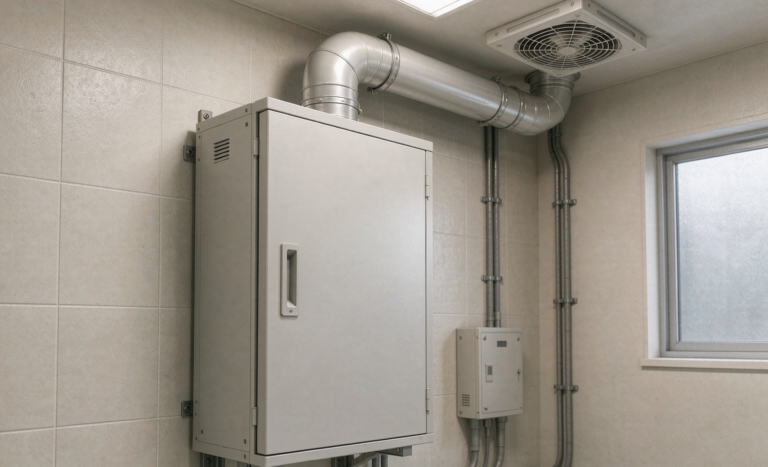
- Sealing — IP65/IP66 enclosure with an ePTFE breather that equalizes pressure but blocks dust and washdown. We salt-fog per IEC 60068-2-52 because ammonia from a barn is corrosive.
- Temperature swing — −20°C to +55°C, 20 cycles, watching for seal weep and weld micro-fracture.
- Mechanical — MIL-STD-810H Method 514.8 (vibration) and 516.8 (shock), because a pack mounted on a pole or in a machine shed sees tractor-frequency shake.
- Surge and lightning — TVS clamping on every external comms and PV input; a single induced strike can take out an unprotected BMS.
- Rodent defense — conduit entry seals and bitterant-loomed sensor wire; I have pulled packs with chewed balance leads that caused a 40 mV spread and a silent thermal event.
This is the step most catalog “home energy storage” vendors skip, and it is the step that separates a pack that lasts from one that swells.
BMS Functional Test, Burn-In, and the End-of-Line Gate
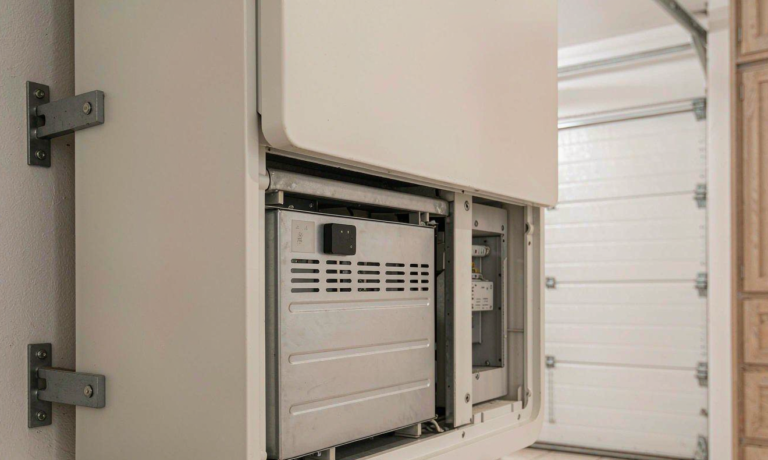
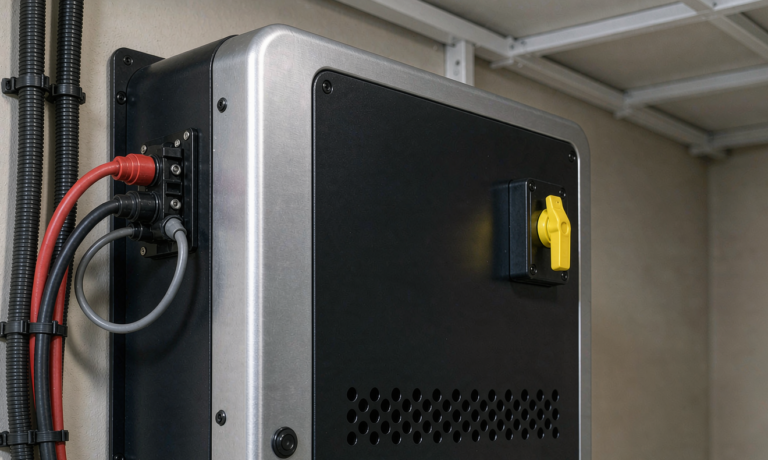
The battery management system is the difference between a safe farm pack and a liability. Our functional test exercises layered protection: dual-sense current, over-current protection < 200 ms, short-circuit protection, pre-charge to limit inrush, contactor weld-detect, and a charge lockout below 0°C so a cold pack never takes a damaging charge. We then run a 72-hour burn-in at the replayed duty cycle and a 30-day standby self-discharge audit.
The end-of-line (EOL) gate rejects any unit that does not meet: capacity ≥ 98% of nameplate, pack DCIR within +10% of the graded baseline, cell-voltage spread ≤ 30 mV, and a clean fault log. Units that pass get a sealed DataMatrix genealogy and ship. Units that do not go back to teardown—and the teardown data feeds the next cell-grade threshold.
Commissioning and a Working Farm Pilot
Testing does not end at our dock. For a 60 kWh / 10 kW energy storage system on a 40-cow dairy, commissioning is a six-point checklist: megger the DC isolation (> 1 MΩ), verify pre-charge, confirm 0.2C charge acceptance, form the islanding frequency at 50/60 Hz ± 0.2 Hz, set the SoC floor at 15% to protect winter autonomy, and baseline a 4-wire Kelvin DCIR reading for future trending. We then ran a 90-day pilot: 92.4% round-trip efficiency at real duty, 7% capacity fade at 110 cycles, and zero thermal events through a −18°C stretch. That is the number I trust, not the brochure.
Frequently Asked Questions
Do farm batteries really need different testing than home batteries?
Yes. The duty cycle is harsher (motor inrush, partial-SoC, generator bridging), the environment is more corrosive and dusty, and the cost of failure is livestock or crop loss rather than a dimmed living room. Proper home energy storage testing for farms replays the actual recorded duty cycle and screens for rural environmental stress, not just bench specs.
Which chemistry should a farm choose?
For unattended agricultural storage I specify LFP. Its thermal-runaway onset near 270°C and 2,000–6,000 cycle life make it the safe, low-maintenance choice. NMC buys higher energy density but at a lower safety margin and shorter calendar life—rarely worth it where nobody is watching the pack daily.
How much autonomy should I size for?
Size the inverter to the three largest simultaneous loads plus 25%, and the battery to critical load plus a 1.25× surge for at least 4–8 hours at 80% DoD. If your loads are unusual, a custom battery solution sized from a recorded duty cycle beats any catalog guess.
What standards prove a farm battery is safe?
The floor is UN38.3, IEC 62133-2, IEC 62619, UL 1973, UL 9540/9540A, NFPA 855, IEEE 1547, and NEC 690/706. Ask the vendor for the actual test reports, not a compliance statement.
If you are specifying storage for a working farm, treat the test plan as the product. A lithium battery pack that passed a real farm duty-cycle replay, graded cell intake, abuse qualification, and environmental screening will outlast three that merely passed a spec sheet—and on a farm, uptime is the whole business case.