Semi-Solid State Battery Prototyping Pilot Line: How We Move From Lab to Small-Volume Production
Why Prototyping Is the Real Bottleneck
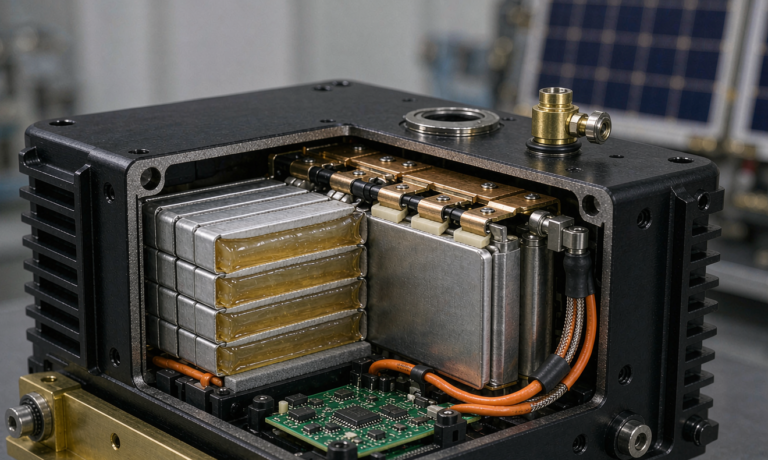
When customers ask me about semi-solid state batteries, they usually want to talk chemistry: energy density, cycle life, the gel electrolyte. Those are fun conversations. But after fifteen years building lithium battery packs and the last three running semi-solid pilot builds, I will tell you the uncomfortable truth: the chemistry is rarely the hard part. Moving a semi-solid state battery from a promising lab result to a repeatable, certifiable pilot line is where most programs stall.
I am Karl Huang, Senior Lithium Battery Engineer at Horizon Power. I have watched brilliant coin-cell data die in translation to a 5 Ah pouch because nobody respected coating uniformity or drying kinetics. If you are scoping a semi-solid state battery prototyping pilot line, this article is the field guide I wish someone had handed me in 2023.
Stage 1 – Coin and Pouch Cells on the Lab Bench
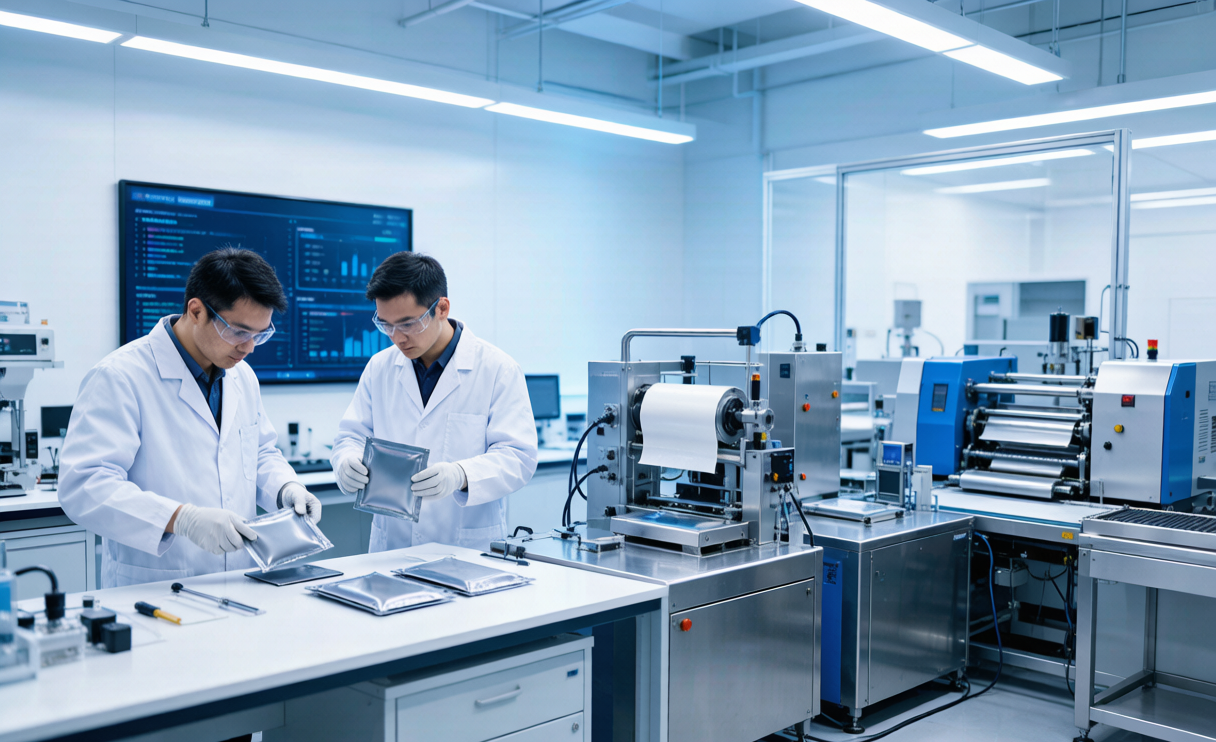
Every pilot line starts as a handful of coin cells. In our lab we screen cathode and anode formulations in 2032 coin cells first because they are cheap, fast, and forgiving. We measure first-cycle Coulombic efficiency, and for a semi-solid cathode we expect 88-92% at formation. Once a formulation clears three formation cycles with less than 5% capacity spread, we graduate to single-layer pouch prototypes in the 0.5-2 Ah range.
This is where the gel polymer electrolyte earns its keep. Unlike a liquid-electrolyte lithium battery, the semi-solid cell carries a much higher electrolyte viscosity, so you cannot just flood the stack. We control electrolyte uptake to roughly 1.2-1.6 g/Ah and verify wetting under vacuum. If a pouch swells more than 3% at room temperature after 24 hours, the gel ratio is wrong and we send it back to formulation. These small, unglamorous checks are what protect you later when you scale.
Stage 2 – Slurry, Coating and the Gel Electrolyte Handoff
Lab pouches are hand-cast. A pilot line is not. The moment you move to a coater, slurry rheology becomes the boss. We run the cathode slurry at a solids content near 65-70% with a viscosity tuned for a slot-die head, targeting an electrode loading of 4.0-5.0 mAh/cm². The wet film goes through a three-zone dryer, and the single most common failure I see is over-drying the gel layer before the two electrodes meet. Dry the gel too fast and you get micro-cracks; dry it too slow and you trap solvent that later off-gasses.
Calendering sets porosity. For semi-solid cells we press to a porosity band of roughly 30-40%, tighter than you would use on a conventional lithium battery. Tighter porosity lifts energy density toward 280-320 Wh/kg, but it also raises internal resistance, so there is a real trade with fast-charge performance. A good custom battery solution partner will show you the resistance-versus-porosity curve, not just a single spec sheet number.
Stage 3 – Building the Pilot Line: Equipment and Layout
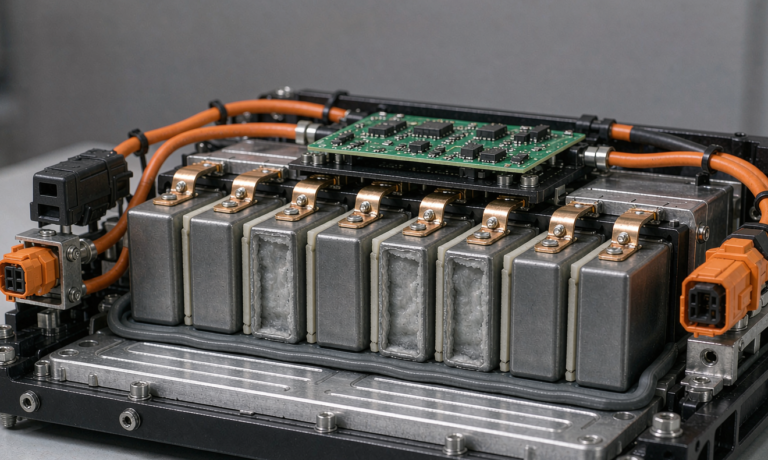
A genuinely useful semi-solid state battery prototyping pilot line does not need to look like a gigafactory. For most of our clients we design a line running 0.5-2 meters per minute, producing 50-500 cells per day depending on format. The core stations are: slurry mixing, slot-die coating, oven drying, calendering, electrode slitting, stacking or winding, electrolyte infusion, pouch forming and sealing, and formation cycling.
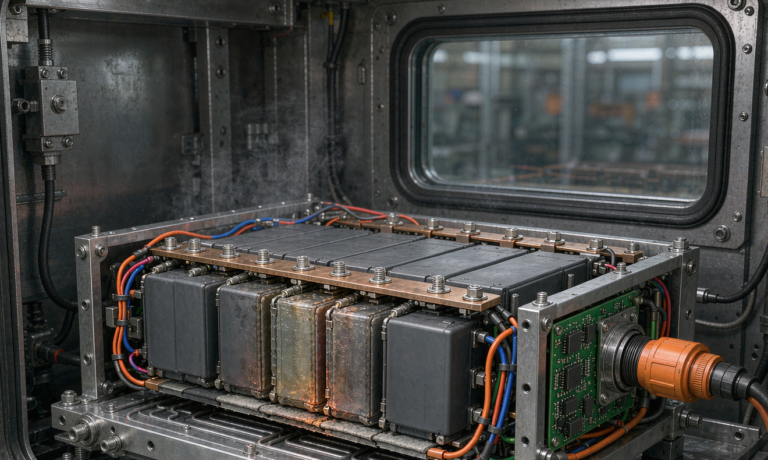
Layout matters more than people expect. We keep the gel-infusion and sealing stations in a low-humidity room (below 2% RH) because once the semi-solid gel is in contact with the electrodes, moisture is the enemy. I have seen a pilot line lose two weeks of yield to a bad door seal on the dry room. Budget for the dry room early; it is cheaper than rework.
Stage 4 – Validation, Abuse Testing and Certification
A prototype that works in the lab is not a product until it survives certification. The first gate is UN38.3, the transport safety test every lithium-based cell must pass before it ships by air, sea, or road. We run the full T.1 through T.8 sequence: altitude simulation, thermal test, vibration, mechanical shock, external short circuit, impact and crush, overcharge, and forced discharge. For a semi-solid cell the abuse profile is gentler than a liquid cell because the gel suppresses leakage, but you still must pass every test, not just the easy ones.
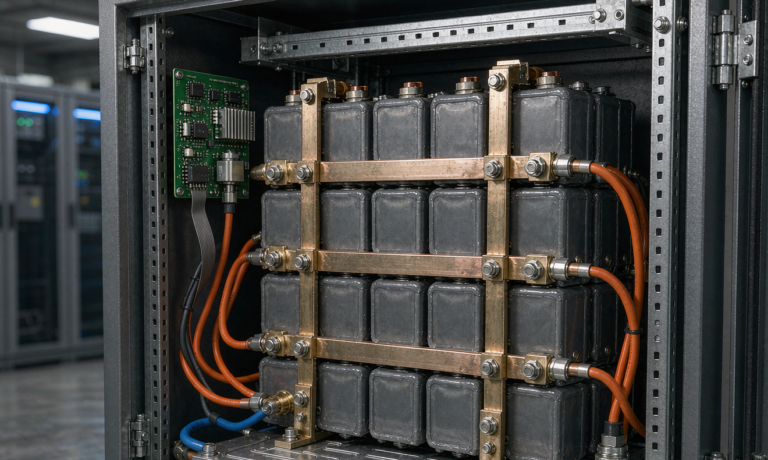
Next comes cell-level safety to IEC 62133-2 for portable applications, and IEC 62619 for stationary and industrial use. If your semi-solid cell is headed into aviation or HAPS platforms, we also map the pack against FAA and EASA expectations, because an airworthy solid-state battery program lives or dies on how cleanly the thermal-runaway boundary is documented. We build the abuse test report alongside the cell, not after it, so the certification dossier is ready when the pilot volume is.
What Buyers Should Specify in a Prototyping RFQ
If you are buying a semi-solid state battery prototyping pilot line service rather than building it yourself, your RFQ should demand more than a price. From my experience, the four things that separate a partner who ships from one who stalls are:
- Format flexibility. Can they build both pouch and prismatic at pilot scale? If they only do one, you are locked in early.
- Data discipline. Ask for formation curves and capacity-spread histograms on every pilot batch. A partner who cannot show you the spread is not in control of the process.
- Certification path. Insist they run UN38.3 and IEC 62133-2 (or IEC 62619) on pilot output, not just on a hero cell.
- Scale narrative. The whole point of a pilot line is the bridge to volume. Your partner should be able to tell you exactly which stations change when you go from 200 cells a day to 20,000.
At Horizon Power we treat the pilot line as a custom battery solution engagement, not a one-off sample run. The prototype is the cheapest place to learn, and the pilot line is where those lessons get locked into a process that surviving certification can actually trust.
Frequently Asked Questions
How long does semi-solid state battery prototyping usually take?
From a cleared formulation to a qualified pilot line, plan on 4-7 months. The first lab pouches take 4-8 weeks, coating and dry-room commissioning another 6-10 weeks, and formation plus UN38.3 abuse validation roughly 8-12 weeks. Rushing the dry room or skipping spread analysis is the usual reason programs slip past nine months.
What is the typical cost of a pilot line build?
A modest semi-solid pilot line producing a few hundred cells per day typically lands in the low-to-mid seven figures including the dry room, coater, and formation equipment. The dry room and formation cyclers are the two line items that surprise first-time buyers, so we always budget them explicitly rather than burying them in a turnkey quote.
Can a semi-solid state battery pass UN38.3 and airline shipping rules?
Yes. A properly built semi-solid cell passes the full UN38.3 T.1-T.8 sequence, and because the gel electrolyte reduces free liquid, the external short and crush behavior is actually easier to manage than a conventional liquid lithium battery. For aviation shipping we still classify under the same PI965/PI966 framework as other lithium cells, and FAA and EASA documentation is prepared during the pilot stage rather than at launch.
When should I move from prototype to pilot volume?
Move to a semi-solid state battery prototyping pilot line once your best lab pouch holds 95% of its capacity through 50 cycles with under 5% batch spread, and your gel ratio is fixed. If you go to pilot before the formulation is stable, you will simply mass-produce your inconsistency. Stability first, scale second.