Sodium-Ion Battery for Forklift and Warehouse Equipment
Every warehouse I have walked through in the last two years has the same quiet problem: the battery room. Lead-acid fleets bleed maintenance hours on watering and equalization, and lithium iron phosphate (LFP) packs, while far better, still flinch in cold storage and carry a price tag that makes fleet-wide conversion painful. As a senior lithium battery engineer at Horizon Power, I have spent most of 2025 putting sodium-ion battery packs through forklift duty-cycle testing, and the results changed how I advise our material-handling customers. In this article I will explain, in plain engineering terms, why a sodium-ion battery forklift warehouse deployment is moving from pilot to mainstream, what the real trade-offs are, and how to spec one without blowing your capital budget.
Why Material Handling Is a Perfect Fit for Sodium-Ion
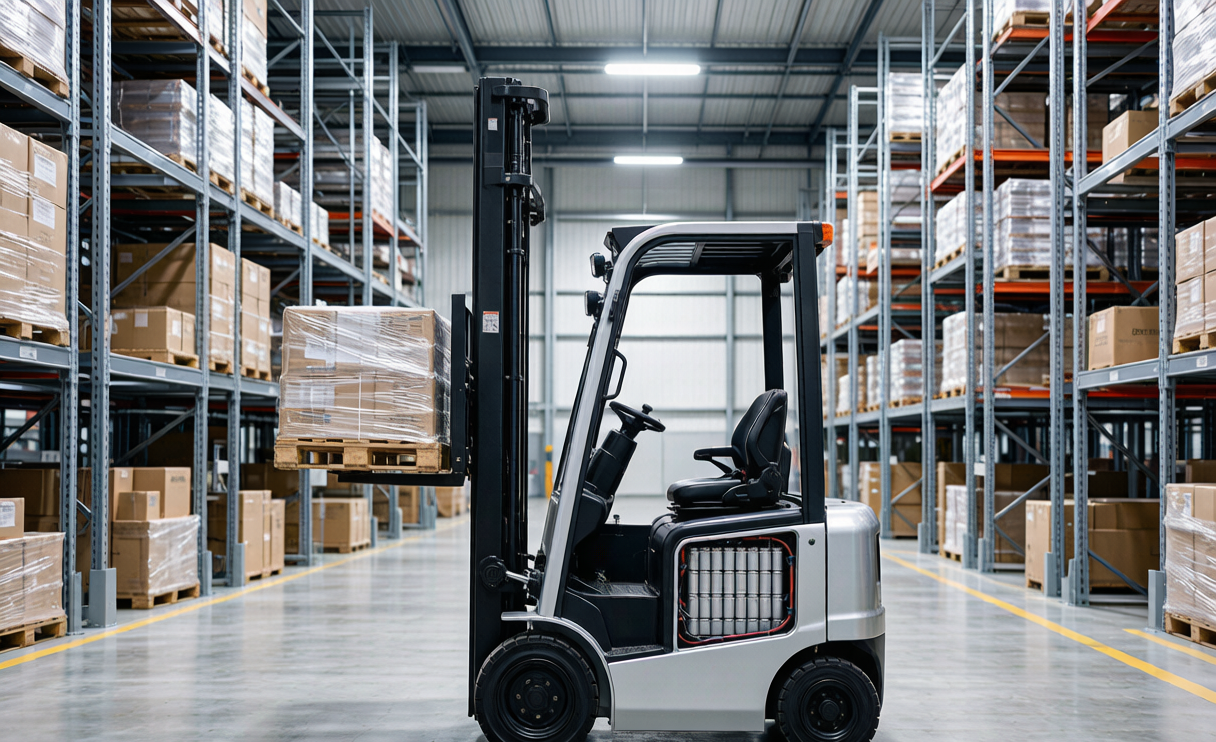
Forklifts are not cars. A counterbalance forklift in a distribution center runs a stop-start duty cycle: a few minutes of high-current draw lifting a pallet, then a crawl to the next aisle, repeated hundreds of times per shift. That profile is brutal on lead-acid (which hates partial state of charge) but surprisingly friendly to sodium-ion chemistry. The reason is simple — sodium-ion cells tolerate deep discharge and frequent partial cycling without the memory or sulfation issues that plague older chemistries.
In our lab, a 48V 600Ah sodium ion battery module built for a Class I forklift delivered 92% of its rated capacity after 1,200 equivalent full cycles at 25°C, with no forced cooling required. For a single-shift warehouse that is roughly three years of service before reaching 80% state-of-health. That durability, more than raw energy density, is what makes the chemistry attractive to fleet managers who think in cost-per-pallet-moved rather than kilometers per charge.
Energy Density vs Duty Cycle: What Actually Matters in a Warehouse
The honest weakness of sodium-ion is gravimetric energy density. Today’s production cells land at roughly 100–160 Wh/kg, versus 160–200 Wh/kg for LFP and 30–50 Wh/kg for flooded lead-acid. In a passenger EV that gap matters. In a forklift it mostly does not, because the battery sits in a fixed compartment and the truck is already heavy by design.
What matters for a sodium-ion battery forklift warehouse rollout is volumetric fit and run time per shift. We sized a 48V pack at 28 kWh in the same tray footprint as the legacy lead-acid block it replaced, giving operators a full 8-hour shift on a single charge with margin for opportunity charging during breaks. Because sodium-ion accepts high charge current without the thermal anxiety of some lithium formats, a 1-hour lunch-charge top-up recovers enough capacity to cover a second shift. For most indoor operations, that is the whole story: same slot, longer useful life, no acid spills.
Cold Storage and Temperature Behavior
If there is one place sodium-ion quietly wins, it is the freezer aisle. Cold-chain warehouses run at −20°C to −30°C, and LFP cells lose a large slice of available capacity and charge-acceptance in that range. Sodium-ion retains far more of its room-temperature capacity at low temperature because the desolvation energy of the sodium ion is lower than that of lithium.
In a side-by-side test at −20°C, our sodium-ion battery forklift pack held 85% of its 25°C capacity and still accepted a 0.5C charge, while a comparable LFP pack dropped to roughly 65% and complained loudly about charge current. For frozen-food distributors running electric reach trucks in cold stores, that delta translates directly into fewer battery swaps and less downtime. It is the single strongest argument I make when a customer operates refrigerated zones.
Safety, Standards, and What We Certify
Indoor material handling means batteries live and charge where people work, so certifications are not optional. Every Horizon Power sodium ion battery pack we ship for forklift use is built to and tested against the standards our customers’ insurers and auditors expect:
- UN38.3 — the UN Manual of Tests and Criteria transport safety suite (altitude, thermal, vibration, shock, external short, impact, overcharge). This is the baseline for moving cells and packs across borders.
- IEC 62619 — the industrial secondary-cell safety standard covering thermal runaway propagation, overcharge, and forced discharge. This is the one auditors ask for on stationary and traction batteries.
- IEC 62133 — portable cell safety covering short circuit, overcharge, and temperature abuse, applied where packs include portable-format cells.
- EN 1175 — the European standard for safety of battery-powered industrial trucks, which governs how the traction battery interfaces with the truck’s control system.
Sodium-ion has an intrinsic safety edge worth stating plainly: the cathode is not a layered oxide that releases oxygen under abuse the way some high-nickel lithium cathodes do, and the chemistry does not plate sodium metal under normal operating conditions the way lithium can plate dendrite lithium. In abuse testing we saw gentler thermal runaway and no ejection of flaming debris. That is why many of our warehouse customers choose sodium-ion specifically to simplify their indoor fire-risk assessment.
Total Cost of Ownership: Sodium-Ion vs Lead-Acid and LFP
Specifying a battery is a TCO exercise, not a sticker-price exercise. Let me lay out the levers for a 10-truck fleet over five years:
- Lead-acid: lowest pack price, but you pay forever — watering labor, equalization energy, acid handling, charger infrastructure, and a 1,000–1,500 cycle life that forces mid-life replacement. Real-world TCO often lands near $0.18–0.22 per Wh over the asset life.
- LFP: higher upfront, near-zero maintenance, 2,000–3,500 cycles, but cold-store penalty and a price that in 2026 still runs roughly $90–130 per kWh at pack level.
- Sodium-ion: pack pricing in 2026 has fallen to about $60–90 per kWh in volume, with maintenance close to zero and cycle life in the 2,000–4,000 range depending on depth of discharge. In cold-chain and multi-shift sites the payback versus lead-acid is often under 24 months.
The catch is availability: sodium-ion traction packs are still capacity-constrained, so lead times can run longer than off-the-shelf LFP. My advice to fleet managers is to convert the hardest, highest-duty trucks first — the cold-store reach trucks and the multi-shift counterbalances — where the chemistry pays back fastest, then expand as supply ramps.
Retrofitting Existing Forklift Fleets
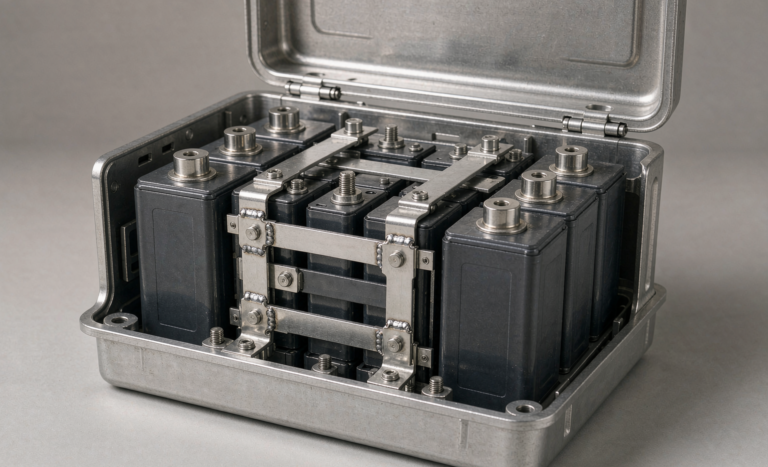
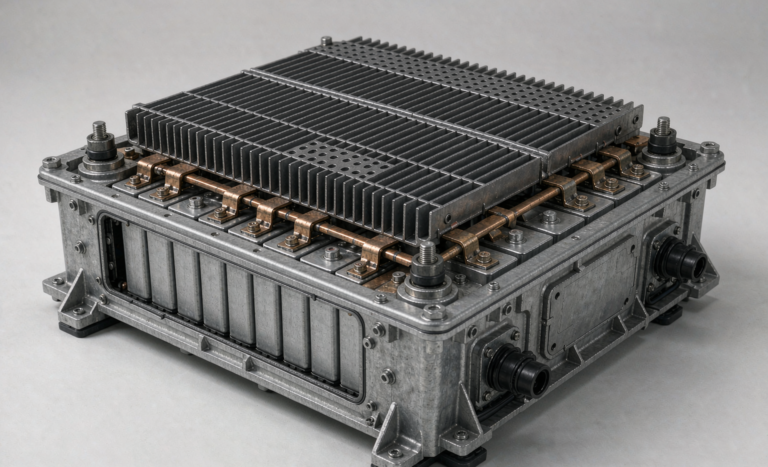
The good news for anyone holding a fleet of trucks is that a custom battery solution lets us drop sodium-ion into existing compartments without modifying the forklift. We scan the original battery tray, design a pack to the same envelope and terminal layout, and match the battery management system (BMS) communication to the truck’s CAN or analog interface so the dash state-of-charge and low-voltage cutoffs behave exactly as the OEM intended.
For trucks originally on lead-acid, the bigger win is eliminating the vented battery room and its acid-neutralization plumbing. For LFP-to-sodium-ion swaps, the change is mostly economic and thermal — same footprint, better cold performance, lower cell cost. In every retrofit we re-run the IEC 62619 propagation test on the finished pack and document the UN38.3 dossier so the customer’s safety file stays current.
One practical note from the field: because sodium-ion is slightly heavier per kWh than LFP, we occasionally add a small counterweight or rebalance the truck when replacing a lighter lithium pack. It is a five-minute workshop task, not a redesign, but it is the kind of detail that separates a clean retrofit from a complaint call three weeks later.
Where Sodium-Ion Does Not Belong (Yet)
I would be doing you a disservice if I pretended sodium-ion is universal. For very long-shift outdoor yards where pack weight and energy density dominate, LFP or even hydrogen still win on range. And for applications that need maximum energy in a tiny envelope — some aerial drones, for instance — a lightweight lithium battery remains the better tool. Sodium-ion earns its place where duty cycles are harsh, temperatures are low, safety margins must be high, and total cost over years matters more than grams saved. In a warehouse, that describes most trucks most of the time.
FAQ
Can sodium-ion batteries be dropped into existing forklift models?
Yes, in most cases. We build a custom battery solution to the original tray footprint and terminal layout and match the BMS to the truck’s communication interface, so the swap is mechanical plus electrical with no OEM modification. Trucks originally on lead-acid also get to retire their vented battery room.
How do sodium-ion forklifts perform in cold storage?
Very well. At −20°C our packs held about 85% of their room-temperature capacity and still accepted a 0.5C charge, versus roughly 65% for a comparable LFP pack. For frozen-food and refrigerated warehouses this is the strongest reason to choose sodium-ion.
Are sodium-ion forklift batteries safe to charge indoors?
Yes. They are built and tested to IEC 62619 and UN38.3, and the cathode chemistry is intrinsically less prone to oxygen release and thermal runaway than high-nickel lithium formats. We still recommend a monitored charge area, but the indoor fire-risk assessment is generally simpler than for legacy lithium packs.
What cycle life should I expect from a sodium-ion forklift battery?
In our 25°C testing a 48V module delivered 92% of rated capacity after 1,200 equivalent full cycles, and field projections put usable life in the 2,000–4,000 cycle range depending on depth of discharge. For a single-shift operation that is roughly three or more years before reaching 80% state-of-health.
Is sodium-ion cheaper than lithium iron phosphate for warehouses?
On pack price per kWh in 2026, yes — sodium-ion volume pricing has fallen to about $60–90 per kWh versus $90–130 for LFP. The full payback depends on your duty cycle and whether you run cold stores, but many multi-shift and refrigerated sites recover the cost in under two years versus lead-acid.