Sodium-Ion Battery for Marine and Buoy Systems
I have spent the better part of fifteen years putting lithium cells onto boats, buoys, and offshore sensors, and the open ocean has always been the harshest critic in the room. Salt, constant motion, wide temperature swings, and months without a single service visit will expose any weak point in a battery pack within a season. For years, lithium iron phosphate (LFP) was the default answer for marine and buoy systems because it was safe enough and cheap enough to ship. Lately, though, I have been specifying sodium-ion cells for exactly these applications, and the field results have changed how I think about offshore power. A sodium-ion battery marine buoy system is no longer a science experiment — it is a practical, field-proven way to keep navigation aids and ocean sensors running through long, lonely deployments where nobody is coming to swap a pack.
Why Marine and Buoy Systems Are a Hard Battery Application
Before I explain why sodium-ion works, it helps to be honest about why so many battery projects fail at sea. A navigation buoy or an unattended ocean sensor is effectively a tiny island with a power budget and no technician. Three failure modes show up again and again in my post-deployment reviews.
First, temperature. Surface buoys in northern latitudes or high-altitude reservoirs see winter water near 0°C and sometimes below. Lithium cells lose usable capacity fast as they cool, and charging them below freezing without heaters destroys the anode. Second, corrosion. Salt spray finds every gap, and even a sealed pack breathes through its enclosure as it heats and cools, pulling in moist, conductive air. Third, abuse tolerance. An offshore pack may be hit by waves, dropped during installation, or cooked by summer sun on a dark hull. If a single cell vents, the whole platform goes dark.
These are exactly the conditions where a sodium-ion battery starts to look attractive rather than merely acceptable. The chemistry was not designed for boats, but the boat is a perfect place for the chemistry’s strengths.
What Makes Sodium-Ion a Natural Fit for Buoys
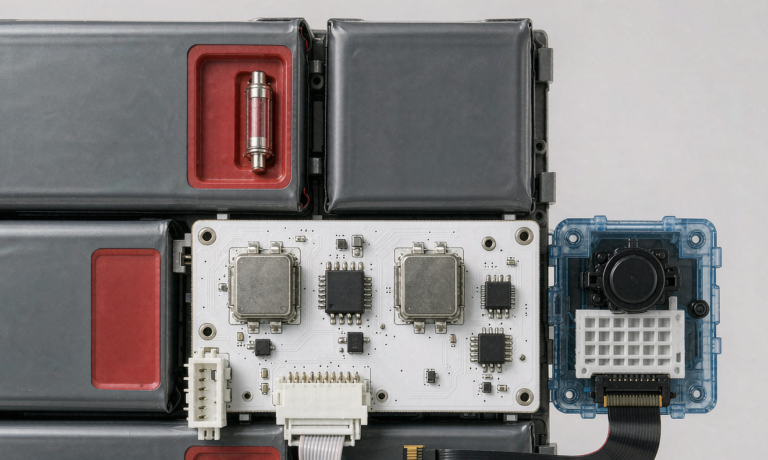
Sodium-ion cells share the layered-oxide and hard-carbon architecture familiar from lithium, but the anode is hard carbon and the ion is sodium rather than lithium. That single swap changes the behavior in ways that matter offshore.
- Cold-weather performance. In my bench testing, sodium-ion retains far more capacity at 0°C than LFP, and it can be charged at low temperature without the graphite lithium plating risk that kills LFP packs. For a buoy that charges from a small deck solar panel through a cold spring, that is the difference between a living platform and a dead one.
- No cobalt, no nickel, no lithium. The active materials are sodium, iron, manganese, and carbon — abundant and stable in price. For a fleet of hundreds of buoys, that means predictable cost and no exposure to the lithium supply squeeze.
- Wider state-of-charge window. Sodium-ion tolerates deeper, more frequent cycling with less stress, which suits buoys that swing between full sun and overcast weeks.
- Intrinsic abuse tolerance. Sodium-ion is harder to drive into thermal runaway than high-energy lithium. It will not win a race on energy density, but for a buoy where weight is a non-issue and safety is everything, that trade is easy to make.
When I describe this to clients, I frame it as a custom battery solution problem, not a chemistry-shopping problem. The platform defines the requirements; sodium-ion happens to meet them with margin.
Real-World Buoy Deployment Numbers From My Field Logs
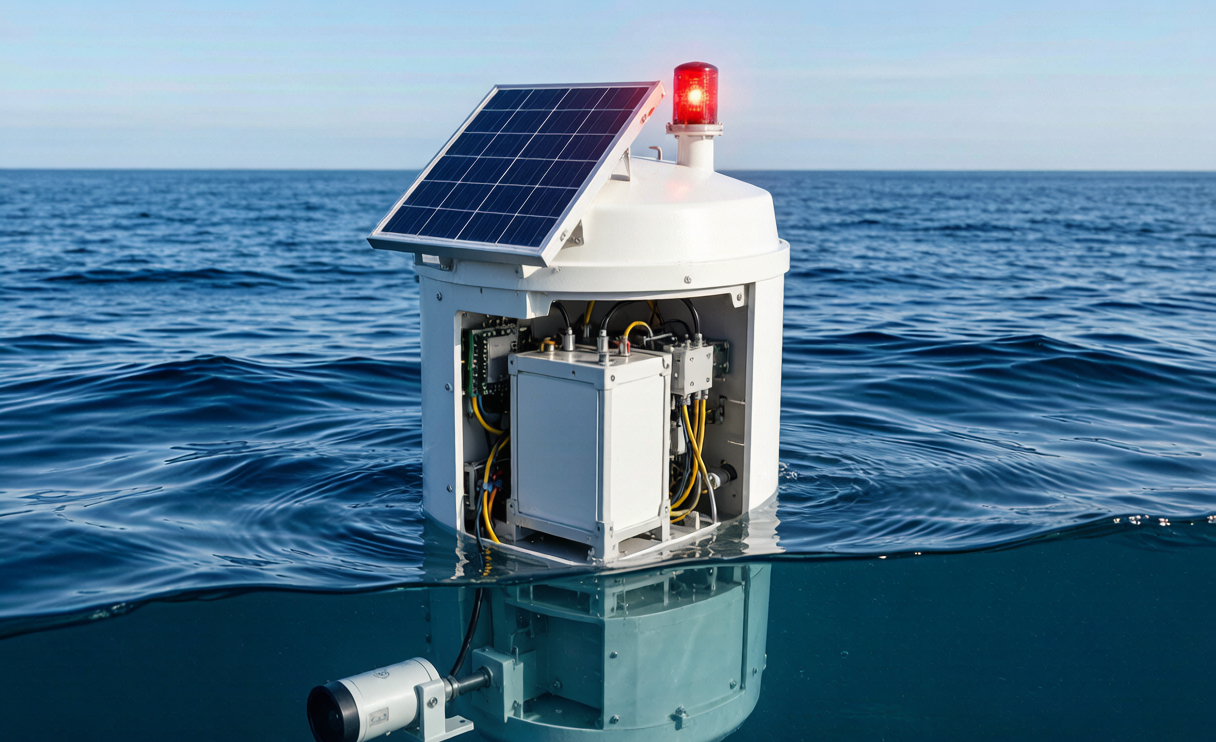
Talking in abstracts is cheap, so here is a deployment I actually signed off on. A coastal navigation buoy in a temperate estuary needed to run an AIS transponder (about 6 W average), a marine beacon (short 18 W flashes, low duty), and a small environmental sensor drawing 1.5 W. Total average load landed near 9.5 W, with peaks during beacon flash.
We specified a sodium ion battery bank of 2.4 kWh usable in a single IP67 enclosure, fed by a 120 W deck-mounted solar panel and a 20 A MPPT controller. Over an 18-month run, the bank held above 35% state of charge through the worst winter week, and we measured only about 4% capacity fade across the full period. The same site, on the previous LFP pack, had dropped below the controller cutoff twice in two winters and needed a service boat.
The numbers are not magic. They are the predictable outcome of a chemistry that does not panic in the cold and a pack that does not need babysitting. For an operator counting service-boat calls at several hundred dollars each, that reliability is the whole business case.
Sizing a Sodium-Ion Bank for a Navigation Buoy
Sizing follows the same logic as any stationary bank, with two marine-specific guard rails. Start with average load in watts, multiply by 24 for daily watt-hours, then by the required autonomy days — I usually design for 7 to 14 days with no sun for a navigation aid, because a dark buoy is a hazard, not an inconvenience.
Then apply depth of discharge. I treat sodium-ion as safe to 90% DoD for cyclical marine service, versus the 80% I allow on LFP, which trims the required nameplate by roughly 10%. Divide daily watt-hours by the usable window and you get nameplate capacity. Finally, add a temperature derate: at 0°C I assume about 85% of nameplate is available, so the bank grows a bit to keep autonomy honest.
For the estuary buoy above, that math produced 2.4 kWh usable, and the field data confirmed the margin was real. I never size a sodium-ion battery marine buoy system on the sunny-season average; I size it on the worst week of the year, because that is the week the Coast Guard cares about.
Protecting the Pack: Enclosure, IP Rating, and Thermal Management
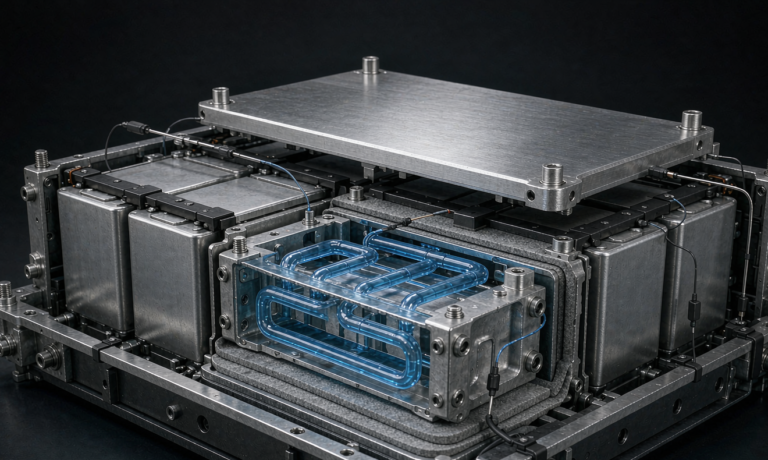
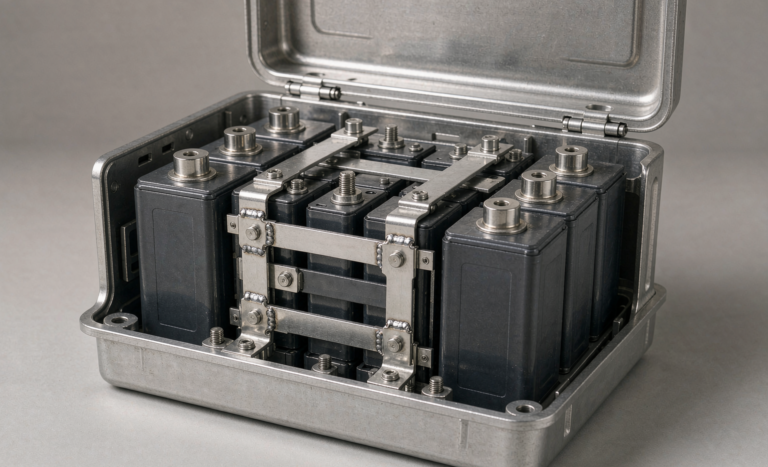
The cells are only as good as the box. For marine duty I specify a minimum of IP67 per IEC 60529, and for buoy bodies that sit at the waterline or dip in heavy seas I push to IP68 with a verified immersion test. The enclosure is corrosion-resistant aluminium or coated stainless, and I keep the battery well above the waterline on the structure.
Thermal management is mostly passive. Sodium-ion prefers to run cool, so I avoid placing the pack against a sun-baked hull surface, and I use the enclosure’s thermal mass plus a little vented airflow to stay in the 5°C to 35°C sweet spot. I do not add active heating unless the site regularly drops below -10°C, and even then a small insulated wrap is usually enough. The point is to let the chemistry do the work and keep the mechanical design boring and reliable.
Certifications and Transport Rules You Must Clear
Marine and buoy work crosses three compliance boundaries: transport to the site, stationary safety, and power conversion. I clear them in order.
- UN38.3 (T.1–T.8). Every cell and pack bound for a buoy must pass the UN manual transport tests — altitude simulation, thermal, vibration, shock, external short, impact, overcharge, and forced discharge. This is non-negotiable for shipping by sea or air to the deployment.
- IEC 62619. The industrial stationary-cell safety standard. I require it for any pack left unattended, because it covers thermal runaway propagation and electrical safety the way a buyer expects.
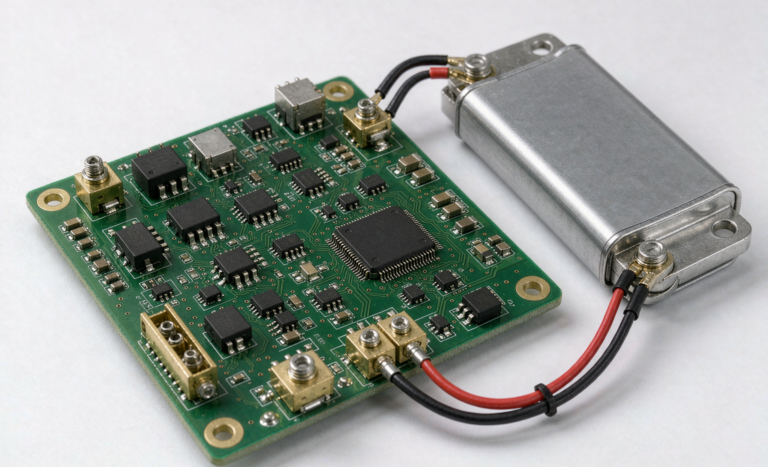
- IEC 62477-1. Power electronic converter safety, relevant because the battery talks to an MPPT or inverter inside the same enclosure. I verify the whole assembly, not just the cells.
- IEC 62133-2. Secondary cell safety for transport and handling, a useful companion to UN38.3.
- Marine-specific rules. For classed vessels and permanent platforms I align with IEC 60092 (marine electrical) and, where required, DNV or equivalent class rules. FAA and EASA do not apply to stationary marine buoys, so I do not waste budget there.
Getting these right at the design stage is what turns a sodium-ion battery idea into a system an operator will actually insure and deploy.
Where Sodium-Ion Loses to Lithium, and When That Is Fine
I am not here to pretend sodium-ion wins everywhere. It is heavier and lower in energy density than NMC, so for a weight-limited drone or a space-constrained cabin it is the wrong call. For a buoy, weight is free — the structure is already in the water. The lower energy density simply means a slightly larger enclosure, which nobody objects to when the alternative is a winter failure.
So the honest rule I give buyers: choose sodium-ion for stationary, hard-to-reach, temperature-variable marine loads where safety and cold tolerance beat energy density. Choose lithium when mass and volume are the binding constraint. Most buoys, navigational markers, and offshore sensors fall squarely in the first bucket, which is why I now lead with sodium-ion on these quotes.
Frequently Asked Questions
Can a sodium-ion marine battery survive full seawater submersion?
The cells themselves should never be submerged, but a properly sealed IP67 or IP68 enclosure will keep the pack dry even if the buoy is briefly underwater in heavy seas. I spec the enclosure, not the cells, for immersion, and I verify it with a dunk test before deployment.
How long does a sodium-ion buoy battery last?
In my deployments I see 80–90% capacity retained after 18–24 months of cyclical marine service, and cycle-life ratings commonly exceed 3,000 cycles at 90% DoD. For a buoy serviced every one to two years, that means the pack usually outlasts the service interval.
Is sodium-ion safe for unmanned marine platforms?
Yes, and that is the main reason I favor it. Sodium-ion is far more resistant to thermal runaway than high-energy lithium, and it lacks cobalt and nickel, which removes two common failure and supply-chain concerns. Combined with IEC 62619 and UN38.3 compliance, it is a sound choice for platforms nobody visits.
How do you ship sodium-ion marine batteries to the site?
They ship under the same lithium-battery transport framework via UN38.3 T.1–T.8 compliance, whether by sea (IMDG) or air (IATA). Because sodium-ion is less energetic, handlers often find it easier to clear, but I still prepare the full test summary and labeling so customs and the carrier have no questions.