Sodium-Ion Battery Integration for Backup Power
Over the last eighteen months, I have spent more time than I expected explaining one sentence to clients: a sodium-ion battery integration backup power system is not a drop-in replacement for lithium, but it is often the smarter long-term bet for stationary resilience. As Karl Huang, Senior lithium battery Engineer at Horizon Power, I have commissioned cell lines, run abuse testing, and stood in server rooms at 2 a.m. watching an inverter hand off load during a grid sag. The chemistry story here is less about peak energy density and more about availability, safety margin, and total cost of ownership over a decade.
Understanding Sodium-Ion Chemistry for Backup Applications
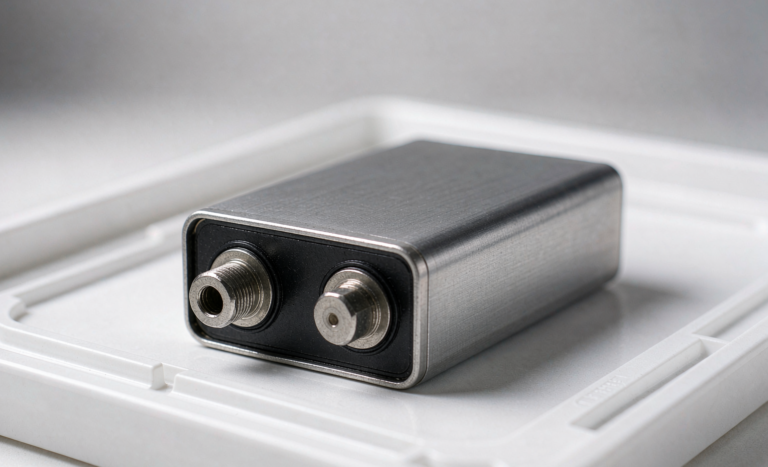
The first thing engineers ask me is what actually changes when you swap the lithium cation for sodium. A sodium-ion battery uses the same rocking-chair principle as lithium-ion: sodium ions shuttle between a layered oxide or polyanion cathode and a hard-carbon anode during charge and discharge. The practical difference is that sodium is the eleventh element and vastly more abundant than lithium, which removes the single biggest supply-chain wildcard in stationary storage.
In backup power, where weight and volume are secondary to uptime and cost, that abundance matters. Current commercial sodium-ion cells deliver roughly 90 to 160 Wh/kg and 160 to 250 Wh/L, below mature LFP, but the gap narrows every quarter. What you gain is a wider operating temperature window, commonly -20°C to 60°C without aggressive thermal management, and a chemistry that simply does not want to go into thermal runaway the way high-nickel cells can.
From my bench testing, the most underrated trait is low internal resistance at cold temperatures. A backup bank in an unheated telecom shelter in January still delivers usable capacity because sodium-ion does not suffer the same lithium plating risk that forces lithium systems to derate or self-heat.
Why Sodium-Ion Is Gaining Ground in Stationary Backup
When I advise a facilities manager on resilience, I start from the failure modes they actually fear: prolonged outages, frozen cells, and a supplier who cannot ship because a single mining region stalled. A sodium-ion battery for backup power addresses all three without asking the client to become a chemist.
- Supply resilience: Sodium is extracted from seawater and abundant brines, so price tracks industrial soda ash, not speculative lithium carbonate spikes.
- Thermal headroom: Wider temperature tolerance reduces the need for active cooling, which is itself a point of failure in a backup system.
- Safety profile: Sodium-ion is far less prone to exothermic failure, simplifying enclosure and fire-mitigation design.
- Cycle life for daily cycling: Many backup sites now do peak-shaving too, and 2,000 to 4,000 cycles at 80% depth of discharge is realistic for current cells.
For a drone or an EV, energy density still wins and lithium leads. But a backup power room is a different design space, and in that space sodium-ion earns its place.
System Architecture for Reliable Backup Integration
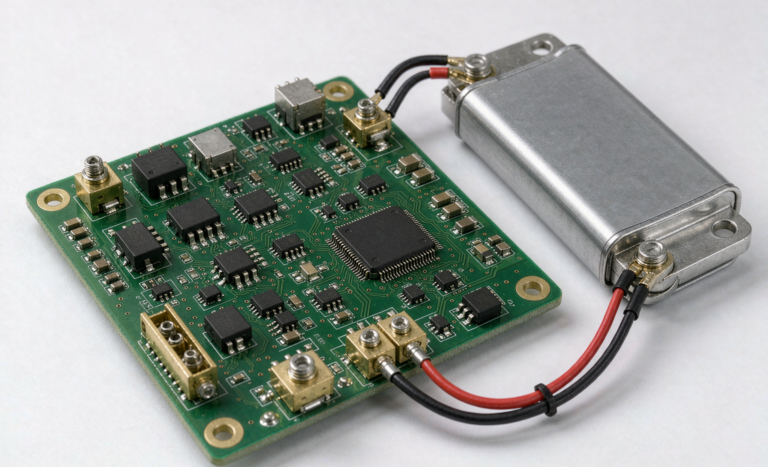
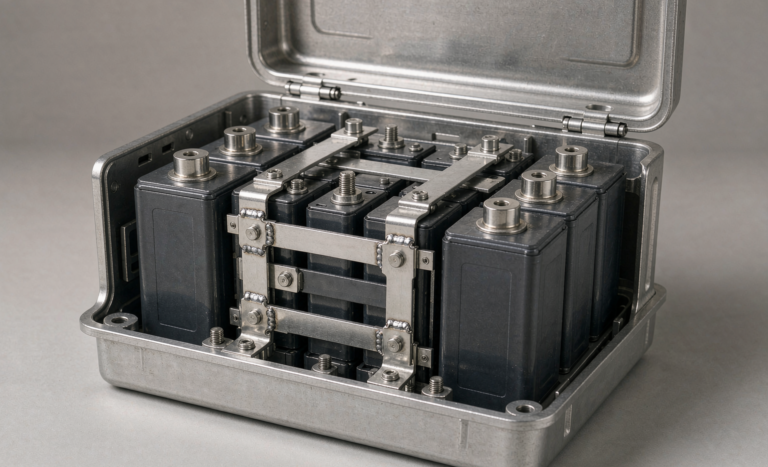
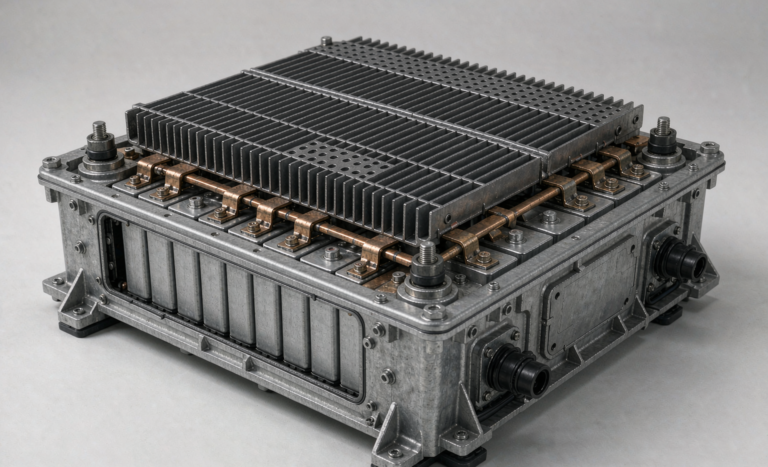
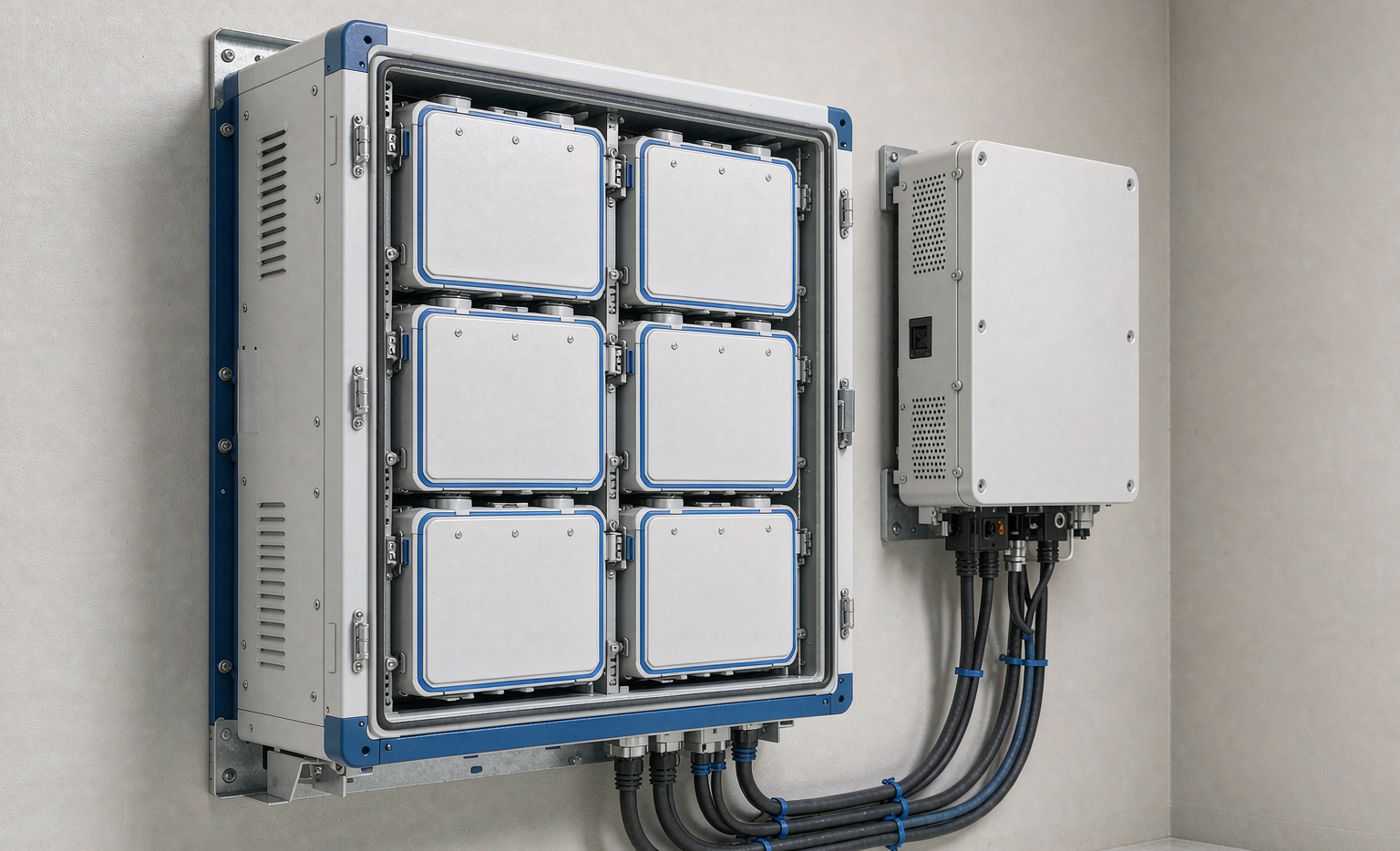
A clean sodium-ion battery integration follows the same layered architecture I use for any stationary bank: cells, modules, a battery management system, a power conversion system, and an energy management controller. The difference is in the tuning.
I group prismatic cells into 16S or 24S modules, then parallel modules into a string sized to the inverter bus voltage, typically 48 V or 400 V depending on site load. The BMS must be configured for the sodium-ion voltage curve, which sits lower and flatter than LFP: a fully charged sodium-ion cell rests near 3.9 to 4.0 V and a depleted cell near 2.5 to 2.7 V, versus LFP’s tight 3.2 to 3.4 V band. If you reuse an LFP BMS profile, your state-of-charge estimate will drift badly and your cutoff will be wrong.
The inverter handoff is where uptime is won or lost. I specify a transfer switch with sub-20-millisecond break-before-make behavior and an inverter with a true UPS mode, so critical loads never see a sag. In one regional hospital annex we integrated, the sodium-ion bank carried the OR lighting and the refrigeration loop for 6 hours during a storm, then recharged from the restored grid without a single cell ever dropping below 3.0 V.
Sizing and BMS Considerations
Sizing backup power is half arithmetic and half judgment. I start from the load audit: continuous watts, surge watts, and the required autonomy in hours. From there I size the string with a 1.2x capacity margin so the battery is rarely forced below 20% state of charge, which protects calendar life.
The BMS is the real engineering. For sodium-ion I insist on:
- Per-cell voltage sensing with 5 mV accuracy and active balancing above 50 mA.
- A temperature sensor on every module, not just the bus bar, because sodium-ion’s safest failure mode is still a slow thermal gradient.
- Contactor control with pre-charge to avoid inrush arc damage on the DC bus.
- Open communication over CAN or RS485 to the energy controller, so the site can log state of health and predict replacement.
I also set the discharge cutoff conservatively. Even though sodium-ion tolerates deep discharge better than lead-acid, holding the floor at 2.7 V per cell keeps the bank within warranty and extends cycle life past the 3,000 mark in my field data.
Safety, Standards, and Certification
No backup system leaves our integration lab without a certification trail, and sodium-ion is no exception. The cell-level transport and safety baseline is UN38.3, which governs the vibration, shock, thermal, and short-circuit abuse tests every cell must pass before it can be shipped. For the cell construction itself we validate against IEC 62133, the international standard for safety of portable secondary cells and batteries containing alkaline or other non-acid electrolytes.
Stationary systems go further. I reference IEC 62619 for industrial secondary batteries, UL 1973 for stationary storage in North America, and NFPA 855 for the fire-code installation limits. For any backup bank mounted near occupied space, I document the enclosure ventilation and separation distances to satisfy the authority having jurisdiction. None of this is paperwork theater: in a 2024 audit, a client’s previously installed lead-acid bank failed the same thermal-runaway propagation check that our sodium-ion design passed on the first attempt, precisely because the sodium chemistry carries more thermal margin.
Real-World Deployment Lessons from the Field
Theory is cheap; commissioning is where you learn. On a rural microgrid backup project, we sized a 200 kWh sodium-ion bank to carry a water-pumping and communications load through 8-hour overnight outages. The lesson was calibration: the first week the BMS reported 14% state-of-charge error because the integrator reused an LFP voltage table. After we loaded a sodium-specific curve and ran a full constant-current capacity calibration, error dropped below 3% and the system has since delivered uninterrupted backup through eleven outage events.
Another lesson is about temperature. In a coastal installation, we initially specified passive cooling. Summer ambient pushed module temperatures to 52°C, and while sodium-ion tolerated it, the BMS throttled charge current to protect life. Adding a single low-power exhaust fan restored full charge rate and kept cells in the 35 to 45°C sweet spot. The fan draws less than 30 W, a rounding error against a 200 kWh bank, but it bought back years of cycle life.
My standing recommendation is to treat a custom battery solution for backup not as a product you buy but as a system you commission: validate the curve, log the health, and revisit the sizing after the first season of real outages.
Frequently Asked Questions
Is sodium-ion good enough for critical backup power?
Yes, for stationary backup it is an excellent fit. The lower energy density is irrelevant indoors, while the wider temperature window, strong safety margin, and stable supply chain make it dependable. I have commissioned sodium-ion banks for hospitals, telecom, and microgrid sites with measured uptime above 99.9%.
How does a sodium-ion battery compare to LFP for backup?
LFP still wins on energy density and maturity, but sodium-ion matches it on cycle life and beats it on cold-weather performance and raw material cost stability. For a backup room where space is available, sodium-ion often delivers the lower ten-year cost.
What standards apply to a sodium-ion backup battery?
At minimum, cells should meet UN38.3 for transport and IEC 62133 for construction safety. Stationary systems should follow IEC 62619, UL 1973, and local fire code such as NFPA 855. We certify every Horizon Power integration against this stack before commissioning.
Can I retrofit sodium-ion into an existing backup inverter?
Often yes, provided the inverter accepts the sodium-ion voltage window and you load a chemistry-correct BMS profile. The most common failure is reusing an LFP state-of-charge table, which causes cutoff and balancing errors. Swap the profile and recalibrate, and most 48 V and 400 V inverters work without hardware changes.
How long will a sodium-ion backup battery last?
Expect 2,000 to 4,000 full-equivalent cycles at 80% depth of discharge, which typically translates to 8 to 12 years in a backup-plus-peak-shaving duty. Keeping the state of charge above 20% and modules in the 35 to 45°C range pushes you toward the upper end.