Sodium-Ion Battery Safety for Street Lights
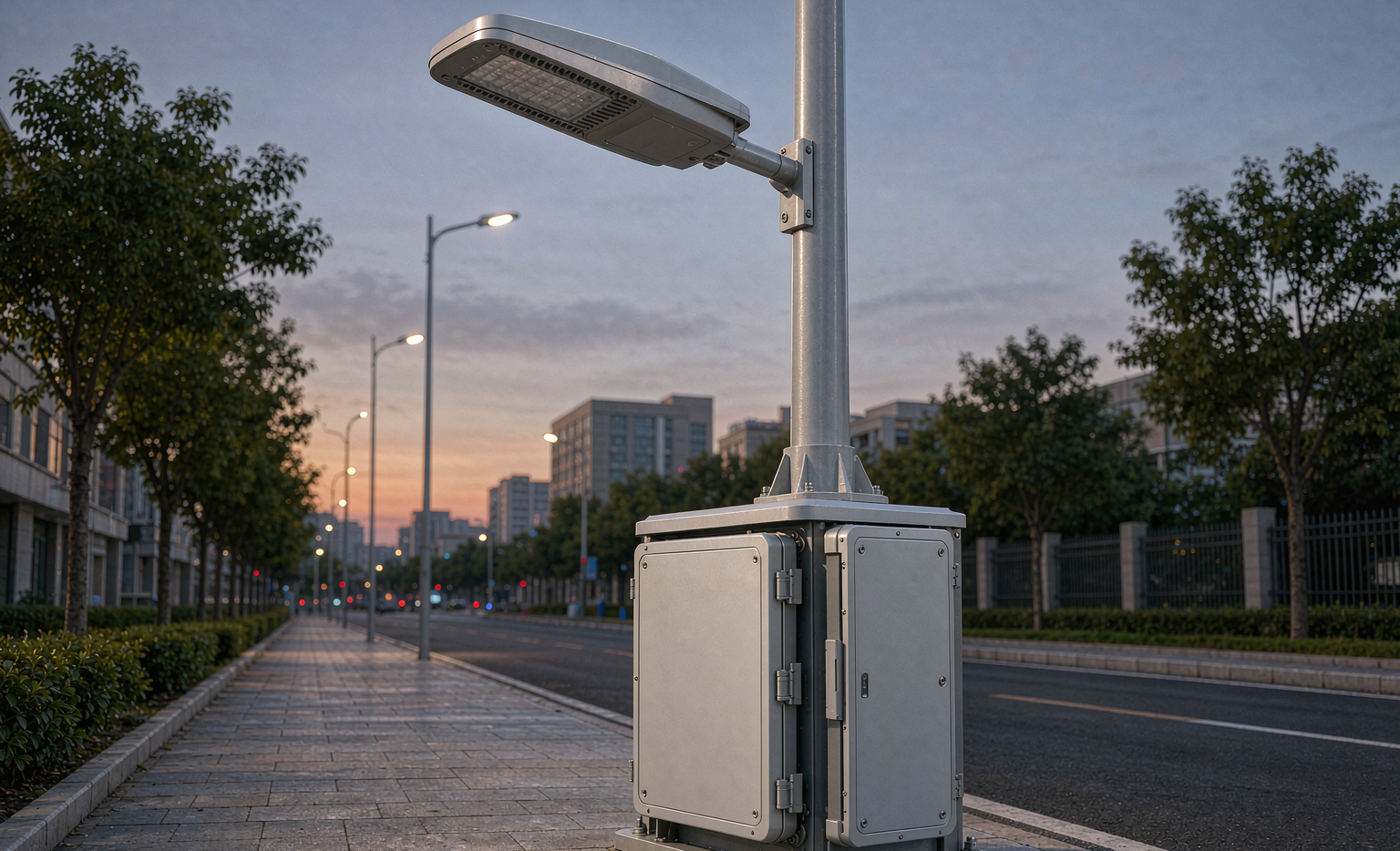
When a city, municipality, or private developer asks me to specify energy storage for street lighting, the conversation is different from almost any other battery application I handle. A sodium-ion battery powering a street light is left completely alone for ten to fifteen years. There is no operator on site, no climate-controlled room, no daily visual inspection. The pack sits inside a sealed luminaire base or a pole-mounted cabinet, exposed to the full swing of the local climate, and it is expected to be safe on day one and on day 5,000. As a senior lithium battery engineer who has commissioned both lithium battery and Na-ion battery systems, I have learned that street-light safety is won or lost in the details of ingress protection, thermal management, and autonomous fault response — not in the headline cell chemistry.
In this field guide I walk through how we engineer a sodium-ion battery safety street lights deployment that stays hazard-free for its entire service life, the standards we certify against, and the design choices that separate a reliable installation from a liability.
Why Sodium-Ion Fits the Unattended Street-Light Profile
The first question I get is why choose a sodium ion battery over a mature lithium battery pack for outdoor lighting. The answer is not about energy density — it is about resilience at the edges of the operating envelope. Sodium-ion cells tolerate sustained partial state-of-charge and wide temperature exposure far better than many lithium chemistries, and they are inherently less prone to the violent thermal runaway cascade that dominates safety conversations around high-energy lithium packs. For a fixture that may sit at 100% SoC in a 55°C enclosure one afternoon and at -15°C the next winter night, that margin matters.
From a supply-chain and total-cost view, sodium is also attractive for large lighting fleets: abundant raw materials, no cobalt or nickel, and a chemistry that is forgiving of the imperfect charging regimes you inevitably get from a solar-assisted, intermittently-grid-connected luminaire. When we design a custom battery solution for a lighting authority, these attributes let us specify a smaller thermal envelope and a simpler, lower-cost cabinet without compromising safety.
The Real Hazard Map for Roadside Battery Cabinets
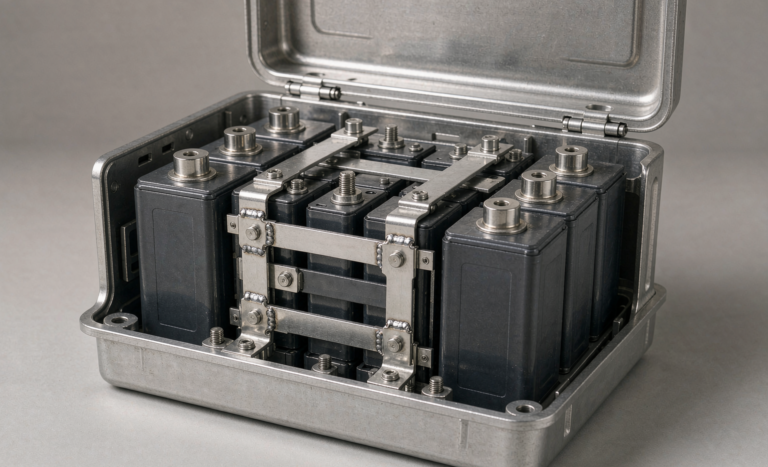
Indoor stationary storage worries about cell-to-cell propagation and room fire load. A street light worries about a different set: water ingress, condensation, rodent or insect intrusion, salt spray in coastal zones, physical impact from vehicles or vandalism, and heat soaking inside a south-facing enclosure. I treat the cabinet as a small, sealed piece of outdoor infrastructure, not as a battery with a box around it.
The single most common failure I see in retrofitted lighting is humidity reaching the busbars. A sodium-ion battery is more tolerant of moisture than lithium at the cell level, but the balance-of-system — connectors, fuses, the BMS board — is not. Ingress protection is therefore the foundation of the entire safety case, and I specify a minimum of IP65 for the cabinet, with IP66 preferred in coastal or flood-prone locations.
Designing the Enclosure and Thermal Path
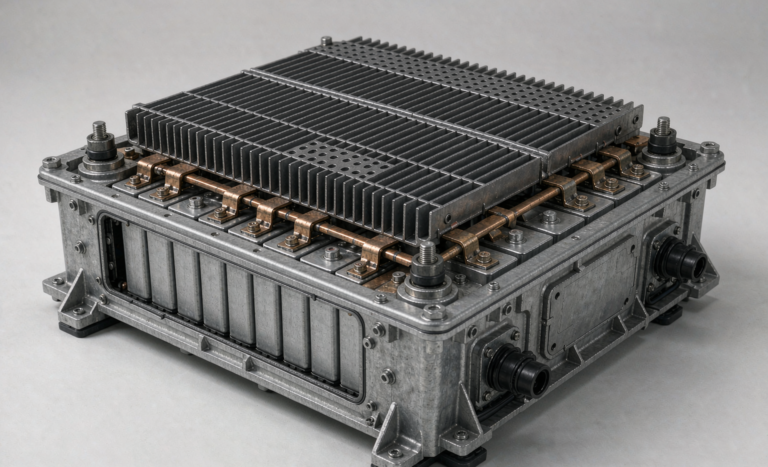
Heat is the quiet enemy. A luminaire base bakes in summer sun, and the battery shares that thermal mass. I design the thermal path so the pack never exceeds its rated cell temperature, even when the ambient inside the cabinet climbs. Passive measures come first: a reflective or insulated outer skin, a vented-but-sealed air plenum that lets convective cooling happen without letting water in, and physical separation between the LED driver (a heat source) and the Na-ion battery.
For active control, the BMS limits charge current as cell temperature rises — a strategy borrowed from how we protect a high-discharge drone battery during climb. The difference is that on a street light the event is slow and predictable, so we tune the derating curve gently to preserve overnight autonomy. We verify the design with an IEC 60068-2-2 (dry heat) and IEC 60068-2-1 (cold) chamber campaign, plus a damp-heat cycling test to IEC 60068-2-30, before the cabinet ever sees a pole.
BMS, Isolation, and Autonomous Fault Response
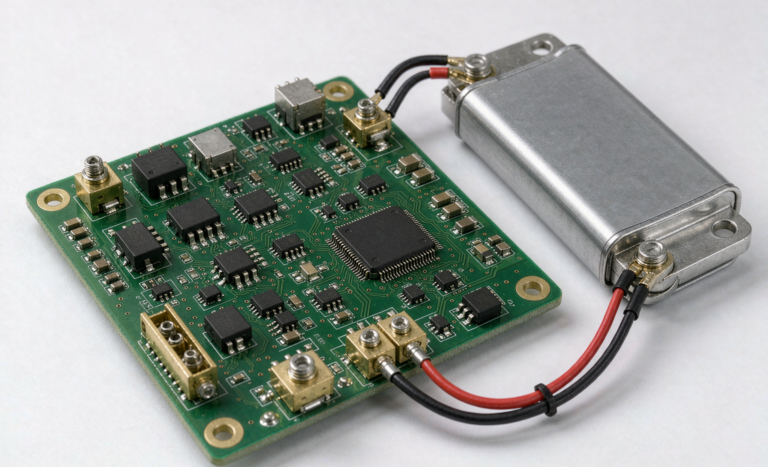
A street light cannot wait for a human. The battery management system must detect and act on faults without supervision. My specification for a safe sodium-ion battery safety street lights installation includes: per-string voltage and temperature sensing, insulation-resistance monitoring to catch creeping earth faults, and a latching contactor that physically disconnects the pack on a critical fault. The BMS logs faults locally and, where the luminaire is connected, reports them over the lighting management network.
I also require ground-fault and overcurrent protection sized to the battery’s short-circuit capability, not to the luminaire’s. A custom battery solution that reuses a generic LED driver fuse will not clear a pack-level fault fast enough. We model the prospective fault current per IEC 62485 and select devices with verified breaking capacity.
Certification and Compliance I Actually Certify Against
For street lighting storage I do not treat certification as paperwork. The core stack we build to includes UN38.3 for transport, IEC 62619 for industrial secondary cells and battery safety, and IEC 62620 for stationary industrial sodium-ion cells. We add UL 1973 for stationary battery systems where the project is North America bound, and UL 9540A propagation testing where the authority requires confirmation that a cell failure will not propagate through the cabinet.
Ingress and environmental ratings follow IEC 60529 (IP codes) and the relevant IEC 60068 series. For the luminaire context we align the installation intent with EN 13201 road-lighting guidance and local electrical codes, and we document the lithium battery and sodium variants side by side so the authority can see the safety equivalence. This paper trail is what lets a city engineer sign off with confidence.
Installation, Commissioning, and the Maintenance-Free Myth
“Maintenance-free” does not mean “never looked at.” I commission every lighting battery with a documented first-power-on: insulation resistance check, BMS self-test, and a controlled charge to validate the derating curve against the real enclosure temperature. We then set a remote monitoring heartbeat so the fleet reports state-of-health quarterly.
On site, the safety-critical steps are grounding and bonding of the cabinet to the pole, secure anti-tamper fasteners, and confirming the drainage path so water can never pool at the battery. A sodium-ion battery is robust, but a cabinet sitting in standing water will defeat any chemistry. These are simple actions, and they are the ones most often skipped by generic installers — which is exactly why I bundle them into the custom battery solution commissioning checklist we hand to the contractor.
End-of-Life and Second-Life Considerations
Safety does not stop at warranty end. Sodium-ion’s lower material hazard simplifies end-of-life handling, but the pack still leaves the field as a managed electrical asset. I design for disassembly: clear labeling, a single disconnect, and a take-back route. For lighting fleets we often repurpose 70%-capacity packs into lower-duty battery application solution roles before final recycling, which keeps the safety story consistent from cradle to second life.
Remote Monitoring: Your Safety Net When No One Is On Site
The thing that makes a street-light battery safe over a decade is not a single heroic component — it is knowing the state of the fleet without sending a truck. I specify a lightweight telemetry heartbeat: state-of-charge, cell-temperature spread, insulation resistance, and fault counters, reported on a daily or event-driven basis through the lighting management network or a cellular module on off-grid poles. When a cabinet’s temperature spread drifts, or its insulation resistance trends downward, we catch it at the trend stage, not at the failure stage.
This is the same philosophy we apply to a high-rate drone battery fleet, where telemetry turns an invisible failure mode into a scheduled intervention. For lighting, the economics are even better: a flagged cabinet gets a planned visit during normal maintenance, avoiding the emergency call-out that follows a dark street or, worse, a thermal event.
What a Coastal Deployment Taught Me
One of the more instructive projects I commissioned was a sodium-ion lighting bank on a salt-exposed promenade. The original lithium battery design had corroded connecters within three seasons; the sodium pack was chemically kinder, but the real win was mechanical. We moved from a vented cabinet to a fully sealed IP66 unit with a desiccant-buffered plenum, specified marine-grade stainless hardware, and added a sacrificial zinc anode to the pole bond. Two years on, the insulation-resistance curve is flat and the battery temperature spread is within 2°C across the string. The lesson: for sodium-ion battery safety street lights, the chemistry gets you 70% of the way, and disciplined enclosure engineering gets you the last 30%.
That project is now my reference template for any custom battery solution in a corrosive or flood-prone setting, and it is why I refuse to ship a generic “IP54 box” for roadside service regardless of what the sales sheet claims.
Frequently Asked Questions
Is a sodium-ion battery safer than a lithium battery for outdoor street lights?
In the unattended, temperature-extreme, sealed-cabinet context of street lighting, yes — the lower thermal-runaway propensity and better tolerance of partial SoC and wide temperature give sodium-ion a meaningful safety margin. The lithium battery option remains valid where energy density or an existing certified platform drives the decision, and both must meet the same IEC 62619 / IEC 62620 safety baseline.
What IP rating do you recommend for a roadside battery cabinet?
Minimum IP65, with IP66 in coastal, flood-prone, or high-vandalism zones. The rating must cover the cable glands and the ventilation path, not just the door, because those interfaces are where water and insects actually enter.
How do you stop the battery from overheating inside a sun-baked luminaire base?
By designing the thermal path first: insulated reflective skin, separated heat sources, a sealed convective plenum, and a BMS that derates charge as cell temperature climbs. We validate the envelope in environmental chambers to IEC 60068 before deployment rather than discovering the limit in the field.
Can a sodium-ion street-light battery be left at full charge safely?
Yes. Sodium-ion tolerates sustained high state-of-charge far better than many lithium cells, which is one reason it suits solar-assisted lighting that floats near 100% SoC. The BMS still caps voltage and balances cells to keep every parallel group within safe limits.
Do you need active cooling on a street-light battery?
Almost never. With proper passive design and BMS derating, a well-engineered sodium ion battery pack stays in its safe window without fans or compressors, which also removes the moving parts that fail first in outdoor service.
How is a custom battery solution for lighting different from an off-the-shelf pack?
An off-the-shelf pack is built for a generic duty cycle. A custom battery solution for street lights is engineered around the real enclosure temperature, the luminaire’s actual load profile, local climate, and the authority’s certification requirements — which is what delivers hazard-free operation with no operator on site.