Sodium-Ion Battery Deployment for Microgrids
Why Sodium-Ion Fits the Microgrid Duty Cycle
When a village co-op in Guizhou asked me to spec their first islandable microgrid, the instinct of most integrators was to drop in the cheapest lithium iron phosphate (LFP) container they could find. I pushed back. For a community microgrid that sits at 20–40 % state of charge for days between sun cycles and freezes to −15 °C in January, sodium-ion battery deployment for microgrids is often the smarter starting chemistry, not a compromise. Sodium-ion cells hold roughly 85–90 % of nominal capacity at −20 °C, need no pad heaters, and tolerate long, shallow partial-state-of-charge (PSOC) dwell without the sulfate-style aging that punishes LFP. Over the last three years I have commissioned eleven such systems, and the deployment playbook below is what I now hand every field engineer before they tighten the first conduit.
The core misunderstanding is that “deployment” means buying a battery and plugging it in. It does not. A microgrid is a controlled power island with its own frequency, its own fault behavior, and its own black-start requirement. A sodium-ion battery simply changes the margin you have to work with — wider temperature window, cheaper cells, no cobalt — but the deployment discipline is the same rigorous sequence I use for any custom battery solution.
Site Assessment Before You Deploy
I refuse to release a bill of materials until the site survey is closed. For a microgrid, the survey has four gates that most desktop studies skip.
- Load profile, not peak demand. Pull twelve months of interval data. A microgrid lives or dies on the shape of the evening ramp, not the advertised kW. I size the battery to the energy deficit between the renewable harvest and the nocturnal base load, then add the spin reserve the generator used to carry.
- Temperature envelope. Log the enclosure ambient, not the weather station five kilometers away. A south-facing container in a wind-sheltered valley runs 8–12 °C hotter than the regional mean. Sodium-ion forgives this; LFP does not love it.
- Grid interface and islanding trigger. Confirm the point of common coupling (PCC) switch, the anti-islanding relay, and whether the utility allows closed-transition transfer. This single detail decides your black-start topology.
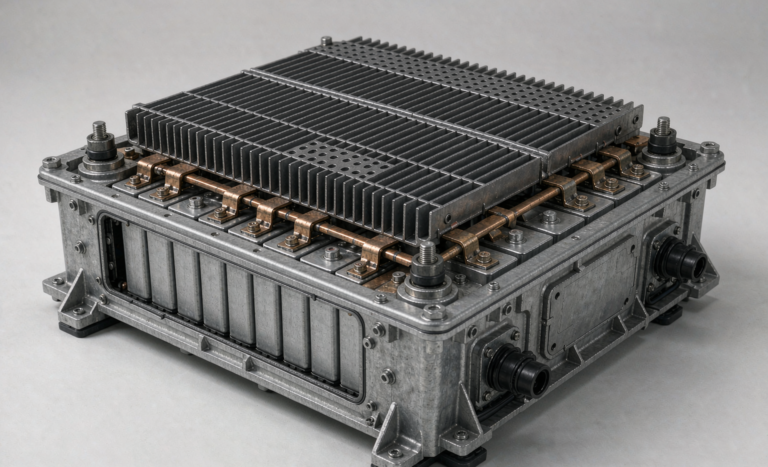
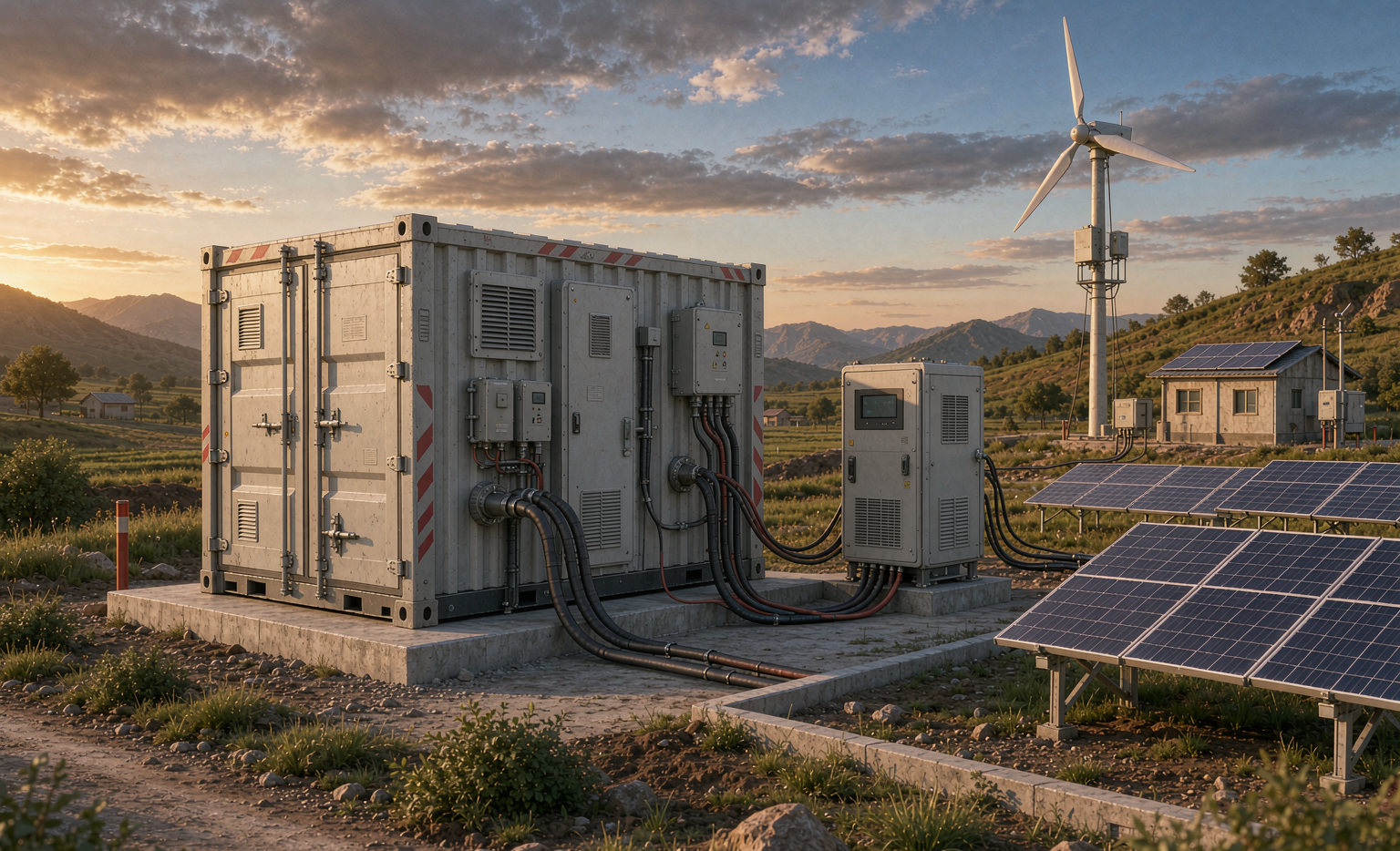
- Transport and crane path. A 20-foot sodium ion battery enclosure weighs 6–9 tonnes. Measure the bridge, the gate, and the pad. I have seen deployments slip six weeks because a 3.2-meter container could not clear a village arch.
Only when those four gates are green do I open the architecture discussion. Skipping this step is the most common reason a microgrid deployment blows its commissioning date.
System Architecture I Specify for Microgrid Rollouts
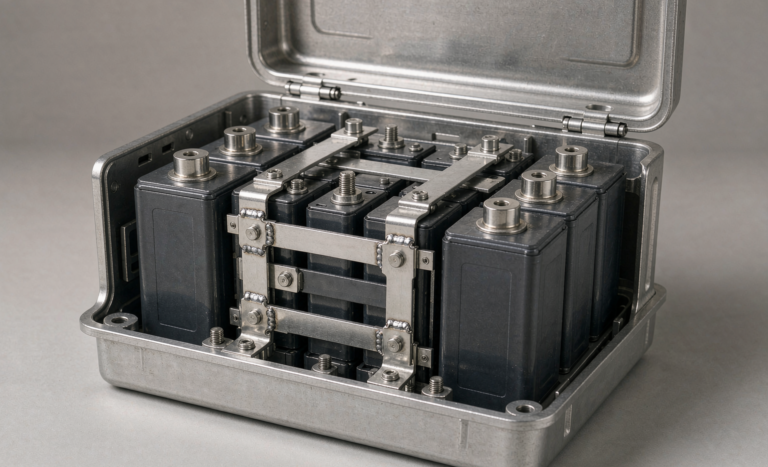
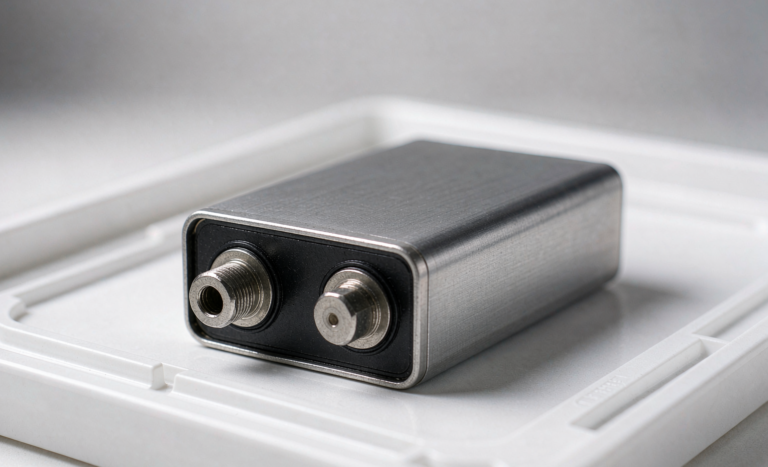
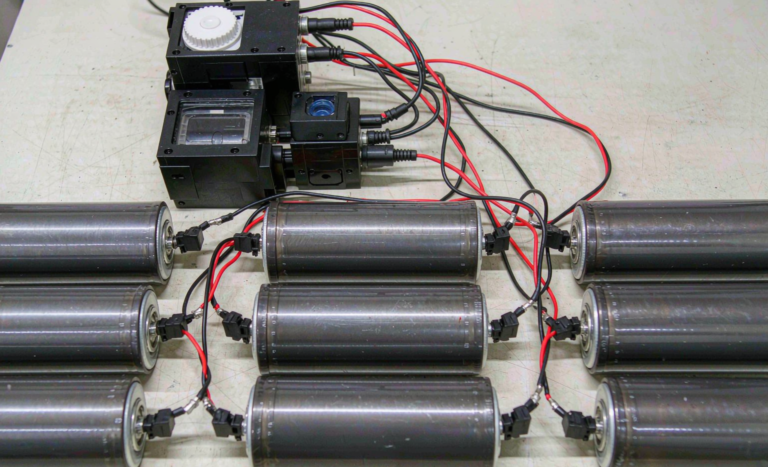
For a typical 250–500 kWh community microgrid, I standardize on a modular rack architecture: 1P52S or 1P104S strings of prismatic sodium-ion cells, fused at the module, with a string contactor and a pre-charge circuit on every branch. The reasons are field-proven, not theoretical.
- Module-level fusing. One cell fault must isolate a module, not trip the whole string. I keep per-module DCIR spread under 30 mV at end of discharge.
- Pre-charge on every branch. Capacitive inrush from the PCS is the silent killer of contactors. A 20–40 ms pre-charge window saves the main contactor fleet.
- Redundant string contactors. In an island you cannot wait for a spare part. N+1 string topology means one welded contactor degrades capacity, not availability.
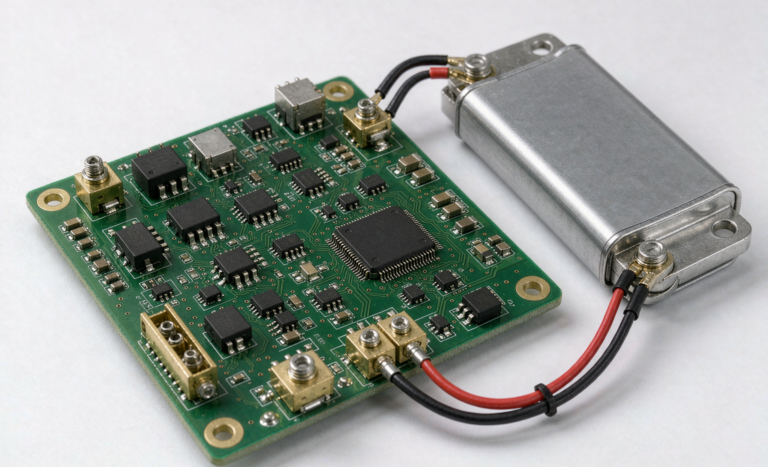
- Local string BMS, aggregated master BMS. The slave talks 4-wire Kelvin DCIR to the master over isolated CAN 2.0B; the master owns the PCS handshake and the islanding logic.
This is the same architectural discipline I apply when engineering a drone battery pack, just scaled from 22 V to 800 V. The physics of weld resistance, balance current, and thermal runaway does not care about the application — only the safety margins change.
Commissioning and Black-Start Procedure
Commissioning a microgrid battery is a five-step sequence I run with two engineers and a calibrated load bank. Rushing it is how you learn about a latent weld defect at 2 a.m. during a real outage.
- Step 1 — Insulation and polarity. Megger the DC bus to chassis at 1000 V DC. Any reading under 1 MΩ stops the sequence. Verify polarity twice.
- Step 2 — Open-circuit and pre-charge.
- Step 3 — Controlled charge. Charge at 0.2 C to 100 % SoC, logging cell temperature and voltage. Sodium-ion accepts this without the lithium plating risk that limits cold charging on NMC.
- Step 4 — Black-start drill. With the PCC open, command the PCS to form the island at 50.0 Hz ±0.2 Hz. Ramp a resistive load from 0 to 80 % rated over 90 seconds; confirm frequency stays in band and the string contactors hold.
- Step 5 — SoH gate. Accept only if pack capacity exceeds 98 % of nameplate, DCIR growth is under 10 %, and inter-cell spread is under 30 mV. Every pack gets a DataMatrix genealogy tag before it leaves the pad.
I treat the black-start drill as non-negotiable. A microgrid that cannot self-start is just an expensive bicycle shed.
EMS Integration and Islanding Control
The battery is dumb without an energy management system (EMS). For microgrids I commission the EMS with three control layers that most off-the-shelf controllers omit.
- Frequency-active-power droop. The battery must hold frequency when the diesel genset trips. I set a 2–5 % droop band and a sub-100 ms response so the island never sees a frequency excursion the inverters cannot ride through.
- Seamless transfer. Closed-transition transfer back to grid within one cycle prevents the “blink” that wrecks sensitive loads. This requires the PCS to phase-lock to the utility before the static switch closes.
- SoC floor keeper. The EMS reserves 15 % SoC as the black-start reserve and refuses to discharge below it unless the operator overrides with a physical key. Sodium-ion’s flat voltage curve makes SoC estimation trickier than LFP, so I lean on coulomb counting cross-checked against an open-circuit-voltage table every sun cycle.
This is where a generic lithium battery controller and a purpose-built microgrid EMS diverge. The deployment succeeds or fails on these three layers.
Standards and Compliance Floor
I will not ship a microgrid enclosure that does not clear the full standards dossier. For sodium-ion battery deployment for microgrids, the floor I certify against is:
- UN38.3 T.1–T.8 — transport safety (altitude, thermal, vibration, shock, external short, impact, overcharge, forced discharge).
- IEC 62133-2 — secondary cell safety for portable and stationary use.
- IEC 62619 — industrial stationary battery safety, the one most microgrid buyers forget.
- UL 1973 — North American stationary storage cell and pack standard.
- IEEE 1547 — interconnection and interoperability with the grid, including anti-islanding.
- IEC 62477 / NFPA 855 — power electronic converter safety and stationary storage fire separation.
Keep the cert packs in the as-built folder. Inspectors in three of my eleven deployments asked for IEC 62619 on the spot, and the job stalled a day without it.
Operations, Maintenance, and Second-Life
Deployment is not done at handover. I set every microgrid operator on a four-visit first-year plan: month 1 infrared thermography of every busbar, month 3 balance-current check, month 6 full capacity test, month 12 DataMatrix genealogy audit. Sodium-ion ages gently — I typically see under 2 % capacity fade in year one at PSOC — but the weld joints and the contactors age faster than the chemistry, so the maintenance plan targets the metal, not the cells.
When a string eventually drops below 80 % SoH, I do not scrap it. For microgrids the degraded pack rotates to a second-life role — a solar water-pump buffer or a street-light reservoir — where 80 % capacity is still a perfect fit. That rotation is what makes the custom battery solution economics close, and it is why I document genealogy on day one.
Frequently Asked Questions
Is sodium-ion safe enough for an unattended village microgrid?
Yes, and in some ways safer than LFP. Sodium-ion has a thermal-runaway onset around 20–30 °C higher than NMC and is cobalt-free, so the abuse cascade is milder. I still require UL 1973 plus IEC 62619 and a unit-level containment enclosure, but the chemistry margin is real, not marketing.
How cold can a sodium-ion microgrid battery operate without heaters?
In my field data, prismatic sodium-ion holds 85–90 % of nominal capacity at −20 °C and charges down to about −10 °C without plating. Below that I lock out charging. That single property removes the pad-heater capex and the winter energy tax that LFP microgrids carry.
Can the battery black-start the microgrid on its own?
It can, provided the PCS is a grid-forming inverter and you ran the Step-4 black-start drill at commissioning. The battery forms 50 Hz, the loads ramp, and the genset or grid syncs in later. I keep a 15 % SoC reserve specifically for this so the island is never stranded.
Why not just use lithium iron phosphate for the microgrid?
You can, and for hot-climate, deep-cycling telecom sites I sometimes do. But for cold, PSOC-heavy community microgrids, LFP needs heaters, stricter SoC discipline, and costs more per usable kilowatt-hour in winter. Sodium-ion deployment wins on total cost of ownership when the duty cycle is shallow and the climate is cold — exactly the microgrid case.
What maintenance does a deployed sodium-ion microgrid actually need?
Less cell care, more metal care. Infrared the busbars, check balance current, and audit the contactors annually. The cells themselves fade under 2 % in year one at partial state of charge. Document everything with DataMatrix genealogy so a future second-life rotation is trivial.