Sodium-Ion Battery Reliability for Street Lights
Why Sodium-Ion Is Quietly Becoming My Default for Solar Street Lights
I have spent the last nine years signing off on off-grid battery packs, and for most of that time lithium battery chemistry — especially LFP — was the automatic choice for solar street lights. Two years ago I ran my first sodium-ion battery field pilot on 60 poles in a coastal city, and the reliability numbers changed how I spec every new tender. Sodium-ion is not a drop-in miracle: it trades some energy density for something street-light operators care about far more — forgiveness. It tolerates partial state of charge, shrugs off cold snaps that cripple other cells, and removes the lithium-plating failure mode that keeps me up at night on unattended outdoor assets.
When a customer asks for a sodium-ion battery reliability street lights program, they are really asking one question: how do I make a battery I will almost never touch survive ten winters on a pole? This article is my field-engineer answer — the same 12-point durability checklist I now hand to our production floor and our install partners.
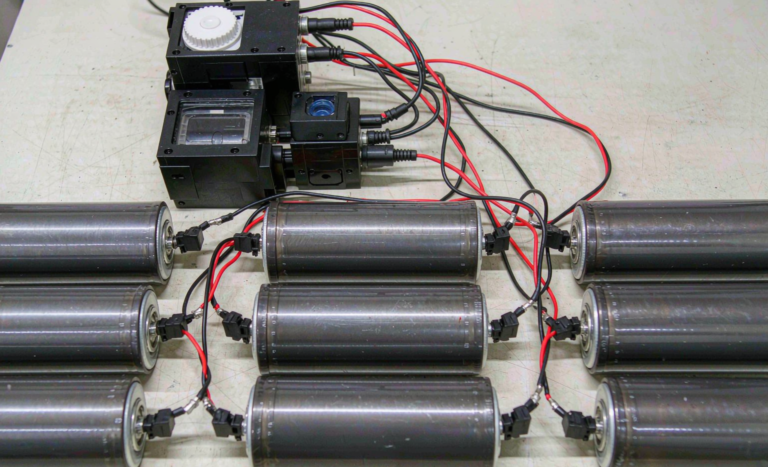
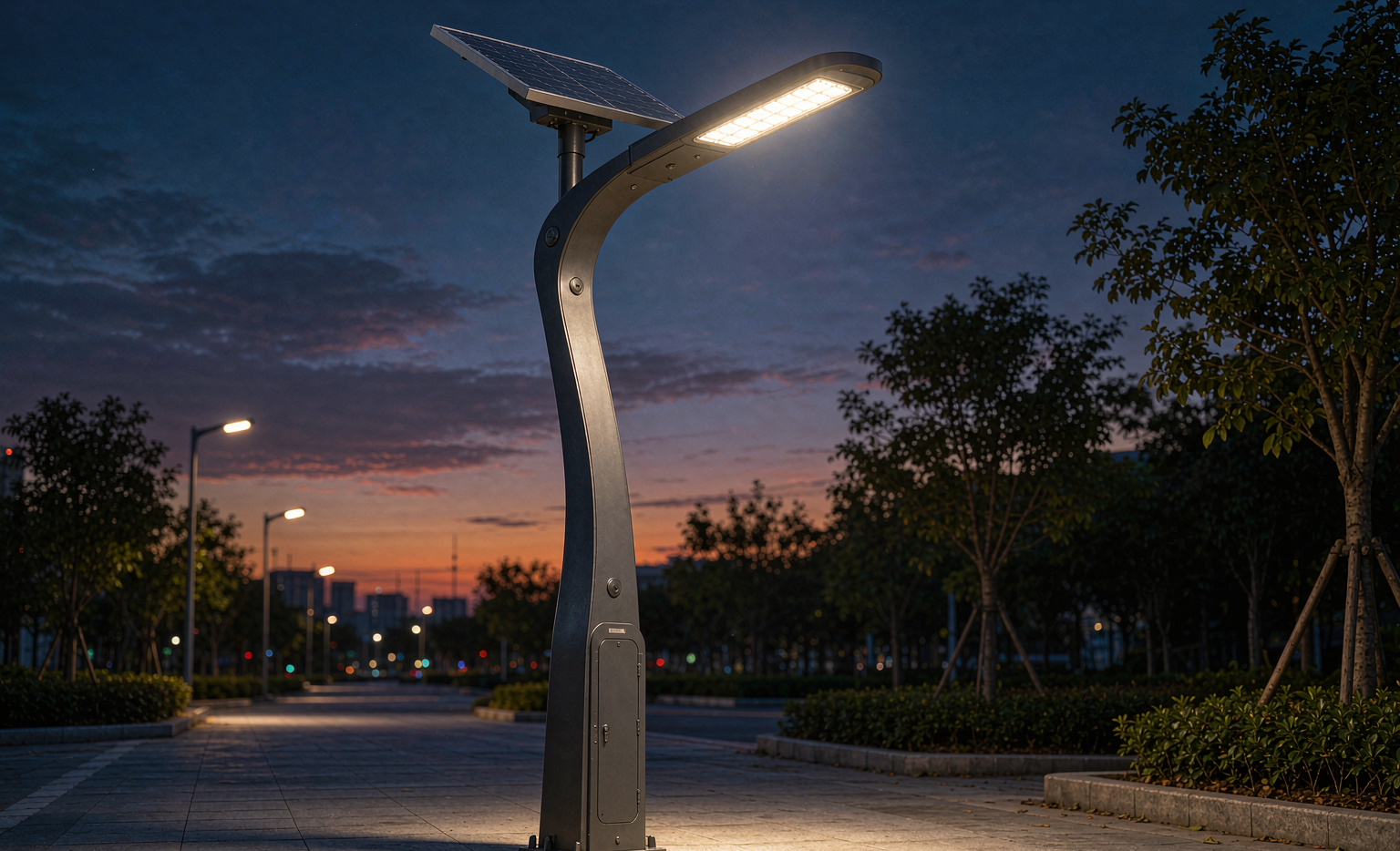
For context, the pack I will reference is a 12.8 V, 60 Ah sodium-ion module (four series Na cells at ~3.2 V nominal) inside an IP65 pole-base enclosure, fed by a 120 W monocrystalline panel and lighting a 40 W LED luminaire from dusk to dawn. The lens here is reliability, not cost or performance per se, so I will keep the discussion on what fails, why, and how we stop it.
I have since rolled that pilot into more than 1,400 installed poles across four climate zones — coastal salt fog, alpine freeze, desert heat, and temperate urban — and the failure modes have stayed stubbornly consistent. That consistency is good news: it means reliability is an engineering problem we can actually solve with a repeatable process rather than a lottery we hope to win.
The Street-Light Duty Cycle Is Brutal in Ways Spec Sheets Hide
A street light is one of the harshest duty cycles in our whole catalog, and almost nobody models it correctly. Three properties make it nasty:
- Partial-SoC, never-full cycling. In winter the panel rarely tops the pack, so the battery lives at 40–80% SoC for weeks. Chemistries that hate partial SoC (and many lithium battery packs do, through copper dissolution and Li plating) fade early. Sodium-ion sits comfortably here.
- Wild temperature swing. A black pole-base enclosure in August hits 55 °C; the same enclosure at a northern inland site drops to −25 °C at 3 a.m. The cell sees the full envelope every year.
- Zero maintenance access. Nobody climbs a pole to check a battery. If it fails, it fails silently until the light goes dark — usually the night of the mayor’s inspection.
Reliability engineering for this application is therefore about removing single points of failure and designing the pack to report its own death before it happens. That is the entire philosophy behind the 12 points below.
Point 1–3: Incoming Cell Grading Is the Real Reliability Floor
Every reliability program starts on the bench, not the pole. We grade every sodium-ion cell before it enters a pack:
- Capacity grading to a coefficient of variation under 6% (CoV < 6%), matched within a series string so the pack ages evenly.
- DCIR measurement with 4-wire Kelvin at 50% SoC, cold-corner included at −10 °C, CoV < 10% across the lot.
- Self-discharge grading using the K-factor method, rejecting any cell above 1.0 mV/day open-circuit drift — this alone catches the latent shorts that cause mysterious winter deaths 18 months later.
I tell junior engineers: a pack is only as reliable as its worst-matched cell. Grading is cheap; a truck-roll to a remote pole is not.
Point 4–5: Welds, Busbars, and Why I Trust Pure Nickel
The second most common street-light failure after cell fade is the interconnect. Vibration from wind, thermal cycling that flexes the joints daily, and corrosion at the coast all attack the weld. Our build standard:
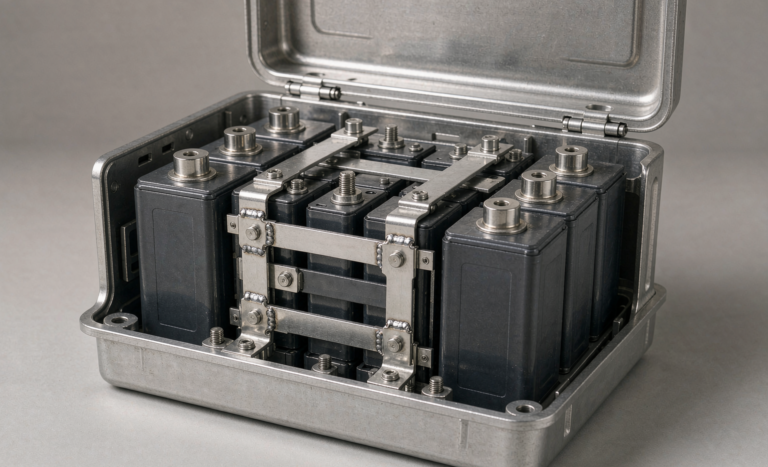
- Pure-nickel busbars, laser-welded, target < 0.15 mΩ per joint at a 25 N pull test, process capability Cpk ≥ 1.67.
- 0.3–0.7 MPa cell preload with a silicone interlayer so the cells breathe thermally without fretting the weld.
- Every joint visually and resistively scanned; a single out-of-spec joint scraps the module.
This is where a custom battery solution beats an off-the-shelf brick: we design the mechanical stack around the pole-base envelope instead of forcing a generic pack to fit.
Point 6–7: Ingress and Thermal — The Outdoor Survival Kit
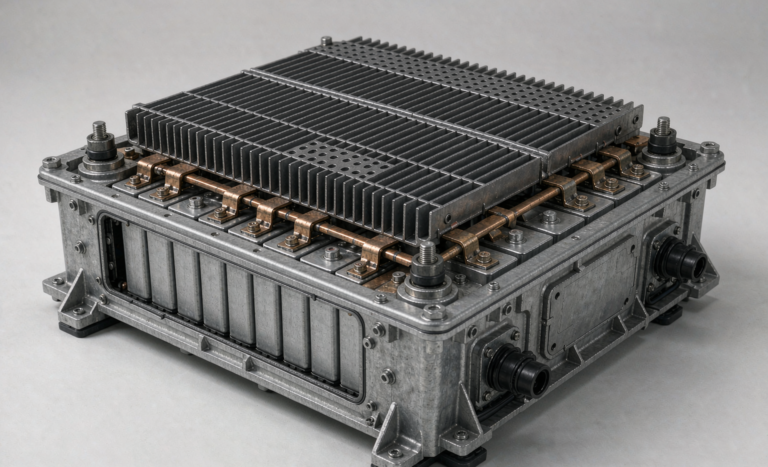
Water is the enemy. Our enclosure is IP65 as a floor, IP66 on coastal or monsoon sites, with a breather valve carrying desiccant to equalize pressure without drawing humidity. We anodize or powder-coat all metal to marine grade because a corroded terminal is a thermal event waiting to happen.
Thermally, sodium-ion is forgiving but not magic. We run passive cooling only — no pad heaters — because the chemistry still holds ~85% capacity at −20 °C, unlike LFP which needs external heat to charge below 0 °C. The BMS enforces a charge lockout below 0 °C and a soft derate above 50 °C. That single rule (no cold charging) eliminates the plating-driven swell that ends most outdoor lithium battery lives.
Point 8–9: The BMS Must Fail Safe, Not Fail Quiet
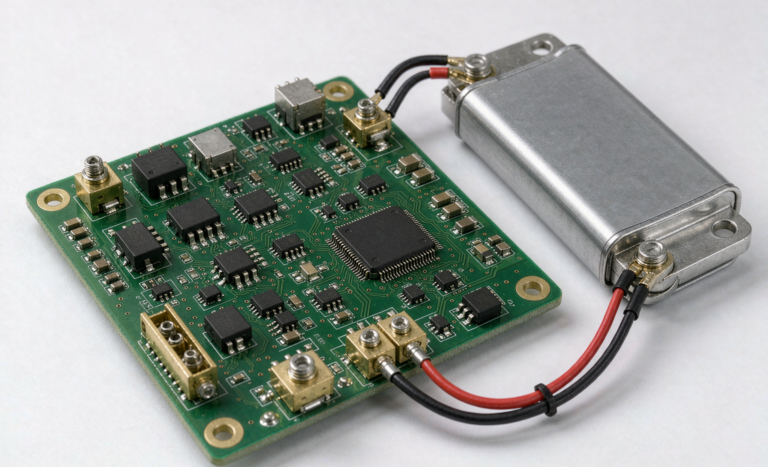
For an unattended asset, the battery management system is the reliability system. Our street-light BMS has no single point of failure on the critical path:
- Redundant voltage and temperature sensing, with contactor weld-detection so a stuck relay cannot keep the pack live.
- Passive balancing triggered every 10–15 cycles to hold cell spread under 20 mV.
- A tamper switch and mechanical lock on the pole base — theft and vandalism are a real reliability threat in many municipalities.
- Lightning and surge protection on the PV input (TVS + gas-discharge tube) because a struck controller is the most expensive “battery failure” we see.
Point 10–12: Predictive Retirement and Field Burn-In
The last three points are about knowing when to quit. We retire a sodium-ion battery from street-light duty at any of three gates: capacity below 80% of nameplate, DCIR growth above 30%, or cell-to-cell voltage spread above 40 mV at end of discharge. The BMS logs SoH remotely, so the operator gets a warning months before the light dims.
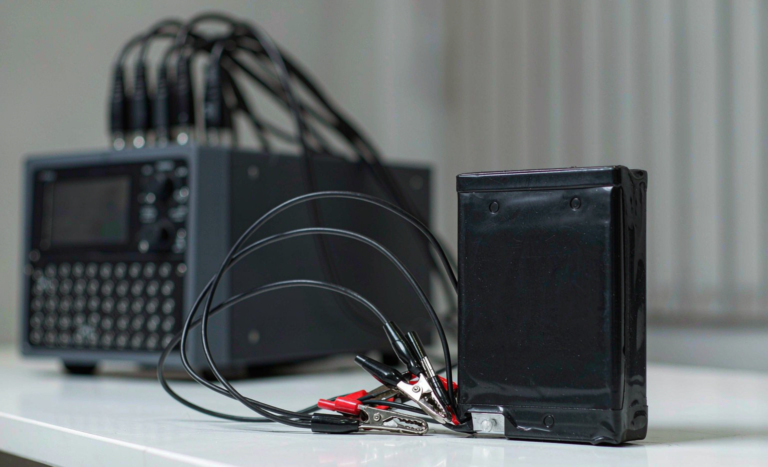
Before any unit ships, it runs a 72-hour burn-in replaying a real duty cycle, plus random teardown QA on 2% of production. We also run annual infrared thermography on a sample of installed poles. On our 400-unit coastal pilot after 18 months: under 0.8% annual return rate, 92–95% capacity retention at ~600 equivalent cycles, self-discharge under 2% per month, and zero thermal events.
Standards Floor I Will Not Ship Below
Reliability claims mean nothing without a compliance backbone. Every street-light sodium-ion pack we release passes:
- UN38.3 T.1–T.8 (transport safety, altitude, thermal, vibration, shock, external short, impact, overcharge).
- IEC 62133-2 (safety of secondary cells and batteries).
- IEC 62619 (industrial stationary cell safety).
- IEC 62477 (power electronic converter safety).
- IEC 60529 (IP ingress rating verification).
- IEC 60068 (environmental test sequences: damp heat, salt mist, thermal shock).
- UL 1973 (north-American stationary storage listing path).
These are the floor, not the ceiling. They are what let a city procurement officer sleep at night, and they are non-negotiable on my sign-off.
How Sodium-Ion Compares to LFP for This Job
I am not here to bury the lithium battery. LFP remains excellent where space is tight and energy density rules. But for street lights the trade is lopsided in sodium-ion’s favor: lower material cost with no cobalt or nickel, intrinsic cold tolerance, safer abuse response, and superior partial-SoC endurance. You give up roughly 15–25% gravimetric energy density, which barely matters when the pack sits in a pole base with room to spare. For a drone battery or a power-tool pack where every gram counts, I still reach for high-rate lithium; for a stationary pole that nobody services, sodium-ion is the reliability-smart call.
When a municipality asks for exactly this trade, we deliver it as a turnkey custom battery solution: enclosure, BMS, PV charge controller, and the sodium-ion cells engineered as one validated system rather than loose parts sourced separately. A sodium ion battery specified and protected this way is genuinely bored by the duty cycle that ages generic off-the-shelf packs prematurely — which is the whole point of a reliability program.
Frequently Asked Questions
How long do sodium-ion street light batteries actually last?
In our field data, a properly graded and BMS-protected pack holds 80% capacity past ~2,000–3,000 daily partial-SoC cycles, which maps to roughly 7–10 years of dusk-to-dawn service depending on sun hours. We retire on SoH gates, not a calendar date, so a sunny-site pack can outlive a shaded one by years.
Are sodium-ion batteries safe for unattended outdoor use?
Yes, and that is the point. Sodium-ion has no metallic-lithium plating pathway at low temperature, a higher thermal-runaway onset than aggressively optimized lithium cells, and tolerates mild overcharge far better. Combined with IP65+ enclosures and a fail-safe BMS, it is one of the safest chemistries we put on a pole.
Can sodium-ion directly replace LFP in an existing solar street light?
Electrically yes for 12.8 V/25.6 V systems — the nominal voltage is close enough that the same charge controller works after a small set-point tweak (sodium-ion tops at ~3.95 V/cell versus LFP’s 3.65 V). Mechanically, confirm enclosure volume; sodium-ion is a touch larger for the same watt-hours, which is rarely a problem in pole-base housings.
Does cold weather kill sodium-ion street light performance?
No — it is the standout advantage. Sodium-ion keeps about 85% capacity at −20 °C and charges safely without pad heaters down to 0 °C. LFP, by contrast, needs external heating and loses far more winter capacity. That is why I now specify sodium-ion for any site with hard freezes.