Home Energy Storage Performance for Farms
Fifteen years into designing lithium battery packs, I have stopped trusting the marketing sheet the moment a home energy storage unit leaves the showroom and lands on a working farm. A suburban home draws a smooth, predictable curve. A farm does not. Between irrigation pumps, milk-cooling compressors, grain dryers, and a well that kicks on at 4 a.m., the load profile is violent, seasonal, and unforgiving. If you spec a home energy storage system for a farm the same way you would for a city townhouse, you will watch it degrade in three seasons instead of ten years. This article is the field notebook I wish every agricultural buyer had: the performance numbers that actually move the needle, the standards that keep the fire marshal happy, and the failure modes I have personally pulled out of barns from Iowa to Inner Mongolia.
Why Farms Need a Different Performance Baseline
The first mistake I see is treating a farm like a bigger house. It is not. A typical rural residence peaks at 3-5 kW; a dairy operation with a vacuum pump and plate cooler can pull 12-18 kW in transients, and a center-pivot irrigator running on a VFD can demand 15-22 kW with a starting inrush three times that. When I size a lithium battery bank for a farm, I start from the motor nameplate, not the electricity bill. The battery’s continuous rating must clear the steady-state load with 20-30% headroom, and its pulse rating must survive the locked-rotor inrush for at least 3 seconds without the BMS tripping on overcurrent.
Then there is duty cycle. A home battery might cycle once a day on a self-consumption schedule. A farm battery backing up a frost-free waterer or a cold-climate greenhouse can cycle two or three times daily through winter. That triples throughput, and throughput — not calendar age — is what writes the check for replacement. I budget in megawatt-hours through the pack, not years on a wall calendar.
Capacity, Throughput, and Real Cycle Life Under Farm Loads
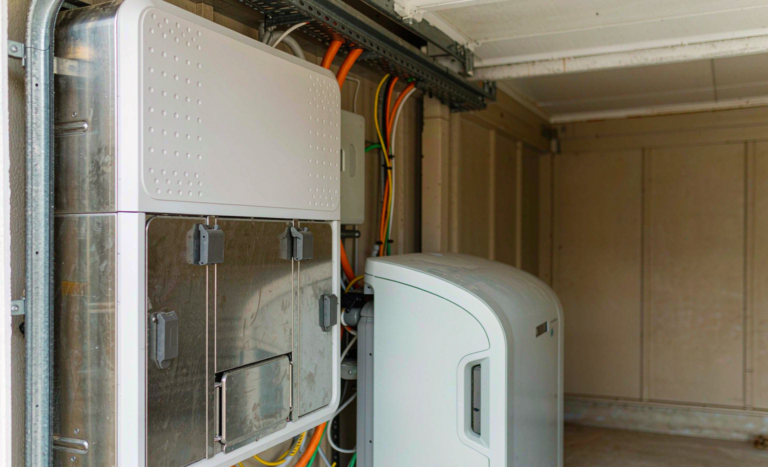
For stationary storage I standardise on LFP (LiFePO4) cells, and the reason is simple arithmetic. In our bench and field data, LFP delivers 6,000-8,000 equivalent full cycles at 80% depth of discharge and 25°C, versus 3,000-4,000 for NMC before capacity falls to 80% of nameplate. At a farm running two cycles a day, that is the difference between eight years and four. I derate explicitly for temperature: above 35°C every 10°C cuts cycle life roughly in half, so a battery crammed into a non-ventilated equipment shed in summer will die young no matter what the brochure claims.
The number I report to farmers is usable, not nominal, capacity. A 10 kWh module at 90% round-trip efficiency and an 80% usable window gives you about 7.2 kWh of delivered energy per cycle, not 10. I print that on the commissioning sheet. When a client says “the battery is smaller than advertised,” it is almost always because nobody separated nameplate from usable. A proper custom battery solution sizes to delivered kWh after efficiency and DOD, with the inverter’s own standby losses subtracted.
- Nameplate capacity: the cell-level rated Ah x V, measured at 25°C, 0.2C.
- Usable capacity: nameplate x allowed DOD (I cap at 80-90% for LFP longevity).
- Delivered capacity: usable x round-trip efficiency, minus inverter idle draw.
Round-Trip Efficiency and Where Farms Lose Energy
Round-trip efficiency (RTE) is where farms bleed money quietly. A DC-coupled system — solar directly to battery through an MPPT, then inverted once to AC — runs 92-95% RTE. An AC-coupled retrofit, where solar feeds the grid-tie inverter, gets rectified to DC, stored, then inverted back, drops to 86-89%. On a 20 MWh annual throughput, that 6-point gap is roughly 1.2 MWh of free energy lost to conversion. For a farm with a large PV array, I push DC coupling hard.
Self-discharge matters more on a farm than in a city because the bank often sits idle between seasons. Quality LFP cells self-discharge 1.5-3% per month; I have measured packs from cut-rate vendors at 8-12% monthly, which means a summer-empty vacation cabin battery arrives dead in October. I verify self-discharge at 40°C for 28 days as part of incoming inspection, and I reject anything above 3%.
Cold-Weather Performance and Thermal Management
Cold is the silent killer of rural storage. Below 0°C, charging an LFP cell without heating triggers lithium plating that permanently destroys capacity. I spec a self-heating film or warm-liquid jacket for any installation where the battery sees sub-zero winters, and I lock the BMS charge circuit below -5°C until the cells warm. Discharge is more forgiving — LFP holds 85-90% of capacity at -20°C — but internal resistance climbs, so voltage sag under a pump start gets worse exactly when you need it most.
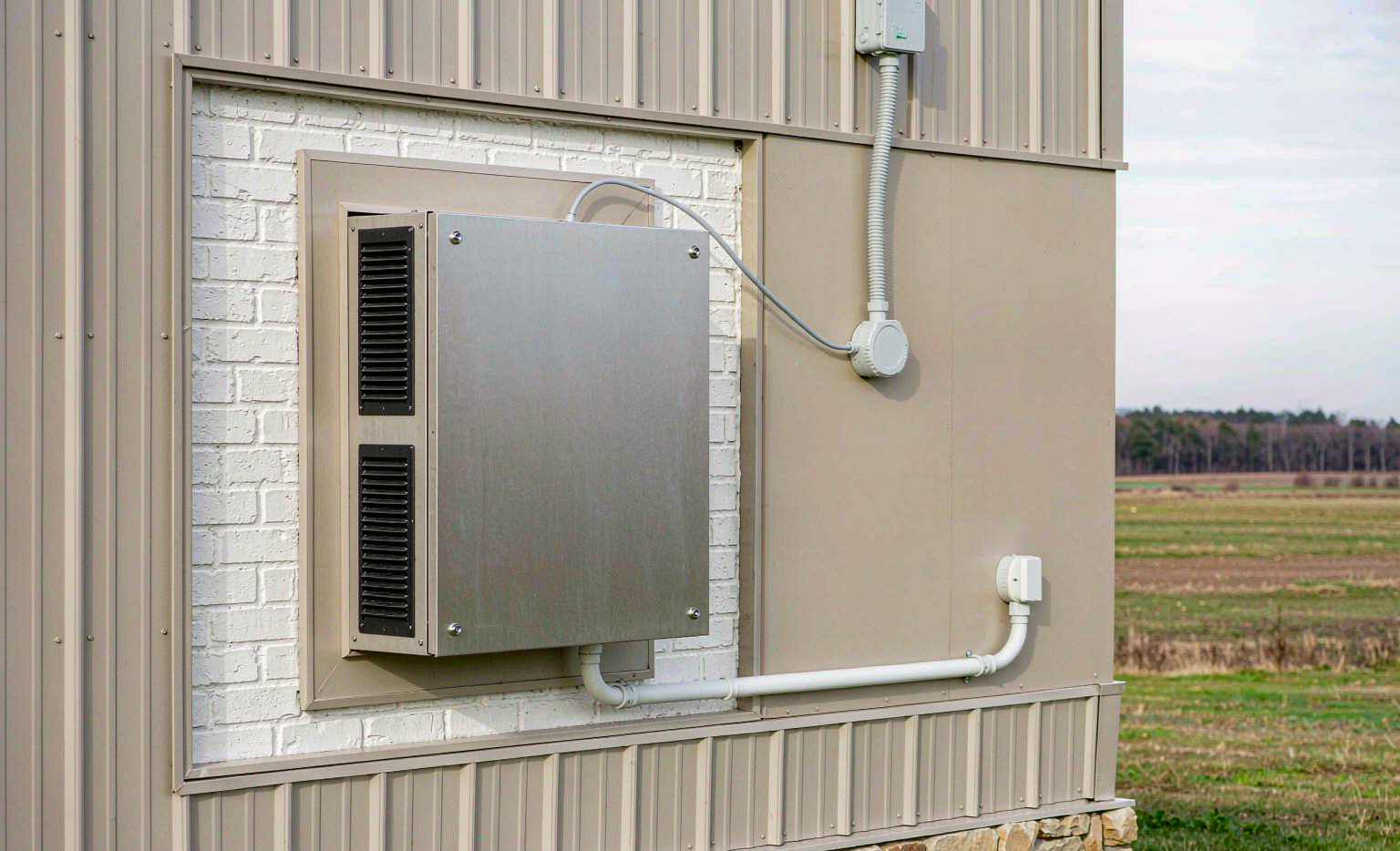
A practical rule I give clients: if the battery shares an unheated barn, the thermal management budget is not optional. A 200 W heating element drawing from the pack itself for 20 minutes each cold morning costs far less than replacing a plated pack in year two. The heater also keeps the BMS and contactors above their condensation threshold, which protects the insulation resistance I measure next.
Safety Architecture: NFPA 855, UL 9540, and Arc-Fault Protection
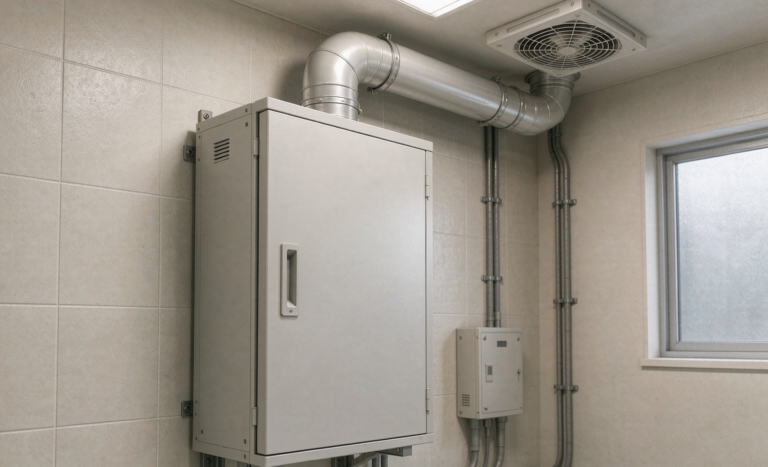
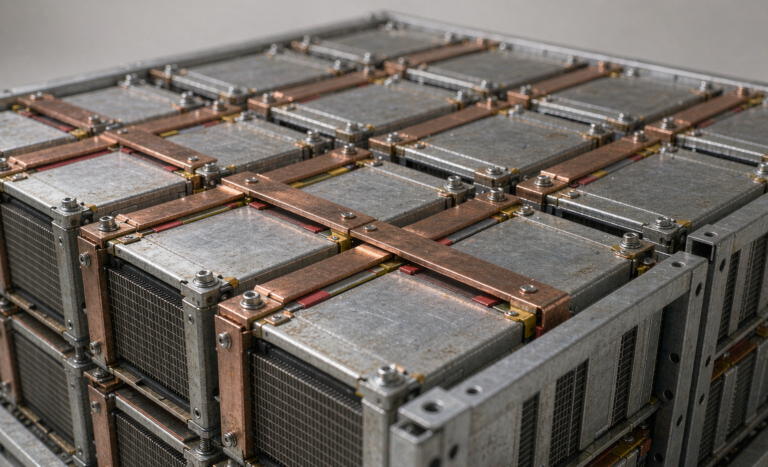
For any stationary installation I design to the same skeleton every time. Cells carry UN38.3 (T.1-T.8 transit safety) and IEC 62133-2 for portable cells; the pack and rack carry IEC 62619 for industrial stationary use and UL 1973 for the North American market. The system as installed is evaluated to UL 9540, with UL 9540A fire propagation testing behind it, and laid out per NFPA 855 spacing — I keep units at 20 kWh per enclosure and 40 kWh per dwelling unit before additional separation is required. That spacing is not bureaucracy; it is what stops a single cell fault from taking the whole barn.
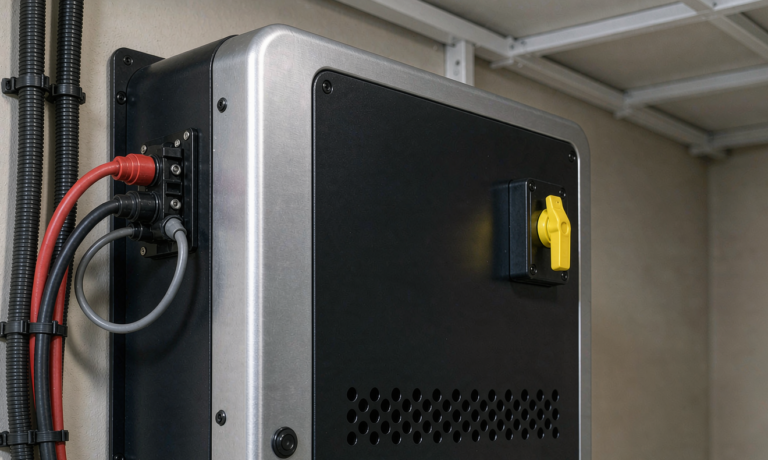
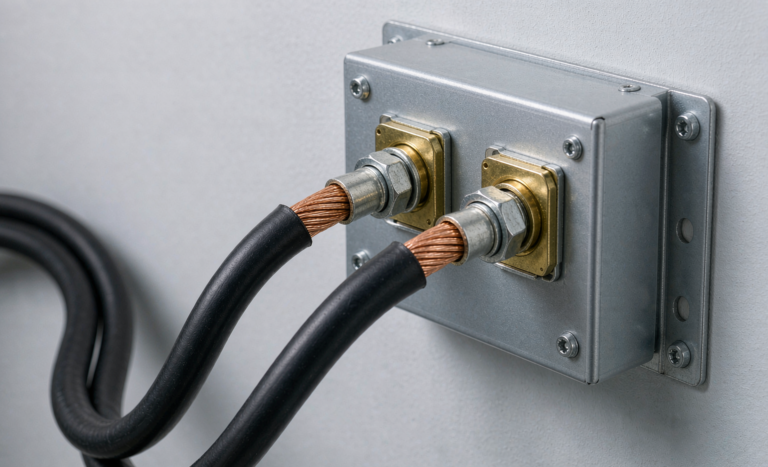
On the electrical side I mandate a ground-fault protection device at 30 mA with a 300 ms trip, insulation resistance monitoring at ≥1 MΩ at 500 VDC, and an arc-fault detector on the DC bus. I have traced three barn fires to series arcing at a loose terminal; a torque wrench to 8-10 N·m on every busbar joint, logged on the commissioning sheet, closes most of that gap. Islanding protection must drop the grid connection in under 20 ms so a downed line does not back-feed and kill a lineman.
Integration With Solar, Generators, and Three-Phase Loads
Farms rarely run single-phase. A 480 V three-phase well motor needs a battery inverter that synthesises clean three-phase, and I size the inverter’s surge rating to the motor, not the battery. I also integrate the diesel generator as a controlled AC source: when state of charge drops below my 15% floor during a multi-day outage, the system starts the gennie, charges at a C-rate the cells can take, then shuts it down — no human in the loop at 3 a.m. For grid-tied systems I follow IEEE 1547 for interconnection and IEEE 2030 for the control architecture, so the utility sees a stable, anti-islanding node.
The load-shedding sequence is the part farmers remember. I program the BMS gateway to shed non-essential loads — the shop heater, the outdoor lights — before it touches the milk cooler or the waterer. Prioritised loads get a reserved SoC band; the freezer never competes with the irrigation pump for the last amp.
Sizing a Home Energy Storage System for a Working Farm
My sizing worksheet is boring on purpose. Step one: log every motor’s running kW and starting kW for a week. Step two: total the daily kWh of critical loads — usually the cooler, the pump, and the controller — and multiply by the autonomy days you need (I use 1-2 for grid-backed, 3-5 for off-grid). Step three: divide by usable capacity and RTE. Step four: add the pulse margin. A 5 kW critical load at 90% usable, 2-day autonomy, needs roughly 11 kWh delivered, so I quote a 14 kWh nameplate bank and leave 20% for degradation headroom.
I always leave a comms port open. A home energy storage bank that cannot report cell-level voltage and temperature to a dashboard is a black box, and black boxes fail without warning. Every pack I commission pushes telemetry — per-group voltage, Max-Min delta, SoC, and fault codes — to a cloud log the owner can open from a phone. That single feature has caught more failing cells in month one than any lab test I run.
Frequently Asked Questions
How long does a home energy storage battery last on a farm?
With LFP cells at 80% DOD and temperature-controlled siting, 6,000-8,000 cycles or 10-15 years is realistic. Throughput, not calendar time, drives wear — a bank doing two cycles a day ages faster than one cycling nightly. I warranty against delivered MWh, not just years, because that is what actually correlates with failure.
Can a home energy storage system run a well pump or irrigation motor?
Yes, if the inverter’s surge rating covers the motor’s starting inrush, which can be 3x running power for seconds. I size the inverter to the locked-rotor amps and keep 20-30% battery headroom, and for three-phase pumps I use a true three-phase inverter rather than a single-phase unit with a rotary converter.
Will the battery charge in freezing weather?
Not safely without heating. Charging LFP below 0°C without a warming cycle causes lithium plating and permanent capacity loss. I fit self-heating or liquid thermal management and lock charging below -5°C until cells warm, while discharge still works down to -20°C at reduced capacity.
What certifications should I require for a farm installation?
At minimum UN38.3 and IEC 62133-2 for cells, IEC 62619 and UL 1973 for the stationary pack, UL 9540 with UL 9540A for the installed system, and NFPA 855 spacing compliance. Grid-tied units need IEEE 1547 interconnection. I refuse to commission a bank missing any of these.
Is a drone battery chemistry different from farm storage?
Different priorities. A drone lithium battery chases energy density and pulse C-rate at the cost of cycle life; a farm lithium battery chases cycle life and safety at the cost of weight. The cell chemistry families overlap, but the pack design, BMS thresholds, and certification path are tailored to each duty. A custom battery solution for one does not transfer to the other without revalidation.