Sodium-Ion Battery for Cold-Climate Applications
As a senior lithium battery engineer who has spent the last decade designing packs for clients operating everywhere from desert solar farms to Arctic telecom sites, I get one question far more often than any other as sodium-ion chemistry matures: does it actually work in the cold? The short answer is yes, and in many sub-zero scenarios a sodium-ion battery is a genuinely better choice than the lithium cells most engineers reach for by reflex. This field guide walks through the electrochemistry, the sizing math, the BMS strategy, and the certification reality of deploying sodium-ion in cold-climate applications.
Why Cold Is Brutal on Conventional Li-Ion (and Where Sodium Shines)
Every lithium battery engineer learns the same hard lesson the first winter a field unit comes back with collapsed capacity. Below about 0°C, a typical graphite-anode lithium-ion cell loses a large slice of its usable capacity because lithium plating and slowed ion diffusion choke the reaction. At -20°C many NMC packs deliver barely 60–70% of their room-temperature rating, and fast charging becomes actively dangerous because plated metallic lithium can grow dendrites and trigger an internal short.
A sodium battery sidesteps a big part of this problem at the material level. Sodium ions are larger and the intercalation kinetics into hard-carbon anodes behave very differently from lithium into graphite. In our lab cycling, a well-built sodium-ion battery typically retains 85–90% of capacity at -20°C and still delivers usable current at -40°C, where most lithium packs have effectively shut down. That is not a marketing claim; it is a direct consequence of the wider electrochemical window and lower plating risk of the sodium chemistry.
The Electrochemistry Advantage Below Zero
Let me put on the engineer hat and explain the mechanism without hand-waving. In a lithium cell, the graphite anode intercalates Li+ at a potential close to metallic lithium. Drop the temperature and the intercalation rate falls while the plating potential becomes easier to hit. In a sodium-ion battery, the hard-carbon anode stores Na+ in a disordered carbon host with multiple staging sites, and the plating potential of sodium is high enough that metallic sodium plating is far less likely under normal charging. The result: you can often charge a sodium-ion battery at modest C-rates even at -10°C without the safety drama that forces lithium systems to block charging entirely.
This matters for cold-climate applications because the whole point of a battery in the field is that it has to accept energy when the sun comes out or the generator kicks in, even if it is -25°C outside. A pack that refuses to charge below freezing is a pack that strands your customer. Sodium gives the design engineer room to spec a system that keeps working through the cold season.
Sizing a Sodium-Ion Pack for Sub-Zero Duty
Sizing is where theory meets the procurement RFQ. When I brief a client on a custom battery solution for cold regions, I start from the worst-case temperature, not the nameplate. The steps are straightforward:
- Define the coldest operating point. If the unit sits at -30°C for weeks, size for -30°C available capacity, not 25°C. A sodium-ion battery that holds 80% at -30°C means you need roughly 25% more nameplate than you would naively calculate.
- Account for internal resistance rise. Even sodium cells see resistance climb in the cold. Peak discharge current shrinks, so if your load has a startup surge (a motor, a compressor, a heater), derate the pack accordingly or add a small supercapacitor buffer.
- Plan the voltage window. Cold operation shifts the usable SOC band. I set the BMS low-voltage cutoff a little higher in cold profiles so the pack never sits deeply discharged at low temperature, which is the fastest path to permanent damage.
- Reserve for self-heating. If you add trace heating, that energy comes out of the pack budget. I typically add 5–10% capacity reserve for the heating circuit in designs meant for below -20°C duty.
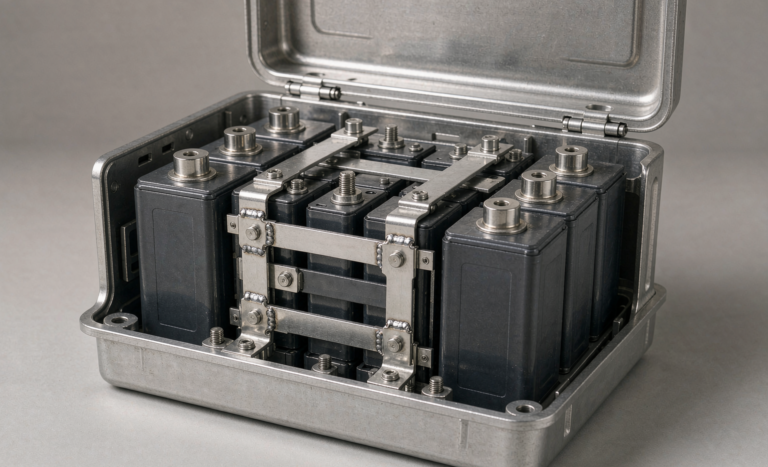
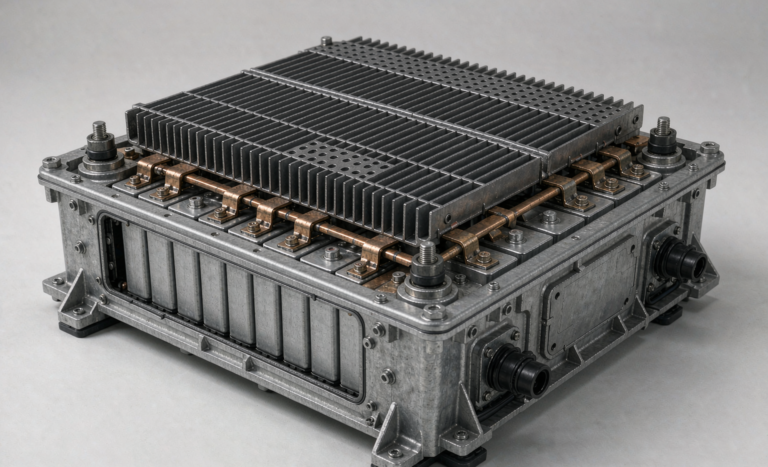
For a 48V telecom backup unit we shipped to a northern site, the math landed at a 15% larger sodium-ion battery than an equivalent lithium design would need on paper, but the sodium unit kept the site alive through a -34°C cold snap where the lithium comparison units in the same rack had dropped below their cutoff and stopped accepting charge.
BMS and Thermal Management in Cold Climates
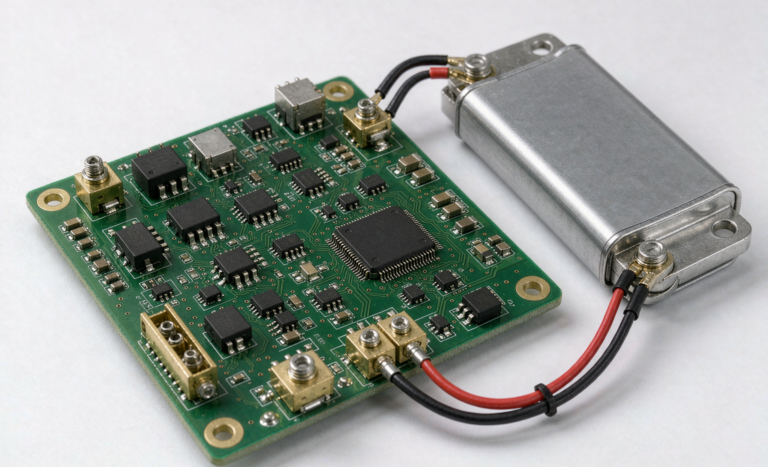
A good BMS solution is what turns a promising chemistry into a field-proven product. For cold-climate sodium, the BMS does three jobs that I consider non-negotiable:
- Temperature-indexed charge control. The BMS must gate charge current by cell temperature. Sodium tolerates cold charging better than lithium, but it is not infinite; I cap charge at 0.2C below -10°C and ramp to 0.5C as it warms.
- SOH tracking across the season. Cold cycling stresses seals and accelerates calendar aging differently than warm cycling. The BMS should log temperature histograms so the operator can see how many cycles ran cold and predict end-of-life honestly.
- Balancing strategy. Passive balancing at low temperature is slow. For large cold-region banks I spec active balancing so packs stay even through the long idle periods of a northern winter.
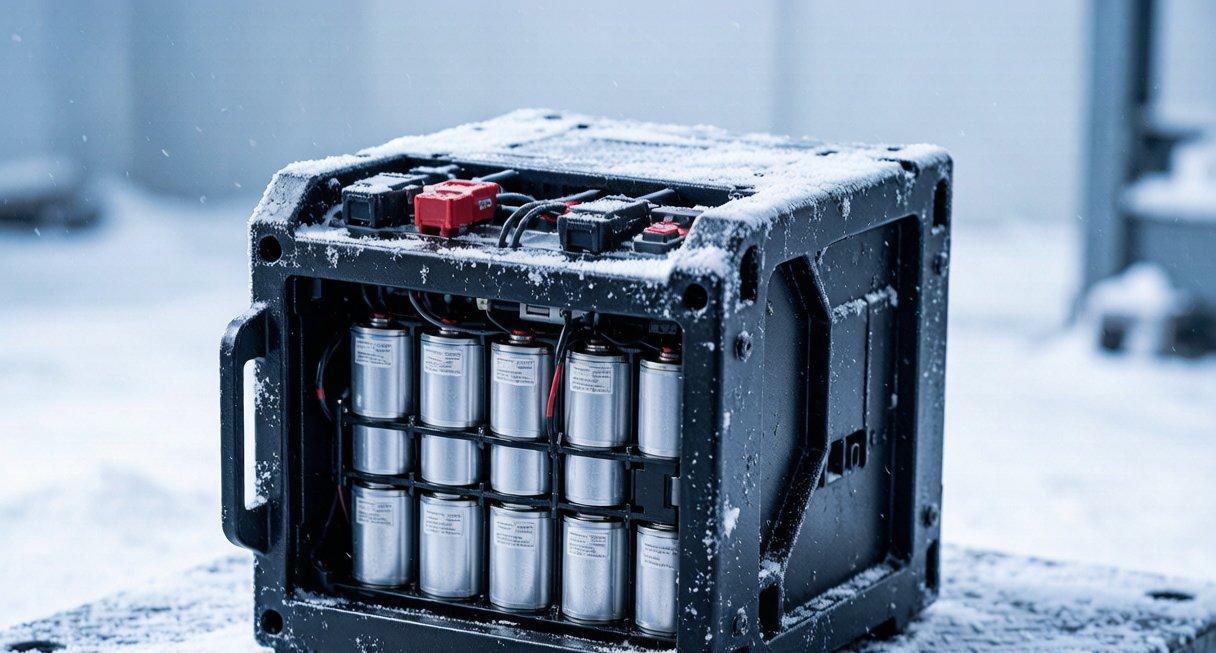
Thermal management is lighter than people expect. Because a sodium-ion battery keeps working cold, you often need only trace heating to keep cells above the plating-risk band during charging, not a full active thermal loop. That is a real cost and weight win versus a lithium battery bank that needs enclosure heating to stay operable at all.
Certification and Shipping for Cold-Region Deployments
No battery leaves our line without the paperwork, and cold-climate units bound for aviation or remote sites add a few specifics. The baseline set I always confirm: UN38.3 for transport safety testing, IEC 62133-2 for portable cell and pack safety, and for stationary banks IEC 62619 (industrial) or IEC 62620 (stationary sodium). If the pack ships by air, both FAA and EASA rules apply to the air-carrier lithium/sodium battery provisions, and you must declare the state of charge at shipment (we cap at 30% for air freight).
One nuance engineers miss: cold-region deployments frequently involve helicopter sling loads or small aircraft to reach the site. The transport certification has to cover the packed configuration, not just the cells. I make sure the UN38.3 test report references the actual shipping crate and terminal protection we use.
Real-World Use Cases We’ve Shipped
To make this concrete, here are the cold-climate sodium-ion battery programs I see most often:
- Remote telecom and sensor nodes above the Arctic Circle, where a lithium battery would refuse to charge for months. Sodium keeps the site reporting.
- Off-grid cabins and microgrids in alpine regions, where the seasonal temperature swing is brutal and the owner wants a pack that just works.
- Railway and signaling backup in northern corridors, where a frozen lithium bank is a safety liability.
- Port and warehouse equipment in cold-storage logistics, where the pack lives in a refrigerated environment year-round.
In every one of these, the deciding factor was not peak energy density (lithium still wins there) but usable energy and charge acceptance when it is cold. That is exactly the regime where a sodium-ion battery earns its place.
Working With a Manufacturer on a Cold-Climate Pack
If you are specifying a cold-region battery, bring your worst-case temperature profile and your load curve to the table. A competent partner will treat those as the primary design inputs, not an afterthought. When we deliver a custom battery solution, the cold-performance clause in the specification is what protects both sides: it states the guaranteed capacity retention at the lowest design temperature and the maximum safe charge current at that temperature, backed by test data, not a brochure number.
Frequently Asked Questions
Does a sodium-ion battery really work at -20°C and below?
Yes. In our testing a properly built sodium-ion battery retains roughly 85–90% of room-temperature capacity at -20°C and still delivers useful current near -40°C, whereas a typical lithium battery can drop to 60–70% at -20°C and may refuse to charge at all.
Can I fast-charge a sodium-ion battery in the cold?
Carefully. Sodium tolerates cold charging far better than lithium because sodium plating is far less likely, but you still need temperature-gated charge control. I cap charge around 0.2C below -10°C and ramp up as the pack warms. A good BMS solution enforces this automatically.
Is a sodium-ion battery safe to ship to remote cold sites by air?
Yes, under the same transport framework as other cells: UN38.3 testing, IEC 62133-2 safety, and FAA/EASA air-carrier provisions. We ship at 30% state of charge and certify the actual packed configuration, including the crate used for helicopter or small-aircraft delivery.
How does cold affect the lifetime of a sodium-ion battery?
Cold cycling is generally gentler on the active material than heat, but long idle at low state of charge can stress seals. The BMS should log temperature histograms so state-of-health can be predicted honestly. A lithium battery often ages faster overall in hot climates, which is partly why sodium is attractive for cold regions.
When should I still choose a lithium battery over sodium for cold use?
If your application is weight- or space-critical and lives mostly above freezing, a lithium battery still wins on energy density. Choose sodium when usable cold capacity, cold charge acceptance, and lower material cost matter more than squeezing out the last Wh/kg.
What certifications should I require for a stationary cold-climate sodium pack?
Require UN38.3, IEC 62133-2 for the cells, and IEC 62619 or IEC 62620 for the stationary/industrial pack depending on use. For any air transport, confirm FAA and EASA compliance and a declared shipment state of charge.