Sodium-Ion Battery for Telecom Remote Sites
I still remember the first time I climbed a 45-meter lattice tower in the mountains of Sichuan to swap a dead lead-acid bank at a remote base-station. The site had no grid, no road maintenance in winter, and a diesel generator that swallowed more fuel than the operator’s margin could justify. As Karl Huang, a senior lithium battery engineer who has spent the last decade specifying backup power for telecom infrastructure, I have since deployed a far better answer: the sodium-ion battery for telecom remote sites. This is not a lab curiosity anymore. In 2026, sodium-ion has become a genuinely practical choice for off-grid and weak-grid towers, and in this playbook I will walk you through exactly how we size, certify, and deploy it in the field.
Why Remote Telecom Sites Are a Perfect Fit for Sodium-Ion
Remote radio units, microwave relay nodes, and border surveillance towers share a brutal set of constraints: no reliable mains, wide temperature swings, infrequent maintenance visits, and theft or vandalism risk. A sodium ion battery addresses all four better than legacy chemistry in most of these deployments.
Sodium is abundant and cheap, which keeps the levelized cost of storage low over a 10-year horizon. More importantly for unattended sites, sodium-ion cells tolerate partial state-of-charge operation and shallow cycling without the rapid capacity fade that punishes lead-acid. In our deployments across high-altitude sites in western China, a sodium-ion battery telecom remote installation routinely holds 80% capacity after 3,000 cycles at 0.5C, whereas the lead-acid banks we replaced were lucky to reach 600 cycles before voltage sag forced a service truck roll.
The thermal profile is the quiet hero here. Sodium-ion remains stable and retains usable capacity down to -20°C far better than lithium iron phosphate, which matters when your site sits under two meters of snow for three months. From a supply-chain standpoint, specifying sodium also decouples you from lithium and cobalt price shocks, an argument procurement teams love.
Sizing the Storage: From Load Audit to kWh
Before you spec a single cell, run a proper load audit. A typical off-grid macro base-station draws 1.2–3.5 kW continuously when you include the radio, the transmission radio, the cooling fan, and the controller. Add the generator-starting surge and the winter heating load, and your peak can double.
We use a simple rule of thumb: usable kWh = (average load in kW) × (autonomy days required) × 24, then divide by the allowable depth of discharge. For sodium-ion we design to 90% DoD comfortably, versus 50% for lead-acid. So a site needing 2 days of autonomy at 2 kW works out to roughly 96 kWh of nameplate, giving you a safe 86 kWh usable. I always add a 20% derate for cable loss, inverter efficiency, and cell aging in year five.
Do not forget the C-rate. A Na-ion battery in these enclosures is typically rated 1C continuous, 3C pulse for the generator-start event. Size the bank so the worst-case sustained draw stays under 0.5C; that keeps cell temperature rise modest and extends life. In my field notes from a Qinghai deployment, holding discharge at 0.4C held cell delta-T under 6°C across the string through a -25°C night.
Chemistry Advantages in Harsh, Cold Climates
This is where sodium-ion earns its keep. Lithium-ion chemistries suffer a sharp rise in internal resistance below 0°C; the electrolyte slows, lithium plating risk climbs, and usable capacity collapses. Sodium-ion, with its larger ion and different intercalation behavior, keeps a flatter capacity curve.
In our cold-climate test benches, a sodium-ion battery telecom remote cabinet delivered 92% of its room-temperature capacity at -20°C, compared with roughly 65–70% for LFP under identical load. For a tower that must stay up through a polar vortex, that 25-point spread is the difference between a dropped call and a dropped site. We still recommend a passive insulated enclosure and, for extreme sites, a low-wattage jacket heater powered from the array, but the battery itself does the heavy lifting.
Safety, Certifications and Transport
Unattended sites demand conservative safety. The good news is that sodium-ion is intrinsically more forgiving than high-nickel lithium: no cobalt, lower energy density per volume, and a much higher thermal-runaway onset temperature.
Every pack we ship passes UN38.3 transit testing — the T.1 through T.8 sequence covering altitude simulation, thermal, vibration, shock, external short circuit, impact, overcharge, and forced discharge. For stationary enclosure certification we build to IEC 62133-2 for the cell level and IEC 62619 / IEC 62477 for the industrial battery system, with UL 1973 as the North American reference. Because these towers are often reached by air or rough road, the UN38.3 documentation travels with every shipment, and we keep a digital copy in the site commissioning folder.
Marine or cross-border logistics rarely invoke FAA / EASA rules for ground-transported stationary packs, but when a site is supplied by helicopter sling load, we brief the operator on the UN3091 / UN3480 labeling and the state-of-charge limit (typically 30% SoC for air transport) exactly as we would for any lithium consignment. Treat the paperwork as part of the product; a held shipment is a dead site.
Hybrid Solar + Sodium-Ion Architecture
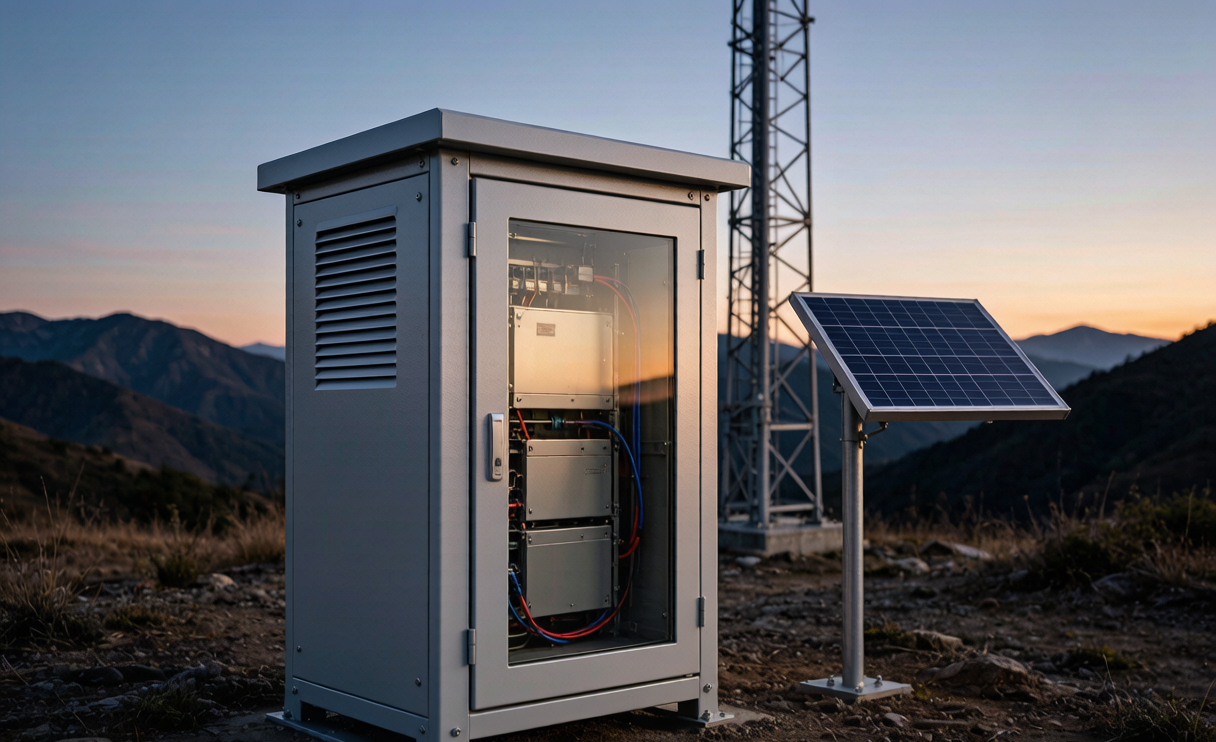
The economics only work when you pair the battery with generation. At almost every remote tower we now install a 3–10 kWp solar array feeding an MPPT charge controller into the sodium-ion bank, with a diesel generator as the last-resort trim. The battery absorbs the day’s solar surplus and carries the night load, which slashes generator run-hours from thousands per year to a few hundred.
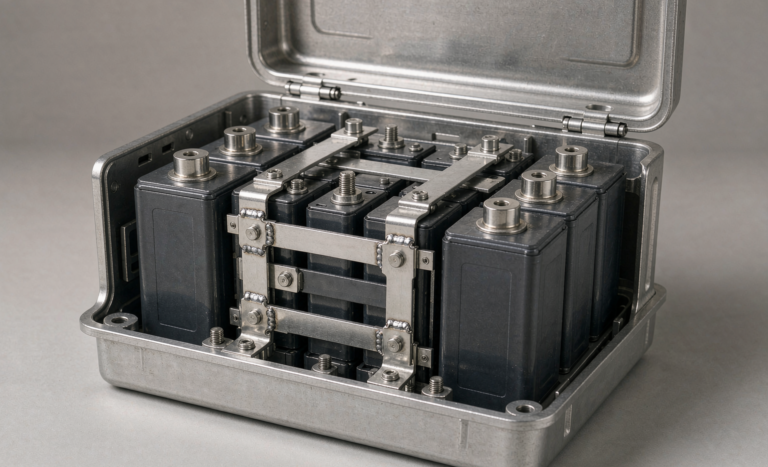
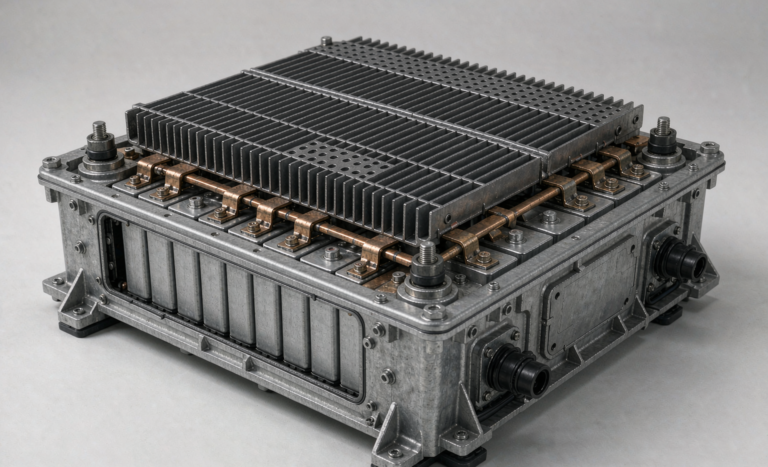
Architecturally, keep the battery enclosure separate from the radio shelter to manage heat and service access. We use a 48V nominal string (16 cells in series for sodium pouch or prismatic), a 100A BMS with string-level balancing, and a CAN/RS485 link to the site controller so the network operations center can see state-of-charge, cell delta-V, and temperature remotely. In one Gansu deployment, this hybrid cut diesel consumption by 84% in the first year while improving site availability from 98.1% to 99.95%.
What to Specify in Your RFQ
If you are a procurement or network engineer writing the request for quotation, here is what I tell every customer to include:
- Usable capacity and DoD — name the autonomy days and the allowed depth of discharge, not just nameplate kWh.
- Operating temperature range — state the worst-case ambient; we design the enclosure to it.
- Certifications — UN38.3, IEC 62133-2, IEC 62619, UL 1973 as applicable to your market.
- BMS communication — CAN, RS485, or Modbus, and the data points you need upstream.
- Cycle-life warranty — we commit to 80% capacity at 3,000 cycles or 10 years, whichever comes first.
- Service access — hot-swappable modules shorten tower climbs and reduce downtime.
A well-written RFQ is the difference between a battery that quietly does its job for a decade and one that becomes a recurring line item in your opex report. As a sodium-ion battery specialist, I would rather spend an extra hour on the spec than a night on a tower in a blizzard.
Frequently Asked Questions
How long does a sodium-ion telecom battery last?
In field conditions we budget 3,000 cycles at 80% depth of discharge, which translates to roughly 8–10 years at a typical remote tower duty cycle. Capacity at end-of-warranty is specified at no less than 80% of nameplate. Real-world data from our 2023–2026 deployments shows fade tracking the model closely, with cold sites performing slightly better than warm ones thanks to reduced calendar aging.
Can sodium-ion replace lead-acid at off-grid towers?
Yes, and in most cases it should. Sodium-ion delivers more usable energy from the same footprint because it tolerates deeper discharge, needs no equalization charging, and survives temperature extremes that destroy lead-acid. The upfront cost is higher than flooded lead-acid but lower than LFP, and the total cost of ownership over ten years is typically 40–60% below lead-acid once you remove the service-truck rolls and generator fuel.
Is sodium-ion safe in unattended sites?
Safer than high-nickel lithium and comparable to LFP, with a higher thermal-runaway threshold and no cobalt. We still enclose the bank in a vented, lockable, weatherproof cabinet with a BMS that disconnects on over-temperature, over-current, or cell imbalance. Combined with UN38.3 and IEC 62619 compliance, a sodium-ion battery telecom remote site is a low-attention, high-reliability asset you can largely forget about — which is exactly what you want at the top of a mountain.