Home Energy Storage Virtual Power Plant Participation
When a homeowner asks me whether their new battery is “VPP-ready,” they usually picture something futuristic. After fifteen years on the lithium-battery engineering bench — most recently designing residential packs at Horizon Power — I tell them the truth: a home energy storage virtual power plant is less sci-fi than it sounds, and far more dependent on unglamorous details like certification paperwork and latency budgets than on any exotic chemistry.
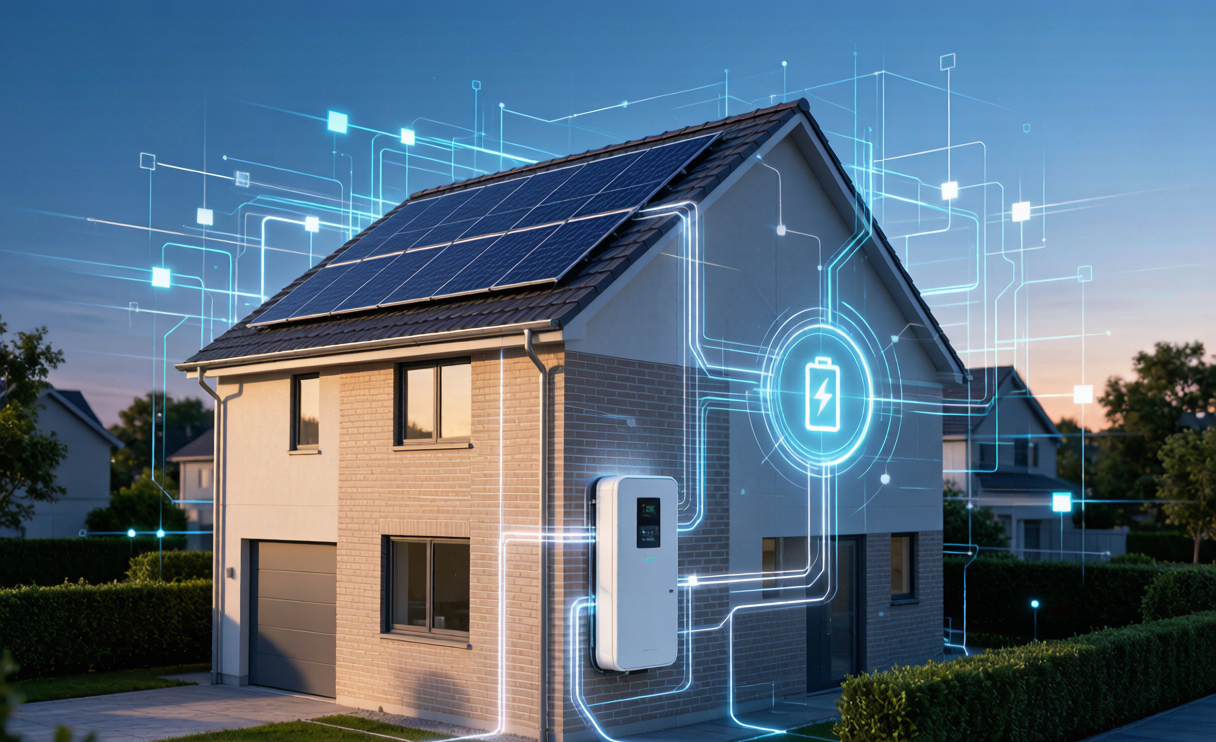
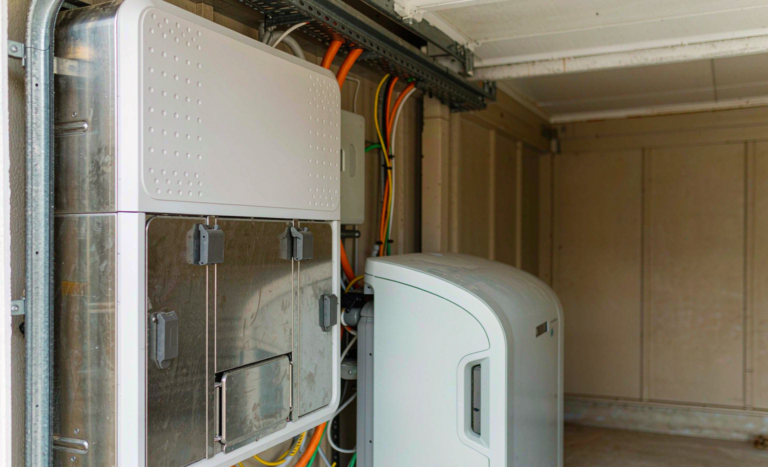
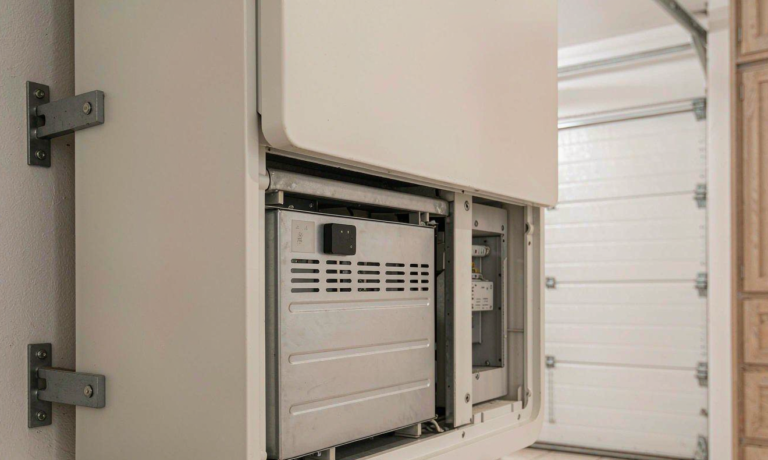
A VPP does not physically route electrons from your garage to a neighbor’s toaster. It aggregates the dispatchable capacity of thousands of distributed systems and sells that pooled resource into wholesale energy markets or grid-services programs. Your home energy storage unit is one cell inside a very large, software-defined organism. If you understand the engineering rules that let a single pack play nicely inside that organism, you will spec, install, and monetize it far more effectively.
What a Virtual Power Plant Actually Is (and Is Not)
A virtual power plant is a fleet-management layer. On the supply side, it stacks the available energy and power of many small assets — rooftop solar, batteries, smart EV chargers, even controllable loads like water heaters. On the demand side, it bids that stack into markets: energy (buying low, selling high), capacity (standing reserve for peak events), and frequency regulation (responding to grid imbalance in seconds).
The “virtual” part means there is no central power station. The “plant” part means the aggregation behaves like one to the grid operator. From an engineer’s seat, the practical consequence is simple: your residential battery is no longer just a backup device. It is now a grid asset with uptime, latency, and telemetry obligations.
This distinction matters because it changes how we design the pack. A pure backup battery can sit idle for months. A VPP battery may be cycled five to ten times a week on someone else’s schedule. That difference drives cell selection, thermal design, and warranty structure — topics I will come back to.
How Home Energy Storage Connects to a VPP
The connection is three layers, and each has a failure mode I have personally debugged:
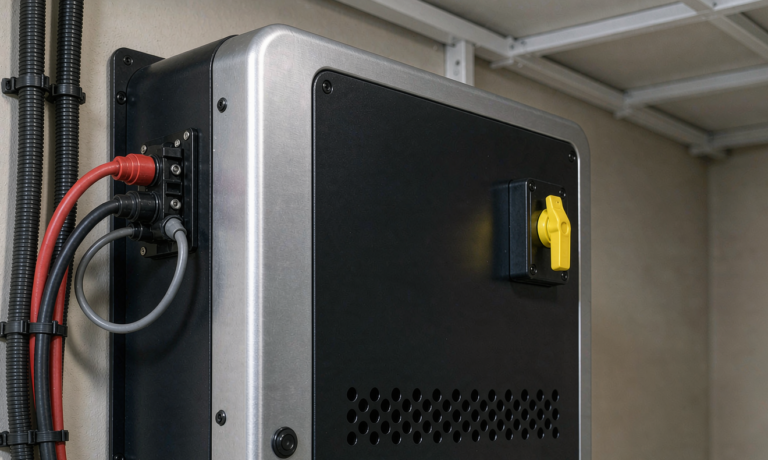
- Local controller. The hybrid inverter or energy-management system (EMS) inside the home talks to the battery over CAN bus, RS-485, or a proprietary battery-management protocol. This is where state-of-charge (SOC) accuracy and safety limits live.
- Aggregator gateway. A small communications box or software agent links the home to the VPP operator over broadband or cellular. It reports telemetry and receives dispatch commands.
- Cloud orchestration. The VPP operator’s platform forecasts load, prices, and grid signals, then sends optimized dispatch instructions back to each home.
The weakest link is almost always the middle one. I have seen a perfectly good battery storage system fail VPP enrollment simply because the home’s Wi-Fi dropped for twenty minutes during a firmware update. For mission-critical programs, I now insist on a cellular fallback or at minimum a wired connection with a UPS on the gateway.
The Engineering and Certification Baseline
Here is where B2B buyers and installers get burned if they skip homework. A battery that is safe in a lab is not automatically legal to connect to the grid. The certification stack for VPP-participating residential systems is non-negotiable:
- UL 9540 — the overarching safety standard for energy storage systems and equipment. This is the baseline for any installed residential unit in North America.
- UL 9540A — the test method for thermal runaway fire propagation. Aggregators and utilities increasingly require it because a VPP implies many units in dense neighborhoods.
- IEEE 1547 — the interconnection standard. It defines how your system must behave during grid disturbances, including ride-through and anti-islanding. VPP dispatch is meaningless if the inverter trips offline the moment frequency wobbles.
- IEC 62109 — safety of power converters for use in photovoltaic power systems. Relevant for the inverter half of the system.
- IEC 62619 — industrial and residential stationary battery safety. We use this as the design baseline even on UL-certified programs because it is recognized across more markets.
- UL 1741 and UL 1973 — inverter interconnection and stationary battery cell/module safety, respectively.
- UN38.3 — the transport test. Not a grid standard, but every pack we ship crosses a border at some point, so the T.1 through T.8 tests (altitude, thermal, vibration, shock, external short, impact, overcharge, forced discharge) are part of our release checklist.
In the European market the equivalents shift toward IEC 62477 and EN 50549 for grid connection, but the engineering intent is identical: prove the lithium battery cannot hurt people or destabilize the grid, then prove it can talk to the grid politely.
Communication Protocols and Aggregator Software
Once certified, the battery has to speak the right dialects. Most VPP operators in North America lean on OpenADR (Automated Demand Response) for event signaling and either Modbus or SunSpec for device-level telemetry. In Europe, IEC 61850 and EEBus are gaining ground. The practical risk: an installer buys a great battery that only speaks Modbus, but the local utility program requires OpenADR 2.0b. Enrollment fails, the homeowner earns nothing, and the finger-pointing begins.
My rule of thumb for any custom battery solution destined for VPP work: build the EMS with a protocol-agnostic abstraction layer. We expose a single internal model of the battery (SOC, SOH, power limits, temperature) and map it to whatever the aggregator needs. That way a single hardware platform can serve three different VPP programs across two continents without a redesign.
Latency is the other silent killer. Frequency-regulation programs can demand a response within two to four seconds of a grid signal. If your gateway buffers telemetry for thirty seconds to save bandwidth, you will be disqualified from the most lucrative programs. I size the communications path for sub-second telemetry at the pack level and accept the cellular data cost as a cost of doing business.
Sizing, Inverters, and the Cycling Math
VPP economics live or die on depth of discharge (DOD) and cycle count. A homeowner who buys a 10 kWh pack expecting 10 kWh of daily VPP contribution will be disappointed; the usable window after reserve and degradation margins is closer to 7–8 kWh. Worse, if the aggregator calls for a full discharge-and-recharge cycle every day, a calendar-life warranty of ten years may collapse into a cycle-life limit of seven years.
When I size a system, I run the cycling math backward from the program’s dispatch profile, not forward from the panel capacity. If the local VPP averages 1.2 equivalent full cycles per week, that is roughly 62 cycles per year — trivial for a well-built LFP pack rated at 6,000 cycles. But some arbitrage programs push 2 cycles per day, which is 730 cycles per year and a very different warranty conversation. The inverter’s continuous power rating matters too: a 5 kW inverter on a 10 kWh battery gives you two hours of full discharge, which fits most capacity programs but misses fast frequency products that want power bursts.
Real-World Pitfalls I See in the Field
A few patterns repeat across the deployments I review:
- Reserve starvation. Homeowners join a VPP for the rebate, then get angry when the battery is empty during a real outage because the aggregator used the reserve. Solve it with a configurable backup reserve that the homeowner controls, and make the trade-off explicit at sign-up.
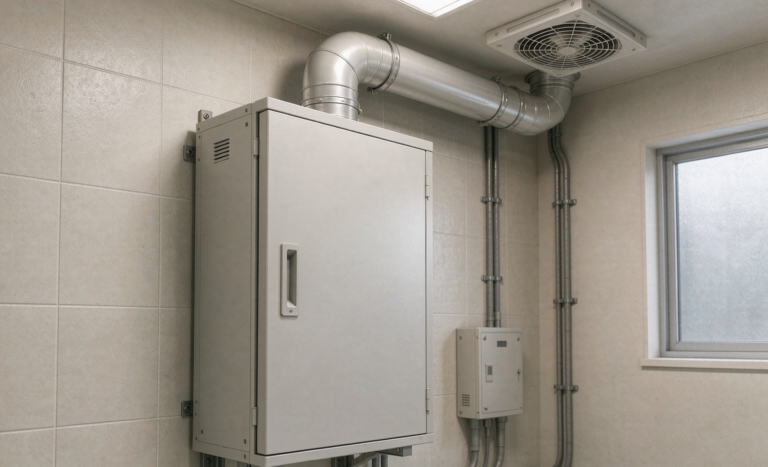
- Temperature blind spots. A pack in an unconditioned garage in Minnesota will derate in January. VPP dispatch does not care about your comfort; it cares about available power. We specify heater mats and a wider operating envelope for cold-climate programs.
- Warranty mismatch. The battery warranty says “70% capacity at 10 years,” but the VPP contract pays for throughput. If throughput wears the pack to 68% in year eight, who pays? I always align the throughput allowance in the battery warranty with the expected VPP cycle profile before launch.
- Single point of failure in the gateway. Covered above, but worth repeating: cellular fallback is not optional for revenue-grade participation.
What This Means for Buyers and Installers
If you are specifying a home energy storage virtual power plant deployment, treat the battery as a grid-tied instrument, not a consumer gadget. Ask the vendor for the actual UL 9540 / UL 9540A certificates, confirm the protocol stack matches your utility’s program, and model the cycling profile against the warranty before you promise the homeowner a payback number. The chemistry is the easy part. The paperwork, the latency budget, and the thermal envelope are where programs succeed or quietly lose money.
Frequently Asked Questions
Can any home battery join a virtual power plant?
Technically any internet-connected battery can be enrolled, but practically only units with the right certifications (UL 9540, IEEE 1547) and communication protocols (OpenADR, Modbus/SunSpec) will qualify for revenue-grade programs. Always confirm compatibility with the specific VPP operator before purchase.
Does VPP participation void my battery warranty?
It should not, provided the warranty’s throughput allowance matches the program’s cycling profile. Ask the manufacturer to state the warranted cycle count and throughput in writing, and compare it to the aggregator’s expected annual cycles.
Will joining a VPP leave me without backup power?
Only if the reserve is misconfigured. A properly set backup reserve keeps a defined percentage of capacity available for outages, and the homeowner should be able to override VPP dispatch during an emergency.
How much can a homeowner actually earn?
Earnings vary widely by region, program type, and dispatch intensity. Capacity and frequency-regulation programs in well-designed markets typically outperform simple energy arbitrage. The honest answer is: model it against your local program’s published rates and your battery’s real usable window, not the nameplate capacity.
Is a virtual power plant safe for a dense neighborhood?
Yes, when the batteries carry UL 9540A thermal-runaway propagation testing and are installed to code. The whole point of that standard is to prove a single unit’s failure will not propagate to neighbors — which is exactly the concern a VPP raises by clustering many units in one area.
The direction of travel is clear. As inverter standards converge and aggregator software matures, the residential battery stops being a lonely backup box and becomes a small, reliable node in a continent-scale power plant. Engineers who build for that future — certified, connected, and honestly warranted — will own the next decade of deployments.