Home Energy Storage Sizing kWh
Every week, another homeowner emails our engineering desk with the same anxious question: “How many kWh of home energy storage do I actually need?” After sizing a few hundred residential systems over the past decade, I can tell you the honest answer is rarely the round number a sales brochure prints. Sizing a home battery is a balance of daily consumption, backup ambition, solar harvest, and the hard physics of depth of discharge. Get it wrong and you either overpay for dead capacity or sit in the dark during the outage you bought the system to survive. This guide walks through the exact worksheet my team uses when we spec a battery energy storage project, with the real engineering numbers behind every step.
Step 1: Anchor on Your Real Daily kWh Consumption
Everything starts with one number: your average daily electricity use in kilowatt-hours. In most markets this is printed on your monthly utility bill as “kWh used” divided by the number of days in the billing period. A typical single-family home in a temperate climate lands between 20 and 35 kWh per day. A well-insulated all-electric home with heat pumps can push past 50 kWh in winter. I always tell clients to use a three-month average rather than a single bill, because a July number hides the January heating spike and vice versa.
The trap is confusing average with peak. Your daily average might be 28 kWh, but your worst winter day could hit 45 kWh. If your goal is whole-home backup, you size to the peak day, not the average. If your goal is solar self-consumption, you size to the average plus a margin. Write both numbers down; you will use them in the worksheet below.
Step 2: Define the Mission — Backup, Partial, or Whole-Home
The second decision is what the home energy storage system is actually for. I break this into three missions, and each drives a very different kWh target:
- Backup essentials only. Refrigerator, internet, a few lights, phone charging, maybe a well pump. For most homes this is 8–15 kWh of usable capacity. A single modular home battery module often covers it.
- Partial home. Essentials plus HVAC circulation fan, microwave, washing machine. Plan 20–30 kWh usable. This is the sweet spot for most of our residential clients.
- Whole-home. Everything, including electric heat or induction cooking during an outage. Expect 40–80+ kWh, usually a stacked battery energy storage bank with a 10–12 kW inverter.
Be honest about the mission. I have seen too many buyers pay for whole-home capacity and then only ever run the refrigerator off it. Right-sizing to the mission is where a custom battery solution pays for itself.
Step 3: The Solar Self-Consumption Math
If you have rooftop solar, the battery’s job is to catch the midday surplus you would otherwise export at a low feed-in tariff. Take your typical daily solar generation and subtract what the home consumes while the sun is up. The remainder is what you can store. A 8 kW array in a sunny region might produce 35 kWh on a good day, of which the home uses 12 kWh live — leaving 23 kWh of storable surplus.
Size your home battery to capture most of that surplus without wasting money on capacity you can never fill. In practice, a 10–15 kWh usable bank captures the vast majority of daily surplus for a typical home, which is why that range is so common in residential installs. A lithium battery chemistry with high round-trip efficiency (we run LiFePO4 at 95–96%) makes self-consumption economics work.
Step 4: Depth of Discharge and Usable vs Nameplate Capacity
This is the step where brochure numbers lie. A pack advertised as “15 kWh” is not 15 kWh of usable energy. The usable figure depends on depth of discharge (DoD). Quality LiFePO4 cells safely deliver 90–95% DoD, while older lead-acid or NMC packs may be limited to 80% or less. So a 15 kWh nameplate LiFePO4 pack gives you roughly 14 kWh usable; a 15 kWh NMC pack at 80% DoD gives you only 12 kWh.
When we rate a residential battery for cycle life under IEC 62619, we always quote usable capacity, not nameplate, because that is what the homeowner actually experiences across the 6,000+ cycles the standard expects. Insist on usable kWh in any quote — it is the only honest basis for home energy storage sizing kWh math.
Step 5: Power Rating (kW) Matters as Much as Energy (kWh)
Homeowners fixate on kWh (energy) and forget kW (power). kWh tells you how long you can run; kW tells you what you can run at once. A 30 kWh bank paired with a 5 kW inverter cannot start a 4 kW well pump with a 3 kW inrush on top — the inverter clips. For whole-home backup you typically need a continuous rating of 8–12 kW and a surge rating near 2x for motor loads.
Match the inverter to the largest simultaneous load, then size the home battery energy to feed it for the desired hours. In our custom battery solution designs we model the load curve hour by hour rather than guessing, which prevents the classic “plenty of capacity, not enough power” failure.
Step 6: The Practical Sizing Worksheet
Here is the worksheet I hand to every client. Fill the blanks with your own numbers:
- Average daily use (kWh/day): A
- Peak winter/summer day (kWh/day): P
- Mission multiplier: backup 0.5x A, partial 0.9x A, whole-home 1.0x P
- Target usable kWh = mission figure ÷ DoD (use 0.92 for LiFePO4)
- Add 15% expansion headroom if you plan an EV or heat pump later
Worked example: A home averaging 28 kWh/day, partial-home mission, LiFePO4 at 0.92 DoD. Target = (0.9 × 28) ÷ 0.92 ≈ 27.4 kWh, plus 15% headroom = ~31.5 kWh usable. That is a two- or three-module residential battery stack. Notice how the math, not the marketing, set the number.
Step 7: Safety, Codes, and What We Verify Before Shipment
Sizing is only half the job; the pack must be certifiable. Every home energy storage unit we ship is validated against the standards inspectors actually check. Transport and handling fall under UN38.3 (the T.1–T.8 test series: altitude, thermal, vibration, shock, external short, impact, overcharge, forced discharge). Cell-level safety references IEC 62133-2, while stationary pack safety and performance follow IEC 62619. In North America the install-grade benchmarks are UL 1973 for the battery and UL 9540 for the system, alongside IEEE 1547 for grid interconnection and UL 1741 / IEC 62109 for the inverter.
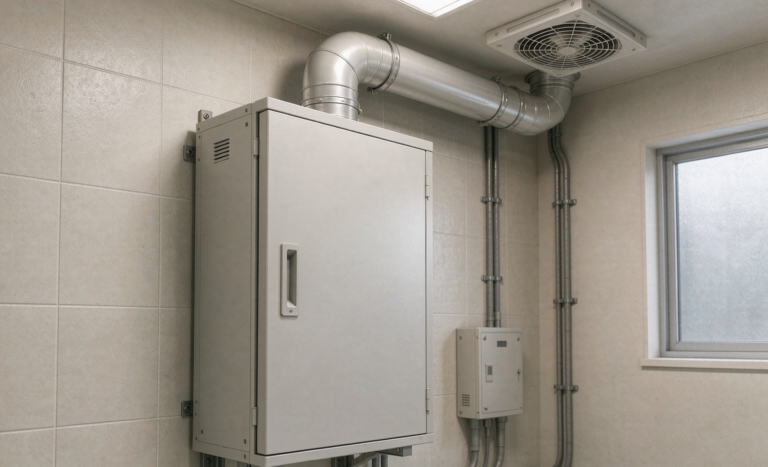
During our incoming inspection we also confirm the enclosure rating (IP55 for garage or carport siting), the thermal runaway isolation between modules, and the ventilation path. A correctly sized lithium battery that fails these checks is a liability, not an asset. Our custom battery solution line documents every one of these tests per serial number so the installer’s permit goes through on the first submission.
Frequently Asked Questions
How many kWh does it take to run a house for a full day off-grid?
For a typical home at 25–35 kWh/day, plan 30–45 kWh of usable capacity to cover a full day including evening peak, assuming modest conservation. Whole-electric homes in cold climates need 60–80 kWh. Always size to your own peak day, not a generic average.
Is 10 kWh of home energy storage enough?
For backup of essentials only — fridge, lights, internet, phone — yes, 10 kWh usable is often enough for 12–24 hours. For partial or whole-home coverage it is too small. The right answer depends entirely on your mission from Step 2.
Should I oversize the battery for future expansion?
Add 15–20% headroom if you expect an EV, heat pump, or more appliances within three years. Most modular home battery platforms let you add enclosure-matched modules later, so a small headroom plus expansion-ready architecture is cheaper than buying all capacity upfront.
Will home energy storage power my house during a blackout?
Only if it is wired for backup with a transfer switch or hybrid inverter and the inverter supports off-grid operation. A self-consumption-only system without backup switching will shut down with the grid for safety. Confirm the topology before you buy, because it changes both the inverter spec and the home energy storage sizing kWh target.
The right capacity is never a guess — it is your consumption, your mission, and your solar harvest run through the worksheet above. If you want a pack that matches these numbers exactly rather than a one-size box, that is what a proper custom battery solution is for. Get the kWh honest and the rest of the system falls into place.