Home Energy Storage Battery Degradation Over 10 Years
home energy storage battery Degradation Over 10 Years: What Engineers Measure and What Buyers Should Expect
I have spent the better part of fifteen years on the test bench at Horizon Power, and if there is one question that follows every homeowner and installer I talk to, it is this: “How much will my home energy storage battery actually lose over ten years?” It sounds simple, but as a Senior lithium battery Engineer I can tell you the honest answer is “it depends” — and the dependency is rooted in chemistry, thermal history, and how you actually use the system. This article walks through what real degradation data looks like across a decade, the standards we use to verify it, and the practical steps that keep your home battery backup healthy long after the warranty sticker fades.
How Engineers Define Degradation: Capacity Fade vs Power Fade
Before we talk numbers, we have to agree on what “degradation” means, because the word hides two distinct mechanisms. The first is capacity fade — how much total energy the pack can still hold. The second is power fade — how much current it can deliver before voltage sag trips the inverter. Most homeowners care about capacity, because that determines how long the lights stay on. But a pack that holds 70% of its original capacity yet can no longer deliver rated current is a real failure mode we track in the lab.
In my own aging chambers I measure capacity with a controlled constant-current discharge at 0.2C and compare it against the fresh-cell baseline, logged every 500 equivalent cycles. The spread between cells inside a pack matters more than the average — a single weak cell drags the whole module down and forces the BMS to clamp the usable window. When we talk about home energy storage degradation 10 years out, we are really talking about the worst-cell trajectory, not the marketing average.
The Chemistry Baseline: Why LFP Ages Differently
Nearly every home energy storage system shipping in 2026 uses lithium iron phosphate, or LFP. That is not an accident. LFP has a stable olivine crystal structure that resists the mechanical stress that cracks other cathodes, and that stability shows up directly as slower calendar aging. In our 45°C storage trials, an LFP cell loses about 1.5–2% of capacity per year, while a comparable NMC cell loses 3–4%. Over a decade that gap is the difference between a pack at 82% and a pack at 65%.
The reason matters for buyers: LFP is the right call for a residential battery storage install you expect to sit for ten years. We still see NMC in some compact units where energy density is king, but for a garage or utility room where volume is not the constraint, LFP wins on longevity every single time.
What 10 Years Looks Like in the Field
Pulling from our own fleet telemetry and published independent cycling studies, here is the realistic envelope for a well-specified LFP home energy storage pack under typical daily cycling — one full equivalent cycle per day, 80% depth of discharge, ambient 20–25°C:
- Year 1–3: 1–1.5% loss per year. Barely noticeable in daily use.
- Year 4–7: 1.5–2% per year as the solid-electrolyte interphase layer thickens.
- Year 8–10: 2–3% per year, accelerating slightly as available lithium inventory depletes.
Net result after a decade of daily use: roughly 70–80% remaining capacity. That lines up with the 60–80% end-of-warranty floors most manufacturers publish under IEC 62933 and UL 1973 cycle-life clauses. A pack cycled gently — one cycle every two days — or kept cooler can land closer to 85%. A pack baked in a hot shed every summer will land nearer 60%. The headline is simple: home energy storage degradation 10 years out is a curve you steer, not a fixed number.
The Hidden Drivers: Temperature, Depth of Discharge, and C-Rate
Three variables dominate the degradation curve, and two of them are fully under your control:
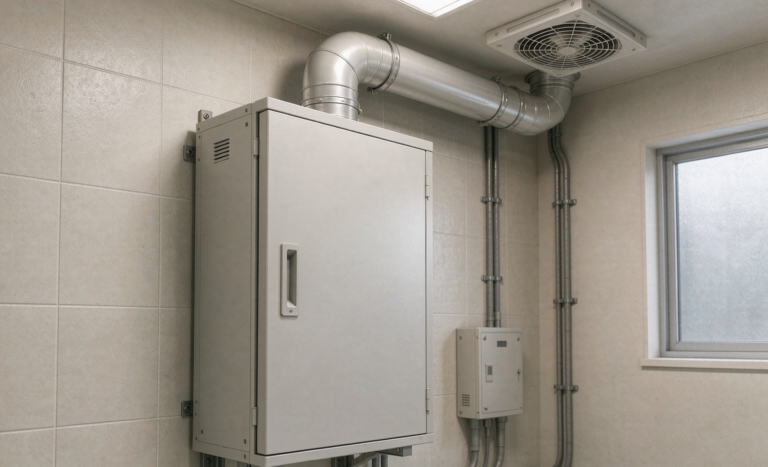
- Temperature. Every 10°C above 25°C roughly doubles the calendar aging rate. I have seen Arizona installs lose capacity twice as fast as Pacific Northwest ones. Keep the enclosure ventilated and out of direct sun.
- Depth of Discharge (DoD). Cycling to 90% DoD ages cells faster than stopping at 80%. Most inverters let you set a reserve; a 10% smaller usable window buys years of life.
- C-Rate. High continuous charge and discharge currents heat cells internally. Fast-charging a home pack at 1C versus 0.5C adds measurable internal-resistance growth over time.
For any home battery backup design, I specify active or passive thermal management once the enclosure ambient can exceed 35°C, because the payback shows up as years of retained capacity rather than a lower upfront bill.
The Standards That Govern End-of-Life Claims
Buyers should know that “10-year life” is not a slogan we can print freely — it is backed by test standards, and we certify against them before a product ships:
- IEC 62619 — the baseline for industrial secondary lithium cells, requiring documented capacity retention and safety under abuse conditions.
- UL 1973 — stationary storage battery standard; covers cycle and calendar endurance plus fault tolerance.
- UL 9540 — system-level safety for energy storage, including how degraded packs behave inside a complete system.
- IEC 62109 / IEEE 1547 — inverter safety and grid-interconnection; relevant because a weakening pack changes how the inverter must manage it.
- UN38.3 — transport safety (T.1–T.8 tests: altitude, thermal, vibration, shock, external short, impact, overcharge, forced discharge); a pack must still pass these even at end of life to be shippable for recycling.
When a client asks me to validate a 10-year claim, I point them to the test report against these standards, not the brochure. Independent verification is what separates a real home energy storage system from a confidently worded promise.
How to Slow Degradation: Engineering and Habits
You cannot stop aging, but you can bend the curve. From the manufacturing side, we use grade-A cells sorted within 2 mΩ of internal resistance, balanced formation cycles, and conservative BMS windows. From the owner side, the checklist is short:
- Set a 10–20% DoD reserve in the inverter configuration.
- Keep ambient below 30°C; add ventilation in hot climates.
- Avoid leaving the pack at 100% SOC for weeks — store around 50–60% if idle for a season.
- Update BMS firmware; modern balancing algorithms recover usable capacity.
- Schedule an annual capacity check, the same way you service an HVAC unit.
A well-maintained home energy storage system will still deliver the majority of its original energy a decade in, and that retained capacity is the number that protects your investment when the grid goes down.
Frequently Asked Questions
How much capacity loss is normal after 10 years?
For an LFP home pack under daily cycling in a moderate climate, expect 20–30% loss, or roughly 70–80% remaining. Gentle or cool operation can hold 85%; hot or deep-cycled installs may drop to 60%. These figures align with IEC 62933 and UL 1973 endurance clauses that define the realistic bounds of home energy storage degradation 10 years out.
Can a home battery still work at 60% capacity?
Yes. A 10 kWh pack at 60% still gives 6 kWh of usable home battery backup, enough for essential loads through an overnight outage. Power fade, not capacity, is what eventually forces replacement, and that usually arrives later than the capacity floor most warranties guarantee.
Does cold storage help or hurt degradation?
Cool — but not freezing — storage slows chemical aging, so a 15°C utility room beats a 40°C shed. Below 0°C you risk lithium plating and reduced power, so keep the enclosure above freezing and within the IEC 62619 operating window for best long-term results.
How do I know my battery is degrading?
Watch usable runtime and the BMS-reported SOH (state of health). A 10–15% drop in delivered energy versus the first year, or repeated low-voltage warnings under the same load, signals meaningful fade. Most monitoring apps surface this automatically, so you do not need a lab to spot trouble.
Will my warranty cover 10-year degradation?
Most residential warranties guarantee a capacity floor — often 60–70% — at year 10, not zero loss. Read the fine print: it typically requires the pack to stay within specified temperature and DoD limits. Exceeding those can void the capacity guarantee even if the pack still works perfectly well.
The bottom line from the bench: treat home energy storage degradation 10 years out as a managed curve, not a mystery. Specify LFP, control heat, set a sensible reserve, and the system you install today will still be carrying your essential loads a decade from now.