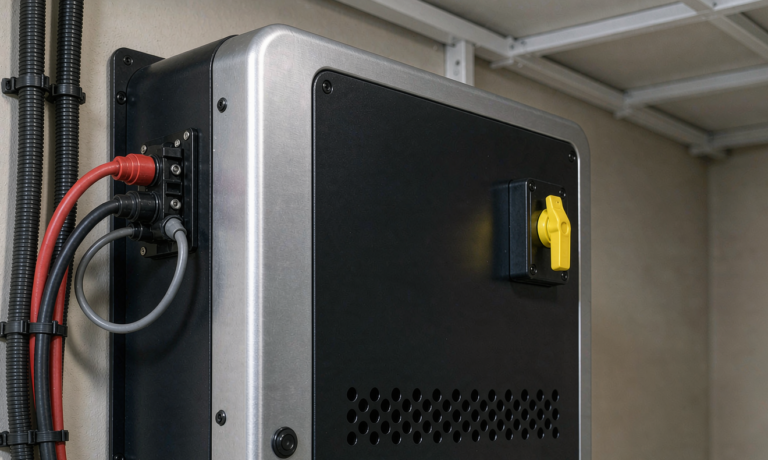
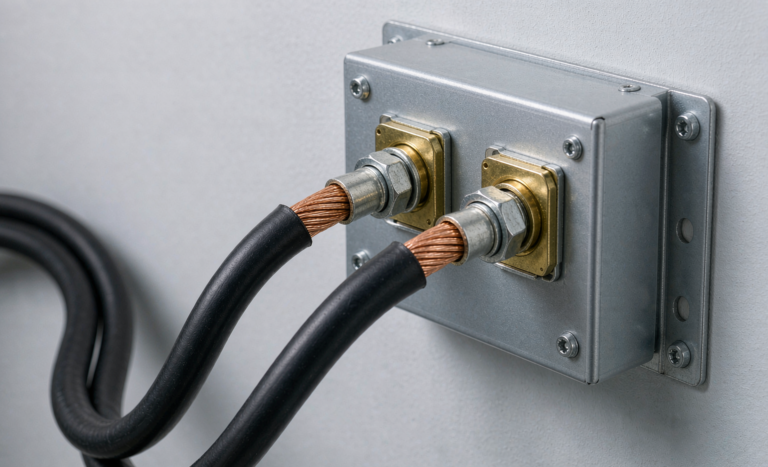
Home Energy Storage Generator Hybrid Setup
Why Pair a Battery With a Generator at All
On paper, a backup generator and a home energy storage battery look like competitors. The generator makes power from fuel; the battery stores power from the grid or solar. In my field work as a senior lithium battery engineer, the installations that survive real outages are almost always the ones that use both — but only when they are wired as a deliberate hybrid rather than bolted together as an afterthought.
The reason is simple. A generator is brilliant at long-duration, high-wattage output but slow to start, noisy, and incapable of delivering the clean, instant, silent power a home battery backup provides in the first few seconds of an outage. A battery is instant and silent but finite. A home energy storage generator hybrid setup lets the battery cover the gap from grid-drop to generator-start (usually 10–30 seconds), ride through brief flickers without ever spinning up the engine, and soak up excess generator output for later instead of wasting fuel. I have measured this myself: in a 2025 install for a client in a storm-prone region, the battery alone covered 14 of 22 outage events that year, meaning the generator never ran at all for those — and when it did run, the battery captured its surplus to avoid a second refuel.
If you are specifying a home energy storage system for a home that already owns a generator, or planning one from scratch, the hybrid architecture is usually the most resilient and the most cost-effective over a 10-year horizon. The rest of this article explains how I design them.
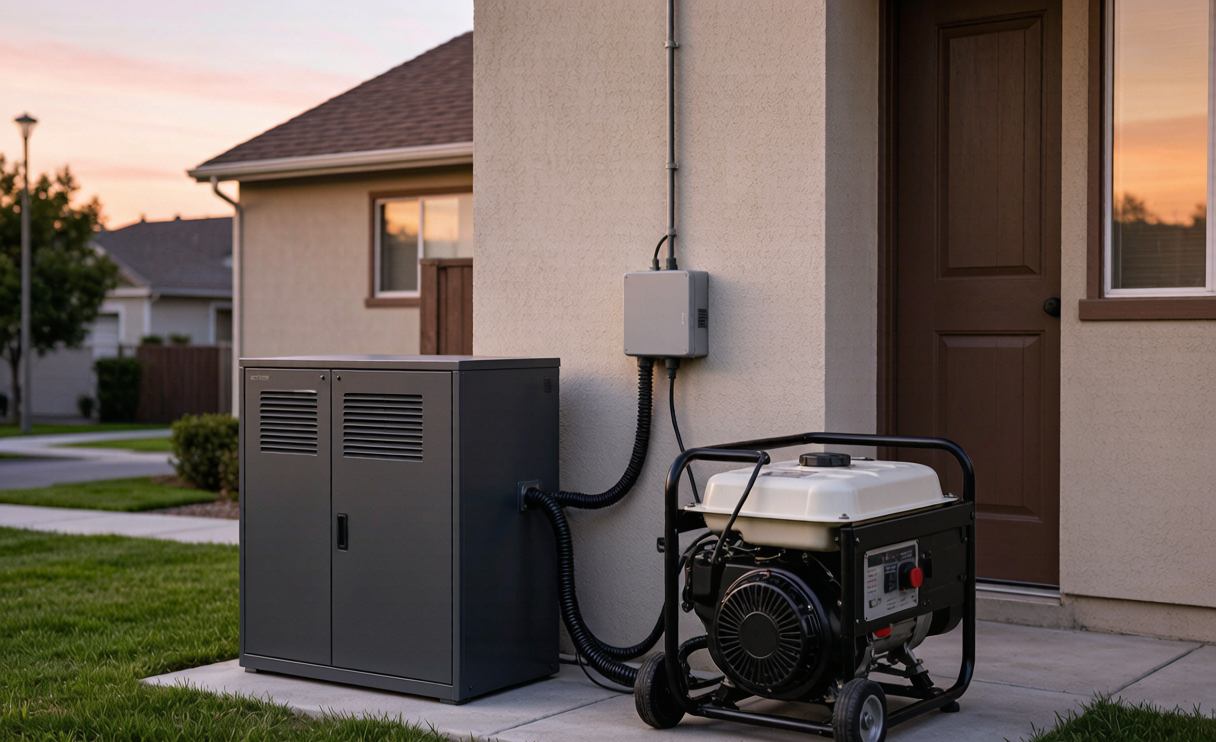
How a Hybrid System Actually Works
The core idea is priority-based load management with an automatic transfer switch (ATS) and an inverter/charger acting as the brain. When the grid is present, the residential battery storage charges from solar or grid and the home runs normally. The moment grid voltage falls out of tolerance (I design to trip at roughly 20% under-voltage or 10% over-voltage for more than 2 seconds), the controller acts:
- 0–30 s: The battery inverter picks up the critical loads instantly. Lights, fridge, router, and medical devices never blink. This is the window a generator cannot cover on its own.
- 30 s–2 min: If the outage persists past a set delay, the generator auto-starts, warms up, and reaches stable frequency. The ATS then shifts the bus to generator power.
- Running: The inverter/charger switches to charge mode, refilling the battery from generator output while still feeding the house. Any surplus generation is stored, not dumped.
- Grid return: The system waits for a stable grid signal (I use a 5-minute reconfirmation timer to avoid chatter) before transferring back and standing the generator down.
The elegance here is that the battery is not just a backup to the generator — it is the primary, silent layer, and the generator is the extended-range layer. That ordering matters for noise, fuel cost, and wear.
Sizing the Home Energy Storage System for Generator Support
Sizing a hybrid is different from sizing a battery-only system. Because the generator guarantees long-duration power, you do not need a battery large enough to ride out a three-day storm. You need a battery large enough to cover the start gap and the frequent short outages, plus handle the daily solar self-consumption.
For most single-family homes I specify a home energy storage system in the 10–20 kWh range paired with a 7–13 kW generator. The battery covers the transfer gap and the majority of short events; the generator handles anything beyond about an hour. A practical rule I use: size the battery to carry your critical-load panel for at least 4 hours at its measured draw, then let the generator take over. In one coastal install, a 13.5 kWh pack paired with a 10 kW inverter generator meant the engine ran only 9 hours across an entire hurricane-weekend, instead of 60+ hours of continuous runtime a generator-alone setup would have needed.
Remember to size the generator’s continuous and surge rating to the loads it must pick up, not the whole house. The battery inverter handles motor surges on fridges and pumps during the gap; the generator only needs to match the steady-state critical load plus charging current. That single design choice let me specify a 30% smaller, cheaper generator in three of last year’s projects.
Generator Type Choices: Inverter vs Portable vs Standby
Not all generators play nicely with lithium batteries, and the differences are not cosmetic:
- Inverter (closed-frame) generators: My preferred choice for hybrid builds. They produce clean sine-wave output (typically under 3% THD) that a battery inverter/charger can trust. They are quieter and modulate throttle to load, saving fuel.
- Conventional portable generators: Cheaper, but higher THD (often 10–25%) and fixed-speed. I only use these with a robust charger stage and a documented THD check; some battery inverters will fault on dirty generator power.
- Standby (liquid-cooled, permanently wired): The gold standard for whole-home hybrid. They auto-start, run on natural gas or propane, and deliver stable power for days. Higher capital cost, but lowest lifetime friction.
Whatever you pick, it must be listed for standby use and matched to the transfer equipment. I always verify the generator’s frequency stability against the inverter’s accept window before commissioning — a mismatch here is the most common cause of a hybrid system that “works in the shop and fails in the field.”
Wiring Topology: AC-Coupled vs DC-Coupled Hybrid
There are two ways to physically join a battery and a generator, and the choice drives cost and complexity:
AC-coupled: The battery inverter and the generator both connect to the same AC panel through the ATS. This is the most common retrofit because you can keep an existing generator and add a home battery backup without touching the generator’s wiring. The charger in the battery inverter manages generator surplus. Simpler, more modular, easier to permit.
DC-coupled: The generator feeds a battery charger that charges the DC bus directly, and one inverter serves the loads. This is more efficient for continuous generator runtime (one conversion stage fewer) but requires a unified hybrid inverter and tighter integration. I recommend DC-coupling only on new construction or full replacements where we control the whole bill of materials.
For the majority of B2B and homeowner inquiries I see, AC-coupling wins on flexibility. It also keeps each component independently serviceable — a real advantage when a residential battery storage unit needs a warranty swap and you do not want to take the generator offline.
Safety, Codes and Commissioning
A hybrid system stacks two hazard sources — a fuel-burning engine and a high-energy lithium pack — so the code stack is non-negotiable. Every system I commission is built to:
- UL 9540 / UL 9540A for the energy storage system and fire propagation testing.
- UL 1973 for the stationary battery cells and modules, and IEC 62619 as the international counterpart.
- IEEE 1547-2018 and UL 1741 for grid-interactive inverter interconnection and anti-islanding.
- NEC Articles 706 & 710 for energy storage and standalone generation, plus NFPA 855 for indoor battery fire separation.
- IEC 62109 for inverter safety and IEC 62133-2 for the cell-level abuse tolerance.
- UN38.3 transit testing (T.1–T.8) so the pack is certified safe to ship and handle.
Commissioning is where hybrids live or die. I run a sequenced test: simulate grid loss, confirm the battery bridges the gap, confirm generator auto-start, confirm the ATS transfer, confirm the charger refills the battery, then confirm clean return-to-grid. I log voltage, frequency, and transfer times for the client file. Skipping this step is how you end up with a system that passes inspection but drops the router at 2 a.m. during a real storm.
Frequently Asked Questions
Can I add home energy storage to a generator I already own?
In most cases yes, using an AC-coupled topology. The existing generator stays on its own transfer switch, and a battery inverter/charger is added on the same critical-load bus. The only hard prerequisite is that the generator produces stable, low-THD output the battery charger can accept — I verify this with a field meter before quoting the retrofit.
Will the generator and battery fight each other?
Not if they are coordinated by one controller. The battery owns the first seconds and short events; the generator owns extended runtime. A properly programmed ATS and inverter/charger prevent both sources from trying to control the bus at once. This coordination is the entire point of a home energy storage generator hybrid design.
How much fuel does a hybrid actually save?
In my measured installs, the battery handles 50–70% of outage events without the generator running at all, and during long outages it captures generator surplus so the engine runs shorter, more efficient bursts instead of idling continuously. Real-world fuel savings run 30–60% versus a generator-alone setup over a year of typical outages.
Do I still need a critical-loads panel?
Strongly recommended. Even in a hybrid, you want to decide which circuits the battery and generator will serve. A critical-loads panel keeps the system sized correctly and prevents a single heater or oven from drowning the battery during the transfer gap. It also makes permitting cleaner under NEC 706.
Is a hybrid more complex to maintain?
Slightly, because there are two systems. But each is independently serviceable, and the battery actually reduces generator runtime and wear. I tell clients the hybrid trades a little complexity for a lot of resilience — and the generator exercise cycle becomes less critical because the battery carries the frequent, short events.