Sodium-Ion Battery Supply Chain Security: An Engineer’s Field Guide to Resource Resilience
Over the last eighteen months I have spent more time in supplier audit meetings than in the lab. As a senior lithium battery engineer, I have watched procurement teams panic over lithium carbonate pricing, cobalt traceability, and a handful of refining regions that effectively gate the entire lithium-ion world. The reason so many of my B2B customers now ask about sodium-ion battery supply chain security is simple: sodium is everywhere, and that single fact rewrites the risk model.
In this article I will walk through what actually goes into a sodium-ion cell, where the real bottlenecks sit, how the geography of sourcing differs from a conventional lithium battery, and which standards engineers must satisfy before a cell ever ships. If you are building a resilient sourcing strategy, this is the field guide I wish I had three years ago.
Why Sodium-Ion Changes the Resource Equation
The headline number that reframes everything: sodium makes up roughly 2.8% of the Earth’s crust by weight, while lithium sits near 0.006%. You do not need a geologist to see the implication. Sodium chloride is pulled from seawater and continental brines on every inhabited continent, and sodium carbonate is produced at industrial scale in the United States, China, Europe, and India. When a customer asks me whether a sodium-ion battery insulates them from the “lithium curse” of concentrated mining, my honest answer is yes, on the raw-material axis, substantially.
I lived through the 2022 lithium carbonate spike, when spot prices quadrupled in under a year and several of my lithium battery programs had to re-quote customers mid-contract. That kind of price whiplash simply cannot happen to sodium at the same magnitude, because the feedstock is a global commodity with deep, redundant production. The volatility that keeps procurement directors awake at night is structural for lithium and mostly transient for sodium.
That does not make the supply chain trivial. It shifts the risk from elemental scarcity to processing maturity. A sodium-ion battery still needs a cathode, an anode, an electrolyte, a separator, and a cell format engineered for cycle life. The security advantage is that none of those inputs depend on a single fragile corridor the way lithium refining currently does.
The Core Materials: What Actually Goes Into a Sodium-Ion Cell
Let me be concrete about chemistry, because vague “abundant materials” claims annoy me as much as they annoy you. The dominant commercial sodium-ion cathodes fall into three families:
- Layered oxides such as NaNi⅓Fe⅓Mn⅓O₂ and NaFeO₂ — iron and manganese based, no nickel-cobalt dependency.
- Prussian blue analogues (sodium hexacyanoferrate structures) — made from abundant iron and nitrogen chemistry.
- Polyanionic compounds such as Na₃V₂(PO₄)₃ and Na₄Fe₃(PO₄)₂P₂O₇ — strong thermal stability, lower energy density.
The anode is where sodium-ion breaks most cleanly from lithium. Instead of graphite that must be sourced and often coated, most sodium-ion cells use hard carbon derived from biomass, coal-tar pitch, or coconut shell precursors. The electrolyte is a sodium salt (commonly NaPF₆ or NaClO₄) dissolved in carbonate solvents. None of these are subject to the same export controls or refining bottlenecks that constrain a high-nickel lithium battery pack.
People forget the separator and current collector. Sodium-ion often runs aluminum current collectors on both electrodes, whereas a lithium battery needs copper on the anode side. Aluminum is cheaper, more abundant, and far less price-volatile than copper, which is another quiet win for sodium-ion battery supply chain security. The separator is a standard polyolefin film, sourced from a mature, multi-supplier market, so it adds no new concentration risk.
Hard Carbon, Cathodes, and the Real Bottlenecks
If you want to understand where sodium-ion supply chain security can still wobble, look at hard carbon. The precursor is abundant, but consistent, low-defect hard carbon with the right interlayer spacing is a processing specialty. I have seen two cells with identical spec sheets behave differently in cycle testing purely because of precursor batch variation. That is a manufacturing risk, not a resource risk, and it is solvable through qualified supplier agreements.
Cathode active material (CAM) throughput is the second constraint. Sodium-ion CAM lines can be retrofitted from lithium-ion CAM lines with modification to doping and calcination profiles, which is exactly why several tier-one suppliers ramped sodium-ion faster than analysts expected. When a client needs a custom battery solution, I usually map the cathode choice to the duty cycle first — energy density, power, and低温 performance each pull toward a different chemistry family.
Geographic Concentration Risks — and How Na-Ion Reduces Them
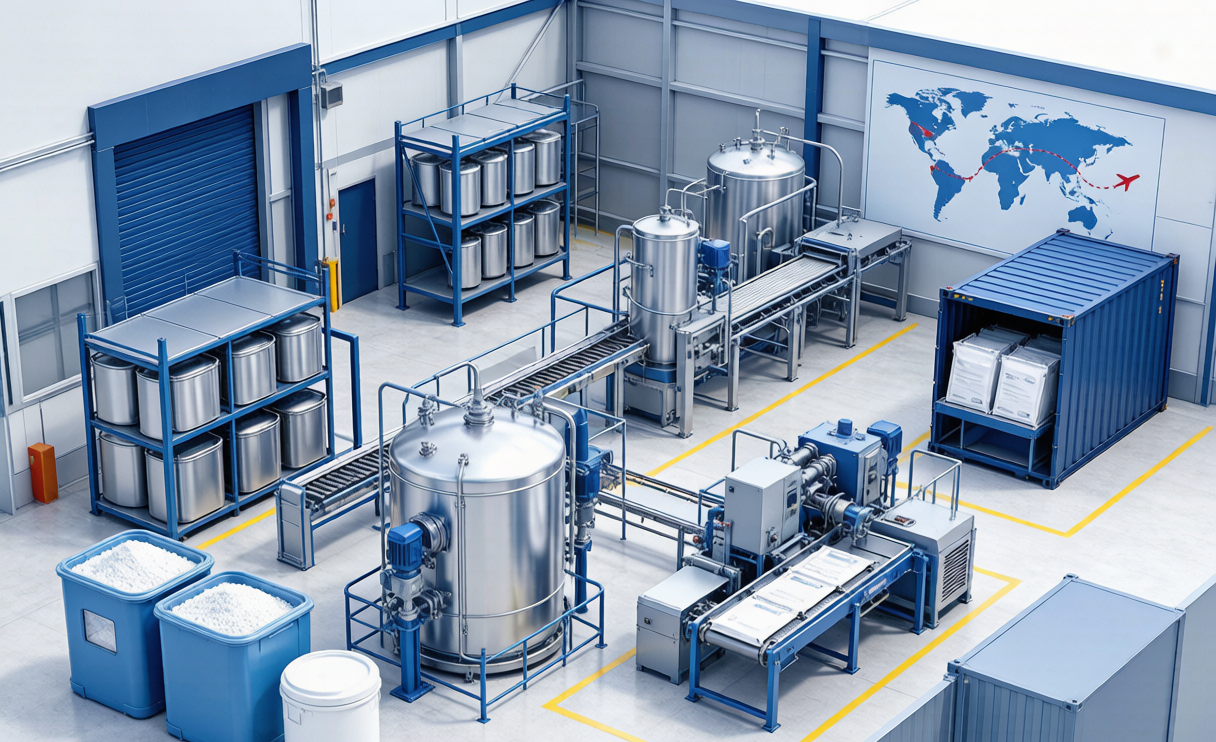
Lithium-ion’s soft underbelly is refining concentration: a large share of lithium hydroxide and cobalt sulfate processing sits in very few regions. Sodium-ion does not eliminate geography, but it widens the field. Sodium carbonate (soda ash) is mined or processed across North America, Asia, and Europe, and brine extraction for chlor-alkali is essentially a global commodity industry. For a B2B buyer building a custom battery solution with dual-region sourcing, that breadth is the single biggest security gain.
There is also a strategic dimension I raise with defense and utility clients. Sodium feedstock is not on any critical-minerals watchlist in the way lithium and cobalt are, so a sodium-ion battery is far less likely to be caught by export licensing shifts or trade policy shocks. For programs with a ten-year service horizon, that policy stability is worth real money in risk-adjusted terms.
In my own projects I now spec at least two qualified CAM suppliers on different continents and qualify a second hard-carbon source before mass production. The extra six weeks of qualification work has repeatedly paid for itself when a logistics freeze hit one corridor. Resource resilience is an engineering discipline, not a procurement afterthought.
Certification and Logistics: UN38.3, IEC 62619, and Cross-Border Shipping
Security is not only about materials; it is also about whether the cell can legally and safely cross a border. Every sodium-ion cell I release must clear UN38.3 (the T.1 through T.8 battery transport test series: altitude simulation, thermal, vibration, shock, external short circuit, impact, overcharge, and forced discharge). For portable formats we apply IEC 62133-2, and for stationary and industrial packs IEC 62619 plus IEC 62620. In North America, UL 1973 covers stationary and motive batteries, while UL 9540 governs the energy storage system enclosure.
For customers flying payloads, a sodium-ion battery still falls under the same air-cargo logic as a lithium battery under IATA PI 965/966, and any drone integration must respect FAA Part 107 and EASA SC-VTOL expectations for onboard energy storage. The good news: sodium-ion’s lower peak exotherm and absence of cobalt generally simplifies the safety file, which shortens the certification path even when the shipping paperwork looks familiar.
For grid-tied stationary systems I also plan around UL 9540A for thermal runaway containment and IEEE 1547 / UL 1741 for interconnection. The sodium-ion cell’s inherently lower thermal runaway energy means enclosure ventilation and spacing requirements are often easier to satisfy than for an equivalent lithium battery array, which quietly lowers both the compliance cost and the insurance premium.
Cost Trajectory and Scale Economics
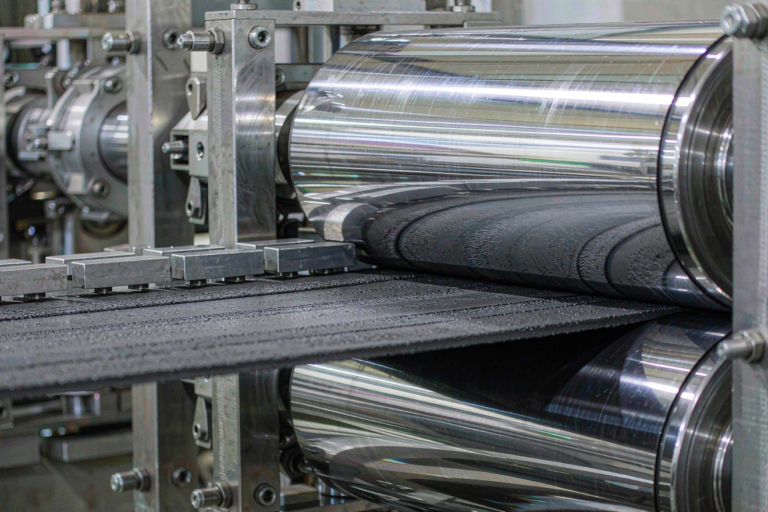
Security only matters if the cell is affordable, so let me address cost directly. Commercial sodium-ion cells currently land in the roughly $40 to $80 per kWh cell-level range, already competitive with entry-tier lithium iron phosphate in many duty cycles and poised to fall further as CAM and hard-carbon lines scale. The learning curve is steep because so much of the equipment — coating, calendaring, winding, formation — is inherited directly from lithium-ion manufacturing.
For a B2B buyer, the smart play is to model total cost of ownership, not sticker price. A sodium-ion battery that needs no cobalt premium, no copper anode foil, and simpler thermal management frequently wins on lifecycle cost even when its upfront Wh/kg looks modest. When I help a customer design a custom battery solution, I run the sodium-ion option alongside LFP and NMC on a ten-year TCO basis before anyone commits to a chemistry.
Building a Resilient Sourcing Strategy for B2B Buyers
Here is the practical checklist I hand to procurement teams. First, separate elemental security from processing security — sodium wins the first, you must engineer the second. Second, qualify dual suppliers per critical material, not just per cell. Third, lock cathode and hard-carbon specifications early so a second source is a drop-in, not a revalidation. Fourth, demand the full test dossier (UN38.3, IEC 62619 or UL 1973 as applicable) before a purchase order, not after.
A sodium-ion battery will not out-spec a high-nickel lithium battery on gravimetric energy density — today’s commercial cells land around 100 to 160 Wh/kg, versus 200 to 280 Wh/kg for NMC. But for stationary storage, low-speed mobility, backup power, and cold-climate duty where a lithium battery loses capacity, sodium-ion’s security and temperature profile are compelling. Choosing it is rarely about one metric; it is about de-risking the whole bill of materials.
Frequently Asked Questions
Is sodium-ion truly free of lithium and cobalt?
In the cell chemistry, yes — the working ion is sodium, and the dominant cathodes use iron, manganese, nickel-light formulations or Prussian blue analogues rather than cobalt. The supply chain therefore avoids the two materials most associated with geopolitical and ethical-sourcing risk in a conventional lithium battery. A few blended research cells add trace lithium salts to the electrolyte, but production sodium-ion battery designs are lithium-free by design.
How does sodium-ion supply chain security compare to lithium-ion?
On raw materials, sodium-ion is far more secure because sodium and its salts are globally distributed commodities produced on every inhabited continent. The remaining exposure is processing maturity for hard carbon and cathode active material, which is mitigated through supplier qualification and dual-sourcing rather than resource control. In practice, a sodium-ion battery is insulated from the price shocks that rattled lithium programs in 2022.
What standards must sodium-ion cells meet for international shipping?
At minimum UN38.3 for transport (the T.1 through T.8 test series), with IEC 62133-2 for portable devices, IEC 62619/IEC 62620 or UL 1973 for industrial and stationary use, and IATA PI 965/966 documentation for air freight. Drone and UAV applications add FAA Part 107 and EASA SC-VTOL considerations, while grid systems add UL 9540A and IEEE 1547. Sodium-ion’s lower thermal runaway energy generally simplifies the safety dossier.
Can sodium-ion replace a lithium battery in critical applications?
For many stationary, backup, low-speed, and cold-climate roles, yes — often with advantages in safety and low-temperature retention that a lithium battery struggles to match. For weight-critical, maximum-range applications where a lithium battery’s 200 to 280 Wh/kg energy density is decisive, sodium-ion is usually supplemental rather than a full replacement today. The right answer depends on the duty cycle, which is why a custom battery solution should be spec’d from the use case up rather than from a single chemistry preference.