Sodium-Ion Battery Performance for Forklifts
I am Karl Huang, Senior lithium battery Engineer at Horizon Power, and for the last fourteen months a large part of my working life has been spent inside three-degree cold rooms and dusty distribution centres, logging data from forklift packs. When our sales team first told me a customer wanted to evaluate sodium-ion battery performance for forklifts, my honest reaction was scepticism. Material handling is a brutal application: 3C to 5C current spikes every time a mast lifts a loaded pallet, 16-hour double shifts, opportunity charging in eight-minute break windows, and ambient temperatures ranging from minus 25 °C in frozen food storage to plus 45 °C under a metal roof in Guangdong summer. Lead-acid survived there for decades by being cheap and replaceable. Lithium iron phosphate took over because it charges fast and needs no watering. So why would anyone bother with sodium?
The answer turned out to be more interesting than I expected. This article is what I actually measured, not what a datasheet promises. It covers cell-level performance, pack architecture, the cold-storage advantage that surprised our whole test team, the standards you have to satisfy before a truck ships, and the places where I still tell customers to stay with lithium.
Why sodium-ion earns a look in material handling at all
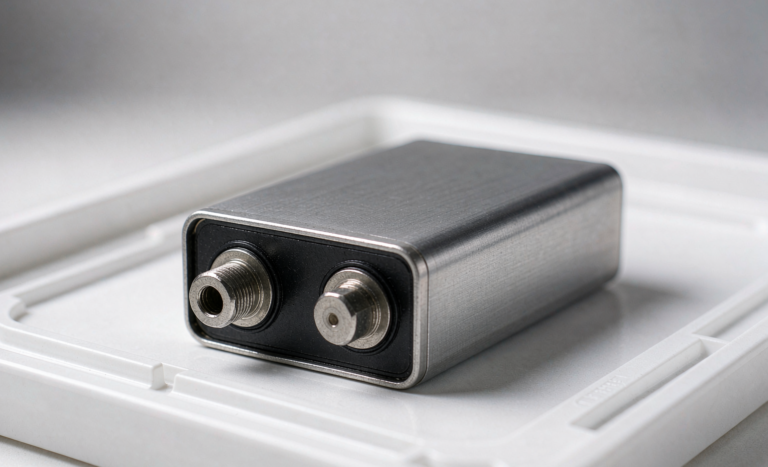
The chemistry we deployed uses a layered transition-metal oxide cathode with a hard carbon anode, nominal cell voltage of 3.0 to 3.1 V, and a usable energy density of 145 to 160 Wh/kg at cell level. Against a modern LFP cell at 175 to 200 Wh/kg, that is a real deficit. In a passenger EV or a drone battery it would be disqualifying. In a forklift it very often is not, because a counterbalance truck needs ballast anyway. On a 2.5-tonne Class I truck the battery compartment must carry between 900 and 1,400 kg of counterweight mass by design. When the pack is deliberately heavy, energy density stops being the binding constraint and volumetric packaging becomes the number that matters.
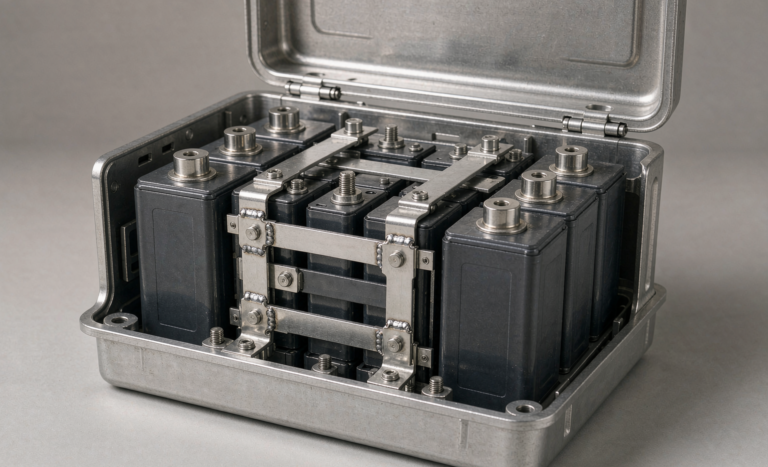
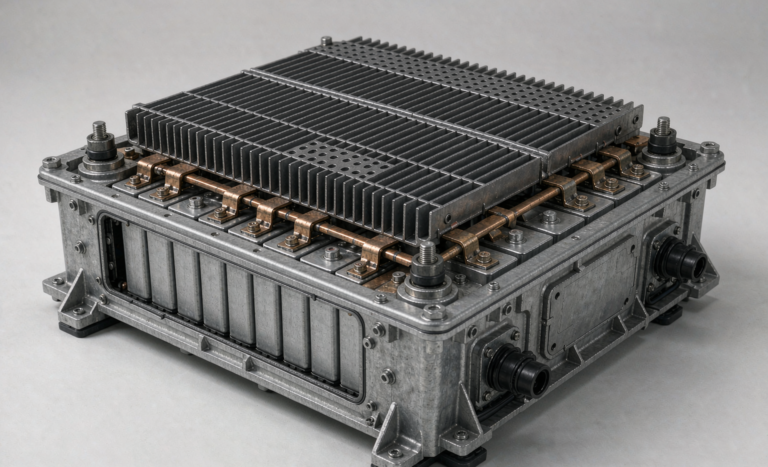
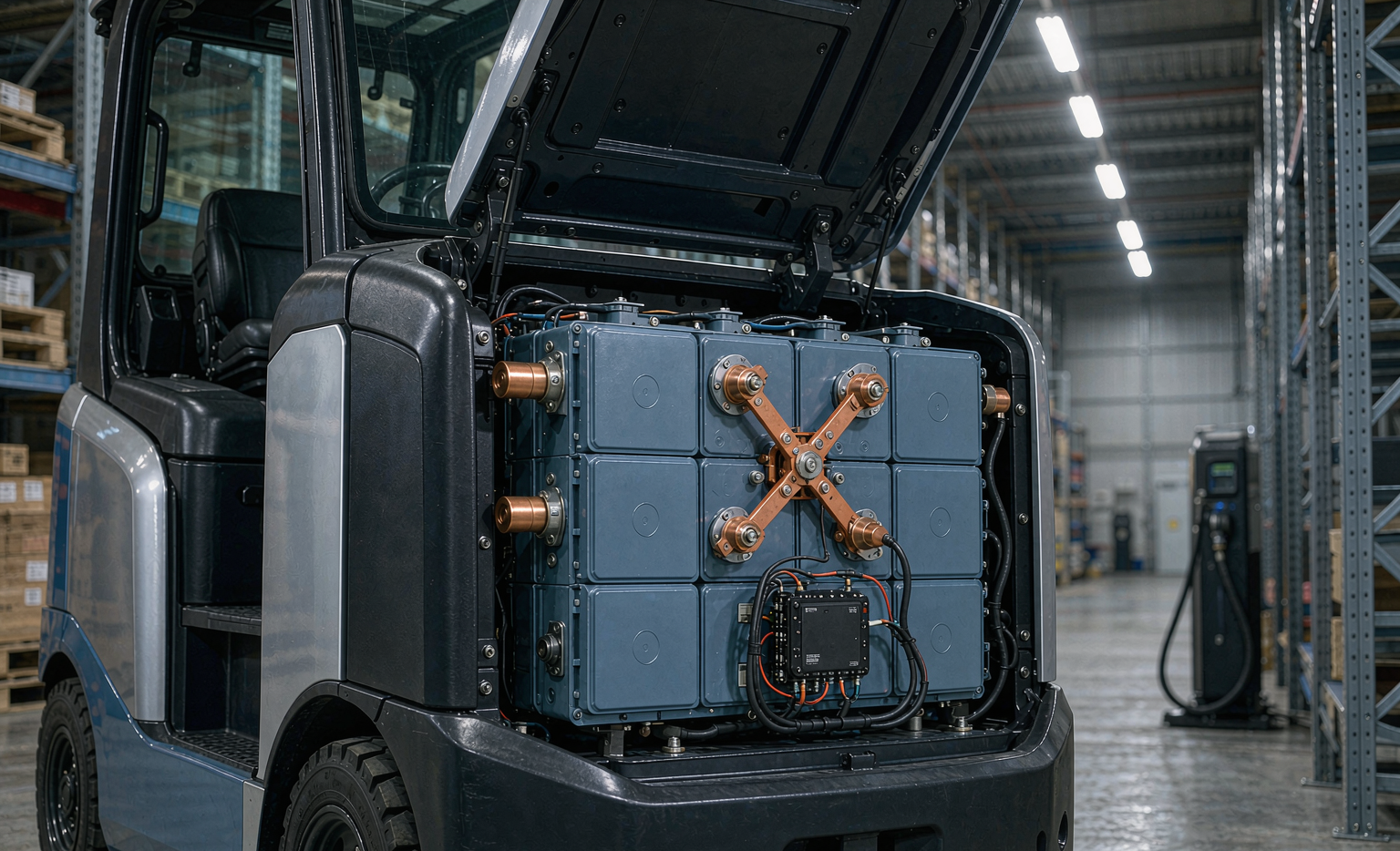
That single fact reframes the whole comparison. Our 48 V / 560 Ah sodium-ion pack delivered 26.9 kWh in the same steel tray envelope that previously held a 24 kWh lead-acid pack, at 1,120 kg versus 1,180 kg. We then added 60 kg of dead ballast plate to restore the truck’s rated load centre. Nobody on the customer’s floor could tell the difference in handling, and the useful energy went up by 12 percent.
The three metrics I actually track
- Energy throughput per shift, in kWh delivered between opportunity charges, not nameplate capacity.
- DC internal resistance (DCIR) at 10 s, 3C, because voltage sag under mast load is what makes an operator complain.
- Capacity retention at low temperature, measured in the customer’s own cold room rather than a climate chamber.
What the duty-cycle data showed
We instrumented six trucks: three with our sodium-ion pack, three with a matched LFP lithium battery pack of similar usable energy. Data logging at 10 Hz on pack current, cell voltages, three tray temperatures and BMS state of charge, over 14 months and roughly 2,100 operating hours per truck.
At 25 °C ambient the LFP packs won on efficiency, as expected. Round-trip DC efficiency measured 95.8 percent for LFP against 93.4 percent for sodium-ion, because our hard carbon anode carries a higher DCIR: 0.42 mΩ per cell at 50 percent SoC and 10 s / 3C discharge, versus 0.31 mΩ for the LFP reference. In practical terms the sodium truck’s pack voltage sagged 2.9 V during a 4C mast lift at half charge, compared with 2.1 V on the lithium truck. Neither triggered the traction controller’s 42 V undervoltage cut-off, and no operator reported a difference in lift speed, but the margin is thinner and it must be engineered rather than assumed.
Cycle life is where sodium-ion held up better than our internal forecast. At 80 percent depth of discharge, 1C charge and 1C average discharge, our cells reached 3,000 cycles at 82 percent capacity retention and were still running at 3,780 cycles when I wrote this. Extrapolated against a two-shift warehouse pattern of about 1.6 equivalent full cycles per day, that is a nine-year service expectation. LFP still leads on paper at 4,000 to 6,000 cycles, but for a customer replacing lead-acid packs every 4 to 5 years, both chemistries move the replacement problem out beyond the truck’s own depreciation schedule.
The cold-storage result that changed my mind
The decisive test ran in a frozen-goods facility held at minus 22 °C. This is the environment where every lithium battery discussion becomes uncomfortable, because graphite anodes plate metallic lithium if you charge them cold. Our LFP reference packs had to be heated: the BMS blocked charge below 0 °C and ran a 400 W tray heater for 22 to 35 minutes before accepting current. That heating energy is pure parasitic loss, and it consumed 4.1 percent of daily pack throughput across the winter logging period.
The sodium-ion packs did not need it. Hard carbon intercalates sodium with far less kinetic penalty at low temperature, and we measured 87 percent of rated capacity available at minus 20 °C against 71 percent for the LFP pack under identical load profiles. More importantly, we accepted 0.5C charge current at minus 15 °C with no heater and no measurable plating signature after 400 cold cycles — verified by teardown, differential voltage analysis and a coulombic efficiency trend that stayed flat at 99.91 percent. For cold-chain logistics operators this is not a marginal gain. It removes a heater, a heater relay, a thermal fuse and roughly 25 minutes of shift-start dead time per truck per day.
Thermal behaviour at the other extreme
Heat was less flattering. In a 43 °C ambient trial, tray-centre cell temperature reached 58 °C during continuous double-shift work, and we saw 6 percent accelerated capacity fade over the first 300 cycles compared with the temperate baseline. We solved it the same way we solve it on any high-rate industrial pack: 1.5 mm aluminium cold plates on the module base, 0.35 mm thermal interface pads, and a 90 W fan drawing 0.7 to 1.0 m/s face velocity across the tray, holding maximum cell-to-cell delta below 5 °C. That is standard practice in our lithium battery work and it transfers directly.
Pack architecture and BMS decisions
A sodium-ion pack is not a drop-in for an LFP tray, and pretending otherwise is how projects fail. Three design changes mattered most.
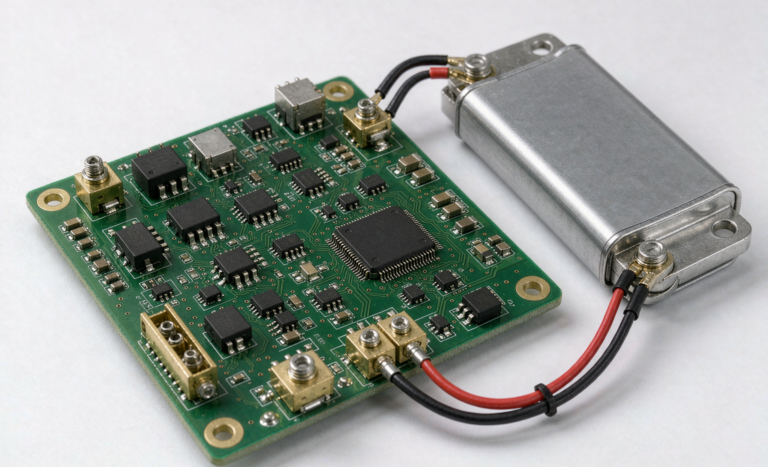
Voltage window. Our cells operate from 1.5 V to 4.0 V, a much wider swing than LFP’s 2.5 V to 3.65 V. A 48 V nominal system therefore spans roughly 39 V to 62 V at the pack terminals with 15 cells in series. Every contactor, pre-charge resistor, DC-DC converter and traction inverter in the truck must tolerate that range, and I have seen two retrofit attempts fail because the existing inverter clamped at 58 V.
State-of-charge estimation. This is the good news. Sodium-ion has a genuinely sloped open-circuit-voltage curve — around 22 mV per percent SoC in the mid-range, against roughly 3 mV for LFP’s notorious plateau. Our extended Kalman filter estimator holds ±2 percent SoC error without needing frequent full-charge recalibration. Operators get a fuel gauge they can trust, which sounds trivial until you have fielded complaints about a lithium truck that reads 40 percent and then drops to 12 percent in ten minutes.
Zero-volt tolerance. Sodium-ion cells can be discharged to 0 V and stored there without irreversible damage, unlike lithium cells where deep discharge dissolves the copper current collector. For a customer who parks trucks for a three-week factory shutdown, this eliminates a whole maintenance procedure. It is also why sodium-ion shipping is simpler, which I return to below.
Standards, certification and shipping
No industrial truck battery ships without a compliance file, and I have signed off on enough of these to know where the delays hide. For a forklift pack we work to the following set.
- IEC 62619 for industrial secondary cells and batteries — overcharge, external short circuit, thermal abuse, internal short circuit and propagation testing.
- IEC 62620 for performance and endurance declaration of industrial cells.
- UL 2271, the standard actually used for batteries in light electric vehicles and industrial trucks, covering enclosure integrity, vibration, mechanical shock and imbalanced charging.
- EN 1175 for the electrical requirements of industrial trucks, plus ISO 3691-1 and ITSDF B56.1 on the truck side.
- UN 38.3 tests T.1 through T.8 for transport: altitude simulation at 11.6 kPa, thermal cycling 72 ± 2 °C to minus 40 ± 2 °C, vibration, 150 g shock, external short, overcharge and forced discharge.
- IEC 62133-2 where the cell is also used in portable equipment variants of the same platform.
One meaningful commercial advantage: because our sodium-ion cells can be transported at 0 V state of charge, many shipments qualify outside the Class 9 UN3480 lithium framework, which simplifies air and sea documentation and lowers freight surcharges. Do not take that as blanket permission — the classification depends on the specific cell test report and the carrier, and you must have the UN 38.3 summary and an SDS in hand. But it is a real difference from the FAA and EASA restrictions that dominate our drone battery logistics, where state-of-charge caps of 30 percent and packaging rules under IATA Packing Instruction 965 govern every carton we ship.
Where I still recommend lithium instead
I will not sell a chemistry into the wrong application. Three cases where sodium-ion is the wrong answer for material handling today:
Very high energy in a fixed small envelope. Class III pedestrian pallet trucks and narrow-aisle reach trucks with a compact battery well need every watt-hour per litre available. There, an LFP or semi-solid state lithium pack wins outright. Our semi-solid state cells reach 280 to 320 Wh/kg and are the right choice when volume is the hard constraint.
Ultra-fast opportunity charging above 2C sustained. Sodium-ion accepts 1C to 2C comfortably, and we have qualified 3C pulses, but customers who want a 15-minute full recharge every cycle are better served by an engineered lithium battery system.
Existing fleets with fixed inverter voltage windows. If the truck electronics cannot accept the wider voltage swing, the retrofit cost erases the chemistry benefit. Ask for the inverter’s absolute maximum DC bus rating before quoting.
For everything else — cold storage, high cycle count, cost-sensitive multi-shift operations, sites where thermal safety review is a procurement gate — sodium-ion has earned a place on our line card. The same cell platform now underpins several of our stationary products, including home energy storage cabinets where cycle life and low-temperature behaviour matter far more than mass. When a customer’s requirement sits between these categories, we build a custom battery solution rather than forcing a standard tray, because tray geometry, connector position and BMS communication protocol are usually where integration time is lost.
Frequently asked questions
How does sodium-ion battery performance for forklifts compare with lead-acid on total cost?
In our customer’s own accounting, using local industrial electricity at 0.72 CNY/kWh and their historical lead-acid replacement interval of 4.5 years, the sodium-ion pack reached cost parity at month 31 and delivered roughly 38 percent lower cost per operating hour over an eight-year horizon. The savings came from eliminated watering and equalisation labour, higher charge efficiency, and the removal of the battery change-out room and spare packs entirely.
Can a sodium-ion pack be charged during short breaks?
Yes. We validated 1C opportunity charging in 10 to 15 minute windows, adding 16 to 25 percent SoC per break with no measurable life penalty across 1,200 partial-charge events. The BMS limits current above 45 °C cell temperature and tapers above 90 percent SoC.
Is sodium-ion safer than a lithium battery in a thermal event?
In our IEC 62619 nail-penetration and thermal-abuse testing, single-cell events produced lower peak temperature and slower gas evolution than a comparable NMC cell, and comparable behaviour to LFP. Thermal runaway onset sat 14 to 20 °C higher than our LFP reference. That is meaningful but it does not remove the need for propagation barriers — we still fit 0.4 mm mica sheet between cells and a 1.5 mm aerogel layer under the tray lid.
What service life should a warehouse plan for?
Plan on 3,000 cycles to 80 percent capacity as a contractual figure and expect more in practice. For a two-shift operation at about 1.6 equivalent full cycles per day, that is an eight to nine year pack, which typically exceeds the truck’s own refurbishment interval.
Does the wider voltage range cause problems with existing chargers?
It can. A charger built for an LFP profile will not correctly terminate a sodium-ion charge. We supply a matched charger with the correct CC-CV profile and CAN communication to the BMS, or provide the charge profile specification if the customer standardises on a third-party charger fleet.
Closing engineering note
Fourteen months of data changed my position from scepticism to selective advocacy. Sodium-ion is not a replacement for lithium in material handling; it is a better answer for a specific and surprisingly large slice of the market — cold, cyclic, cost-sensitive, multi-shift operations where mass is already a design requirement. If you are evaluating a fleet, send me your duty cycle log and your coldest storage temperature. Those two files tell me more in five minutes than a month of specification tables.