Sodium-Ion Battery Cost Optimization for Forklifts
Across the material-handling fleets I advise, the forklift has quietly become the most cost-sensitive electrified asset on the floor. When a warehouse runs two or three shifts, battery cost is not really about the sticker price—it is about energy throughput per dollar over the life of the pack. For years the choice was binary: cheap-but-high-maintenance lead-acid, or premium lithium iron phosphate (LFP). Today a third option is changing the math. In this article I will walk through sodium-ion battery cost optimization forklifts from an engineer’s bench: where the savings actually come from, which trade-offs you must design around, and how to spec a pack that lowers total cost of ownership without compromising uptime.
Why Forklift Fleets Are Re-Evaluating Battery Chemistry
The economics of a forklift battery are governed by duty cycle, not spec sheets. A single-shift operation that charges overnight can tolerate a slower, cheaper chemistry. A three-shift e-commerce facility cannot afford a battery sitting on a charger for eight hours. That is why opportunity charging and fast charging became the killer features of lithium batteries—and why total cost of ownership (TCO) now dominates the buying conversation.
When I model TCO for a client, I split it into five buckets: (1) upfront pack cost, (2) energy cost per kWh delivered, (3) maintenance labor, (4) downtime and charger infrastructure, and (5) end-of-life residual value. Lead-acid almost always wins bucket 1 and loses buckets 2–4 badly because of watering, equalization, and vented-acid handling. LFP wins buckets 2–4 but carries a higher bucket 1. A sodium-ion battery is engineered to compress all five buckets at once—and that is the heart of sodium-ion battery cost optimization forklifts.
What Makes Sodium-Ion Structurally Cheaper
Sodium-ion chemistry removes the most expensive and geopolitically fragile inputs from the bill of materials. There is no lithium, no cobalt, no nickel, and no copper on the anode side. Sodium is the sixth most abundant element on Earth and is extracted from brine and seawater at a fraction of lithium’s processing cost. Because the anode can use hard carbon with an aluminum current collector instead of copper, the cell’s internal metal content drops further.
From a manufacturing standpoint, the electrodeprocessing, drying, and formation steps overlap heavily with existing lithium battery lines. At Horizon Power we run pilot sodium-ion packs on the same coaters and tab welders we use for our lithium battery products, which means the capex to add capacity is incremental rather than greenfield. That shared supply chain is a quiet but powerful lever in sodium-ion battery cost optimization forklifts.
The Real-World Cost Levers That Matter
Let me translate chemistry into warehouse dollars. The metric I care about most is cost per kWh-cycle—how much you pay for one full discharge-and-recharge of the pack over its life.
- Cycle life: Modern sodium-ion cells for industrial use deliver 3,000–6,000 cycles at 80% depth of discharge, versus 1,000–1,500 for a well-maintained lead-acid block. More cycles means the pack amortizes over more working hours.
- Maintenance: There is no watering, no acid stratification, and no equalization charge. One client cut battery-related labor by roughly 120 hours per year across a 25-truck fleet.
- Thermal tolerance: Sodium-ion holds capacity better at low state-of-charge and tolerates cooler warehouse ambient temperatures without the heater burden LFP sometimes needs, trimming HVAC and charger losses.
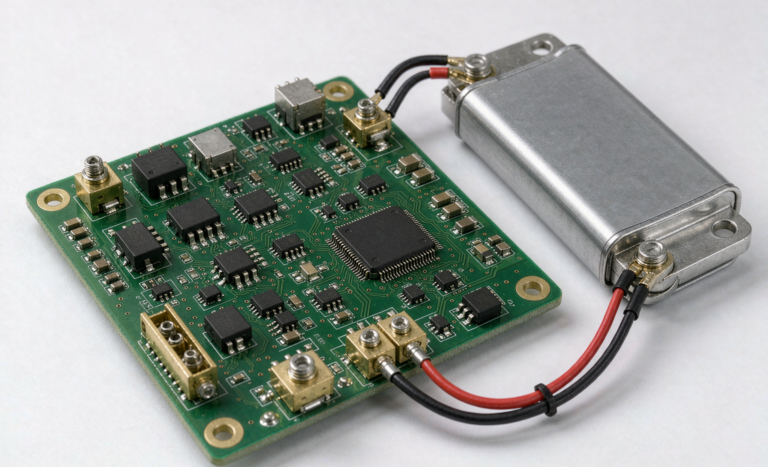
- BMS overhead: The chemistry is more forgiving of partial-state operation, so a lighter battery management system is sufficient, reducing electronics cost without sacrificing safety.
Stack these levers and a sodium-ion battery often reaches cost parity with LFP on a three-year TCO basis, while beating lead-acid on virtually every operational metric.
Performance Trade-Offs You Must Design Around
Honest engineering means naming the weaknesses. The headline limitation of sodium-ion is gravimetric and volumetric energy density—typically 100–160 Wh/kg versus 160–200 Wh/kg for LFP. Practically, that means the pack is somewhat larger and heavier for the same usable energy.
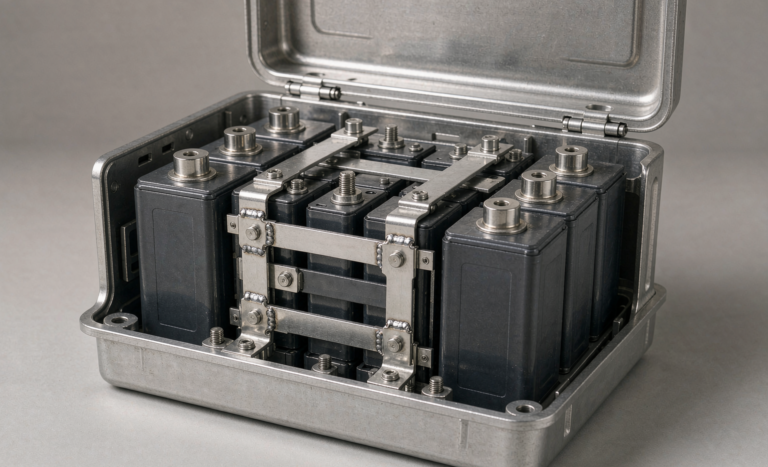
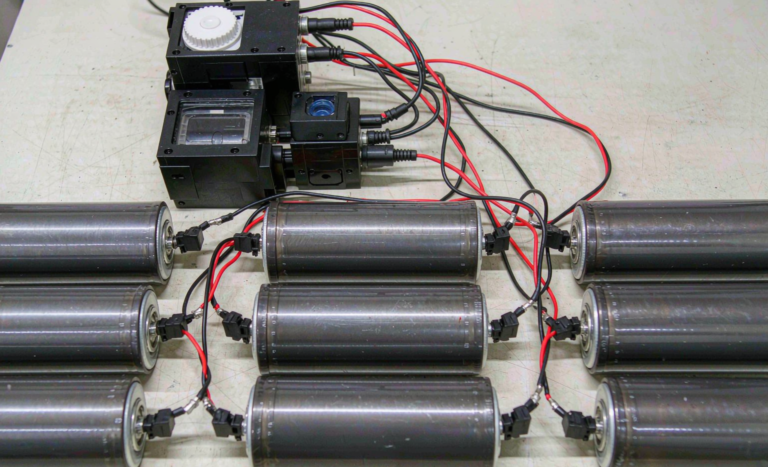
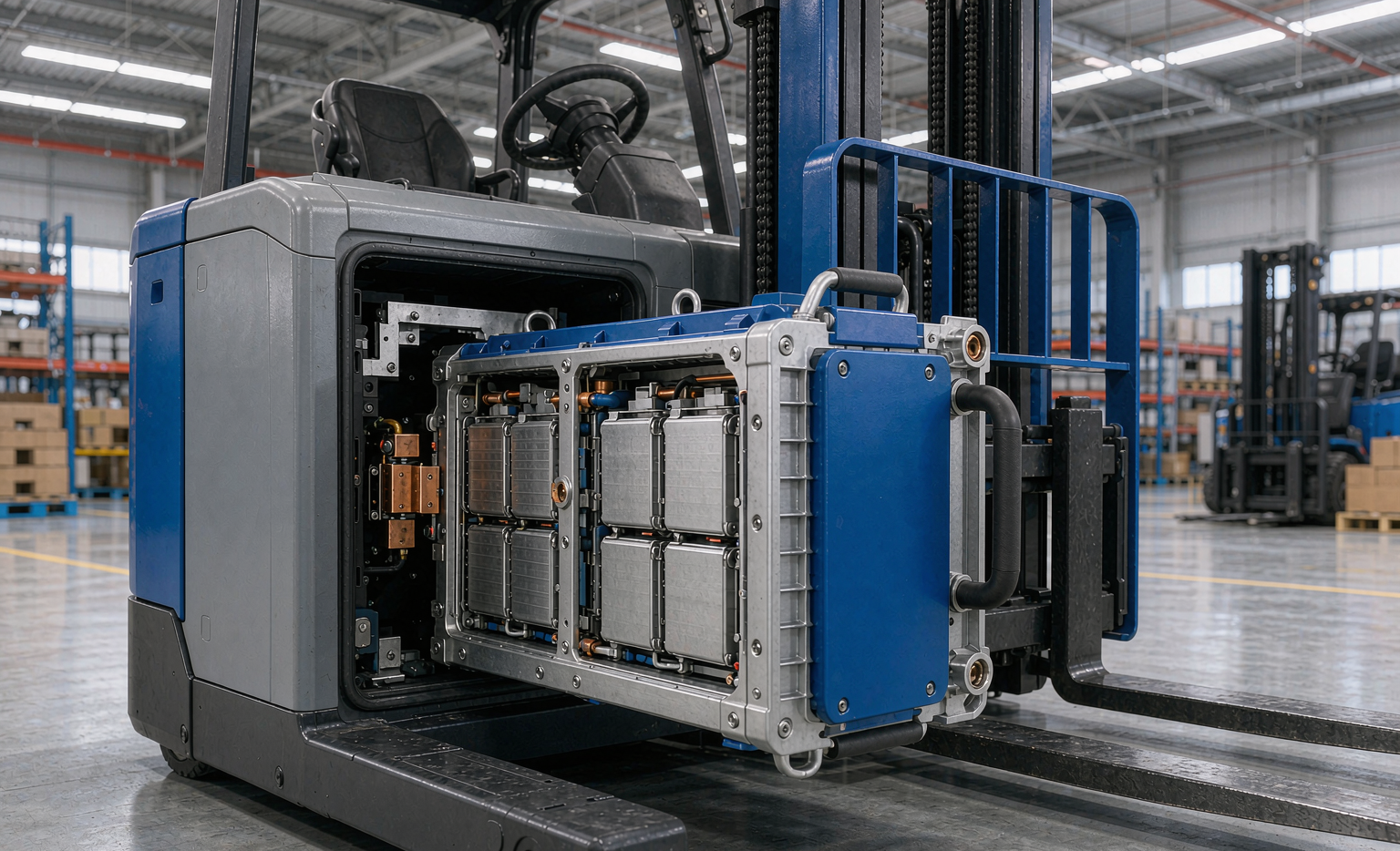
For a forklift this is usually a non-issue: the battery sits in a dedicated compartment sized for lead-acid mass, and floor weight is actually beneficial for stability. The bigger design note is that you should not simply “drop in” an LFP-sized enclosure. When we build a custom battery solution for a sit-down counterbalance truck, we re-space the cells and reinforce the tray so the heavier sodium pack seats correctly and the truck’s stability triangle is preserved. The power density, meanwhile, is excellent—sodium-ion handles high discharge currents well, which matters for lifting heavy loads from standstill.
Low-temperature behavior is a genuine strength. Where LFP loses meaningful capacity near 0°C, sodium-ion degrades far less, an important point for cold-store and refrigerated distribution centers.
Engineering a Cost-Optimized Pack
Cost optimization is not “buy the cheapest cells.” It is system design. My checklist when specifying a sodium-ion forklift battery:
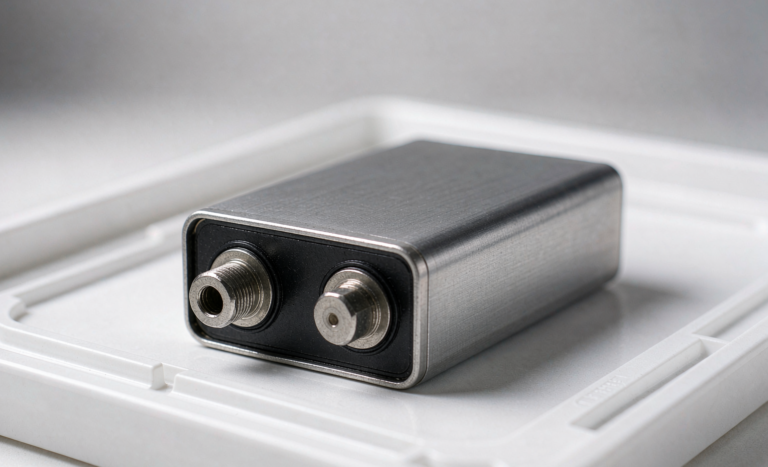
- Cell selection: Match cell format to the compartment. Prismatic cells simplify mechanical integration and thermal interface; cylindrical cells ease thermal runaway isolation if a single cell faults.
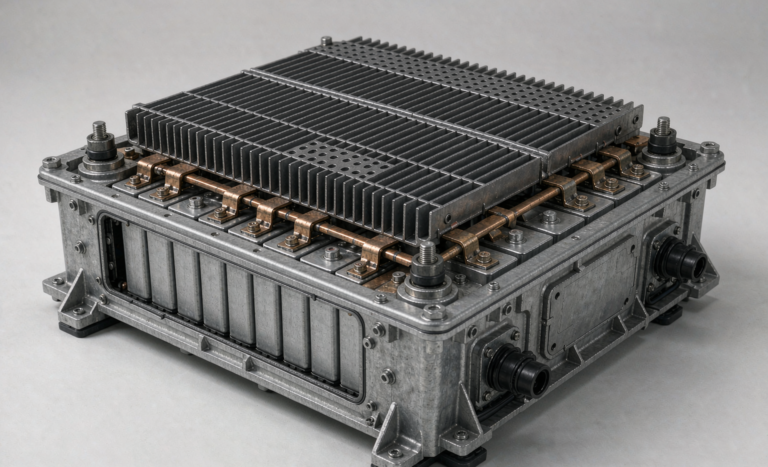
- Thermal design: Use passive conduction to the steel tray plus optional low-power fans. Avoid active refrigerant loops—they erase the energy savings.
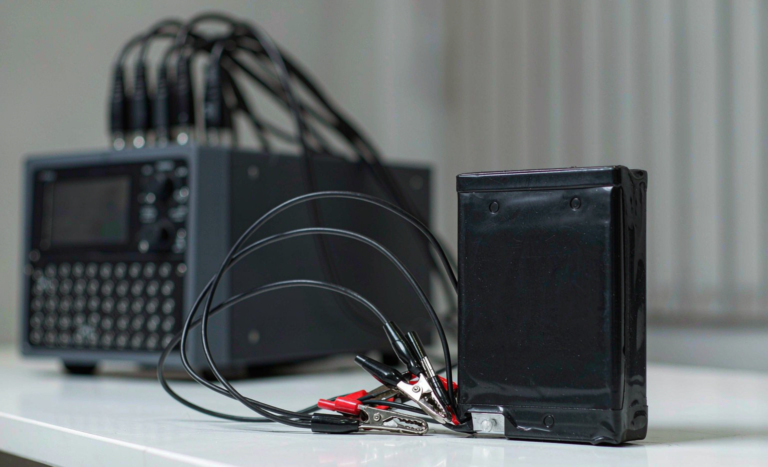
- BMS and comms: Keep the BMS lean but standards-compliant. Expose CAN bus or RS485 so the fleet manager sees state-of-charge and health without proprietary gateways.
- Charger compatibility: Most sodium-ion packs accept the same constant-current/constant-voltage profile as LFP within a slightly wider voltage window, so existing high-frequency chargers usually work after a profile update.
- Opportunity charging: Because sodium-ion tolerates partial charging, a 15-minute top-up during breaks keeps trucks running across shifts without a spare battery pool.
Standards, Safety, and Compliance
Industrial batteries live in occupied buildings, so compliance is non-negotiable. Every Horizon Power sodium-ion forklift pack we ship is validated against the transport standard UN38.3 and the industrial stationary/traction battery safety standard IEC 62619. For the North American market we align with UL 1973 (batteries for stationary and motive uses) and verify the broader cell-level safety suite IEC 62133 for the cells we qualify. We also specify IP54–IP65 enclosures depending on whether the truck works in wash-down or dusty environments, and we document the bill of materials so customers can satisfy ESG and due-diligence audits.
Sodium-ion’s intrinsic safety profile helps here: the chemistry is far less prone to exothermic runaway than some high-energy lithium formats, which simplifies the fire-detection conversation with facility insurers. That is a soft but real cost advantage in sodium-ion battery cost optimization forklifts.
When Sodium-Ion Is the Right Call
Based on the fleets I have spec’d, sodium-ion is the strongest fit when: you run multi-shift operations and hate spare-battery logistics; your ambient is cool or variable; you want to reduce maintenance headcount; and you are sensitive to lithium price volatility. It is weaker when you have an extreme energy-density constraint—such as a very compact walkie stacker where every millimeter of battery space is already spoken for. In that niche, LFP or a tailored lithium battery still wins. The good news is that a custom battery solution lets you mix approaches across a heterogeneous fleet rather than betting the whole yard on one chemistry.
Frequently Asked Questions
Are sodium-ion forklift batteries cheaper than lead-acid?
Upfront, a sodium-ion battery costs more than a flooded lead-acid block. Over a three-to-five-year horizon, however, the elimination of watering labor, equalization charging, acid handling, and premature replacement typically makes sodium-ion the lower total-cost option, especially in multi-shift fleets.
How does a sodium ion battery vs lithium compare for multi-shift operations?
A sodium ion battery vs lithium (LFP) comparison usually favors LFP on energy density and LFP on absolute cycle count at the high end, but sodium-ion closes the gap on TCO through lower material cost, better low-temperature behavior, and simpler thermal management. For most-motivated forklift duties the two are operationally comparable, with sodium-ion winning on price stability.
Can I keep using my existing forklift chargers?
In most cases yes. Sodium-ion accepts a CC/CV profile close to LFP, so a firmware profile update on a modern high-frequency charger is usually enough. We validate the charger against the pack’s voltage window during commissioning to avoid nuisance faults.
What cycle life should I expect?
Industrial-grade sodium-ion cells typically deliver 3,000–6,000 cycles at 80% depth of discharge under controlled temperature. Real-world life depends on thermal environment and charging discipline, but it is consistently multiple times that of lead-acid.
Are sodium-ion batteries safe to use indoors?
Yes. Sodium-ion is intrinsically more stable than high-energy lithium formats and is validated to IEC 62619 and UL 1973 in our packs. Combined with an IP-rated enclosure and a lean BMS, it is well suited to occupied warehouses, though standard battery-room ventilation and fire planning still apply.
Conclusion
Sodium-ion is not a science project anymore—it is a pragmatic, standards-backed way to lower the total cost of running an electrified forklift fleet. The savings come from abundant materials, longer cycle life, near-zero maintenance, and forgiving thermal behavior, not from cutting safety corners. If you are re-specifying a fleet, I recommend modeling TCO on a per-kWh-cycle basis and piloting one sodium-ion battery on your hardest-working truck before scaling. Our engineering team builds custom battery solution packs to drop into existing compartments, and we are happy to validate the chemistry against your duty cycle and chargers.